English
 中文简体
 русский

Content
You're replacing the bar on a large-displacement saw and the spec sheet says 48-inch guide bar. The first question is not "which bar is best" but "which chain can survive this much bar." On a milled or long-length bar, the chain carries more heat, more tension, and more side load than on a 20-inch setup. The answer usually comes down to two numbers: pitch and gauge. Choose the wrong pair, and the chain either rides too low in the bar groove or jumps the sprocket under load.
Why a 48-Inch Bar Changes Your Chain Requirements
A 48 chainsaw bar is not just a longer version of a 24-inch bar. The distance between the drive sprocket and the nose increases leverage, so every tooth has to pull through a longer contact path. This raises the load on the drive links, increases friction at the bar groove, and makes chain stretch more visible. A consumer chain intended for pruning will heat up, slop, and may derail.
Long bars work best with chains that have:
- Heavier drive links that fill the bar groove correctly.
- Larger pitch such as .404″ or 3/8″ that reduces the number of contact points per inch of bar.
- Cutters designed for high-power saws, e.g. full chisel or chipper rather than low-profile.
Full-complement chains have a cutter on every drive link. On a 48-inch bar, that creates a lot of drag and can overload the saw. Many millers switch to full-skip chains, which remove every other cutter and lower the load while still cutting fast enough for milling. The tradeoff is a rougher finish, which is usually acceptable in lumber production.
In practice, most 48-inch setups use .404″ pitch chains because they balance tooth capacity and strength. The saw itself needs to be in the 100+ cc class; anything less will struggle to spin the chain at a safe cutting speed. If you try to pull a 48 chainsaw bar with a 50 cc saw, the chain speed drops, chips get clogged, and the bar tip overheats.
Pitch and Gauge: The Two Numbers That Decide Fit
Pitch is the distance between three consecutive rivets divided by two. It tells you how far apart the drive links are spaced, which determines the chain's compatibility with the sprocket and bar nose sprocket. Gauge is the thickness of the drive link tang that slides into the bar groove. A .063″ gauge chain will not sit securely in a .050″ slot, and a .050″ chain in a .063″ slot can flutter.
For a 48-inch bar, common combinations are:
| Pitch | Gauge | Typical application |
|---|---|---|
| .404″ | .063″ | Milling and felling on big saws |
| .404″ | .080″ | Mechanical harvester / heavy timber |
| 3/8″ | .058″ | High-power felling with 3/8 drive |
| 3/8″ | .050″ | Lighter 48-inch milling, less common |
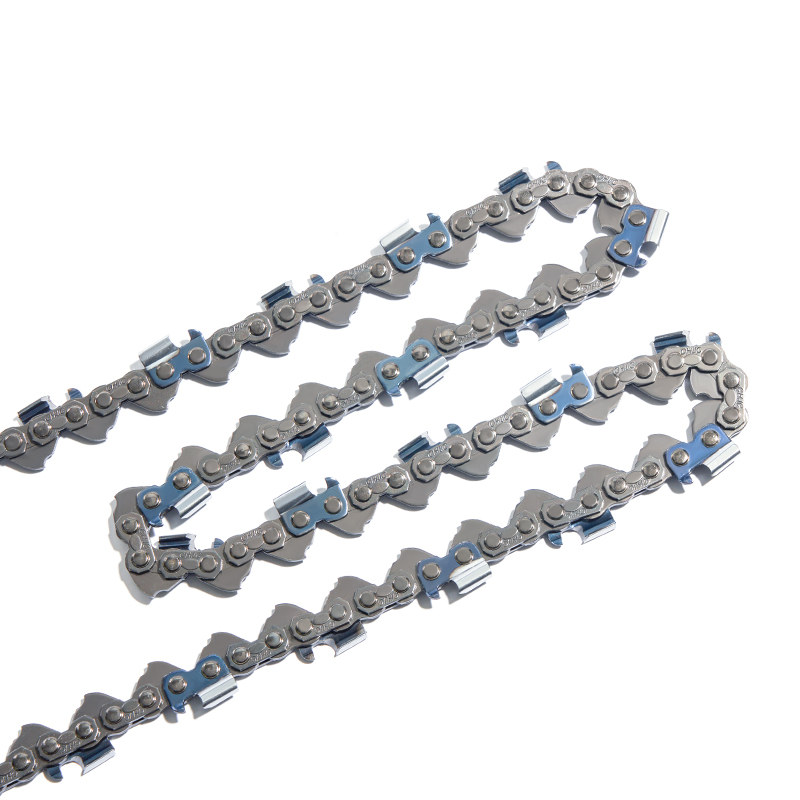
Some of the most stable 48-inch bars are paired with .404″ mechanical harvester chain. The .080″ gauge keeps the chain rigid in the slot, and the cutter geometry is designed for high bite rates through large logs. If your mill or chainsaw uses .404″ pitch, a custom saw chain supplier can cut the exact roll length for your bar pattern.
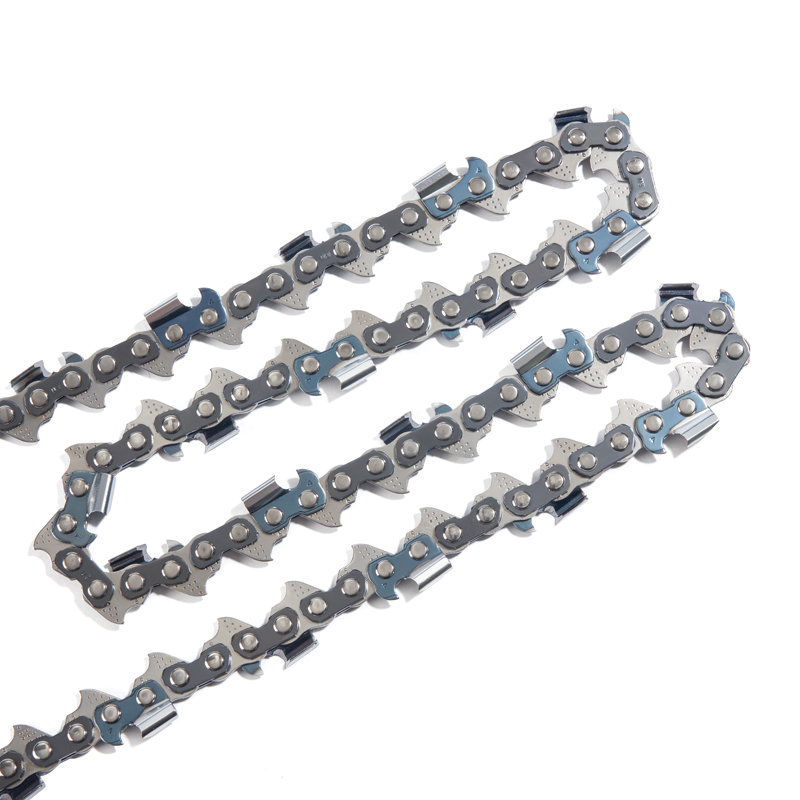
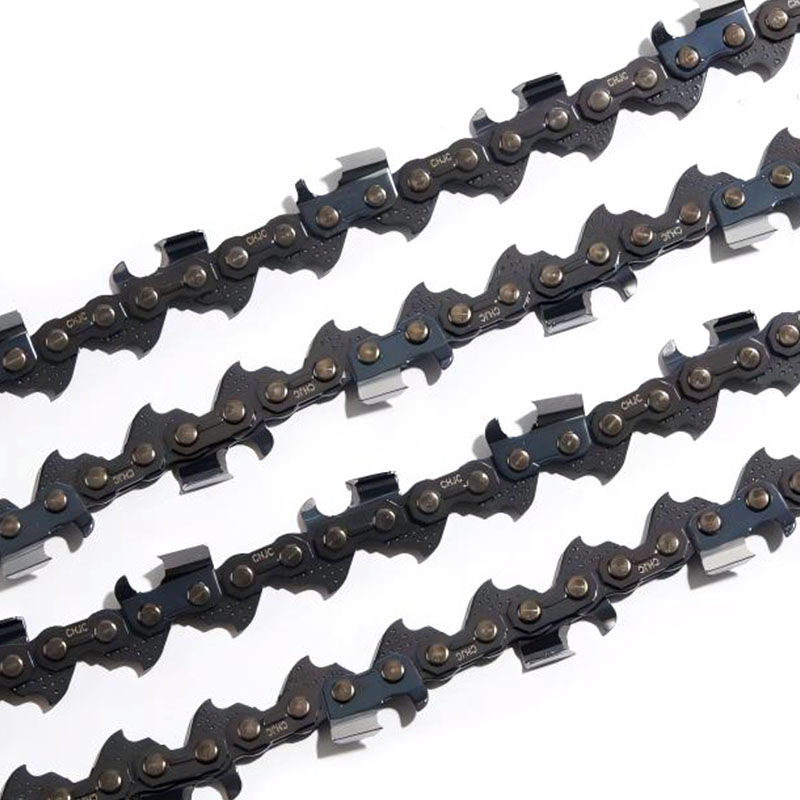
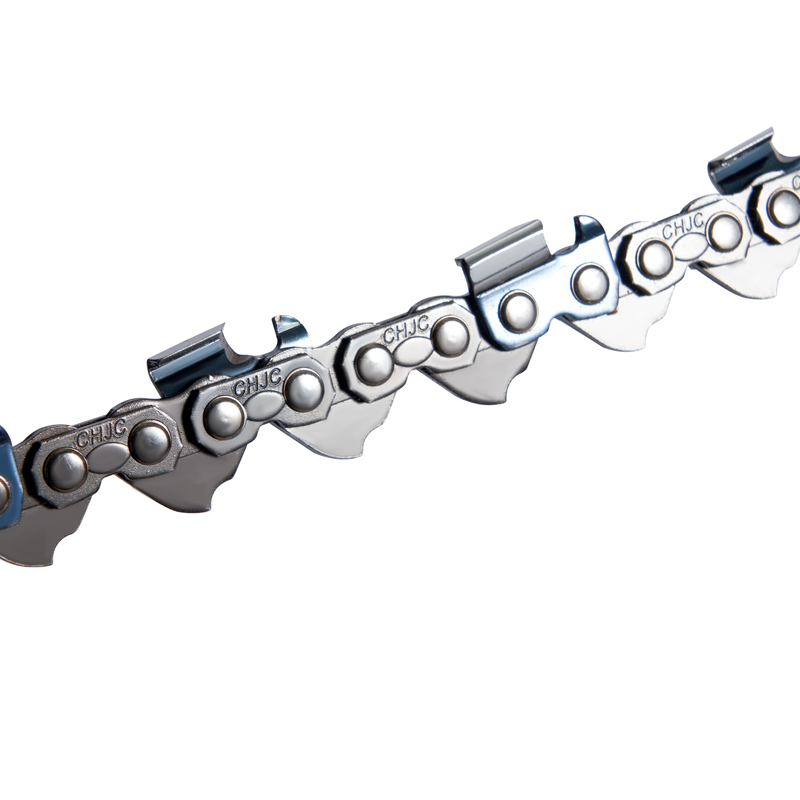 .404" .080" Harvester Chain for Heavy-Duty LoggingThis heavy-gauge harvester chain is built with thickened parts and reinforced tie straps to endure high-stress mechanical logging. Ideal for 48-inch bars, it suits operators needing durable, low-stretch performance in continuous operation.View Product →
Reading a Chain Package Label
A .404″ × .080″ × 48″ chain label is shorthand for pitch, gauge, and bar length. The third number is normally the link count only if the manufacturer prints it; otherwise check the drive link count. The label may also show "full skip" or "semi skip", which refers to the number of cutters relative to drive links. Full-skip chains have fewer cutters and are commonly used on long bars to reduce load and improve chip clearance.
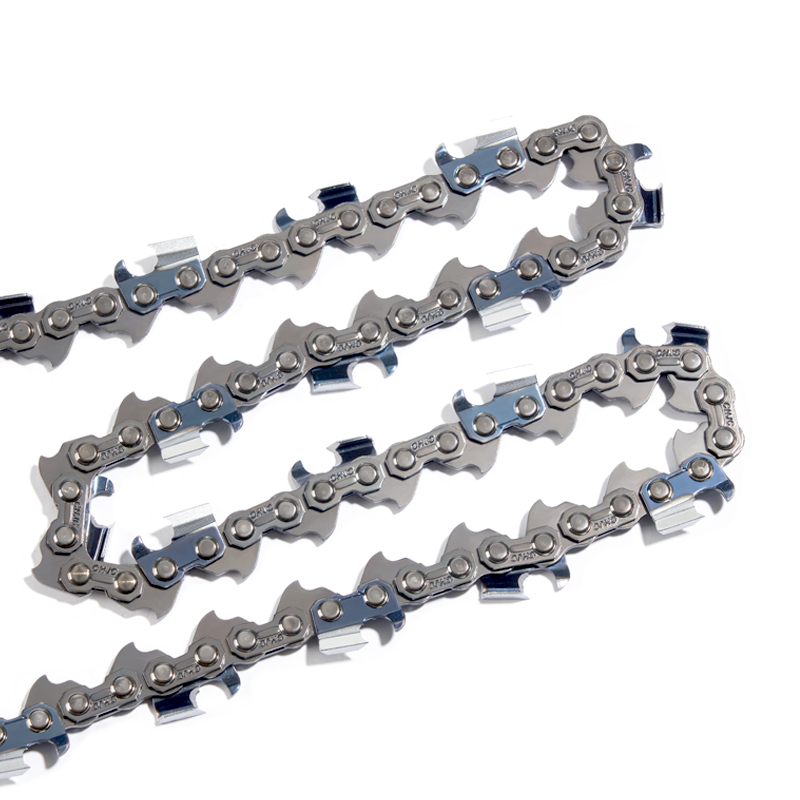
If you prefer a chipper-style cutter for dirty wood, the .404″ chipper chain behaves better around bark, knots, and debris because its rounded nose pushes material away instead of hooking into it. On a 48-inch bar, that makes a visible difference when you're cutting near the ground or in milled timber with embedded dirt.
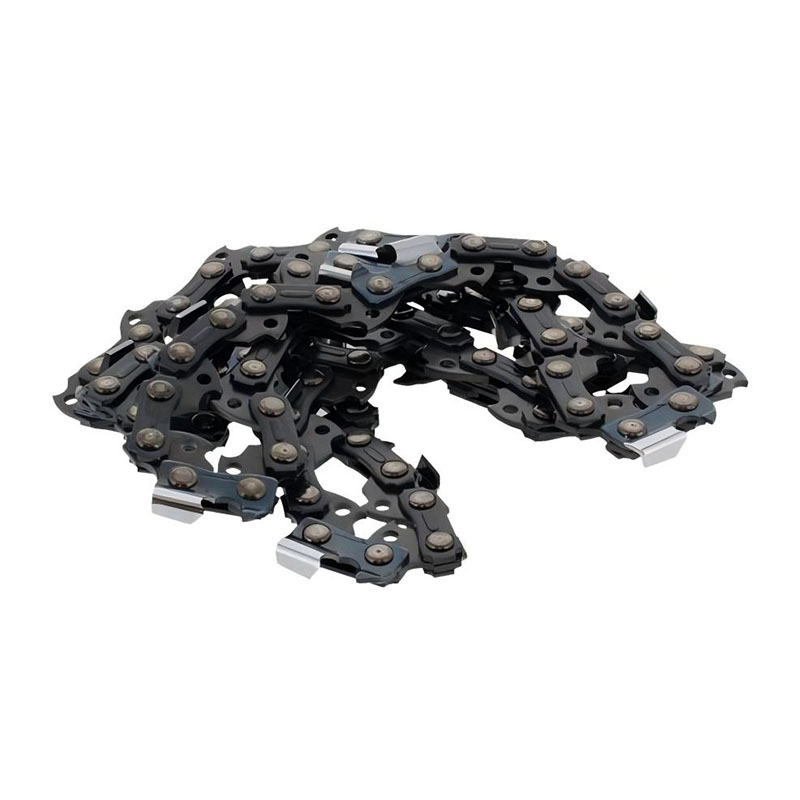
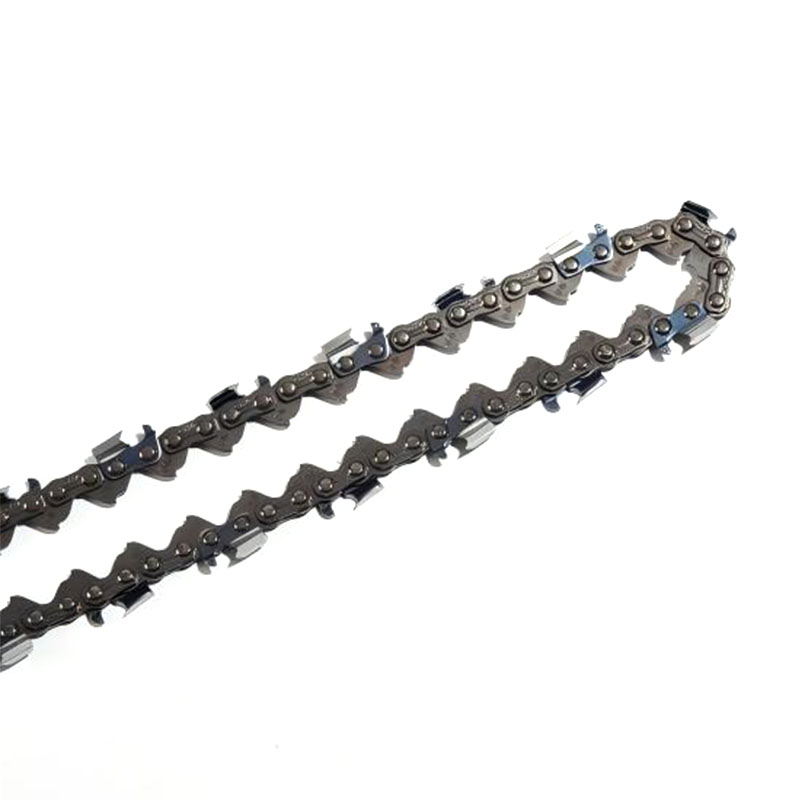
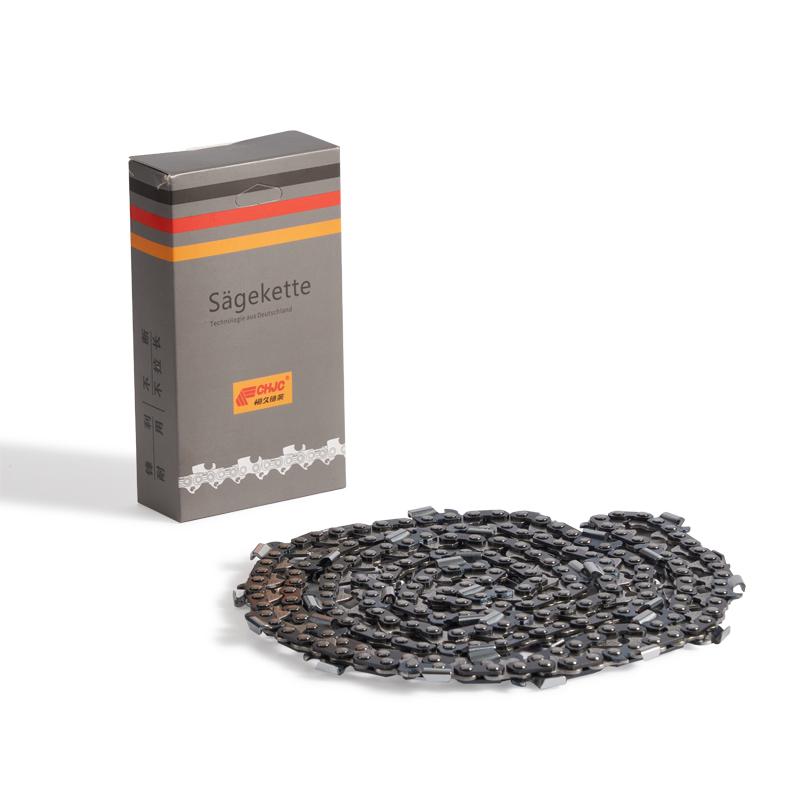 .404" .063" Chipper Saw Chain for Large-Diameter TimberA high-performance chipper-style chain designed for professional felling and bucking in thick wood. Its rounded cutters handle dirty, knotty timber effectively, and it pairs with high-powered saws on long bars for stable, wear-resistant cutting.View Product →
Link Count: How Many Drive Links Does a 48-Inch Bar Need?
The second biggest mistake after pitch/gauge is buying the wrong link count. Unlike a shorter bar, a 48 chainsaw bar leaves very little room for error; one link too many means the chain cannot be tensioned safely, and one link too few will snap the tie straps on the first cut.
Link count is determined by three factors:
- Bar length, measured from the bar tail to the nose tip.
- Pitch — larger pitch means fewer links per inch.
- Sprocket tooth count on the nose and drive sprocket.
A common rule for milled bars is to divide twice the bar length by the pitch, then add half the sprocket tooth count and a small allowance for nose radius. For example, 48 inches × 2 gives 96 inches. With .404″ pitch, that's roughly 238 links before adding the sprocket allowance. Always check the manufacturer's chart or measure the old chain precisely. A mechanical lumbering chain is usually ordered in custom lengths, so you can specify the exact link count rather than guessing.
Using the Old Chain as a Template
The safest way to confirm link count is to lay the old chain flat and count drive links. Pull it off the bar, clean it, and count the deep tangs on the bottom. Do not rely on a tape measure because stretch changes the pitch size over time. If you are switching to a new bar, call the bar manufacturer for a chart instead of guessing.
Before ordering, also check the bar's nose sprocket type. If the bar uses a replaceable sprocket nose, it may have a different effective pitch than a solid-nose bar. That's why buying a ready-made chain "for 48-inch bars" is risky unless it's already matched to your exact bar model.
Bar and Chain Maintenance for Long, Stable Cuts
Once your pitch, gauge, and link count are correct, the remaining problem is heat. A 48-inch bar holds a lot of metal, and the chain has more tooth area generating friction. If the oiler cannot keep up, the bar glides over the wood instead of cutting, and the drive links start to blue.
- Use a high-viscosity bar oil and check the oil hole at the drive sprocket regularly.
- Keep the bar groove clean, because packed sawdust reduces chain speed and overheats the tang.
- Check for burrs on the bar rails after every sharpening. A small burr can make a 48" chain pull sideways on each stroke.
- Monitor the nose sprocket. If it stops turning, the chain will saw into the bar nose and destroy both in a few minutes.
Signs of Bar and Chain Mismatch
- Chain rides too tight in the middle of the bar but loose at the nose: gauge is too thick or the groove is worn.
- Chain clatters on the bar even after tensioning: pitch or sprocket mismatch.
- Cutting veers to one side: cutter shape or bar rail wear.
- Excessive heat at the tip: oiler output is too low or nose sprocket is dead.
Chain tension also behaves differently on long bars. A cold chain should have a few millimeters of slack; as it warms, it will stretch. Re-tension in small increments rather than tightening hard when cold. Over-tensioning a 48-inch chain puts so much load on the clutch and bar studs that it can bend or crack the bar mount.
Finally, match the drive sprocket to the pitch. A .404″ chain on a 3/8″ sprocket will climb off instantly. If you're changing from a shorter 3/8″ bar to a 48-inch .404″ setup, replace the drive sprocket and check the bar tail slot before starting.
New chains and bars also need a short break-in period. Run the chain at low speed for the first few minutes, check the tension, and make sure the oiler is wetting the whole bar. A new 48-inch chain can stretch visibly during the first tank of fuel, so recheck the tension before each cut.
A 48 chainsaw bar is a serious tool. It needs a chain with the right pitch, gauge, link count, and cutter style for the job. Start with the chain, not the bar. If your application involves mechanical felling or milling with a large .404″ chain, a factory-direct saw chain manufacturer can cut rolls to your exact sprocket and bar dimensions — including non-standard link counts that a generic shelf product won't cover.