English
 中文简体
 русский

Content
An 18-inch guide bar sits in front of you, a worn-out chain loop is in your hand, and the shelf behind you is full of chains that all look the same. This is where sizing errors happen: you assume the bar length tells you which chain to buy. It does not. Two saws with identical 18-inch bars can require chains with a different pitch, a different gauge, and a different number of drive links. Put the wrong combination on the bar and the chain will sit too deep, ride too loose, or refuse to engage the sprocket. What you actually need are three numbers: pitch, gauge, and drive link count. This guide explains how to measure each one, what the common values are, and how to use them when ordering a replacement—from a hardware shelf or from a factory floor.
Chainsaw Chain Length Is Defined by Three Numbers
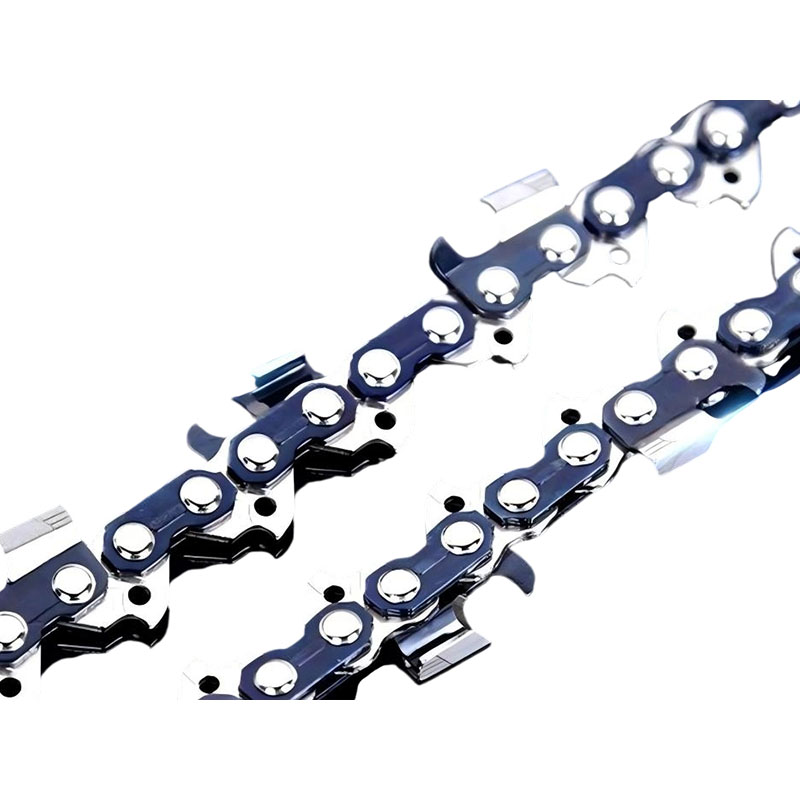
Chain length is not a single printed specification. The loop size is set by the number of drive links—the small tangs that ride inside the bar groove. Pitch and gauge decide whether those drive links can physically match the guide bar and sprocket. A chain can have the right number of drive links and still be useless if either of the other two numbers is wrong.
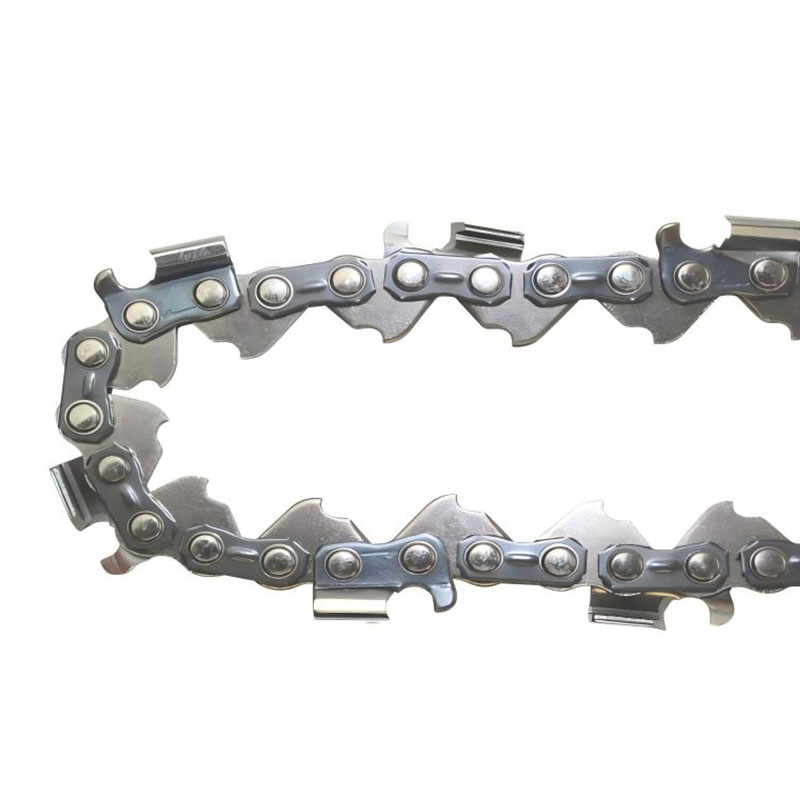
- Pitch: the distance from one drive-link rivet to the next, which controls how the chain engages the saw sprocket.
- Gauge: the thickness of the drive-link tang, which must match the width of the bar's guide groove.
- Drive links: the total count of those tangs in the closed loop, which defines the actual length of the chain.
You can find all three by reading the stamping on the guide bar—most bars list pitch, gauge, and drive-link count—then confirm the drive links by counting the tangs yourself.
Pitch: The Spacing That Matches the Sprocket
Pitch answers a simple question: how far apart are the drive links? The standard method is to lay the chain flat, measure the center-to-center distance across three consecutive rivets, then divide that distance by two. The result is one of the standard values: 1/4 inch, 3/8 inch low profile, .325 inch, 3/8 inch, or .404 inch.
- Lay the chain flat on a bench with the cutters facing up.
- Use a ruler or calipers to measure from the center of the first rivet to the center of the third rivet.
- Divide that measurement by two to get the pitch.
Pitch is not a performance preference. The chain has to match the sprocket tooth spacing. Run a .325 chain on a 3/8 sprocket and it will ride up and jam; run a 3/8 chain on a .325 sprocket and it will slap and skip under load. Standard pitch groups look like this:
- 1/4 inch — pruning and carving saws with low power output.
- 3/8 inch LP — top-handle and compact saws; the lowest-kickback option.
- .325 inch — mid-size professional and farm saws; balanced cutting speed and control.
- 3/8 inch — full-size professional saws for production felling and bucking.
- .404 inch — high-displacement powerheads and mechanical harvesters.
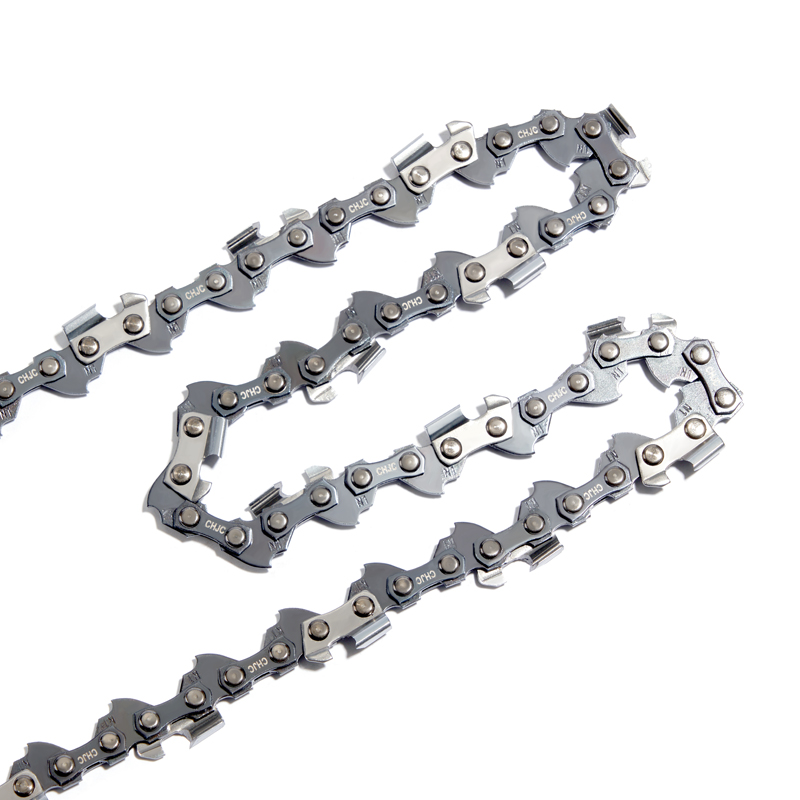
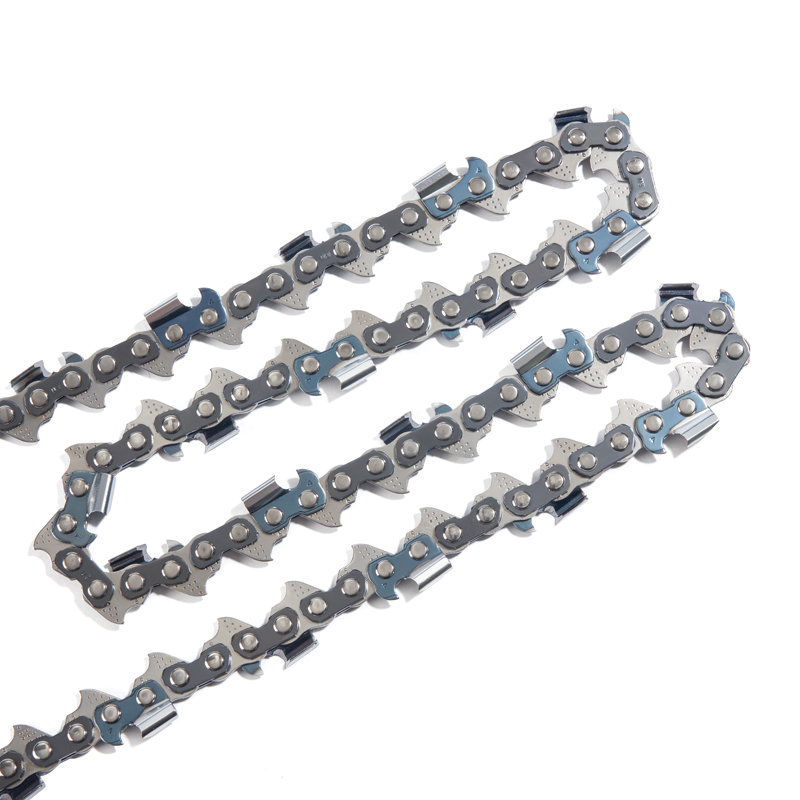
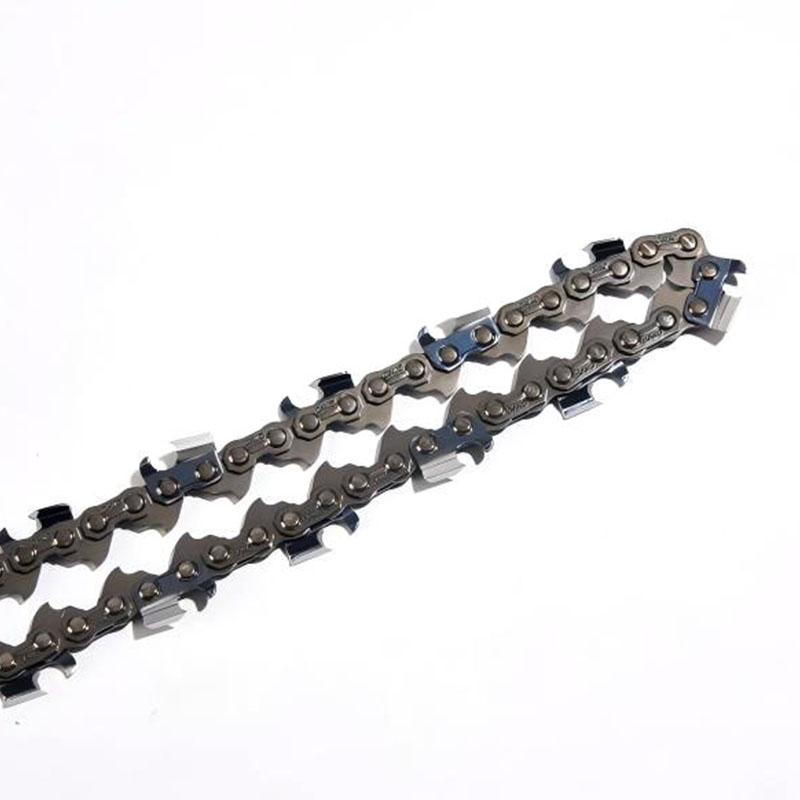
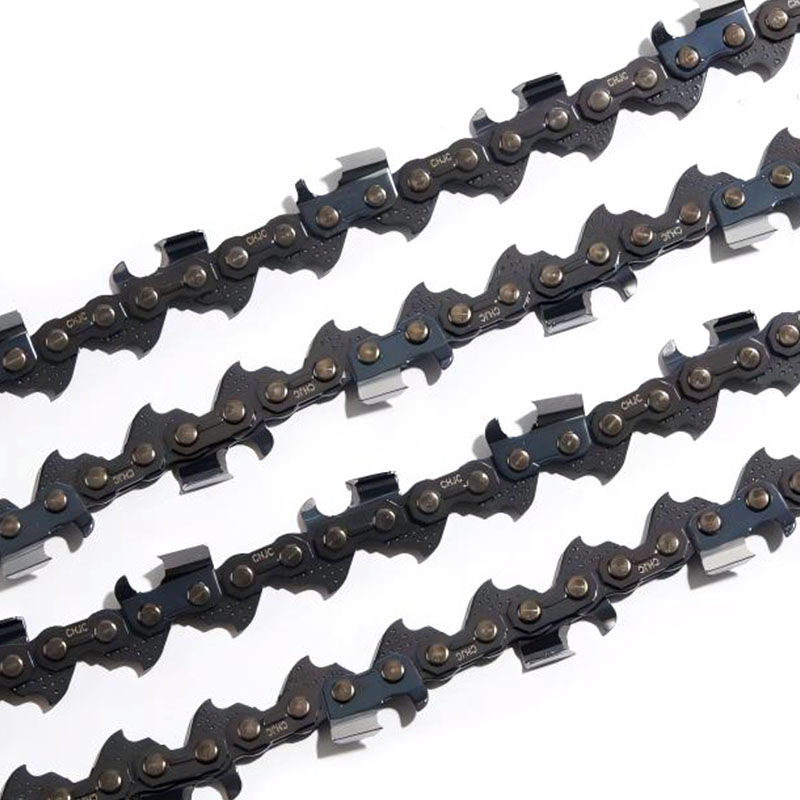
For most firewood, storm cleanup, and general felling on mid-size powerheads, .325 inch is the default because it keeps chain speed high while reducing vibration. A .325 full-chisel loop is a strong first choice in that class, with a cutter shape that takes an aggressive bite in clean softwood and hardwood.
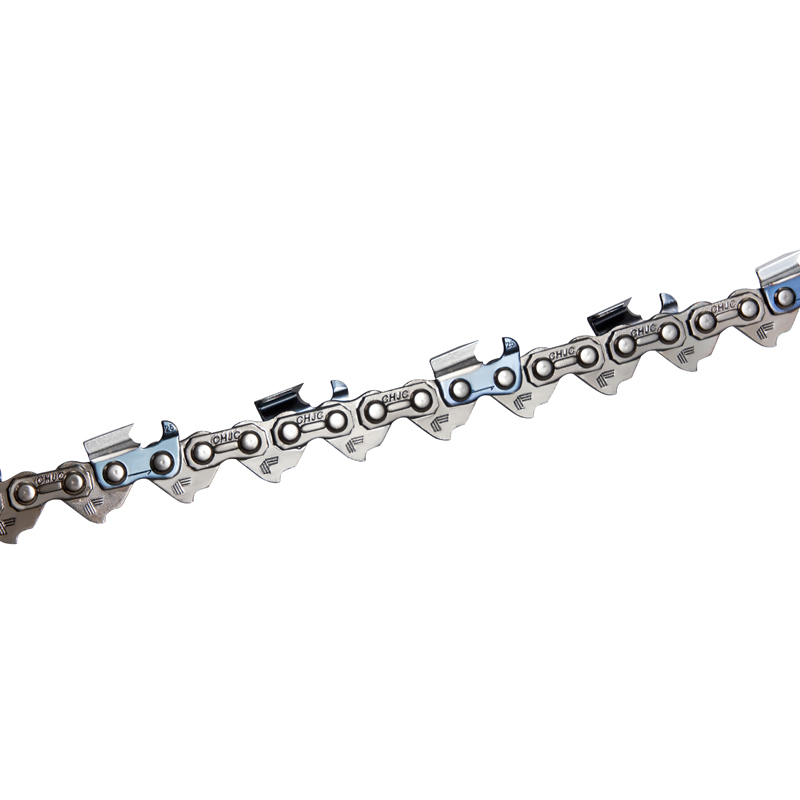 .325" .050" SAW CHAINSpecification PrecautionsView Product →
Gauge: The Thickness That Fits the Bar Groove
Gauge measures the thickness of the drive-link tang—the part that slides into the guide groove of the bar. If the gauge is too thick, the chain will not drop into the groove. If it is too thin, the chain wobbles side to side, the cut wanders, and the bar rails wear out early.
Most chainsaws run one of these gauges:
- .043 inch (1.1 mm) — compact and top-handle saws.
- .050 inch (1.3 mm) — the most common mid-size gauge.
- .058 inch (1.5 mm) — professional mid-size and larger saws.
- .063 inch (1.6 mm) — large pro saws and some light harvesters.
- .080 inch (2.0 mm) — heavy mechanical felling equipment.
The fastest way to confirm gauge is to read the number stamped near the tail of the bar—formats like .050 or 1.3 mm are common. If the stamp has worn away, use a bar-and-chain gauge tool or a caliper to measure the tang on your old chain. Tang thickness is the definitive value, so measure it whenever the bar is not clearly legible.
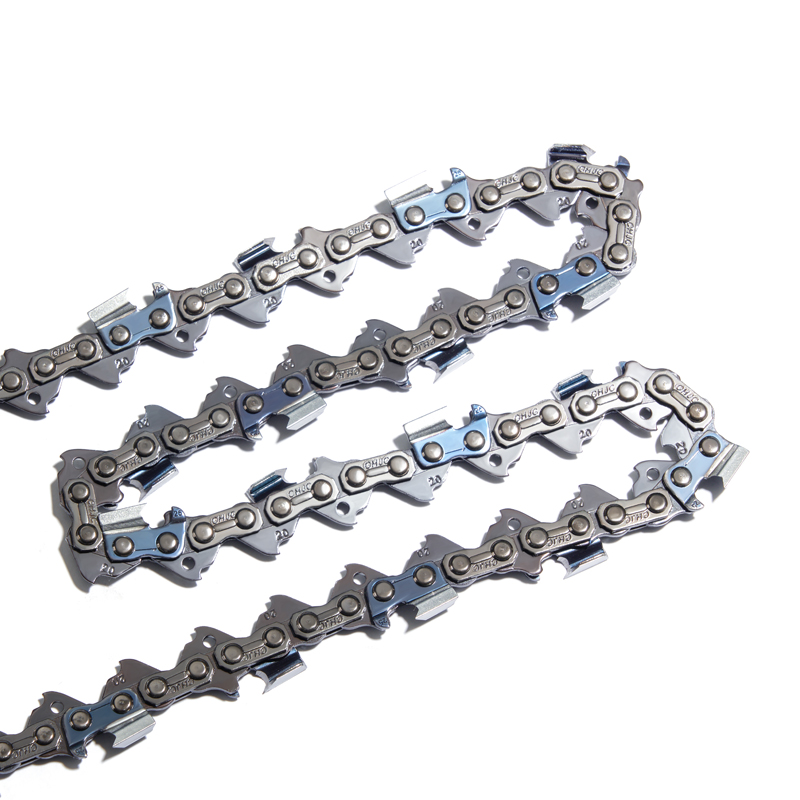
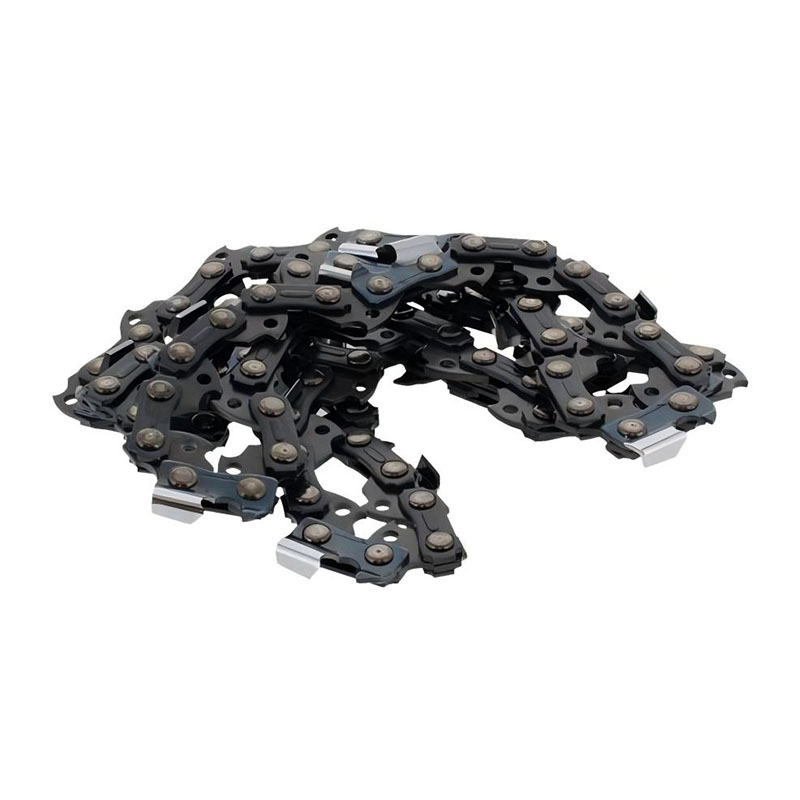
On compact and top-handle saws, the dominant format is 3/8 inch low-profile chain with a .043 or .050 gauge. Low-profile cutters are shorter and take a shallower bite, which reduces kickback and vibration. That matters when you are cutting overhead or working from a ladder; our comparison of low-profile versus standard saw chains goes into where that trade-off pays off.
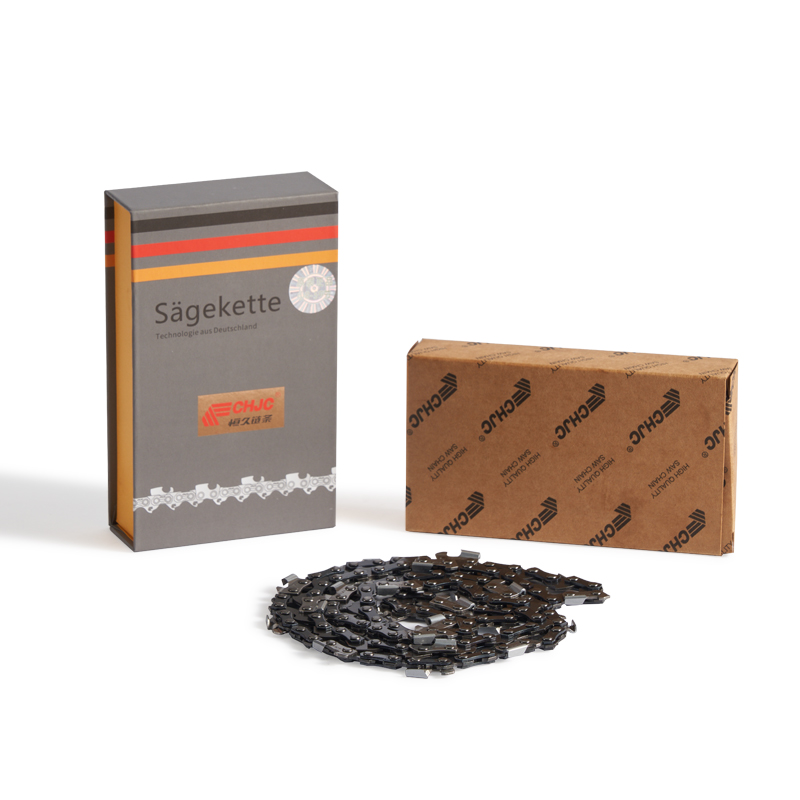 3/8" LP .050" SAW CHAINSpecification PrecautionsView Product →
Drive Links: The Number That Sets the True Length
This is the number people usually mean when they ask for a chain length. Count the tangs that ride in the bar groove—each tang is one drive link. On most chains, you can run your thumb along the underside and count until you return to the starting point. That count, combined with pitch and gauge, is the complete size code for a replacement loop.
The drive-link count is not simply bar length. The total loop size also depends on the chain sprocket teeth and the radius of the nose sprocket inside the bar tip. That is why two 16-inch bars can take different chains, and why the stamped length on the bar is only a starting point. Always order by the drive-link count you measure, not by the bar length label.
| Guide Bar Length | Common Pitches | Typical Drive-Link Count |
|---|---|---|
| 12 in (30 cm) | 1/4, 3/8 LP | 38–45 DL |
| 14 in (35 cm) | 3/8 LP, .325 | 44–52 DL |
| 16 in (40 cm) | 3/8 LP, .325, 3/8 | 50–62 DL |
| 18 in (45 cm) | .325, 3/8 | 56–72 DL |
| 20 in (50 cm) | .325, 3/8 | 68–80 DL |
| 24 in (60 cm) | 3/8, .404 | 84–96 DL |
Most bars also have a tail stamp with the drive-link count, in a format like 56 DL or 72. Between the bar stamp and a manual count, you can confirm the exact loop size without a parts lookup.
Chain Type Changes Cutting Behavior, Not Fitment
Once pitch, gauge, and drive links match, the next decision is cutter style. Three families cover most handheld saws and mechanical applications:
- Low-profile chain: shorter, shallower cutters keep kickback and vibration low. Best for pruning, limbing, and saws used by operators of varying skill levels.
- Full-chisel chain: square-cornered cutters slice clean wood fast and aggressively. They require more frequent sharpening and suit production felling in clean softwood or hardwood.
- Chipper (semi-chisel) chain: rounded cutter corners keep working longer in dirty, frozen, or abrasive conditions. Common on arborist and firewood saws that hit bark, dirt, or dry wood.
The cutter shape does not change pitch, gauge, or drive-link count. A full-chisel and a low-profile loop with the same three numbers fit the same bar; the difference appears in cutting speed, sharpening intervals, and how the saw behaves in the cut. Our guide to choosing a full-chisel chain walks through that trade-off.
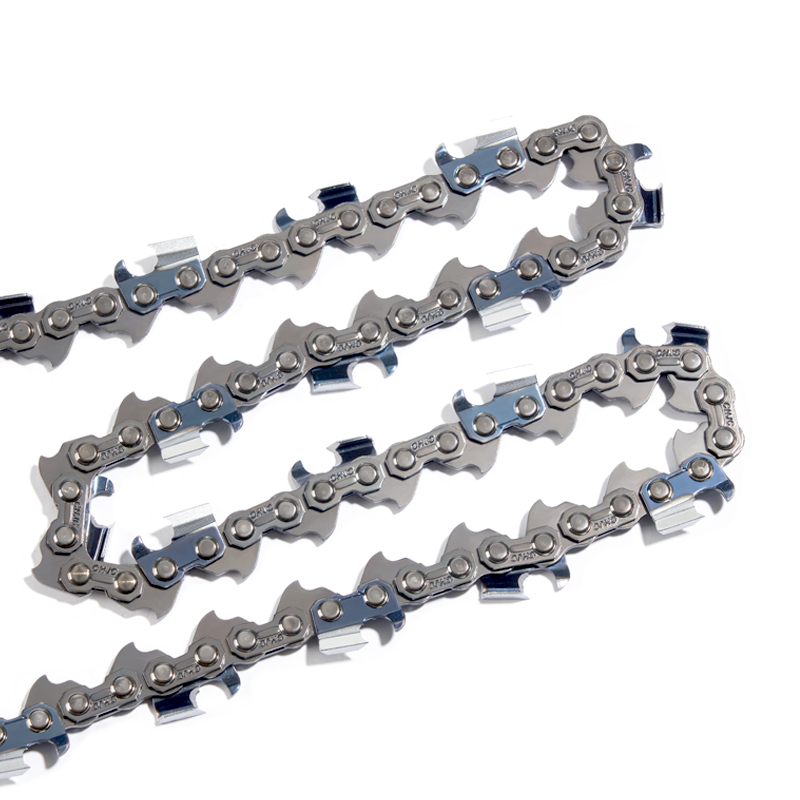
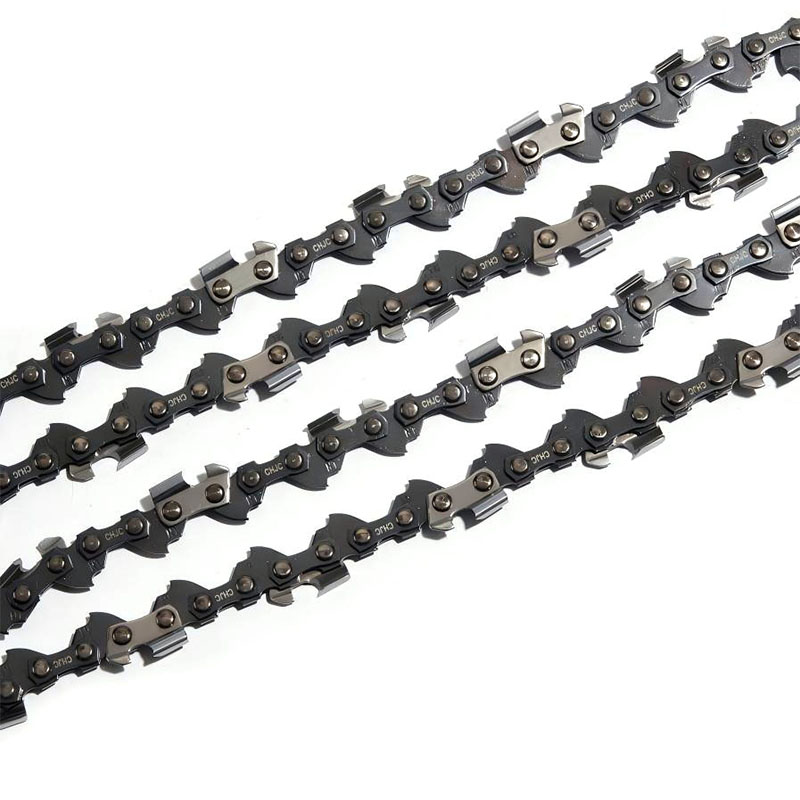
For mechanical harvesting and high-production work, larger chains take over. A .404 chipper chain uses .063 or .080 gauge drive links and a rounded cutter, so it survives grit, frozen wood, and mill conditions without constant filing. For processor heads, a mechanical-lumbering chain shares the same pitch family but uses a cutter geometry tuned for precise limbing strokes.
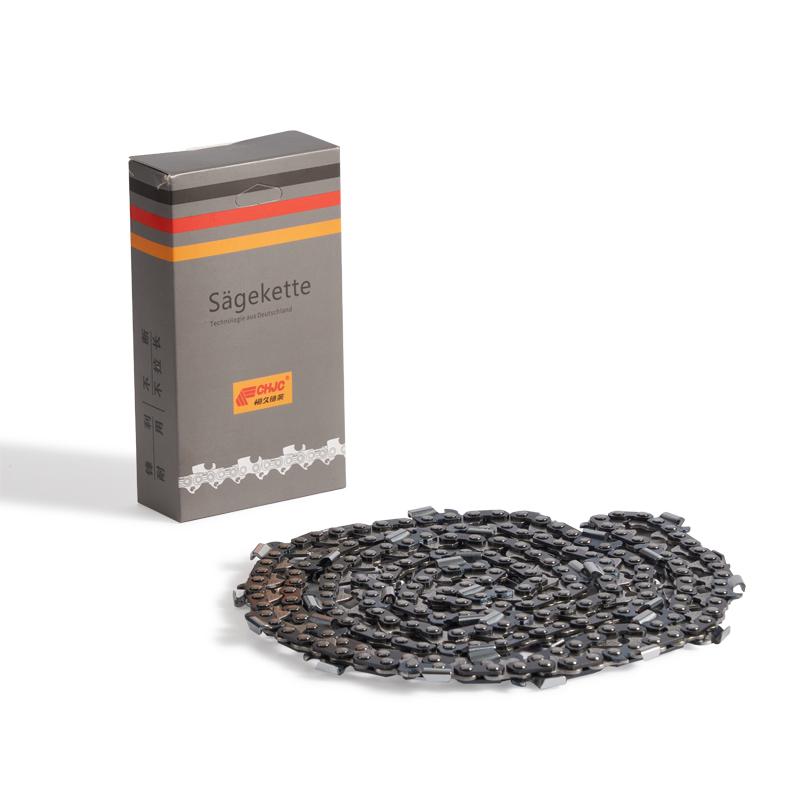 .404" .063" SAW CHAINSpecification PrecautionsView Product →
Ordering Chain the Way a Factory Does
Professional buyers rarely order by bar length. A purchasing spec that reads .325 inch, .050 gauge, 72 DL is unambiguous, and it is exactly the format a chain manufacturer uses to pull, package, and ship a loop. If you are replacing a single chain, measure the three numbers, check the bar stamp, and verify by counting. If you are stocking chains for a crew or building an OEM program, buying directly from a saw chain factory removes the guesswork: the same pitch and gauge series can be produced in different drive-link counts and cutter geometries without changing the bar fit.
Zhejiang Hengjiu Saw Chain Co., Ltd. manufactures saw chain across the full pitch range—1/4, 3/8 LP, .325, 3/8, and .404—with gauges from .043 to .080. Because the factory operates its own chain production lines, custom drive-link counts and cutter configurations are available for volume orders. Sending pitch, gauge, and drive-link count means the loops on the pallet match the number on the spec sheet.
A chainsaw chain is not sized by bar length. It is sized by pitch, by gauge, and by drive-link count. Measure pitch across three rivets, read or measure the tang thickness, and count every drive link on the loop. With those three numbers in hand, you can order a replacement loop anywhere with confidence—from a dealer shelf to a factory container.