English
 中文简体
 русский

Content
- 1 Pitch and Gauge: The Two Dimensions That Physically Lock the Chain
- 2 Bar Length: Cutting Length and Overall Length Are Not the Same Number
- 3 Pitch: Match the Drive Sprocket and the Nose Sprocket
- 4 Gauge: Where Misfits and Premature Wear Come From
- 5 Drive-Link Count: Why Two 20-Inch Bars Take Different Chains
- 6 Mount Pattern: The Fit Dimension Nobody Lists
- 7 Nose Sprocket, Rail Width and Groove Depth
- 8 A Verification Checklist Before the Order Goes Out
A 20-inch bar, .325 pitch, .058 gauge — every number on the box looks right, and the chain still will not sit down in the groove. On most saws the three figures buyers check are only half of the specification. Length, pitch and gauge narrow the field; the drive-link count, the tail profile and the nose sprocket decide whether the assembly bolts on, oils properly and cuts straight.
For a replacement bar or a production order, match in this order: pitch, gauge, drive-link count, mount pattern, then length. Length is what customers ask about, and it is the dimension that matters least to fit — a 16-inch and a 20-inch bar of the same mount are interchangeable. A bar whose groove is 0.005 in too narrow for the chain is scrap, however good the length looks on paper.
What follows covers how each chainsaw bar dimension is measured, where tolerances really go wrong in the field, and what belongs on a purchase specification so the bar and chain arrive as a matched set.
Pitch and Gauge: The Two Dimensions That Physically Lock the Chain
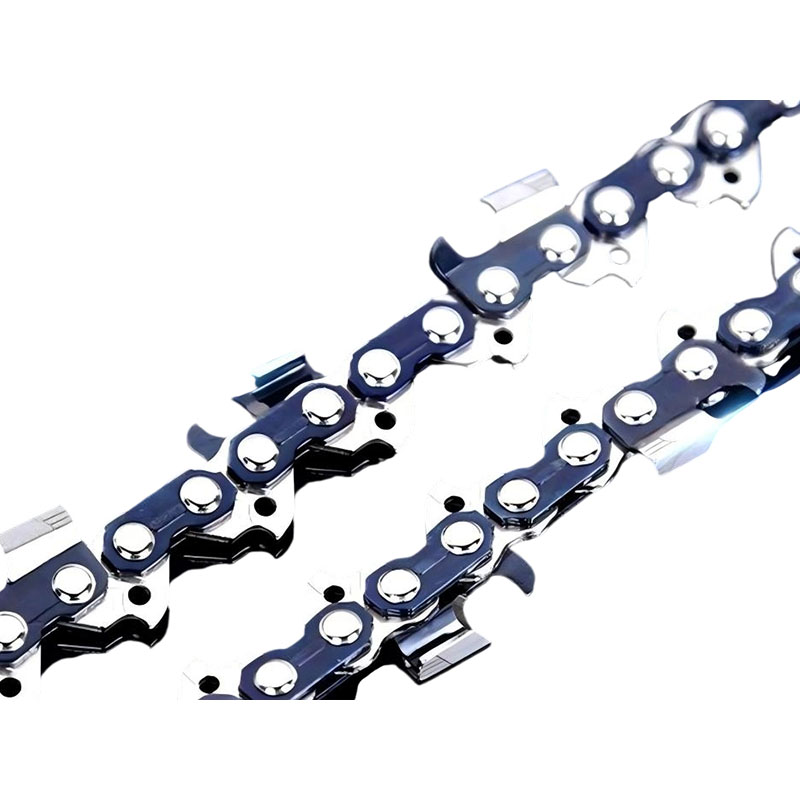
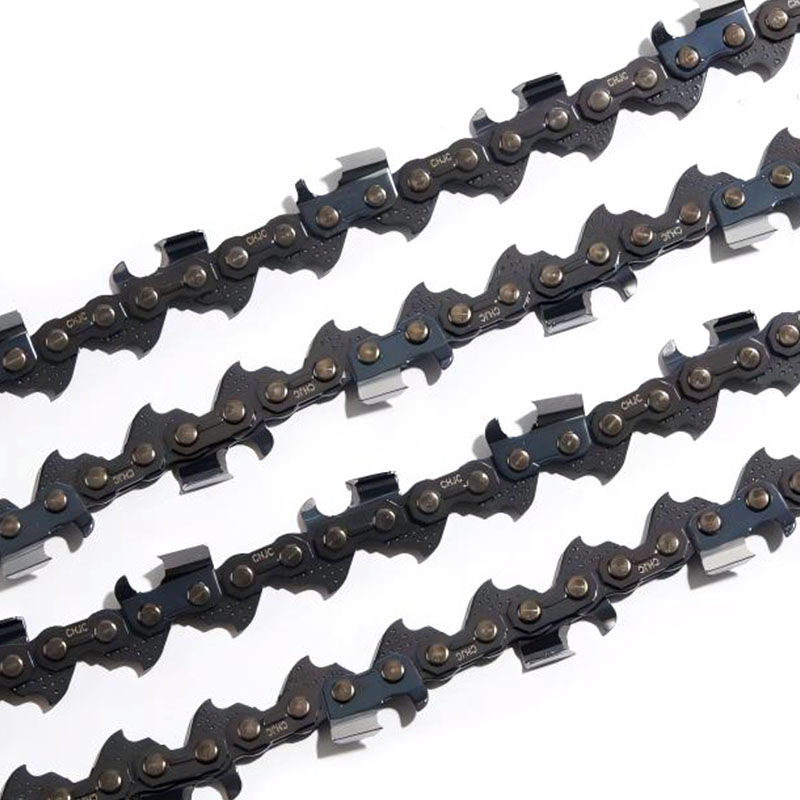
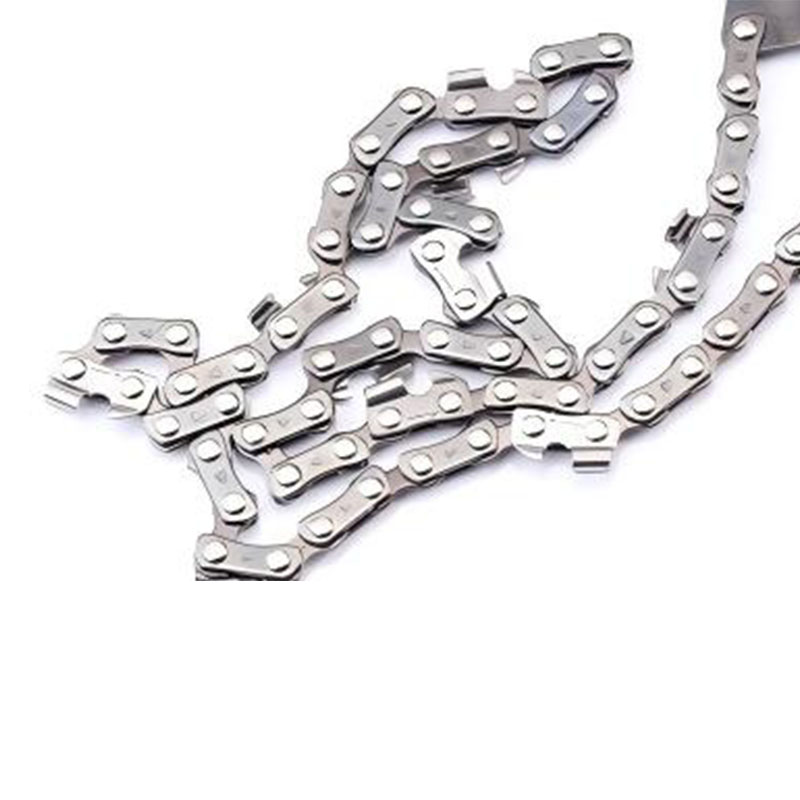
Pitch and gauge do the real work. Pitch is the distance across any three consecutive rivets, divided by two, expressed in inches: a .325 chain measures 0.650 in across three rivets, a 3/8 chain measures 0.750 in. Gauge is the thickness of the drive link where it rides in the bar groove, written in thousandths of an inch — .043, .050, .058, .063, .080.
The two are independent. A .325 bar is sold in .050, .058 and .063 gauge, and each gauge appears in 15-, 18- and 20-inch lengths. That is why "I need a .325 bar" is not a usable order line: it describes roughly a third of a catalogue.
| Pitch | Common gauges | Typical bar lengths | Where it is used |
|---|---|---|---|
| 1/4 in | .043, .050 | 6–12 in | Top-handle saws, pole saws, carving bars |
| 3/8 in LP | .043, .050 | 12–20 in | Arborist and homeowner saws, roughly 35–55 cc |
| .325 in | .043 (LP), .050, .058, .063 | 15–24 in | Mid-size professional saws, roughly 45–65 cc |
| 3/8 in | .050, .058, .063 | 18–36 in | Full-size felling saws, roughly 60–90 cc |
| .404 in | .063, .080 | 24–60 in | Harvester heads and large felling saws |
The table is a starting point, not a rule. The same pitch and gauge combination can be built with different cutter geometry, so a bar has to match the chain family as well as its thickness.
Bar Length: Cutting Length and Overall Length Are Not the Same Number
Bar length is normally quoted as cutting length — from the tip of the nose to the point where the bar enters the saw body. The physical bar is longer, usually by 2 to 4 inches, because the tail section carrying the studs and oiler hole sits inside the crankcase. When a customer measures a bar on the bench and reports 22 inches, they are usually quoting overall length for a bar sold as 18 or 20.
Length is also the one dimension that can be changed freely inside a mount family, which is exactly why it gets over-specified. A longer bar leaves more cutters in the wood at once: more load on the engine, more heat in the rails, more chance of the chain wandering on a worn groove. As general workshop guidance, 16 to 20 inches suits a 50 cc saw, 20 to 24 inches a 60 cc saw, and 28 inches and above is 3/8 or .404 territory on 80 cc and up.
Pitch: Match the Drive Sprocket and the Nose Sprocket
Pitch has to be identical at both ends of the bar. The drive sprocket on the saw and the nose sprocket in the bar tip are each cut for one pitch, and a chain one size off will climb the sprocket teeth under load or wear them into a hook within a few tanks of fuel.
Measure a used chain with care — a stretched loop reads long against a caliper, which is one reason chain is specified from the bar stamp and the saw sprocket rather than from a worn chain. Where low-profile and standard chain share the same 3/8 pitch they are still not interchangeable: LP chain has shorter cutters and a smaller nose radius, and running it on a standard bar overloads the nose sprocket. Our comparison of low-profile versus standard saw chain covers where that line falls in practice.
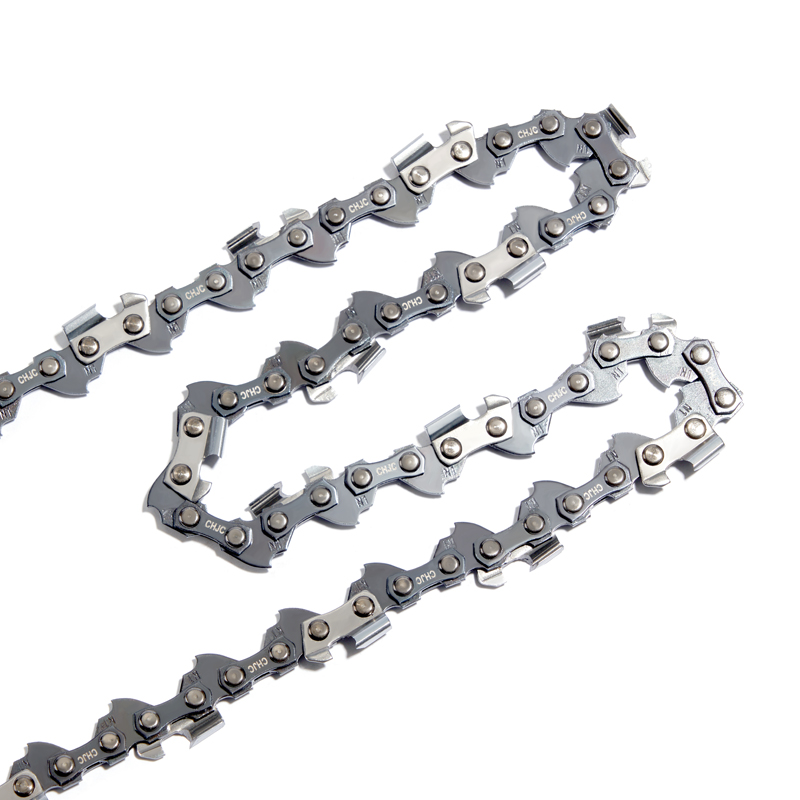
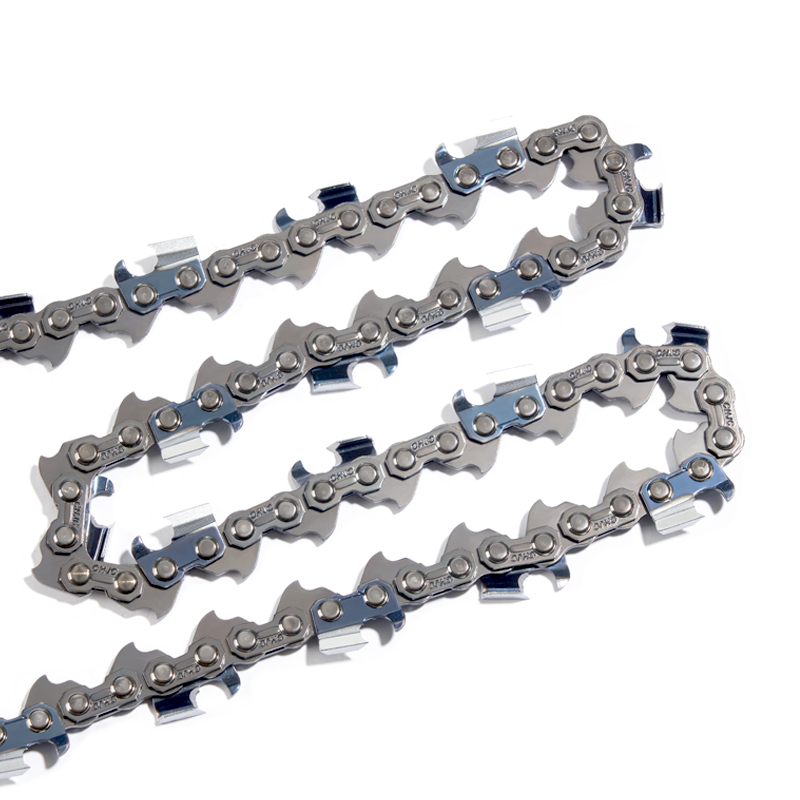
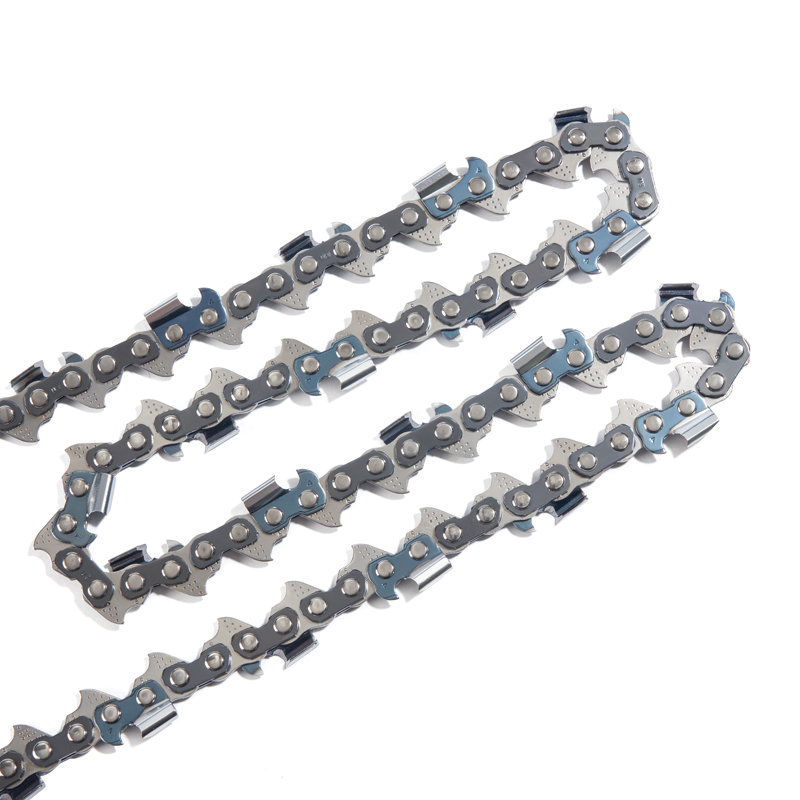
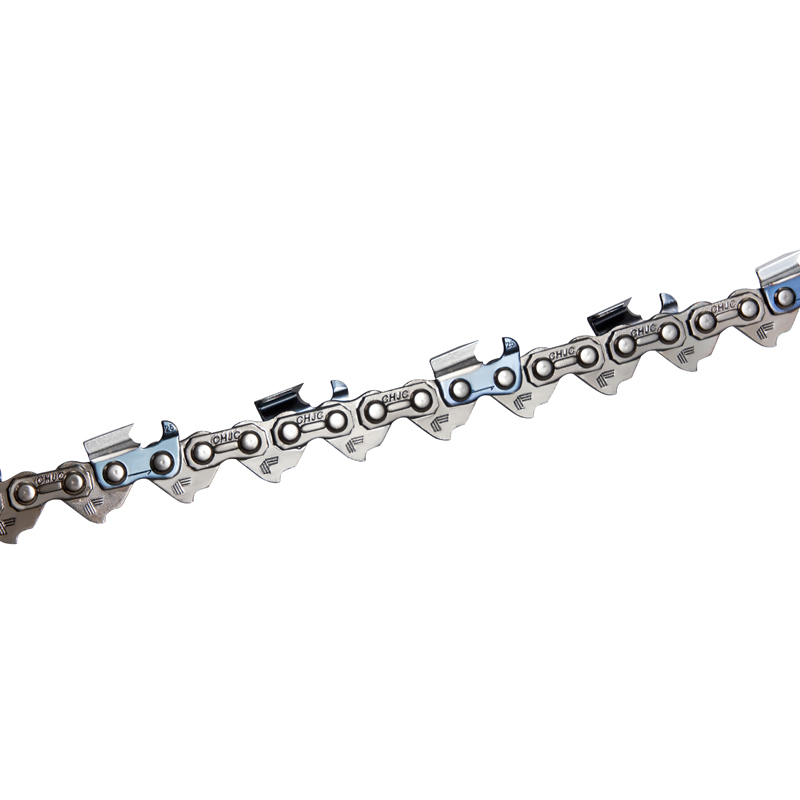 Hengjiu .325-Inch .050-Gauge Professional Saw ChainA .325-inch, .050-gauge professional chain with low-vibration operation and semi- or full-chisel cutters, suited to saws that need narrower kerf than 3/8 at 20 inches.View Product →
The choice between .325 and 3/8 at the same bar length is really about chain speed and kerf width: .325 cuts a narrower kerf and suits engines that cannot pull a full 3/8 load at 20 inches.
Gauge: Where Misfits and Premature Wear Come From
Gauge is a tolerance game. The groove is milled to hold one drive-link thickness with just enough clearance to run and just enough support to keep the chain upright in the cut. Put .050 chain in a .058 groove and the chain rocks sideways, the cutters lean, and the rails wear along one edge. Put .058 chain in a .050 groove and the drive links bind, the bar overheats, and the chain can climb out of the groove in a long cut.
Wear pushes the groove the same way as a wrong-gauge chain. A bar with a few hundred hours on it will have opened measurably, and a .050 chain that once fitted snugly starts to feel loose. Many workshops treat a groove that has opened noticeably beyond nominal gauge as worn out, because dressing the rails straightens them but cannot narrow the groove.
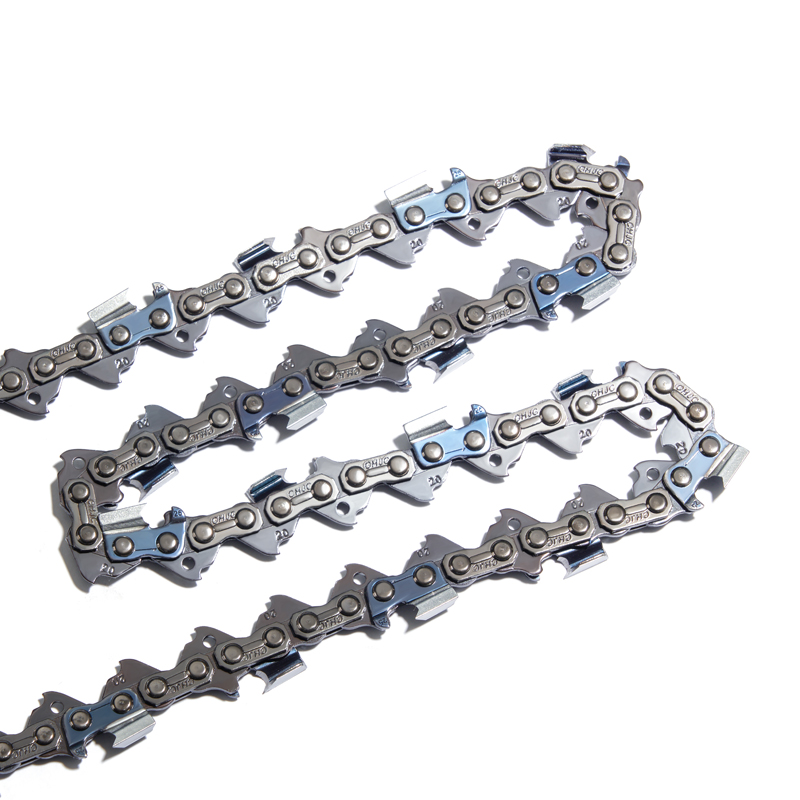
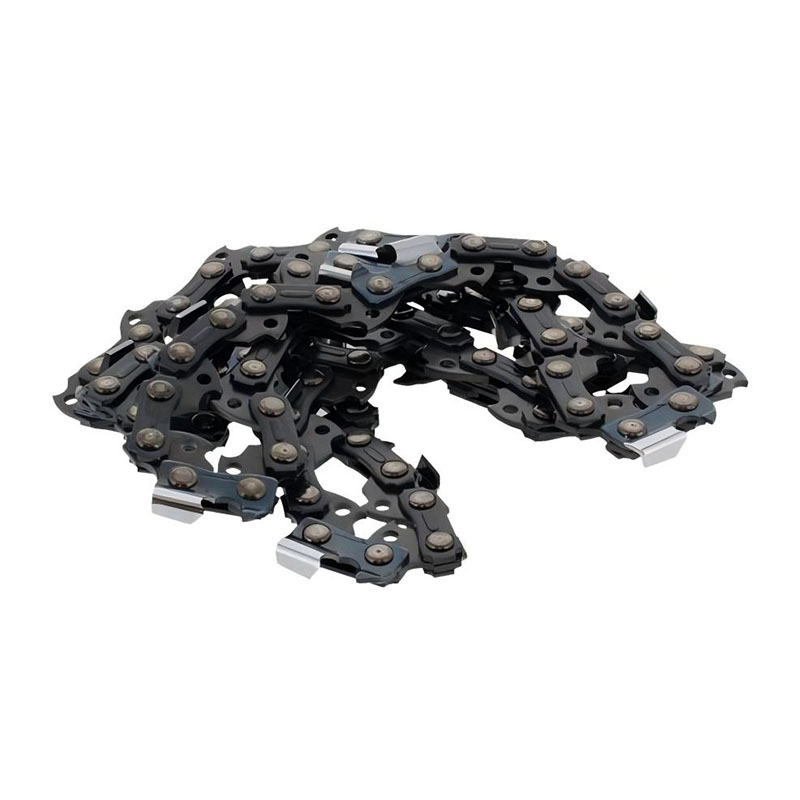
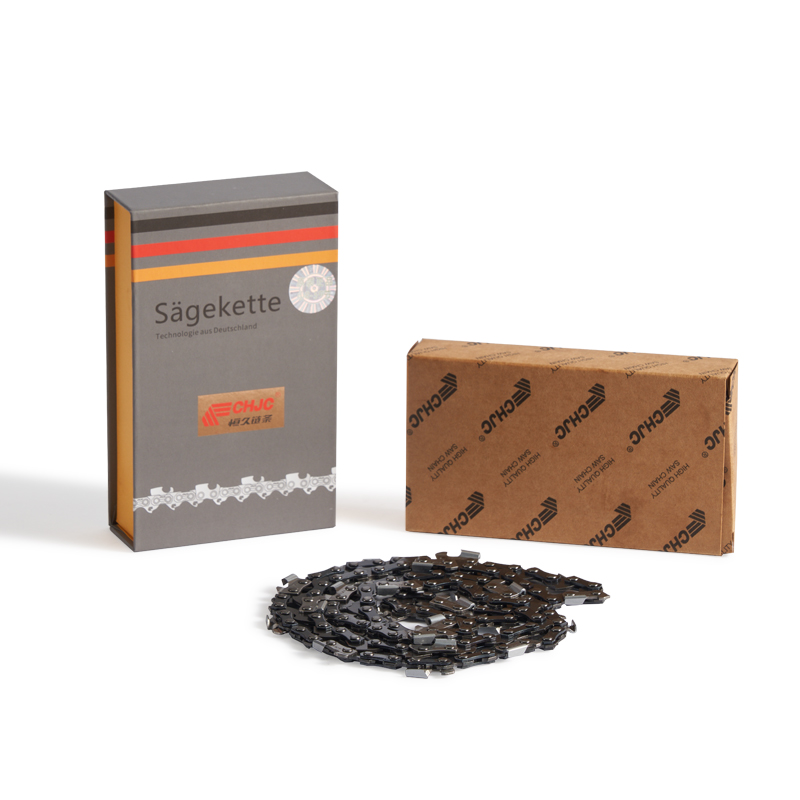 Hengjiu 3/8-Inch LP .050-Gauge Low-Profile Saw ChainA low-profile .050-gauge chain for homeowners and orchardists using lightweight or electric saws, available with semi-chisel or full-chisel cutters for trimming and felling.View Product →
For buyers handling several families at once, gauge is the most common source of shipping errors: .325 and 3/8 loops sit in near-identical boxes, and only the gauge line on the label separates them.
Drive-Link Count: Why Two 20-Inch Bars Take Different Chains
The number stamped near the bar tail is the drive-link count, and it is the only reliable way to order a loop. Two bars with the same length, pitch and gauge can take 72 and 76 links, because the nose sprocket tooth count, the bar tail length and the mount pattern all change the length of the path the chain travels.
Fit the wrong count and the problem is immediate: too short and the chain will not close, too long and the tensioner runs out of travel with the chain still sagging. Loops are sold against that number, not against bar length — "20-inch .325 .058" is not a chain specification; "20-inch .325 .058, 78 drive links" is.
Mount Pattern: The Fit Dimension Nobody Lists
A bar with the correct length, pitch, gauge and link count can still refuse to sit on the saw. The mount pattern is defined by five features: the width of the tail slot, the bar-stud spacing, the position and diameter of the oiler hole, the tensioner hole, and the shape of the tail itself. Saws with the same stud spacing often differ in oiler position, so a bar that bolts up may run dry.
This is where catalogue cross-referencing fails most often in bulk purchasing. Two saws sold in the same market, with the same displacement and the same bar length, may take different tail profiles. When a specification is written for a production run, the mount should be identified by drawing or sample, not by the saw model name alone.
Nose Sprocket, Rail Width and Groove Depth
The nose sprocket tooth count sets chain speed against engine torque. Seven teeth is the common balance point; eight or nine raise chain speed for a given drive sprocket but ask more of the engine in hard wood. The nose sprocket pitch must match the chain, and a sprocket nose needs grease — a dry nose is a frequent cause of a bar that runs hot at the tip while the rest of the bar stays cool.
Two smaller figures are worth writing into a specification. Rail width is the running surface the cutters travel on; as it wears, the chain sits lower and the effective depth-gauge setting changes. Groove depth limits how much drive link is supported, and a chain with unusually tall drive links will bottom out in a shallow groove instead of sitting on the rails. Both are measurable with a straight edge and a depth gauge, which makes them practical incoming checks for a buyer receiving bars from more than one source.
A Verification Checklist Before the Order Goes Out
Five lines on a purchase order remove almost every fit failure:
- Pitch written as a decimal — .325, .375 (3/8), .404 — with LP flagged where the bar uses a low-profile nose.
- Gauge in thousandths (.043, .050, .058, .063, .080), never described simply as "standard".
- Drive-link count from the bar stamp, plus the loop count of the chain being replaced.
- Mount pattern — tail slot width, stud spacing, oiler and tensioner hole positions — confirmed by drawing or sample.
- Cutting length, and a note on whether the customer quotes cutting or overall length.
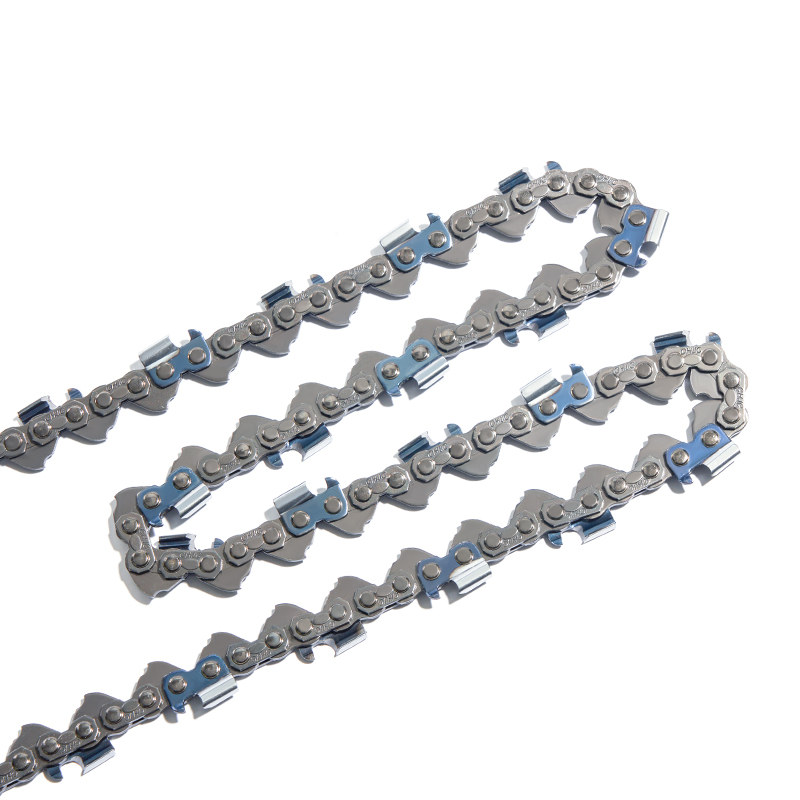
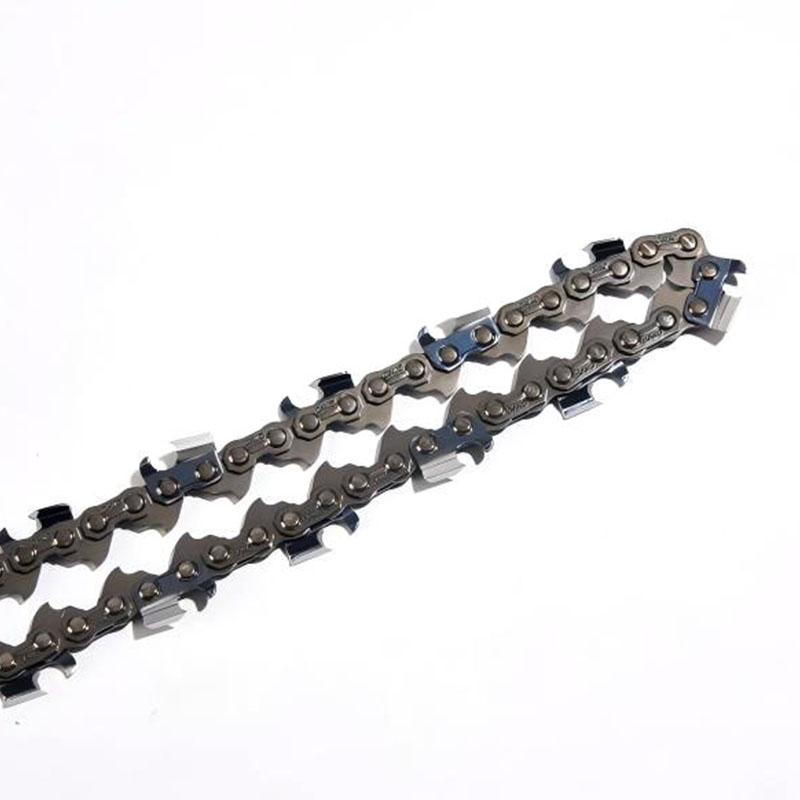
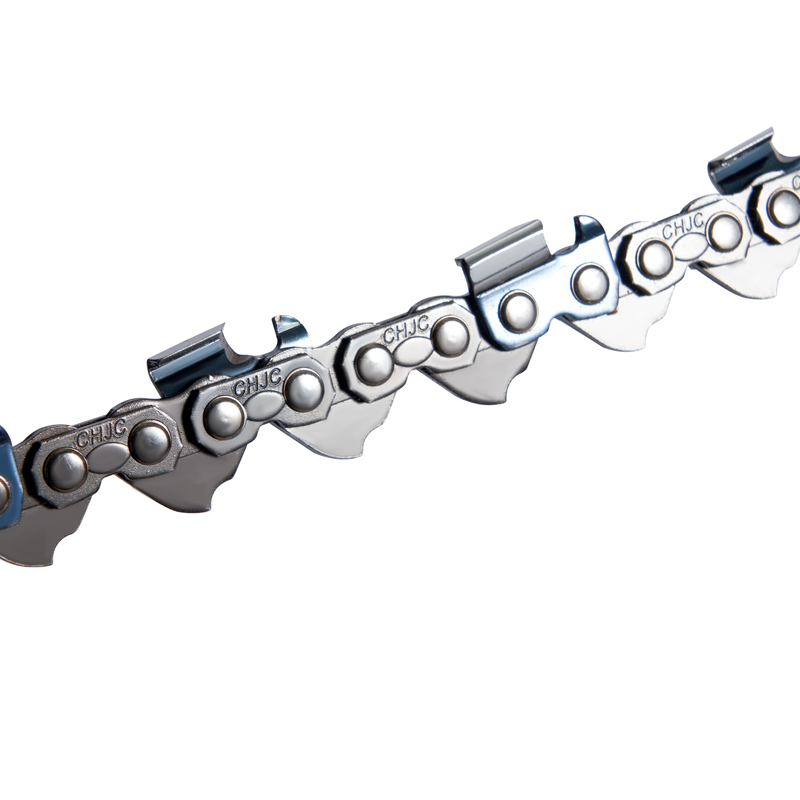 Hengjiu .404-Inch .080-Gauge Harvester Saw ChainA heavy-duty .404-inch, .080-gauge harvester chain with semi-chisel cutters and strengthened chassis, built for continuous mechanical logging and high-stress felling work.View Product →
For harvester and heavy felling work the gauge is usually fixed by the machine head, so the specification should carry the original loop count as well as the bar stamp.
Chainsaw bar dimensions are a chain of dependencies, not a single measurement. Pitch and gauge decide whether the chain can run at all, drive-link count decides whether the loop fits the bar, mount pattern decides whether the bar fits the saw, and length is the variable that can be chosen freely once the other four are settled.
For buyers sourcing in volume, the practical consequence is that bar and chain should be specified and supplied as a set. Zhejiang Hengjiu Saw Chain Co., Ltd. builds saw chain across the 1/4, 3/8 LP, .325, 3/8 and .404 pitch families in the gauges above, and matches loops to a stated drive-link count rather than to a nominal bar length. Send the bar stamp, the mount and the loop count, and the specification stops being a guess — the current series are listed in the saw chain range.