English
 中文简体
 русский

Content
- 1 Three Numbers Decide Whether a Loop Fits
- 2 Pitch: Measured Over Three Rivets, Divided by Two
- 3 Gauge: Thin Metal, Tight Tolerances
- 4 Pitch and Gauge Pairings You Will Actually Meet
- 5 Reading the Bar Stamp Before Anything Else
- 6 Where Purchase Errors Come From
- 7 Writing a Specification a Supplier Can Quote From
A conversation that repeats at almost every saw shop counter: a customer asks for a 3/8 inch chain for a 50 cc saw, the box arrives, and the chain will not settle into the bar groove. The pitch is right. The gauge is wrong — a .043 inch low-profile drive link offered for a bar cut to .050 inch.
Pitch and gauge are independent specifications. Pitch must match the sprocket at the clutch and at the bar nose; gauge must match the width of the bar groove. A chain that satisfies one and not the other is the wrong chain, and no amount of tension adjustment, filing or patience will change that. Both numbers are stamped on the bar, which makes the bar the fastest place to start any conversation.
What follows covers how each dimension is defined, how to measure it with a caliper or a tape, which combinations show up on real saws, and where most ordering errors originate.
Three Numbers Decide Whether a Loop Fits
Pitch, gauge and drive link count settle the fit before cutter style, bar length or price become relevant. Pitch and gauge are the two that make a chain physically incompatible with the saw; drive link count determines whether the loop is the right length for the bar.
- Pitch — the spacing that has to match the drive sprocket and the nose sprocket.
- Gauge — the drive link thickness that has to match the bar groove.
- Drive link count — the number of drive links in the loop, tied to bar length and the bar's mounting pattern.
When pitch is wrong the chain climbs, binds or jumps the sprocket. When gauge is wrong it either refuses to enter the groove or sits loose and rocks sideways. Both failures show up within the first minute of running, which is at least a cheap way to learn.
Pitch: Measured Over Three Rivets, Divided by Two
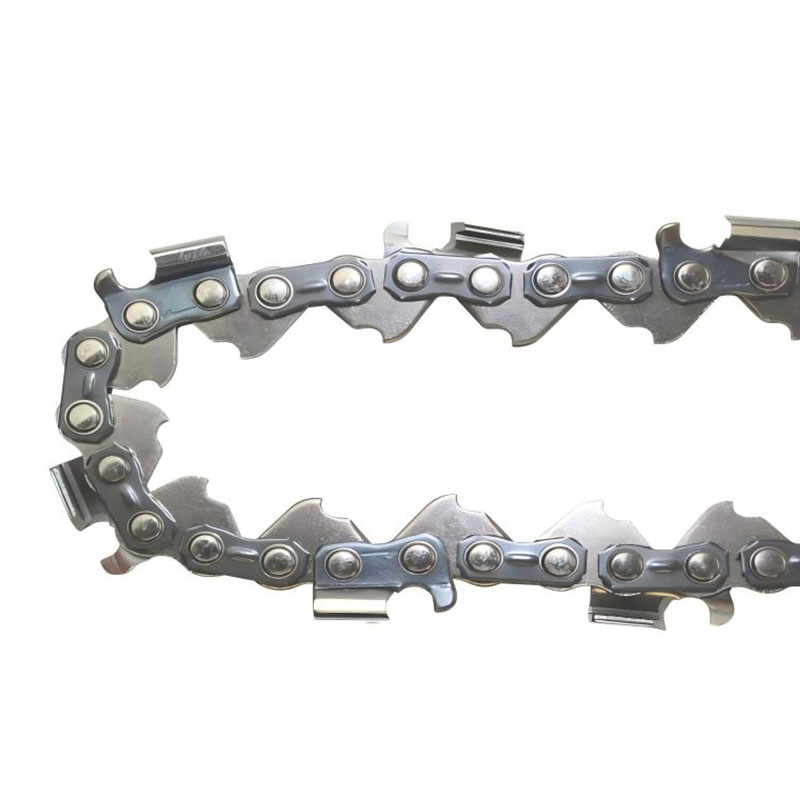
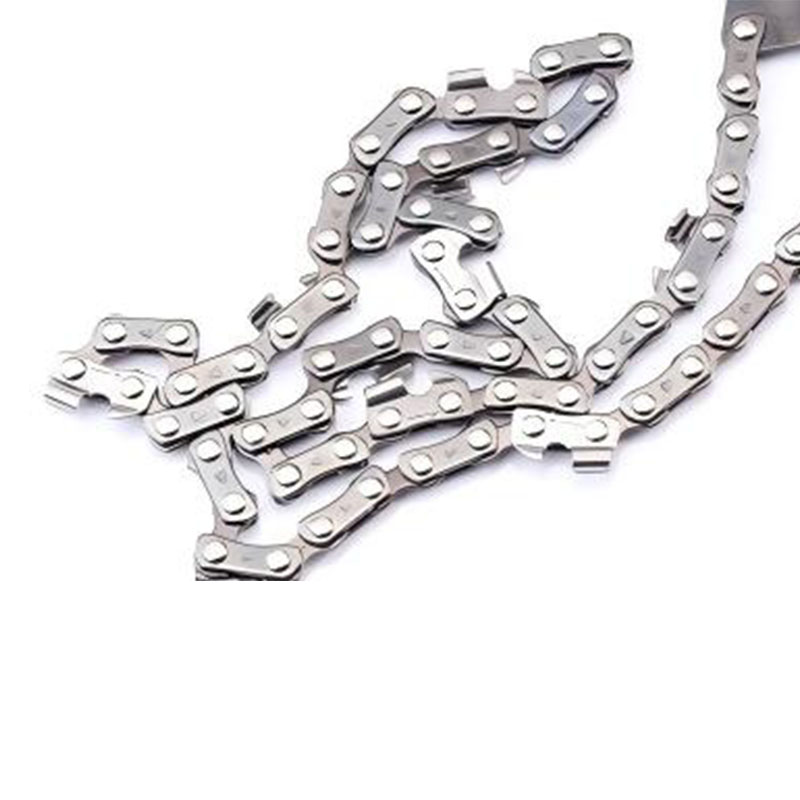
Pitch is taken across three consecutive rivets and divided by two. That returns the distance from one drive link to the next, which is the same dimension as the sprocket the chain runs on. Halving a three-rivet span is the standard field method because a single rivet spacing is too small to read reliably with a tape measure.
The fractional names printed on chain boxes are nominal, not exact. 3/8 inch low-profile chain does not measure 0.375 inch between drive links — it sits closer to 0.365 inch, which is why it needs its own sprocket and cannot be substituted for standard 3/8 inch chain despite identical wording on the label. Treating those two as one item is among the most frequent causes of returns in the category.
Measuring pitch on a loose loop
- Lay the chain flat and pull out the slack; a stretched or damaged loop measures long and misleads.
- Mark the center of one rivet, count to the third rivet, and mark its center.
- Measure center to center and divide by two.
- Compare the result: 0.125 inch is 1/4, 0.1625 inch is .325, 0.1825 inch is 3/8 low profile, 0.1875 inch is 3/8, and 0.202 inch is .404.
Low-profile 3/8 chain exists for a reason. On saws in the 30 to 50 cc class, a narrower kerf and a lighter loop keep the engine inside its power band and reduce the stored energy behind a kickback, which matters more to a farm or firewood user than maximum cutting speed.
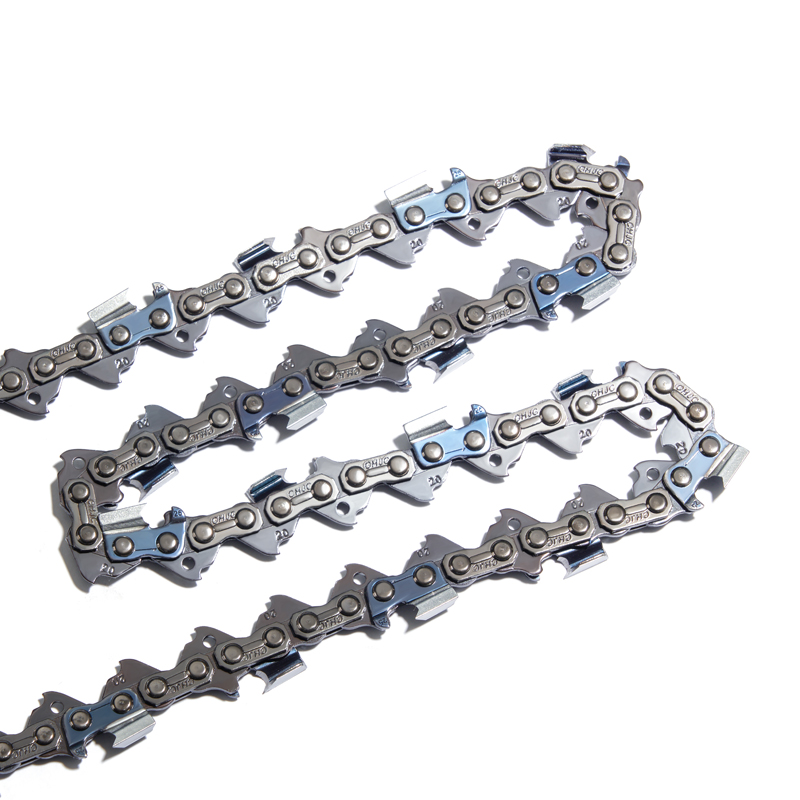
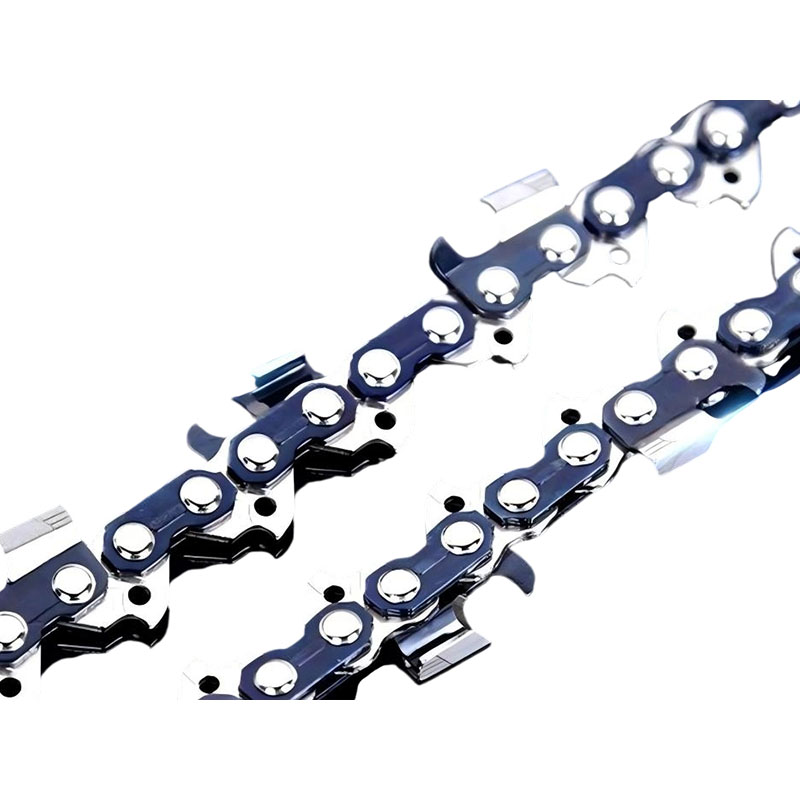
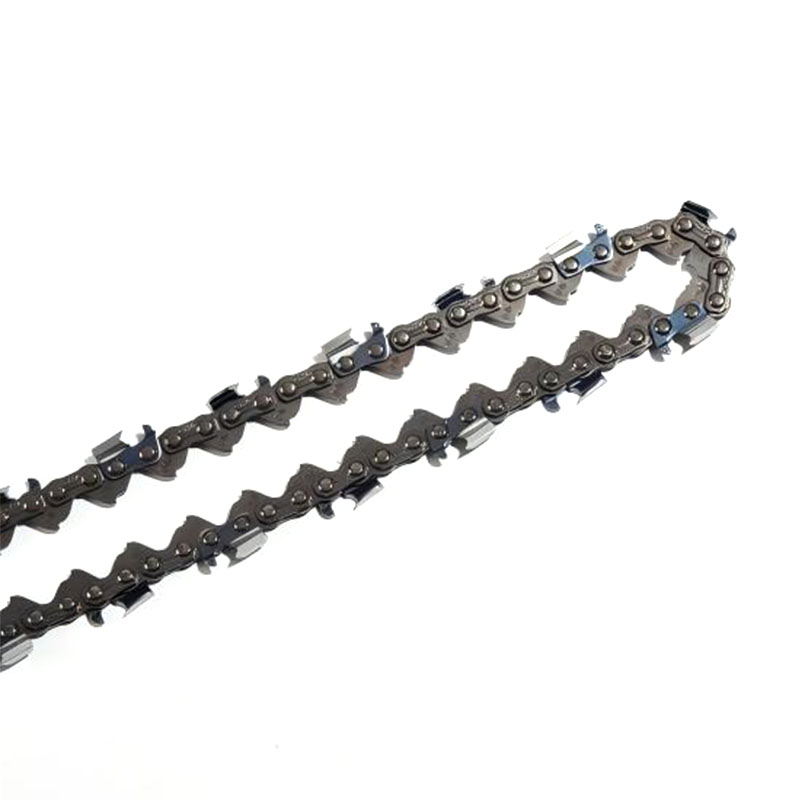
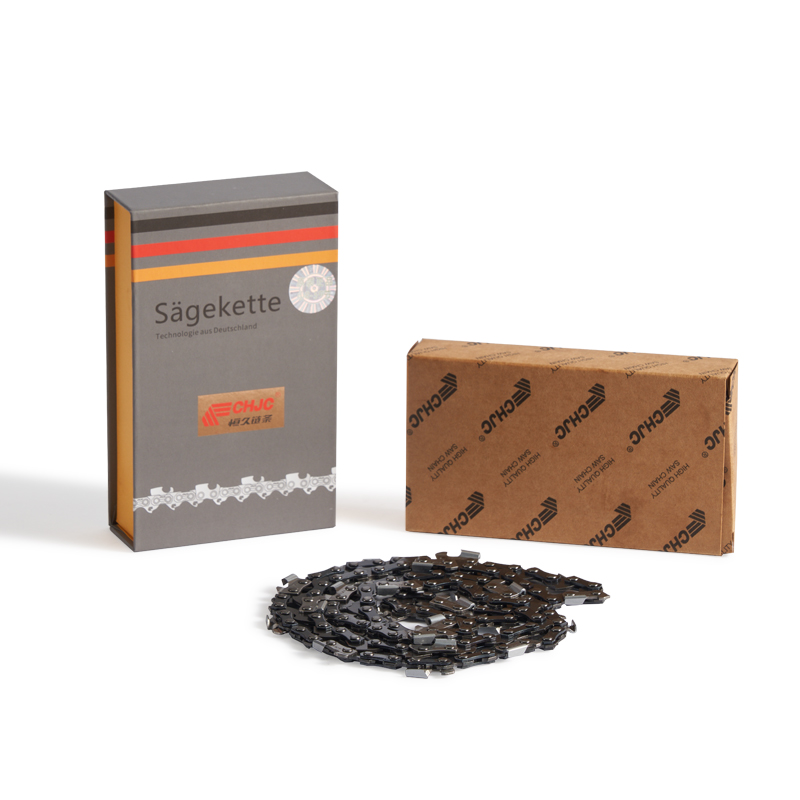 3/8-Inch Low-Profile .050-Gauge Saw ChainA low-profile 3/8-inch, .050-gauge chain for lightweight and homeowner saws, with semi- or full-chisel cutter options and multiple drive-link counts.View Product →
Gauge: Thin Metal, Tight Tolerances
Gauge is the thickness of the drive link at the point where it rides in the bar groove — the tang below the chain body, not the tie strap and not the cutter. Stock gauges run .043, .050, .058, .063 and .080 inch. The full spread from thinnest to thickest is less than one millimetre, which explains why gauge mistakes pass a visual check and only surface once the chain is on the bar under load.
Symptoms of a gauge mismatch
- Too thin: the chain rocks sideways in the groove, cutters lean, the bar wears unevenly and throwing becomes more likely.
- Too thick: drive links will not seat at all, or they seat partway and bind once the bar warms up.
- Worn bar: a groove that has opened past its nominal width lets a correct-gauge chain wobble, and in that case the bar is the part to replace.
Confirm gauge with a caliper on the drive link tang, on a clean link, and on at least three links. A .050 inch chain reading .049 is ordinary manufacturing tolerance; a bar groove that reads .058 when it should be .050 is a worn bar. Sprocket wear follows the same logic — a hooked drive sprocket will wear out a new chain faster than any cutting condition, so replacing the sprocket every two or three chains is inexpensive insurance.
.325 pitch sits in the middle of the range and is the one pitch commonly stocked in three gauges — .050, .058 and .063 — so gauge has to be quoted explicitly rather than inferred from pitch alone.
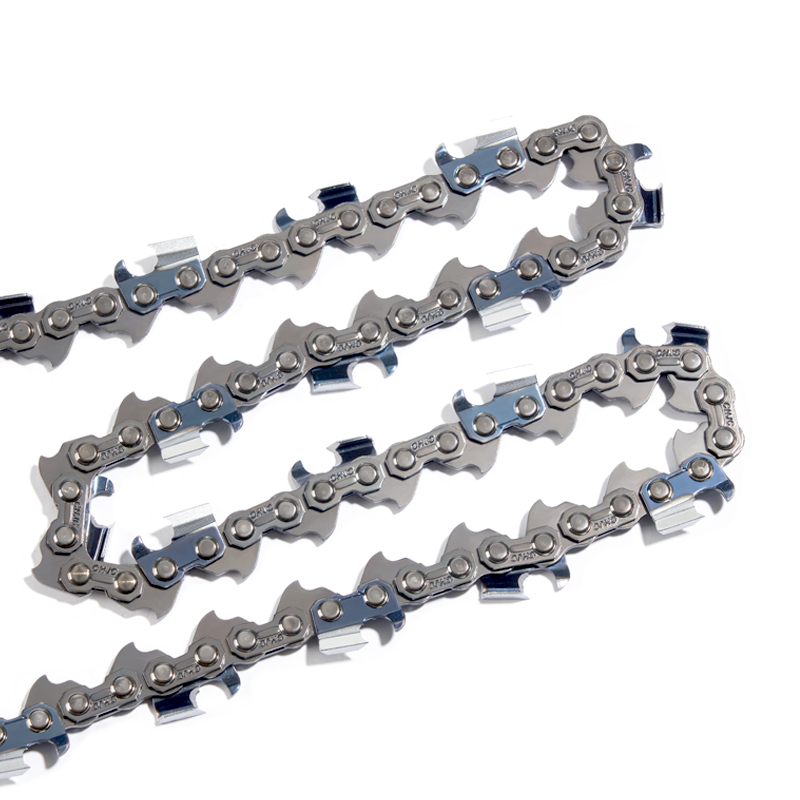
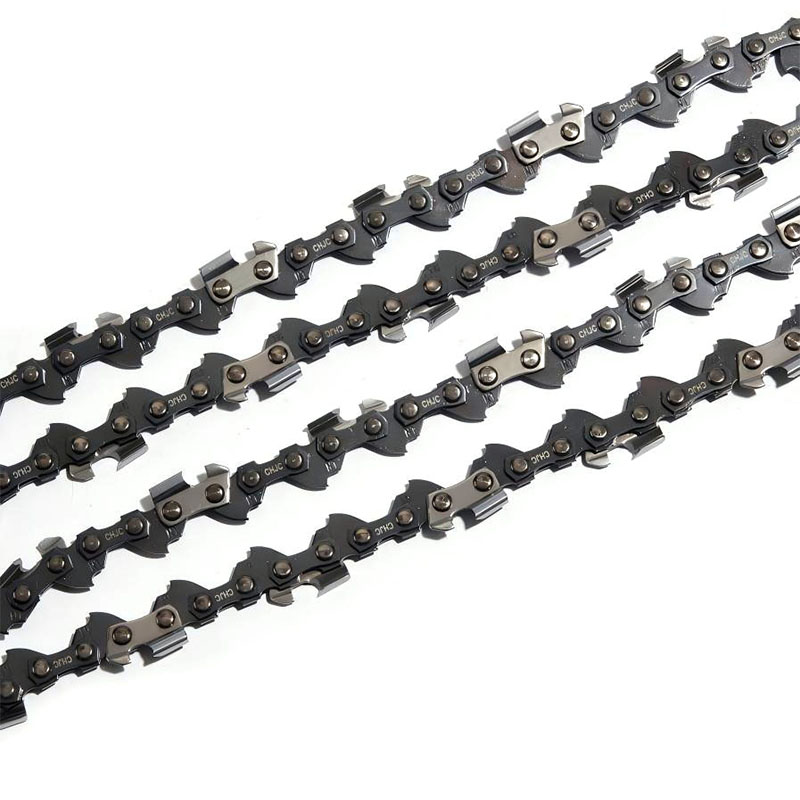
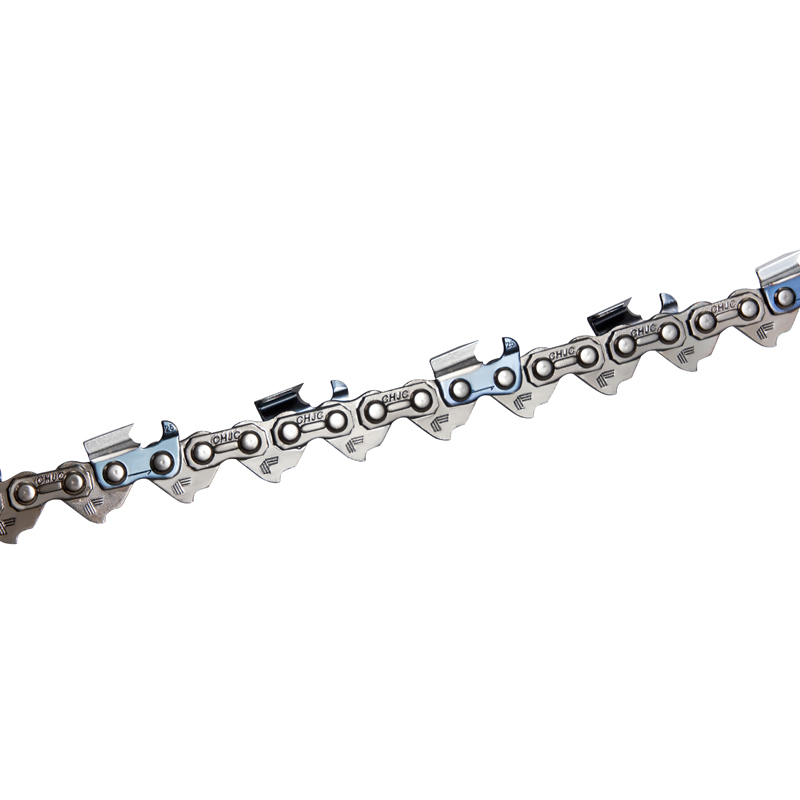 .325-Inch .050-Gauge Professional Saw ChainA .325-inch, .050-gauge chain intended for professional forestry work, with semi- or full-chisel cutters, blued corrosion resistance, and common drive-link counts.View Product →
Pitch and Gauge Pairings You Will Actually Meet
These are the combinations that turn up most often on working saws. The 3/8 inch family alone spans three gauges across different saw classes, which is why the bar stamp outranks any general chart. Within that family, 3/8 inch chains for professional saws are built to different gauge tolerances than the low-profile versions aimed at smaller powerheads.
| Pitch | Common gauges | Typical saw class | Practical note |
|---|---|---|---|
| 1/4 in | .043, .050 | Pole pruners, small top-handle saws | Narrow kerf; low kickback is the priority |
| 3/8 in LP | .043, .050 | 30 to 50 cc farm and homeowner saws | Shares a name with 3/8, not a sprocket |
| .325 in | .050, .058, .063 | 45 to 60 cc mid-range saws | Widest gauge choice; always confirm the bar |
| 3/8 in | .050, .058, .063 | 55 to 90 cc professional saws | Felling and bucking with full-size bars |
| .404 in | .063, .080 | Harvester heads, large saws | .080 is the mechanical lumbering standard |
Reading the Bar Stamp Before Anything Else
Most bars carry a stamp on the tail near the sprocket in a form such as 3/8 050 72. That reads as 3/8 inch pitch, .050 inch gauge and 72 drive links. The same values are usually printed on the chain packaging, in the operator's manual, and on the rim of the spur sprocket.
Two cautions apply. Bars get swapped between powerheads, so a stamp describes the bar rather than the saw, and the sprocket may no longer match a replacement bar. A bar that has been dressed or re-grooved may also have lost its original groove width. When the stamp and the caliper disagree, trust the caliper.
Where Purchase Errors Come From
Most wrong orders trace back to five habits rather than to complicated specifications:
- Ordering by saw model instead of by bar. The same model ships with different bars in different markets.
- Treating 3/8 and 3/8 low profile as a single item. They are separate systems with separate sprockets.
- Fitting a new chain to a worn sprocket, then blaming the chain for early stretch and burred drive links.
- Changing bar length without recalculating the drive link count.
- Placing a bulk order from a verbal spec, where one wrong digit repeats silently across every loop in the shipment.
Shops running light saws face a second layer of choices on top of the numbers, since bar length, saw displacement and cutter style interact differently at that end of the market than they do on full-size felling saws — the selection logic is set out in this guide to choosing the right low-profile saw chain.
Writing a Specification a Supplier Can Quote From
What a supplier needs to quote a loop without a round of emails: pitch, gauge, drive link count, bar length in inches, cutter type (chipper, semi-chisel or full chisel), and either the saw model or a description of the work. Quantity and whether the order is loops or reels close the remaining gaps. A photograph of the bar stamp saves more time than any of it.
Heavy applications narrow the window further. Harvester heads and mechanical lumbering operations run .404 pitch, and the .080 gauge version carries substantially more drive link material than a .325 loop for a handheld saw. A light chain on a harvester head is a false economy measured in downtime, not in purchase price, because the failure happens under load in the field rather than at the bench.
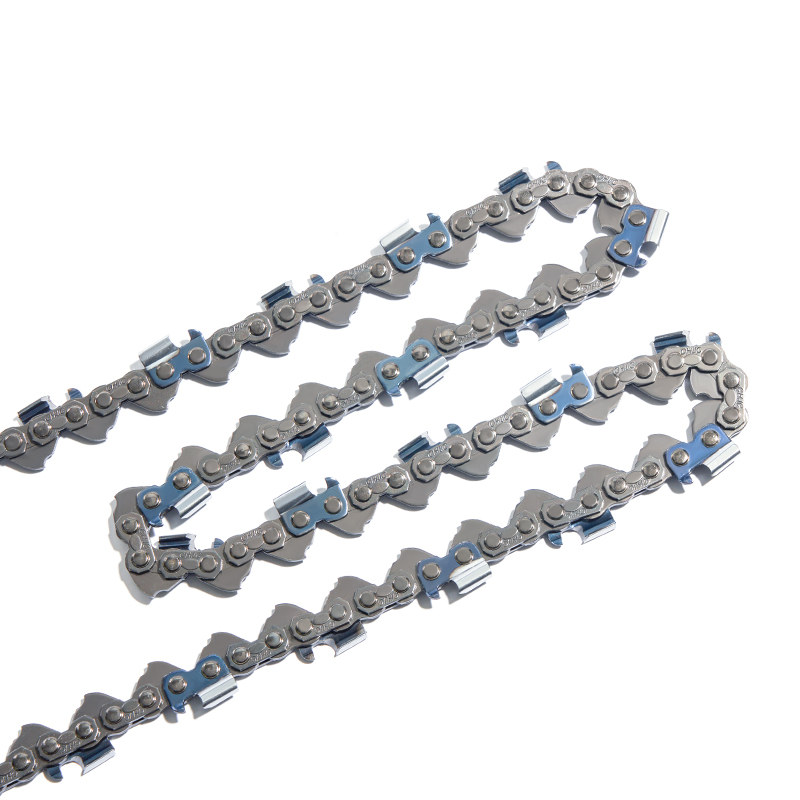
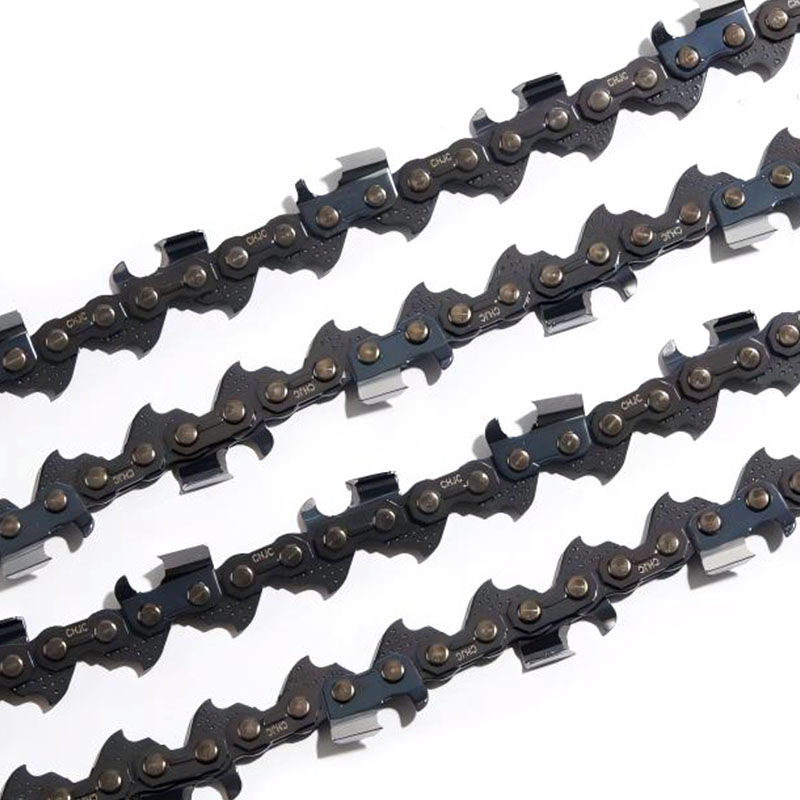
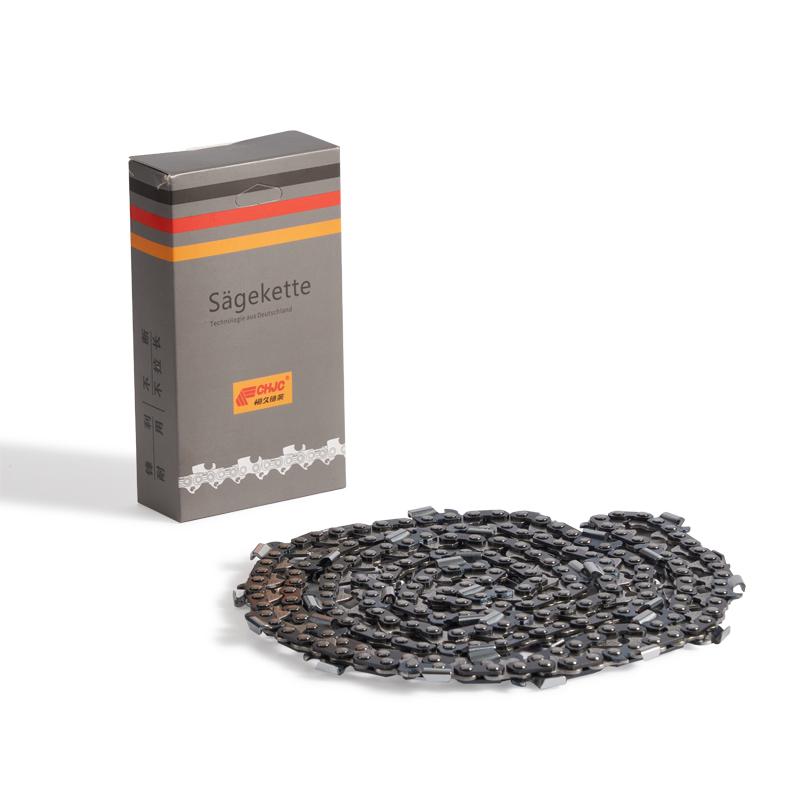 .404-Inch .063-Gauge Big-Timber Saw ChainA .404-inch, .063-gauge chain for larger high-powered saws and big-timber cutting, offered with semi- or full-chisel cutters and blued cutters for corrosion resistance.View Product →
None of this requires special equipment. A tape, a caliper and two minutes at the bar tail cover pitch, gauge and drive link count, and those three readings prevent nearly every mismatch that reaches a workbench. Read the bar first, measure before ordering, and the rest of the specification — cutter geometry, chain type, brand of saw — can be argued about on its merits instead of being re-ordered twice.