English
 中文简体
中文简体
 русский

Content
- 1 Quick Reference: Essential Facts for .404" Saw Chain Operation
- 2 Proper Installation Procedures
- 3 Optimal Tension Settings
- 4 Lubrication Requirements
- 5 Sharpening Techniques and Specifications
- 6 Cleaning Requirements and Procedures
- 7 Troubleshooting: Chain Skipping and Jumping
- 8 Troubleshooting: Unusual Noises and Binding
- 9 Frequently Asked Questions
Quick Reference: Essential Facts for .404" Saw Chain Operation
Before diving into detailed procedures, here are the critical answers to your most pressing .404" saw chain questions:
- Installation: Always install with the engine stopped, brake engaged, and cutters facing forward on the top of the bar.
- Optimal Tension: 0.65–1.0 mm (0.025–0.04") of sag at the center of the bar when cold; the chain should snap back when pulled and released.
- Lubrication: Yes, mandatory—automatic oiler must deliver 8–15 ml per minute at full throttle.
- Sharpening: Use a 7/32" (5.5 mm) round file at 25–35° angle, depending on wood type; depth gauge height is 0.65 mm (0.026").
- Cleaning: Required after every 2–3 hours of use to prevent resin buildup and premature wear.
- Skipping/Jumping: 90% caused by improper tension or worn drive sprocket/bar rails.
- Noises/Binding: Indicates inadequate lubrication, dull cutters, or bar rail damage.
Proper Installation Procedures
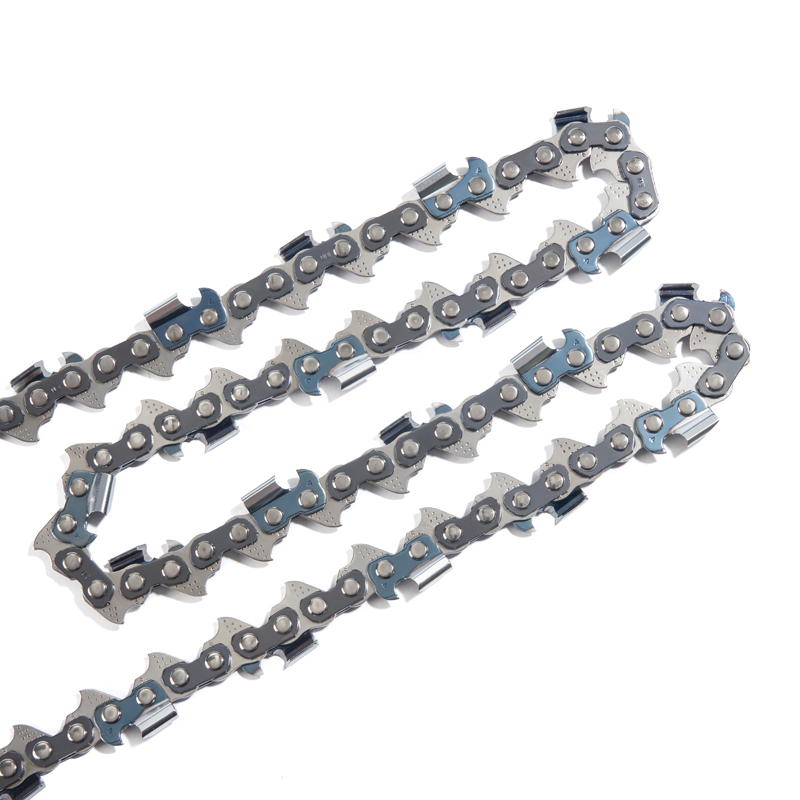
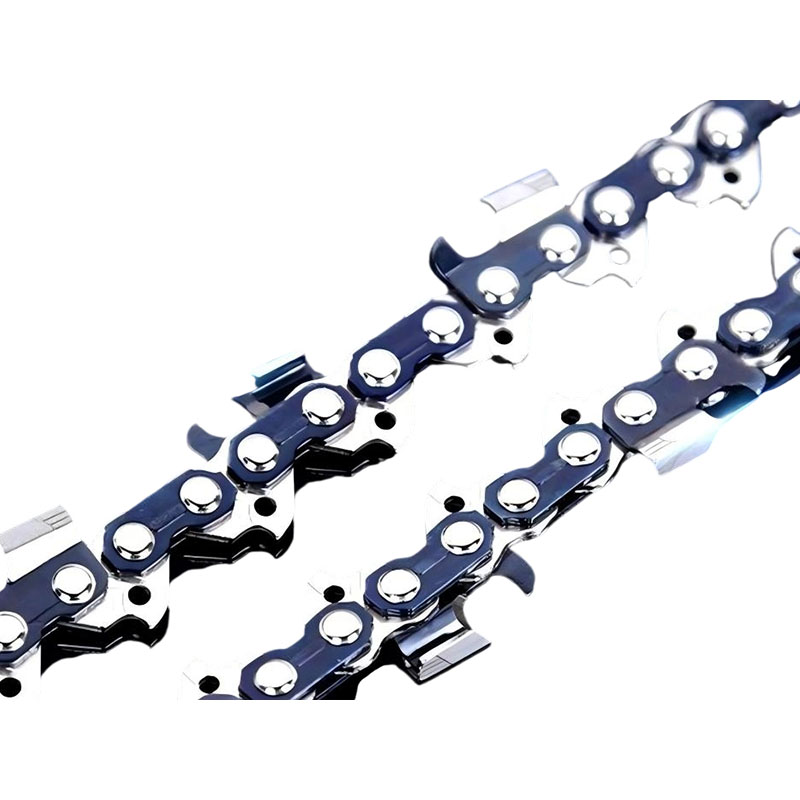
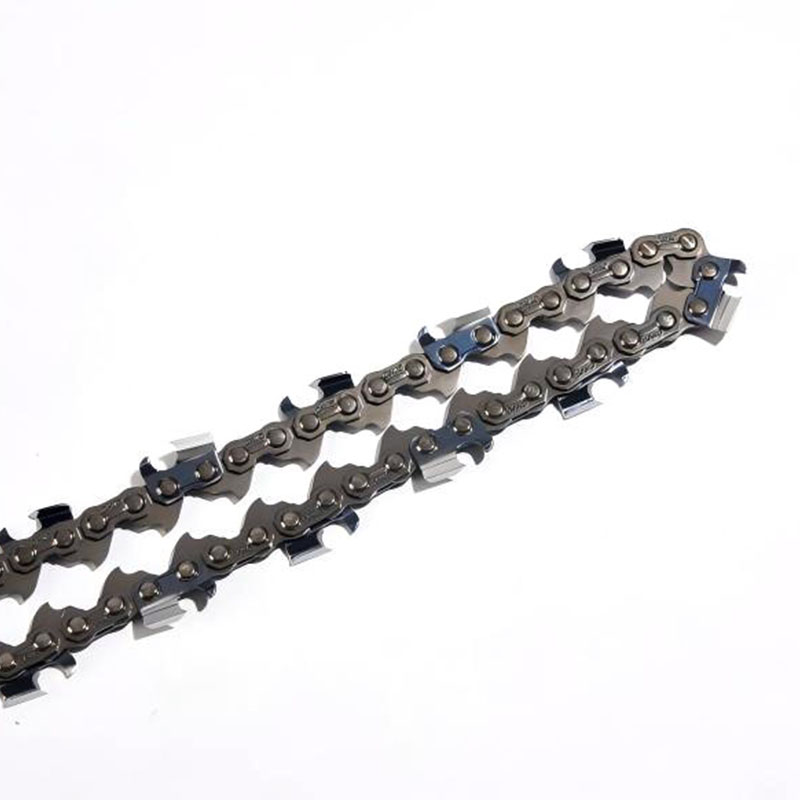
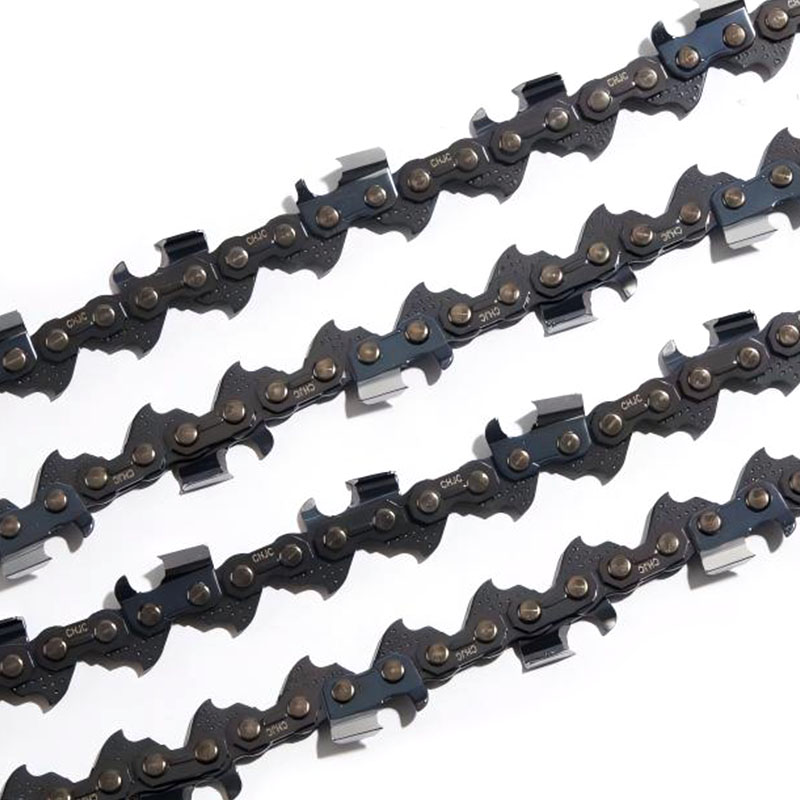
Correct installation is the foundation of safe and efficient chainsaw operation. A .404" pitch chain requires precise alignment with the drive sprocket and bar groove.
Step-by-Step Installation
- Safety First: Ensure the engine is stopped, the chain brake is engaged, and the spark plug is disconnected.
- Bar Positioning: Mount the guide bar onto the studs with the adjustment pin engaged in the bar hole.
- Chain Orientation: Place the chain over the sprocket with cutters facing forward on the top edge of the bar. The .404" drive links must seat fully into the bar groove.
- Tension Adjustment: Turn the tensioning screw until the chain sits snugly against the bar with the specified sag (see Tension section).
- Nut Tightening: Tighten bar nuts to 15–20 Nm (11–15 ft-lbs) while holding the bar nose up to ensure proper seating.
Critical Installation Checkpoints
| Checkpoint | Acceptable Standard | Consequence of Error |
|---|---|---|
| Drive Link Engagement | 100% seated in bar groove | Chain derailment, bar damage |
| Cutter Direction | Forward on top, backward on bottom | No cutting ability |
| Sprocket Alignment | Drive tangs fully engaged | Accelerated sprocket wear |
| Bar Nut Torque | 15–20 Nm (11–15 ft-lbs) | Loose bar, inconsistent tension |
Optimal Tension Settings
Chain tension is the single most critical factor affecting both performance and safety. A .404" chain operates under extreme loads and requires precise tension management.
The "Snap Test" Method
The industry-standard verification involves pulling the chain away from the bar at the center point:
- Cold Chain: 0.65–1.0 mm (0.025–0.04") of clearance between chain drive links and bar
- Warm Chain: Should not sag below the bar edge when the engine is stopped
- Pull Test: The chain should rotate freely by hand but snap back into the bar groove when pulled and released
Temperature Compensation
Metal expansion significantly affects tension:
| Operating Condition | Cold Setting | Hot Setting | Adjustment Frequency |
|---|---|---|---|
| Professional Logging | 0.65 mm | Just touching the bar | Every 30 minutes |
| Firewood Cutting | 0.8 mm | Minimal sag | Every hour |
| Milling Operations | 1.0 mm | 0.5 mm clearance | Every 20 minutes |
Critical Warning: Overtightened chains cause rapid bar rail wear and bearing failure. Undertightened chains derail and damage the drive sprocket. Never adjust tension immediately after stopping a hot saw—wait 5–10 minutes for cooling.
Lubrication Requirements
Yes, continuous lubrication is absolutely mandatory. A .404" chain without oil will seize within 30–60 seconds of operation, causing permanent damage to the bar, chain, and engine.
Oil Flow Specifications
- Minimum Flow Rate: 8 ml/minute at operating RPM (6,000–8,000 RPM)
- Optimal Flow Rate: 12–15 ml/minute for hardwood or dusty conditions
- Oil Type: SAE 30 bar and chain oil (summer) or SAE 10 (winter); never use used motor oil
Verification Methods
Test oiler function before each use:
- Point the bar tip at a clean surface (cardboard or wood)
- Run the saw at half throttle for 30 seconds
- A visible oil line should appear on the surface
- If no oil appears, check tank level, filter, and pump function immediately
Consumption Rate: Expect to refill the oil tank every 1.5–2 tanks of fuel. If you're not using oil at this rate, your lubrication system is inadequate.
Sharpening Techniques and Specifications
A sharp .404" chain cuts 3–4 times faster than a dull one and reduces operator fatigue by 50%. Regular maintenance extends chain life to 5–10 sharpenings before replacement.
File Specifications
| Parameter | Standard Value | Application |
|---|---|---|
| File Diameter | 7/32" (5.5 mm) | All .404" chains |
| Top Plate Angle | 25–35° | 25° softwood, 35° hardwood |
| Side Plate Angle | 85° | Consistent across types |
| Depth Gauge Height | 0.65 mm (0.026") | Standard clearance |
| File Strokes per Tooth | 3–5 strokes | Maintain equal pressure |
Sharpening Procedure
- Secure the Bar: Use a vise with soft jaws or a filing vice; do not clamp the chain
- Mark Starting Point: Use a marker on the first tooth to track progress
- File Position: Place file at 25–35° to the bar, with 20% of the file diameter above the cutter top plate
- Stroke Technique: Push forward with light pressure; lift the file on the return stroke. Use 3–5 strokes per tooth
- Depth Gauge Adjustment: After every 3–4 sharpenings, lower depth gauges using a flat file and gauge tool
- Consistency Check: All cutters must be of identical length; the shortest cutter determines chain performance
Warning: Uneven sharpening causes a dangerous chain pull to one side. If cutters vary by more than 0.5 mm in length, professional grinding or replacement is required.
Cleaning Requirements and Procedures
Yes, cleaning is mandatory every 2–3 operating hours. Resin buildup increases friction by 40%, accelerates wear, and reduces cutting efficiency by 25%.
Daily Cleaning Protocol
- Bar Groove: Use a bar cleaning tool or a wire to remove packed sawdust and oil residue
- Oil Ports: Clear with compressed air or a thin wire to ensure flow
- Chain Soaking: Remove the chain and soak it in commercial degreaser or kerosene for 15 minutes
- Drive Links: Scrub with a stiff brush to remove grit that wears the bar groove
- Air Filter: Clean every 5 hours to prevent engine damage from dust ingestion
Deep Cleaning (Weekly/Monthly)
For professional users:
- Disassemble the bar and chain completely
- Soak components in parts washer or solvent tank for 30 minutes
- Inspect bar rails for wear (should be 0.5 mm or less in width)
- Check the sprocket for hooked or worn teeth
- Lubricate bar nose sprocket with grease gun (if equipped)
- Reassemble with fresh oil and correct tension
Troubleshooting: Chain Skipping and Jumping
Chain derailment is dangerous and indicates mechanical issues requiring immediate attention. 90% of jumping incidents stem from three causes.
Root Cause Analysis
| Symptom | Primary Cause | Solution | Prevention |
|---|---|---|---|
| Chain jumps during cutting | Improper tension (60% of cases) | Adjust to 0.65–1.0 mm cold sag | Check every 30 min |
| Chain falls off at bar tip | Worn bar rails (25% of cases) | Replace bar or have rails dressed | Flip bar every 4 hours |
| Chain climbs off sprocket | Worn drive sprocket (15% of cases) | Replace sprocket immediately | Replace every 2 chains |
| Chain binds, then jumps | Bent or damaged drive links | Replace chain | Avoid pinching in cuts |
Bar Rail Wear Limits
Measure rail width with calipers:
- New Bar: 0.404" groove width (10.26 mm)
- Serviceable: Up to 0.5 mm wear per side (11.26 mm total)
- Replace: Beyond 0.5 mm wear—the chain will rock and derail
Troubleshooting: Unusual Noises and Binding
Abnormal sounds indicate immediate mechanical problems. Stop operation immediately upon hearing grinding, squealing, or rhythmic clicking.
Noise Diagnosis Matrix
- High-Pitched Squeal: Inadequate lubrication—check oil tank, filter, and pump immediately. Chain temperature may exceed 300°C (572°F), causing temper loss.
- Grinding/Rumbling: Worn clutch bearings or drive sprocket. Replace before catastrophic failure.
- Rhythmic Clicking: Damaged drive links, hitting bar rails, or broken anti-kickback links.
- Binding/Stalling: Dull cutters forcing the operator to push—sharpen immediately to prevent engine damage.
Binding Causes and Solutions
| Binding Symptom | Mechanical Cause | Immediate Action |
|---|---|---|
| The chain stops in the cut | Dull cutters/depth gauges too low | Sharpen or replace the chain |
| Chain smokes | No oil / wrong oil type | Stop immediately, check oiler |
| The chain pulls to one side | Uneven sharpening | Professional regrind needed |
| Vibration increase | Broken cutter or drive link | Replace the chain immediately |
Safety Protocol: Any binding or unusual noise requires immediate shutdown. Inspect the chain, bar, and sprocket before resuming operation. Operating a damaged .404" chain at 8,000+ RPM creates lethal projectile hazards.
Frequently Asked Questions
How long should a .404" chain last?
With proper maintenance, a .404" chain lasts 40–60 hours of cutting time or 5–10 sharpenings. Professional loggers in abrasive conditions (dirty bark, sandy logs) may see only 20–30 hours. Replace when:
- Cutter length is reduced by more than 25%
- Drive links show cracks or elongation
- Cutting speed decreases by 30% even when sharp
Can I use a .404" chain on any chainsaw?
No. The saw must have:
- Sufficient power: 70cc minimum for standard .404" chain, 90cc+ for full-skip
- Matching drive sprocket: .404" pitch, 7-tooth standard or 8-tooth for speed
- Bar groove width: 0.063" (1.6 mm) or 0.080" (2.0 mm) to match chain gauge
What's the difference between full-complement and skip-tooth .404" chains?
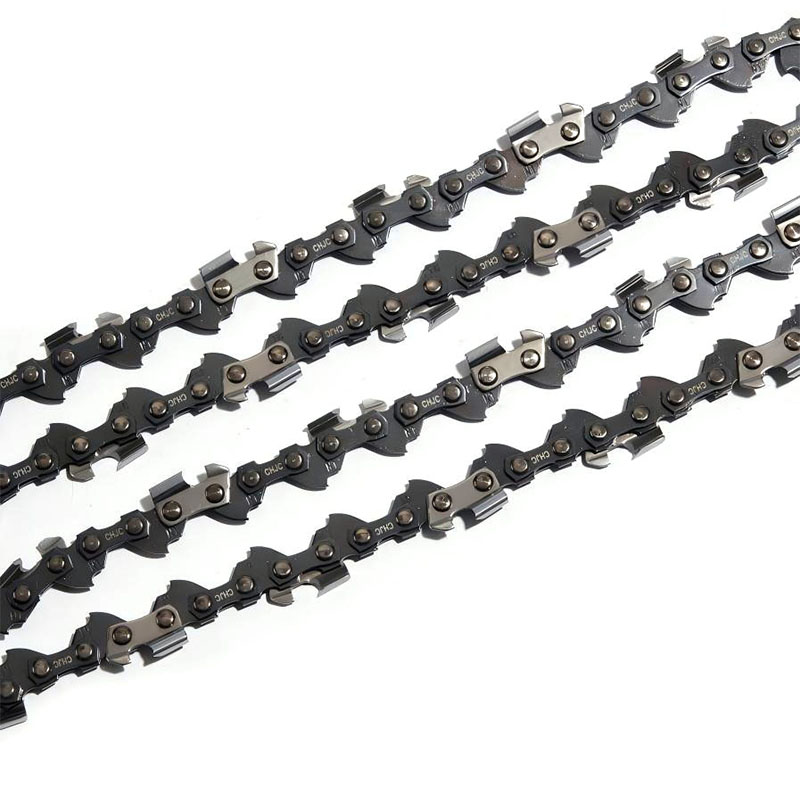
| Feature | Full-Complement | Skip-Tooth |
|---|---|---|
| Cutter Spacing | Every second drive link | Every fourth drive link |
| Best For | Dirty wood, limbing, small saws | Clean hardwood, milling, large saws |
| Chip Clearance | Limited | Excellent |
| Cutting Speed | Moderate | 15–20% faster |
| Power Requirement | 70cc+ | 90cc+ recommended |
Why does my .404" chain cut crooked?
Lateral deviation indicates:
- Uneven Sharpening (80% of cases): One side is sharper than the other, creating uneven cutting forces. Measure cutter lengths—the difference should be less than 0.5 mm.
- Damaged Cutters: Impact damage to one side forces the chain to favor the opposite side.
- Worn Bar Rails: Uneven rail wear causes the chain to lean. Flip the bar regularly to ensure even wear.
- Loose Bar Nuts: Allows the bar to shift during cutting.
Can I repair a broken .404" chain?
Field repair is possible but limited. Use a chain breaker and spinner tool to:
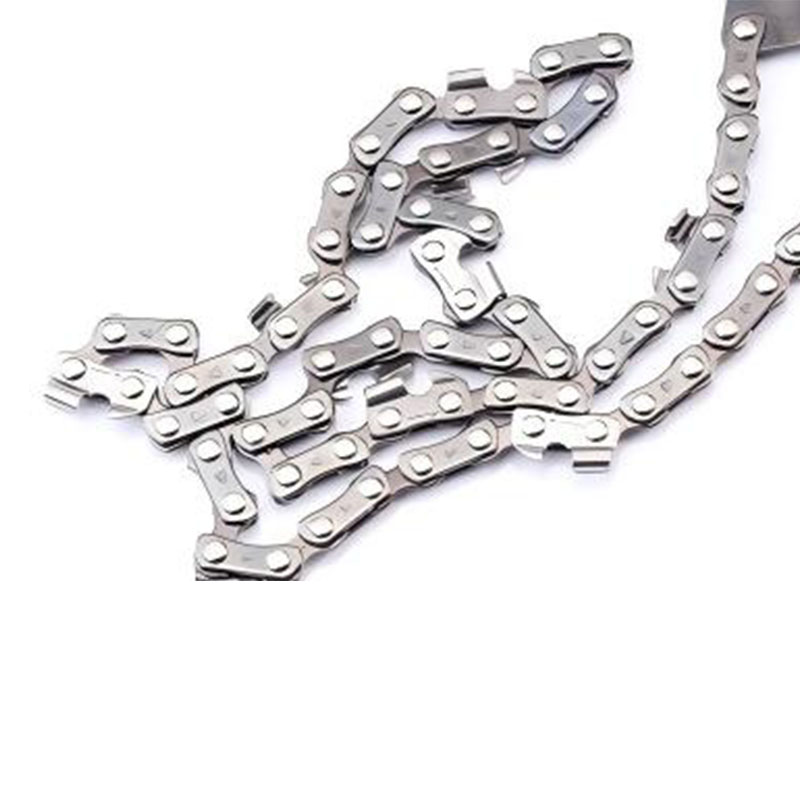
- Remove damaged sections (requires removing a minimum of 2 complete drive links)
- Install repair links or presets
- Rivet replacement links to proper torque specifications
Warning: Repaired chains have reduced strength and should not be used for felling or bucking large timber. Replace with a new chain as soon as possible.