English
 中文简体
中文简体
 русский

Content
- 1 What Saw Chain Pitch Actually Measures
- 2 The Three Points Every Wood Cutter Machine Requires to Match
- 3 Pitch Class by Engine Displacement: Which Wood Cutter Machine Needs Which Chain
- 4 Why .404" Pitch Saw Chain Is the Standard for Heavy-Duty Wood Cutting
- 5 Cutter Profile Selection Within .404" Pitch: Full Chisel vs Semi-Chisel
- 6 Step-by-Step: How to Confirm the Correct .404" Chain for Your Machine
- 7 Common Matching Errors and How They Damage Wood Cutter Machines
- 8 Maintaining Correct Tension and Lubrication After Installation
- 9 Procurement Checklist for .404" Pitch Saw Chain in Fleet Applications
Matching the correct saw chain pitch to your wood cutter machine is not a preference — it is a mechanical requirement. A mismatched pitch means the chain cannot properly engage the drive sprocket, which leads to chain derailment, accelerated component wear, and serious operator safety risk. Before purchasing any replacement or upgrade chain, the pitch specification must be verified against three fixed points on the machine: the drive sprocket, the guide bar, and the existing chain itself.
This guide walks through the complete matching process — from understanding what pitch measurement means, to how engine displacement determines which pitch class is practical, to why .404" pitch saw chain remains the benchmark specification for heavy-duty commercial wood cutting applications. Whether you are outfitting a single professional chainsaw or managing chain inventory for an equipment fleet, the steps covered here apply directly.
What Saw Chain Pitch Actually Measures
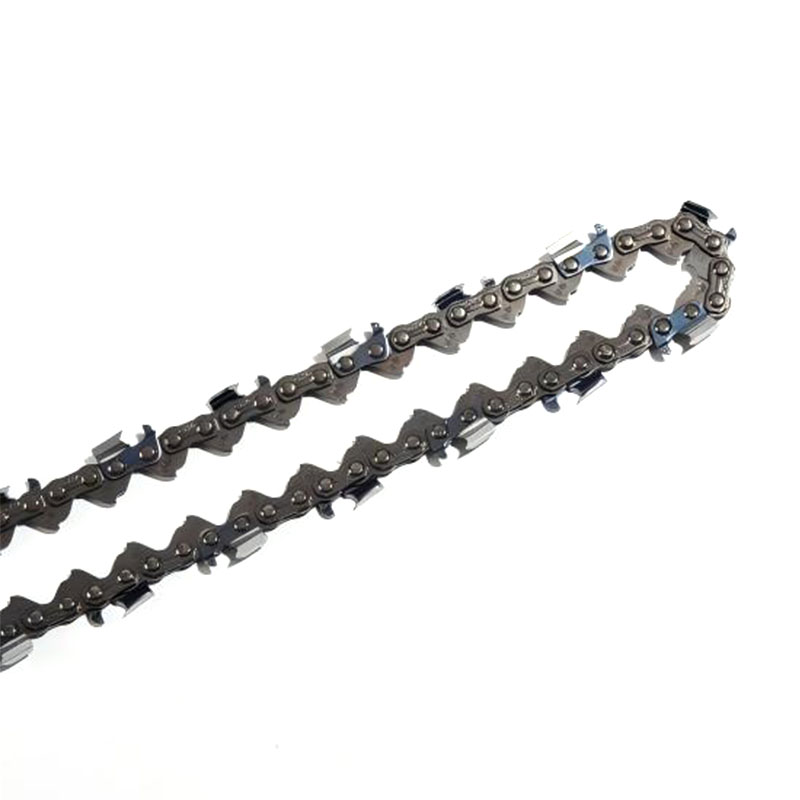
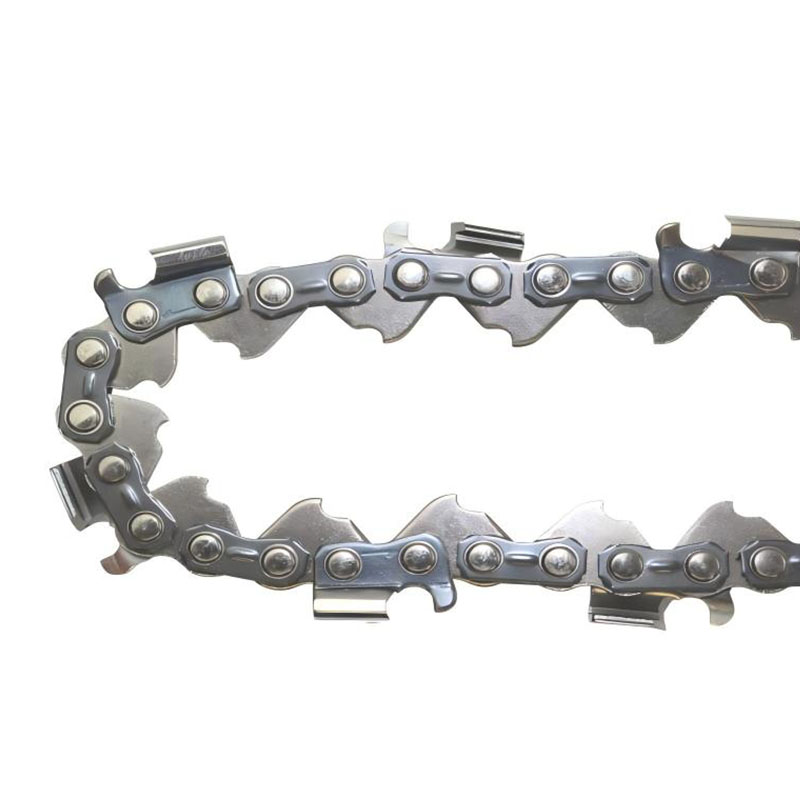
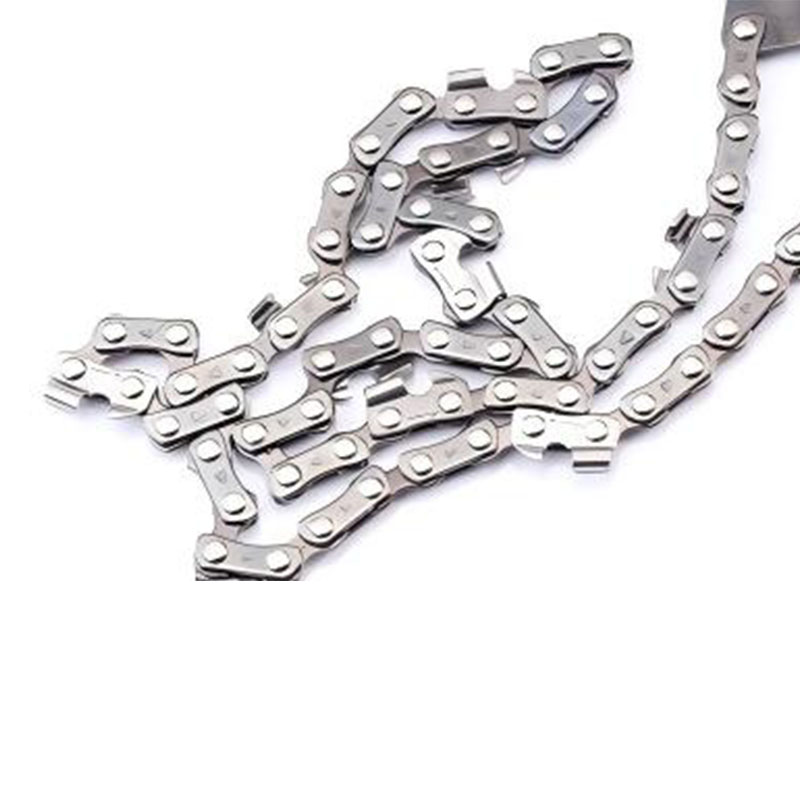
Chain pitch is defined as half the distance between any three consecutive rivets along the chain. It is not the distance between two rivets — it is the average spacing across three, which compensates for manufacturing tolerance variation between individual links. This measurement directly determines the geometry of the drive sprocket teeth that the chain must engage. A sprocket machined for .404" pitch has tooth spacing that physically cannot accept a 3/8" chain without skipping, and vice versa.
The four pitch standards most commonly encountered on professional wood cutter machines are .325", 3/8" low profile, 3/8" standard, and .404". Despite being numerically close to 3/8" (0.375"), the .404" pitch is an entirely separate specification — the 0.029" difference in pitch value produces a different drive link spacing that makes cross-use impossible without changing the sprocket. Many field errors occur precisely because buyers assume .404" and 3/8" are interchangeable based on the numbers appearing similar.
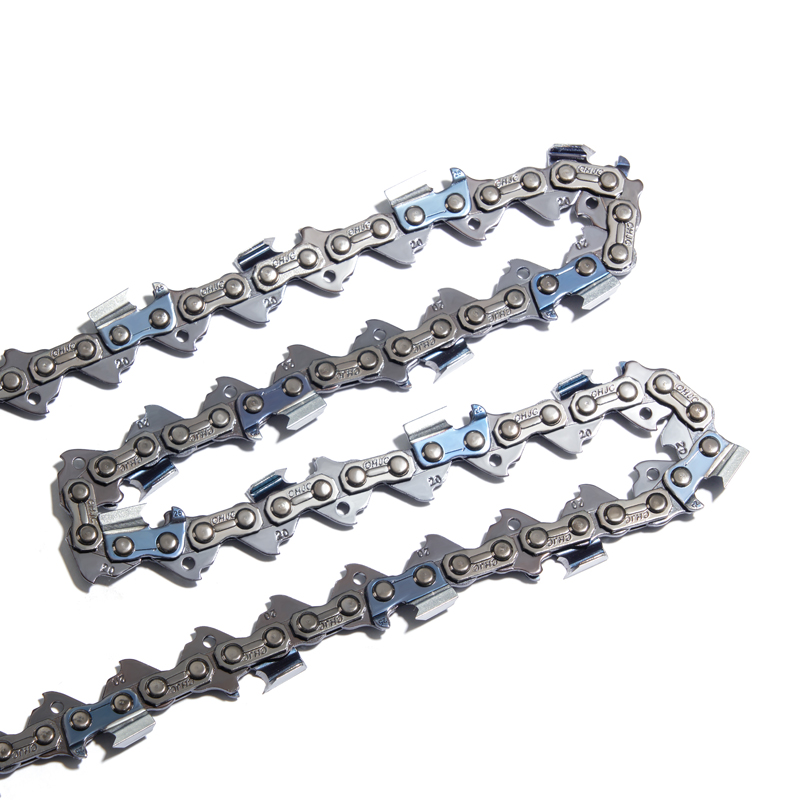
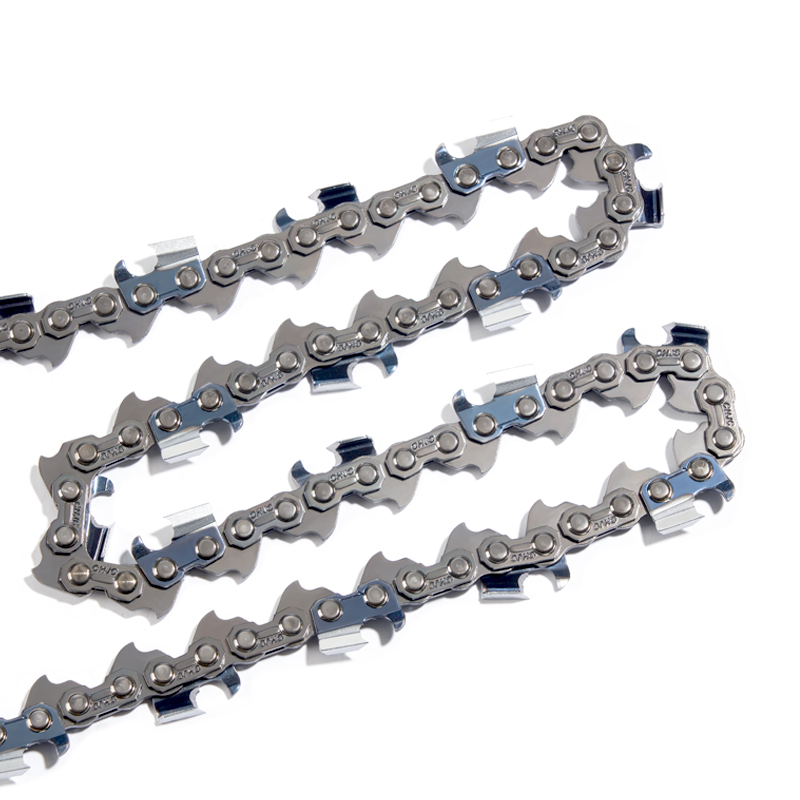
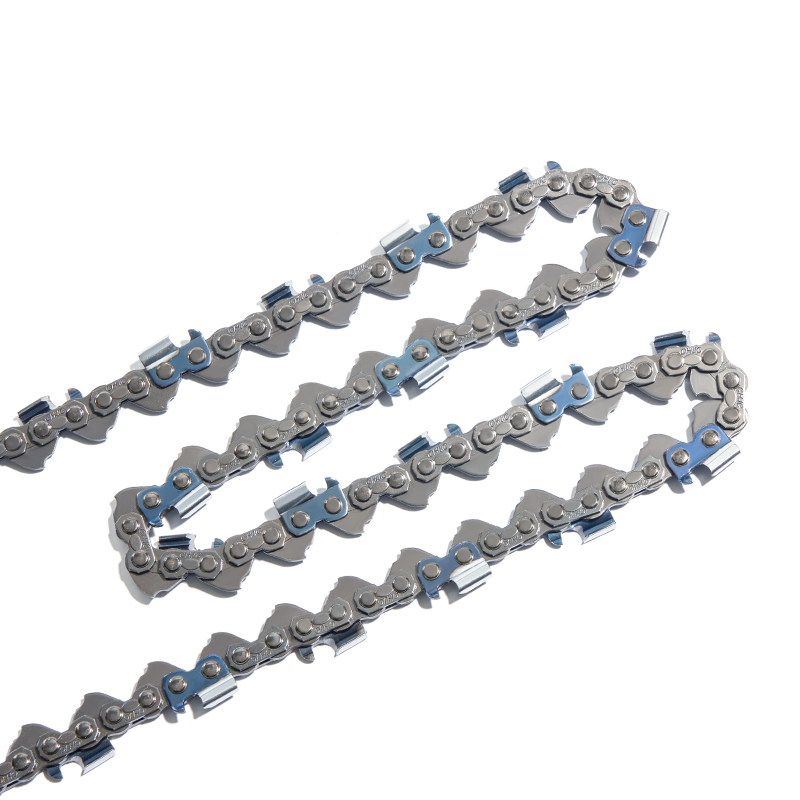
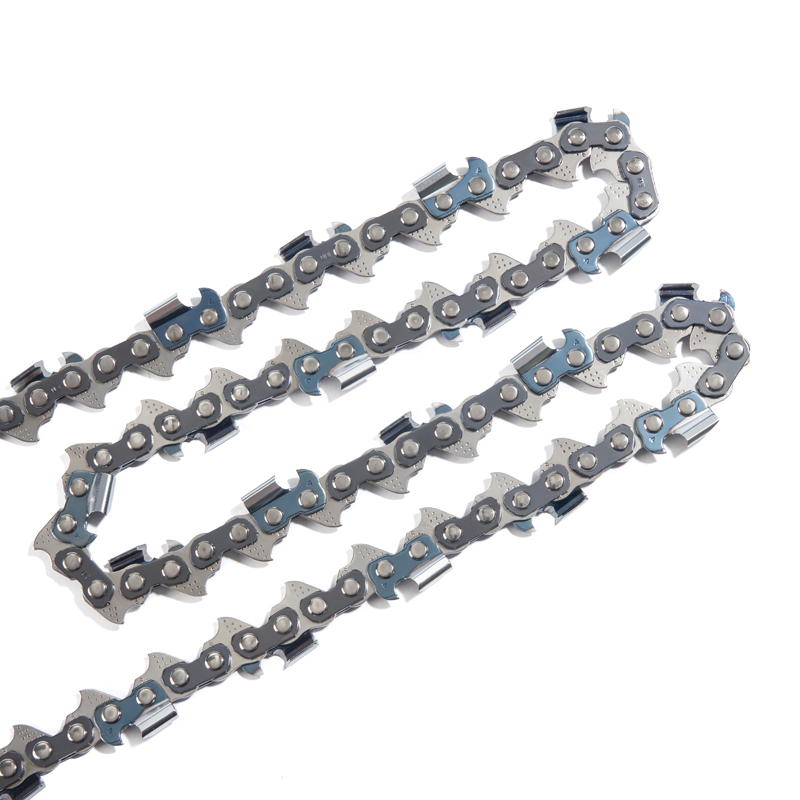
The quickest way to confirm pitch on an existing chain without measuring tools is to check the chain's stamped markings. Most professional-grade saw chains carry a code stamped on the drive links or tie straps that encodes pitch, gauge, and cutter profile. Cross-referencing this code against the manufacturer's specification chart gives a definitive pitch reading without any ambiguity.
The Three Points Every Wood Cutter Machine Requires to Match
Correct chain selection for any wood cutter machine requires matching three independent specifications simultaneously. Getting two out of three correct still produces a non-functional or unsafe result. These three specifications are:
1. Pitch — Must Match the Drive Sprocket
The drive sprocket on the wood cutter machine is machined to a fixed pitch. This is a zero-tolerance match: no chain with a different pitch will function on the machine. Sprocket pitch is typically stamped on the clutch drum, stated in the machine's service manual, or readable from the existing chain's markings. When replacing a sprocket due to wear, the replacement must match the original pitch exactly — upgrading or downgrading pitch requires changing both the sprocket and the chain together as a paired system.
2. Gauge — Must Match the Guide Bar Groove Width
Gauge refers to the thickness of the chain's drive link tang — the portion that rides inside the bar groove. Common gauge specifications are .050" (1.3mm), .058" (1.5mm), and .063" (1.6mm). A chain with gauge too thin for the groove rocks laterally, eroding the rail edges and increasing kickback force. A chain with gauge too thick binds in the groove, generating frictional heat that can warp bar rails and seize the chain under load. Both failures are preventable only by matching gauge precisely to bar specification — never by estimation.
3. Drive Link Count — Must Match the Bar Length
Drive link count determines the total chain loop length. A chain with the correct pitch and gauge but the wrong drive link count will either sit too loose on the bar — creating immediate derailment risk — or will be physically too short to mount at all. Guide bars are stamped with the required drive link count for each pitch standard they are designed to accept. This number must be matched exactly; no adjustment or workaround exists.
Pitch Class by Engine Displacement: Which Wood Cutter Machine Needs Which Chain
Engine displacement is the primary determinant of which pitch class a wood cutter machine can realistically operate. Heavier pitch chains carry more mass, create greater drive resistance, and demand more torque from the clutch and engine to maintain productive chain speed. Running a heavy-pitch chain on an undersized engine does not simply reduce output — it overloads the clutch system, causes chain bog-down in hardwood, and accelerates engine wear under sustained load.
| Engine Displacement | Recommended Pitch | Typical Bar Length | Practical Application |
|---|---|---|---|
| 30cc – 45cc | .325" / 3/8" LP | 12" – 16" | Limbing, light pruning, small cordwood |
| 45cc – 65cc | 3/8" Standard | 16" – 20" | Mid-diameter felling, general firewood |
| 65cc – 80cc | 3/8" Standard | 18" – 24" | Professional felling, hardwood bucking |
| 80cc – 120cc | .404" | 20" – 28" | Commercial logging, large-diameter timber |
| 120cc and above | .404" | 28" – 36"+ | Harvester heads, old-growth, industrial processing |
The 80cc threshold is where .404" pitch becomes the practical standard. Below this displacement range, the engine cannot sustain the chain speed needed to clear chips effectively through the larger gullets of a .404" chain, resulting in stalling and rough cutting behavior. Above 80cc, the additional chain mass of .404" becomes an asset rather than a burden — the greater drive link weight contributes to chain momentum through hardwood fiber, reducing the power demand on the engine at the cutting face.
Why .404" Pitch Saw Chain Is the Standard for Heavy-Duty Wood Cutting
When a wood cutter machine operates in continuous commercial conditions — felling large-diameter hardwood, running harvester head cycles for multiple hours, or processing storm-salvage timber — the mechanical advantages of .404" pitch saw chain become concrete and measurable rather than theoretical.
- Wider gullets between cutters clear wood chip volume from the kerf faster than smaller-pitch chains, preventing chip packing that generates heat and slows the cut in dense hardwood.
- Taller cutter bodies provide more material above the rivet line before the cutter reaches minimum safe height, delivering more total sharpening cycles and longer service life per chain.
- Heavier drive links distribute tension across greater mass, resisting stretch and fatigue under the sustained high-load conditions that heavy wood cutting machines generate.
- Wider kerf produced by .404" cutters gives the bar rail additional clearance in large-diameter timber, significantly reducing the bar pinching that causes stalling and dangerous reactive force.
The trade-off inherent to .404" pitch is chain velocity. At a given engine RPM, a .404" chain on a fixed sprocket diameter moves at a lower feet-per-second rate than a .325" or 3/8" chain on the same machine. This makes .404" the correct choice for power-priority applications — situations where the objective is moving the maximum volume of wood fiber per hour, not achieving the fastest possible chain speed. For limbing work, thin stock, or precision cuts where chain speed determines surface finish quality, smaller pitch options remain more appropriate.
Pitch Comparison at a Glance
| Pitch Standard | Pitch (inches) | Cutting Speed Priority | Power Priority | Interchangeable with .404"? |
|---|---|---|---|---|
| .325" | 0.325 | High | Low | No |
| 3/8" Low Profile | 0.375 | Moderate | Moderate | No |
| 3/8" Standard | 0.375 | Moderate–High | Moderate–High | No |
| .404" | 0.404 | Lower | Very High | — |
Cutter Profile Selection Within .404" Pitch: Full Chisel vs Semi-Chisel
Once pitch, gauge, and drive link count are confirmed, the remaining selection variable is the cutter tooth profile. Within the .404" pitch saw chain family, buyers choose primarily between full chisel and semi-chisel configurations, and secondarily between standard and skip cutter sequences for longer bar lengths.
Full Chisel: Maximum Speed in Ideal Conditions
Full chisel cutters use a square-cornered tooth geometry that produces the most aggressive cut in clean softwood. In fresh-cut, debris-free timber with an experienced operator maintaining correct sharpening geometry, a full chisel .404" chain delivers the fastest cutting throughput of any available configuration. The limitation is edge retention: the sharp corner dulls rapidly when contacting sand-contaminated bark, frozen wood fiber, or embedded rock fragments that are frequently encountered in logging environments. Full chisel sharpening requires consistent 30-degree file angle discipline; any deviation rounds the corner and immediately degrades cutting performance.
Semi-Chisel: Consistent Performance Across Varying Conditions
Semi-chisel cutters use a rounded corner geometry that sacrifices a portion of peak cutting speed in ideal conditions — roughly 10 to 15 percent compared to an optimally sharpened full chisel chain — but retains a functional working edge significantly longer when cutting hardwood species, frozen timber, or wood with bark-embedded debris. For procurement managers sourcing chains for mixed fleet use where cutting conditions vary day to day, semi-chisel .404" chains frequently deliver better total cost of ownership, because reduced sharpening frequency and longer per-chain service life offset the modest speed reduction.
Skip Sequence: Required for Bars 28 Inches and Longer
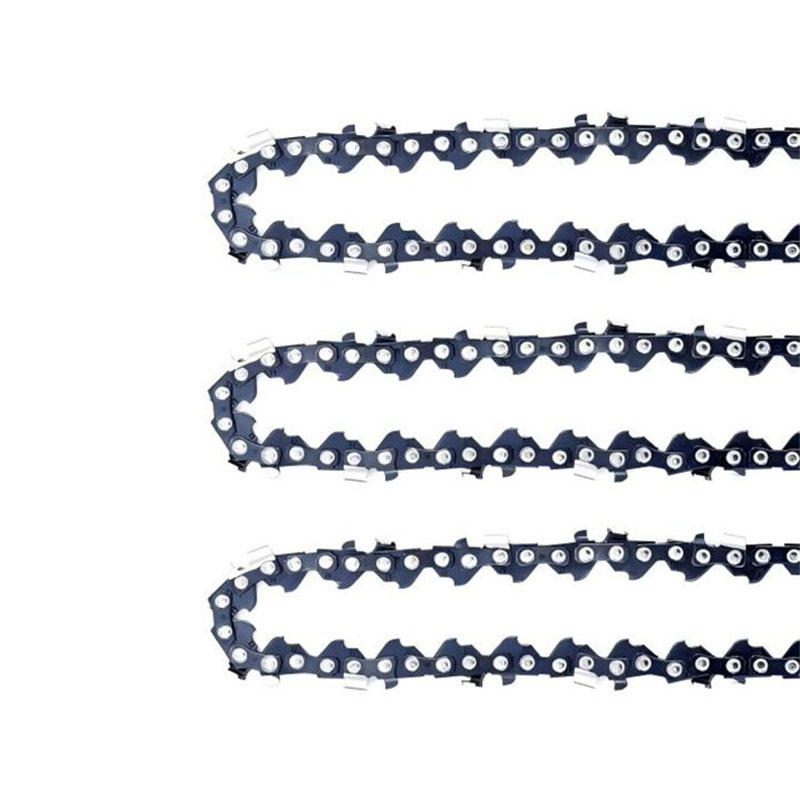
On guide bars of 28 inches and above, standard-sequence .404" chains can pack chips faster than the gullets clear them during deep-bore or ripping cuts, generating heat and cutting resistance that strains both chain and bar. Skip-sequence chains address this by spacing cutters further apart — placing an additional drive link between each cutting group — which reduces total cutter count but dramatically improves chip clearance in extended cuts. Skip chains also run cooler and allow the wood cutter machine engine to maintain chain speed with lower fuel consumption in continuous-cycle industrial use. For any .404" chain application on a bar longer than 28 inches, skip or semi-skip sequence is the correct default choice.
Step-by-Step: How to Confirm the Correct .404" Chain for Your Machine
The following process applies to any wood cutter machine where a .404" pitch saw chain is being specified, whether for initial setup, replacement, or bulk fleet ordering:
- Read the drive sprocket marking. The clutch drum or sprocket rim carries a stamped pitch designation. Confirm this reads .404" before proceeding. If the marking is worn, reference the machine's service manual using the model number.
- Measure bar groove width with a gauge tool. Do not assume gauge from bar model number alone — groove width can change after rail wear. Physical measurement with a feeler gauge or dedicated bar tool is the only reliable method.
- Count drive links on the existing chain or read the bar stamp. Guide bars carry a stamped drive link count for each pitch they accept. Use this number exactly — no rounding up or down is acceptable.
- Select cutter profile based on primary wood species and site conditions. Full chisel for clean softwood under controlled conditions; semi-chisel for hardwood, mixed species, or sites with soil and debris contact.
- Select cutter sequence based on bar length. Standard sequence for bars up to 24 inches; skip or semi-skip for bars 28 inches and above.
- Cross-reference the chain code to the OEM specification. Confirm the selected chain has a verified cross-reference to the wood cutter machine manufacturer's original specification to ensure dimensional tolerances are met across rivet diameter, tie strap thickness, and overall chain width.
Common Matching Errors and How They Damage Wood Cutter Machines
Understanding what goes wrong when pitch is mismatched — even slightly — helps explain why this specification deserves the attention it requires. The following failures are directly attributable to incorrect chain selection on professional wood cutter machines:
Wrong Pitch: Drive Sprocket Damage
A chain with incorrect pitch will not seat cleanly into the sprocket tooth valleys. Under power, the chain skips across sprocket teeth rather than engaging smoothly, generating impact loads that accelerate sprocket tooth wear at a rate many times faster than a correctly matched chain. In rim sprocket systems, this wear can destroy the replaceable sprocket ring within hours of operation. In integrated spur sprocket systems, damage extends to the clutch drum itself — a significantly more expensive repair.
Wrong Gauge: Bar Rail Destruction
Running a chain with gauge thinner than the bar groove allows lateral chain rock inside the groove, which erodes both rail edges unevenly. Once a bar groove has widened beyond the correct gauge, no replacement chain — even a correctly specified one — will track true, because the groove can no longer provide the lateral guidance the chain requires. The bar must be replaced, which is a preventable cost entirely attributable to the initial gauge mismatch.
Wrong Drive Link Count: Unsafe Tension
A chain with too few drive links for the bar length creates a loop that cannot be tensioned to the correct specification — it goes from loose to over-tight with no acceptable range in between. An over-tensioned chain generates continuous friction heat along the entire bar rail length, which leads to oil carbonization in the bar groove, accelerated chain stretch, and in extreme cases, bar rail warping that makes the bar permanently unusable. A chain with too many drive links produces a loop too long to tension, creating derailment risk at startup.
Maintaining Correct Tension and Lubrication After Installation
Installing a correctly matched .404" pitch saw chain is the starting point, not the finish line. Tension and lubrication management during operation determines how long that chain delivers productive performance before requiring replacement.
Correct operating tension for a .404" chain allows the chain to be drawn approximately 6mm (1/4 inch) away from the bar rail at the midpoint, with drive links remaining engaged in the groove. This should be checked cold before starting the machine and rechecked after the first 10 minutes of operation, since new chains undergo initial seating stretch during early use. Chains that are too loose jump the sprocket under acceleration; chains that are too tight generate heat along the entire bar length.
Bar oil flow must be confirmed before each operating session. The oil delivery system on a wood cutter machine is sized to the chain's oil consumption rate — a .404" chain has more surface area in contact with the bar rail than smaller-pitch chains and consumes bar oil proportionally faster. Running even a short cutting session with blocked oil ports or an empty oil reservoir causes heat damage that shortens both chain and bar life significantly. Bar oil viscosity should also be matched to ambient temperature: standard viscosity oil above 5°C, winter-grade below that threshold to maintain adequate flow through oil ports.
Procurement Checklist for .404" Pitch Saw Chain in Fleet Applications
For B2B buyers managing chain inventory across logging operations, equipment rental fleets, or OEM assembly lines, the following checklist consolidates the key verification steps before committing to bulk orders:
- Pitch confirmed at .404" against drive sprocket specification, not assumed from bar label or previous chain marking.
- Gauge confirmed by physical bar groove measurement — .063" (1.6mm) is the dominant standard for .404" professional applications.
- Drive link count confirmed from bar stamp or direct count of existing chain — no rounding permitted.
- Cutter profile selected based on primary species and site conditions across the fleet's operating environment.
- Sequence selected based on bar length distribution in the fleet — document which machine configurations require skip sequence.
- OEM cross-reference verified — confirm the supplier's chain model has documented compatibility with the specific wood cutter machine models in service.
- Steel quality and rivet tolerance confirmed — request production spec sheets or third-party test data from the supplier before large-volume commitments.
- Packaging reviewed for storage conditions — chains intended for humid or coastal storage require individual oiled packaging and moisture-barrier outer cartons to prevent surface oxidation before first use.
Matching saw chain pitch to a wood cutter machine correctly is ultimately a straightforward process when approached systematically. The three non-negotiable variables — pitch, gauge, and drive link count — must all be confirmed before any chain is installed or ordered in volume. Within the .404" pitch class, cutter profile and sequence selection then optimize performance for the specific operating environment. A correctly matched, correctly maintained .404" pitch saw chain on a capable wood cutter machine platform represents the most productive and cost-efficient configuration available for large-diameter commercial wood cutting work.