English
 中文简体
中文简体
 русский

Content
- 1 What Is an Industrial Cut-Off Saw? The Direct Answer
- 2 Core Specifications Behind Industrial Cut-Off Saw Chains
- 3 Harvester Saw Chains: Engineered for Mechanical Logging Equipment
- 4 Chipper Chainsaw Chains: High-Production Cutting of Clean Wood
- 5 Harvester Chain vs Chipper Chain: A Side-by-Side Comparison
- 6 Maintenance Practices That Extend Industrial Chain Life
- 7 How to Choose the Right Chain for Your Industrial Cut-Off Saw
- 8 Why Hengjiu Is a Trusted Source for Industrial Saw Chains
What Is an Industrial Cut-Off Saw? The Direct Answer
An industrial cut-off saw is a heavy-duty, chain-driven cutting machine used to fell, buck, and delimb timber at high volume, typically mounted on mechanical harvesters, feller bunchers, or fixed processing heads rather than operated as a handheld tool. The single most important factor determining how well an industrial cut-off saw performs is not the powerhead itself but the saw chain fitted to it — specifically whether that chain is built as a harvester chain or a chipper chain, since each is engineered for a different stage of the wood-cutting process.
Choosing the wrong chain type for an industrial cut-off saw is one of the leading causes of premature chain stretch, broken tie straps, and unplanned downtime in commercial logging operations. This distinction matters even more at industrial scale, where a single mechanical harvester head can process hundreds of trees per shift, meaning any weakness in the chain is multiplied across thousands of cutting cycles in a single working day. Understanding the structural and material differences between chain categories is therefore essential before specifying replacement parts for any industrial cutting operation.
Core Specifications Behind Industrial Cut-Off Saw Chains
Every industrial saw chain is defined by three measurements: pitch, gauge, and drive link count. Pitch is the distance between three consecutive rivets divided by two, gauge is the thickness of the drive link that sits inside the bar groove, and drive link count determines total chain length. For industrial cutting applications, the .404-inch pitch is the standard choice because it delivers the aggressive tooth spacing needed to process large-diameter timber efficiently, while smaller pitches such as .325" or 3/8" are generally reserved for lighter-duty or handheld applications.
| Chain Type | Gauge | Primary Use |
|---|---|---|
| Harvester Chain | .080" / 2.0mm | Mechanical felling and delimbing heads |
| Chipper Saw Chain | .063" / 1.6mm | High-speed cutting of clean, debarked wood |
Both chain types are typically made from alloy steel such as 68CrNiMo3, a material chosen for its combination of tensile strength and fatigue resistance under continuous mechanical load, which is exactly the stress profile an industrial cut-off saw generates during an eight- to twelve-hour production shift. The choice of raw material grade, combined with how consistently a manufacturer controls its heat treatment process, is often what separates a chain that lasts a full season from one that requires early replacement.
Harvester Saw Chains: Engineered for Mechanical Logging Equipment
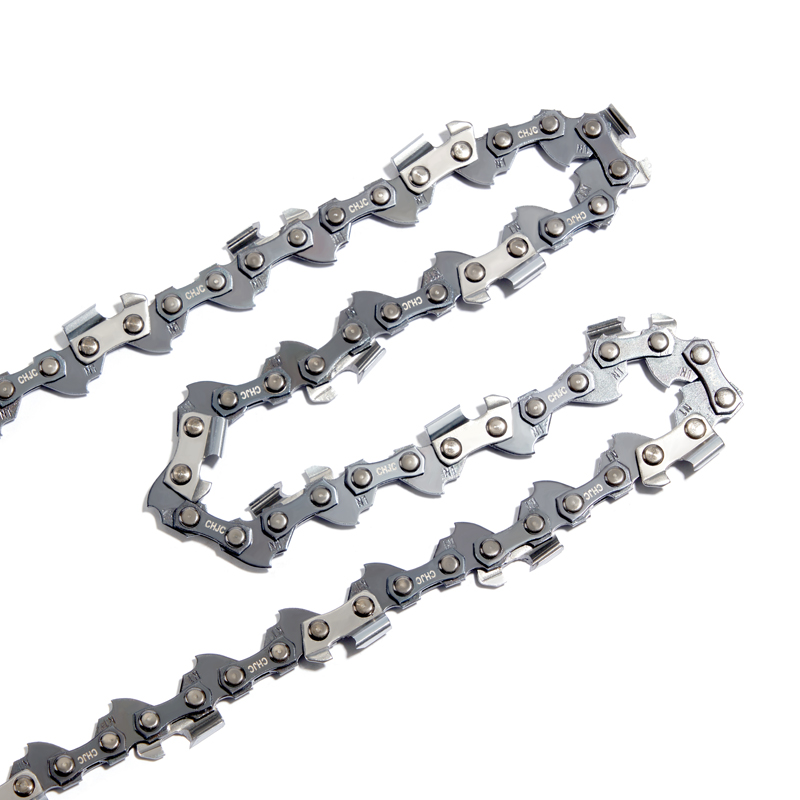
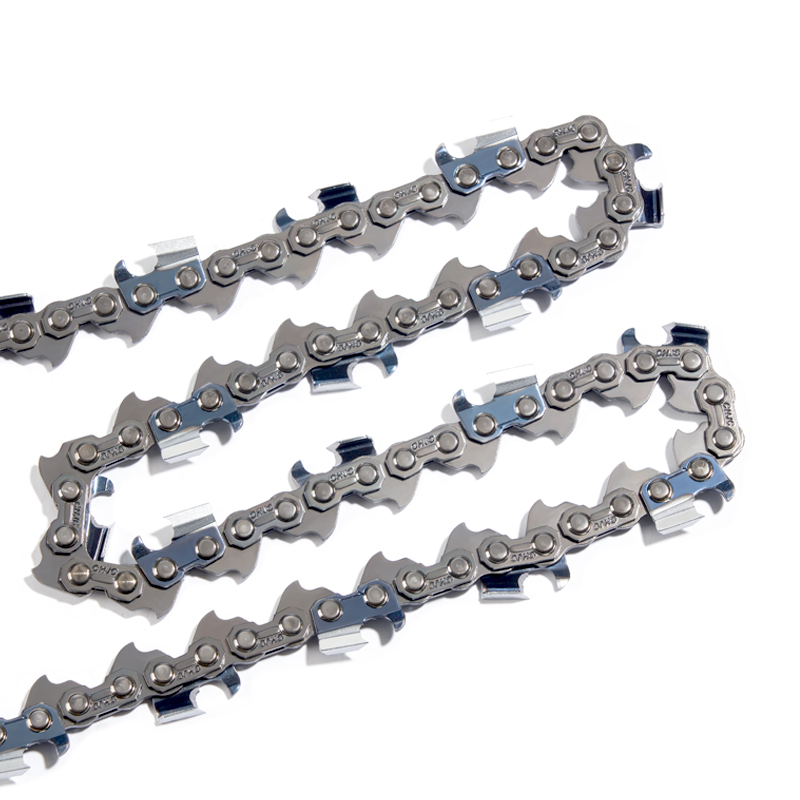
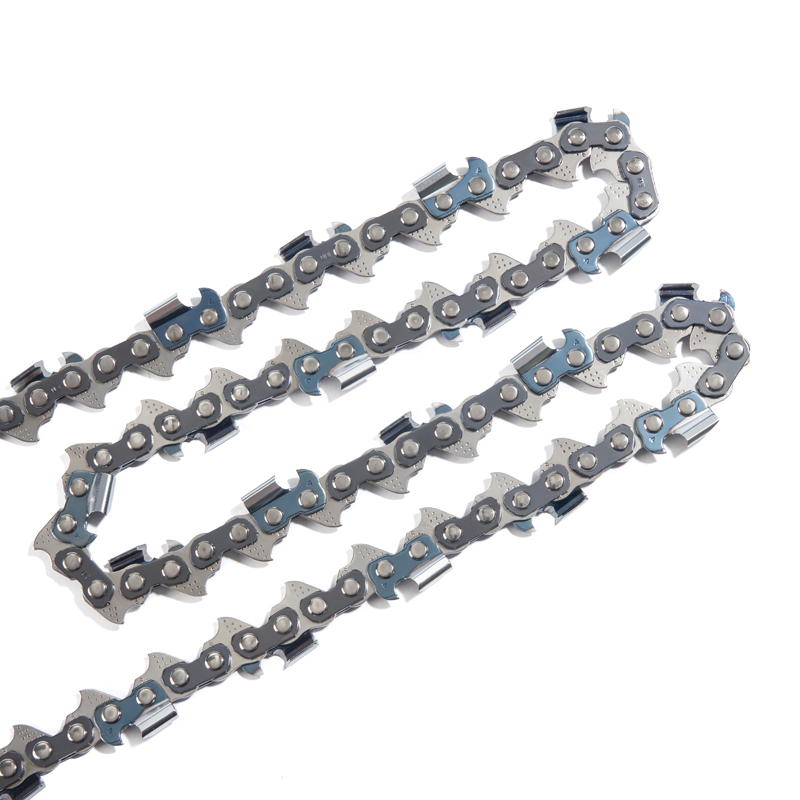
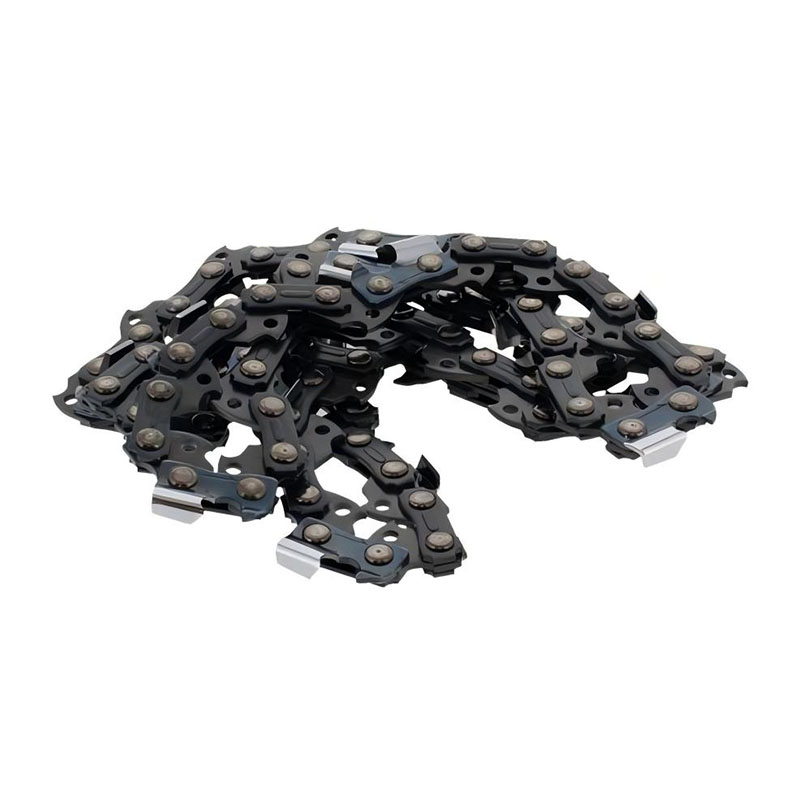
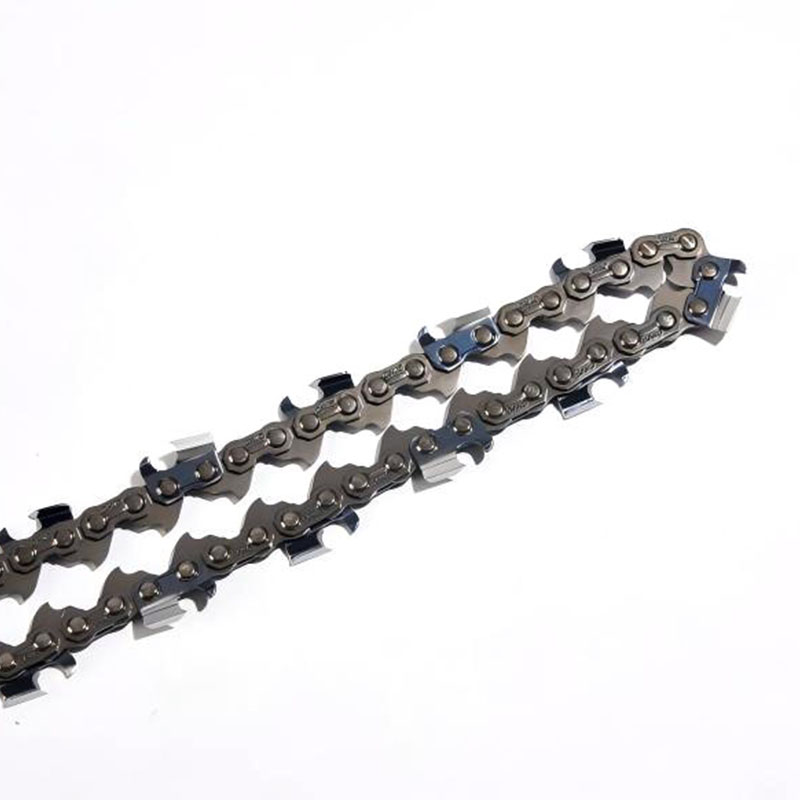
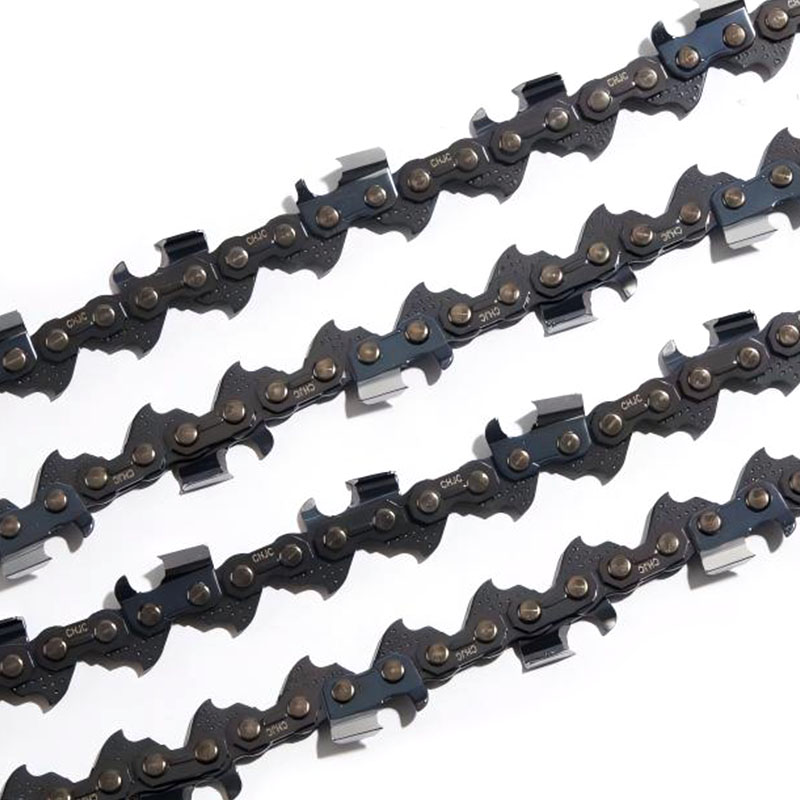
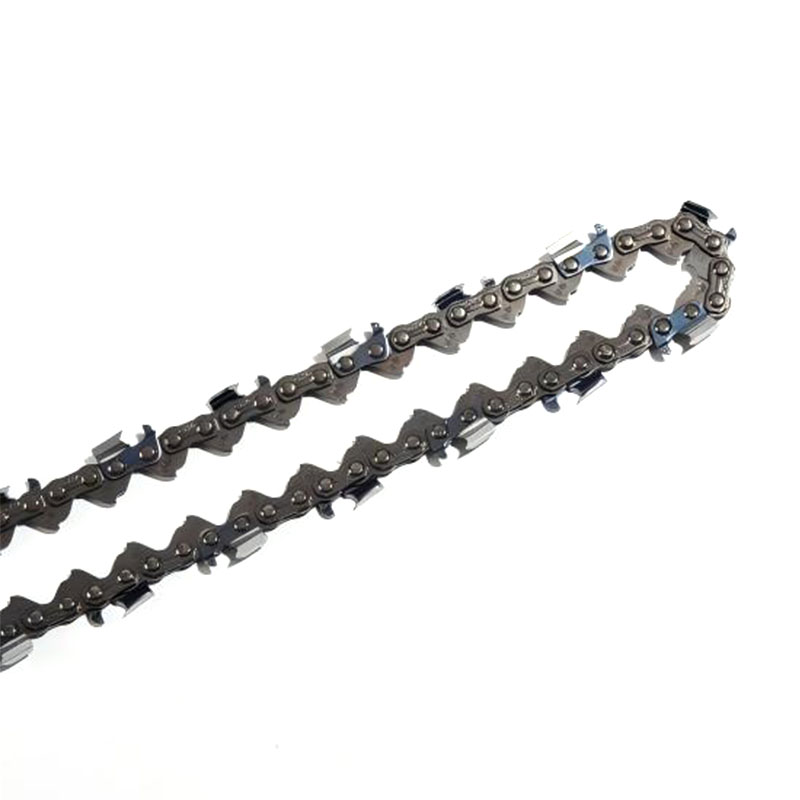
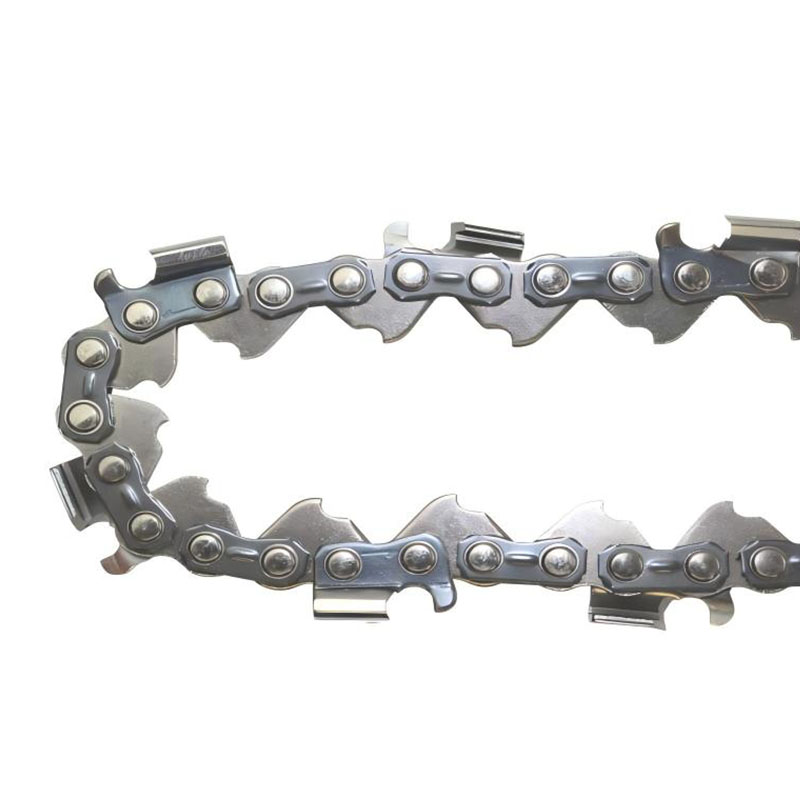
Harvester saw chains are purpose-built for the harshest duty cycle in forestry: continuous felling and processing performed by hydraulically driven harvester heads rather than a human operator controlling feed pressure. Because the machine applies far more force and speed than manual cutting, harvester chains use a thickened, burnished chassis and reinforced tie straps and rivets to resist stretch even at the end of the chain's working life.
Key Structural Features
- Heavier drive links and side plates to withstand high-torque mechanical feeding
- A high-power cutting head shaped to maintain stable performance across mixed wood species
- Optimized heat treatment that raises cutter hardness without increasing brittleness
- Reinforced rivets that minimize chain extension even as the chain approaches the end of its service life
In continuous mechanical harvesting, these reinforcements translate directly into fewer chain changes per shift and lower unplanned downtime, which matters most in commercial logging where machine hours are billed by production volume rather than by the hour. A harvester head that stops mid-shift for a chain failure does not just lose the repair time; it also loses the scheduling slot for that day's log quota, which can be far more costly than the price of the chain itself.
Chipper Chainsaw Chains: High-Production Cutting of Clean Wood
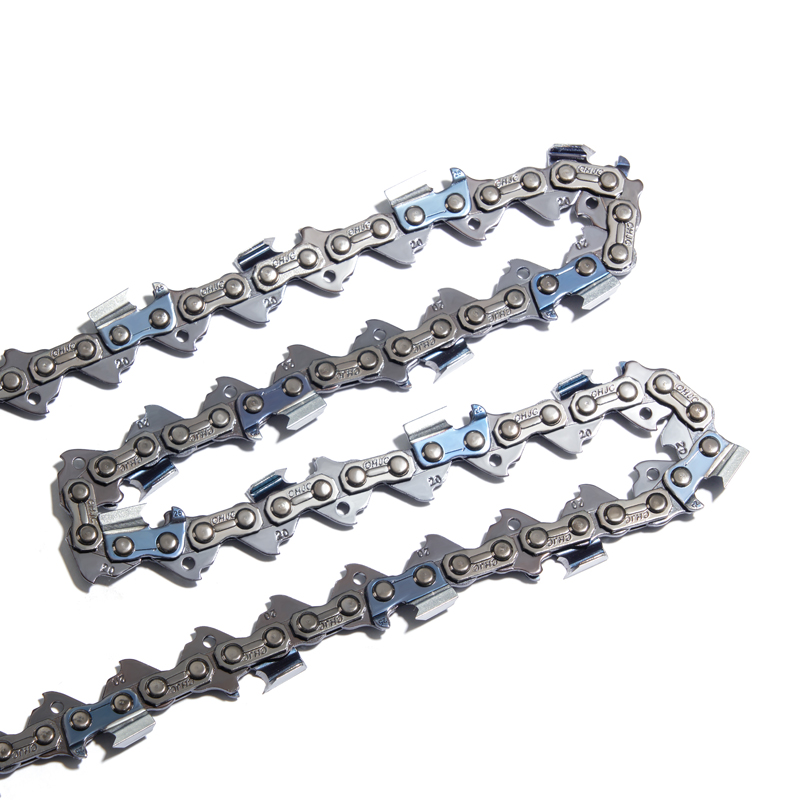
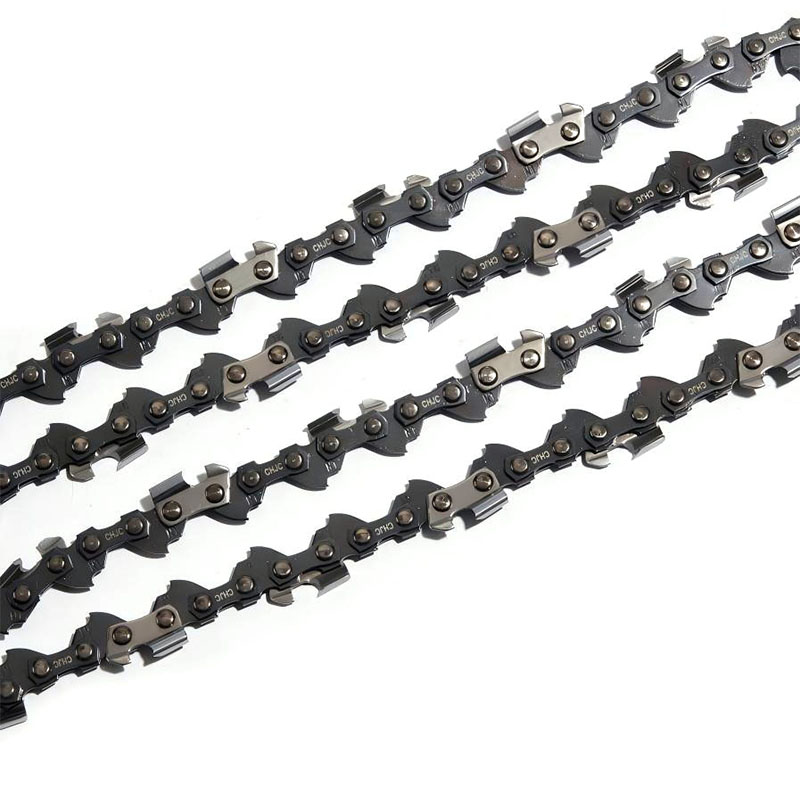
Chipper chains use a rounded, chisel-style cutter design that is different from the square-cornered full-chisel tooth found on general-purpose chains. This shape allows the chain to bite consistently into clean, debarked timber at high feed speed, making chipper chains the standard choice for felling, bucking, and limbing operations in medium to heavy stands processed by mid- to high-powered machinery.
Where Chipper Chains Perform Best
- Sawmill infeed operations where logs are already debarked
- High-throughput bucking stations that need consistent cut speed over long shifts
- Mechanized limbing where reduced vibration improves cut accuracy
Because chipper chains carry a lighter gauge than harvester chains, they cut faster but are better suited to cleaner wood conditions, whereas harvester chains are the better choice when the cutting environment includes bark, dirt, or embedded debris. Many production sites actually keep both chain types in inventory and switch between them depending on which stage of the log processing line is running, since matching chain type to wood condition has a direct effect on both cutting speed and cutter wear rate.
Harvester Chain vs Chipper Chain: A Side-by-Side Comparison
| Criteria | Harvester Chain | Chipper Chain |
|---|---|---|
| Durability | Very high | Moderate to high |
| Cutting speed | Moderate | High |
| Best wood condition | Bark-on, mixed debris | Clean, debarked wood |
| Typical gauge | .080" | .063" |
| Typical service environment | Field felling, high-torque heads | Processing lines, bucking stations |
Neither chain type is universally "better" — the correct choice depends entirely on the wood condition and the machine's power delivery, which is why experienced fleet managers typically keep both harvester chains and chipper chains available and match them to the specific job rather than standardizing on a single chain across every machine.
Maintenance Practices That Extend Industrial Chain Life
Even the most durable chain will underperform without correct maintenance. The following practices are consistently emphasized in industrial saw chain field guidance and directly affect chain lifespan on cut-off saws:
- Run a new chain at reduced speed for the first two to three minutes to allow proper oil distribution
- Check chain tension every 15 minutes during initial break-in, since new chains commonly stretch 2–3mm in early use
- Always file in the direction indicated on the top plate to preserve cutting geometry
- Avoid contact with rocks, embedded metal, or hardened debris that can chip cutters instantly
- Inspect drive links and tie straps regularly for hairline cracks before they progress into full breaks
Following these steps consistently can meaningfully extend the interval between chain replacements, which reduces both material cost and machine downtime across a logging season. Operators who track chain life by cutting hours rather than calendar time typically catch early wear signs sooner, allowing planned replacement instead of an unscheduled breakdown in the middle of a production run.
How to Choose the Right Chain for Your Industrial Cut-Off Saw
Match Chain Type to Wood Condition
If the cutting environment involves bark-on logs, soil contact, or mixed debris, a harvester chain's reinforced structure will outlast a chipper chain under the same conditions. If the wood is already clean and debarked, a chipper chain will generally deliver faster cycle times with less power draw.
Match Gauge to Machine Power
Thicker .080" gauge chains suit higher-torque harvester heads, while .063" gauge chains are matched to mid- to high-powered cutting units where speed is prioritized over maximum structural mass. Running an undersized gauge on an oversized machine tends to accelerate wear, while an oversized gauge on a lower-powered unit can unnecessarily slow cutting speed.
Prioritize Corrosion Resistance for Wet Operations
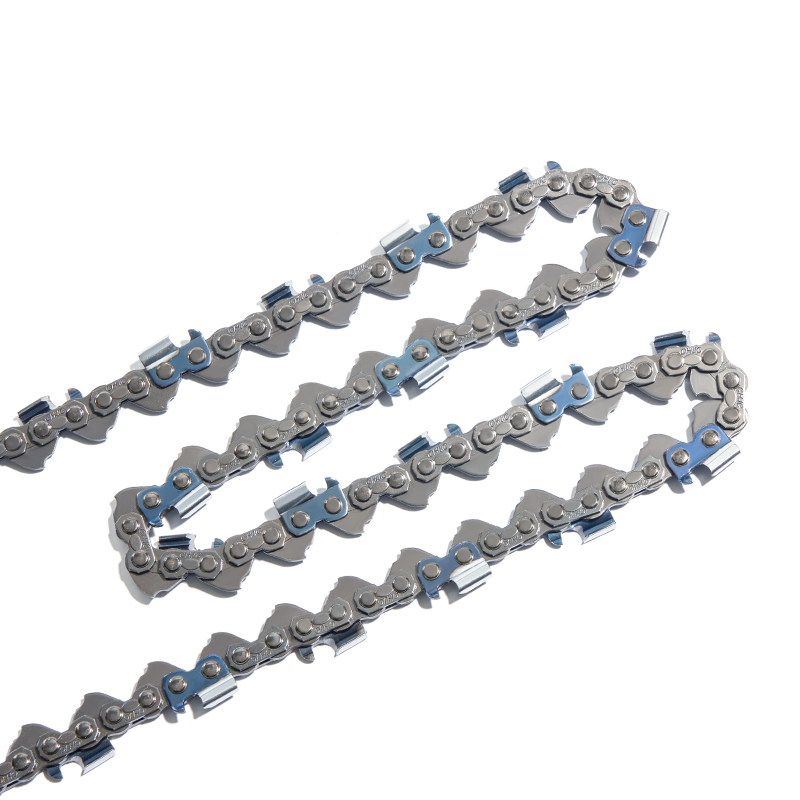
Chains with blued cutter treatment offer improved resistance to moisture-related corrosion, which is a meaningful advantage for operations running in humid climates or wet-season logging schedules where untreated cutters can develop surface rust within days.
Why Hengjiu Is a Trusted Source for Industrial Saw Chains
Hengjiu has been focused on chain transmission products since 1953, and over more than 70 years the company has built a manufacturing base of eight factories and R&D centers headquartered in Zhuji City, Zhejiang Province, giving it the scale to control raw material sourcing, heat treatment, and quality testing in-house rather than relying on outsourced processing. Because harvester chains and chipper chains operate under continuous mechanical stress rather than intermittent handheld use, this level of vertical control has an outsized impact on total operating cost for fleet operators.
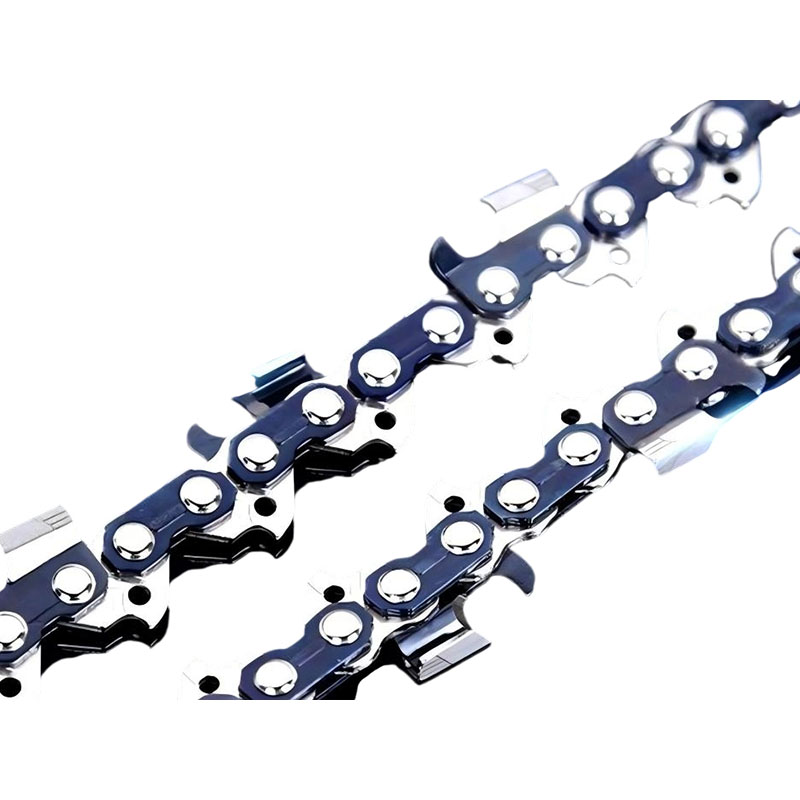
Hengjiu's .404" harvester and chipper saw chains are manufactured from 68CrNiMo3 alloy steel with blued cutter treatment for corrosion resistance, and the company applies optimized heat treatment specifically calibrated for the high-intensity, continuous-duty conditions found in mechanical logging. For fleet operators specifying replacement chains for an industrial cut-off saw, it is worth requesting documented gauge tolerance, tensile strength data, and cutter hardness figures from Hengjiu or any supplier before committing to a bulk order. These specifications, rather than price alone, are the most reliable predictors of how a harvester or chipper chain will actually perform across a full production season.