English
 中文简体
中文简体
 русский

Content
- 1 Chainsaw Log Splitter: What It Is and Which Saw Chain You Need
- 2 How a Chainsaw Log Splitter Works
- 3 3/8'' Saw Chain: The Standard for Log Cutting and Firewood Processing
- 4 3/8'' LP Saw Chain: High-Volume Home Firewood Processing
- 5 1/4'' Saw Chain: Precision Cutting Before Log Splitting
- 6 Comparing 3/8'' and 1/4'' Saw Chains for Firewood Work
- 7 How to Select the Right Saw Chain for Your Chainsaw Log Splitter Setup
- 8 Saw Chain Maintenance for Log Splitting: Keeping Cutting Performance at Its Peak
- 9 Choosing a Saw Chain Supplier: Quality Materials Make the Difference
Chainsaw Log Splitter: What It Is and Which Saw Chain You Need
A chainsaw log splitter — also called a log splitter attachment or firewood splitter attachment for a chainsaw — is a wedge-based tool that mounts to a chainsaw's bar to split logs into firewood as the saw cuts through them. The chainsaw provides the power; the splitting geometry built into the attachment does the separating work simultaneously. The result is a faster, more integrated workflow for anyone processing large quantities of firewood from cut logs.
But the cutting performance of any chainsaw log splitter setup depends entirely on one thing: the saw chain running on the guide bar. For firewood processing and log splitting work, the two most practical saw chain choices are the 3/8'' Saw Chain — the professional-grade workhorse for heavy log cutting — and the 1/4'' Saw Chain — the precision choice for small-diameter wood, pole saws, and branch processing before splitting. Choosing the wrong chain for the job costs cutting speed, accelerates wear, and raises the risk of kickback.
How a Chainsaw Log Splitter Works
Traditional log splitting requires two separate steps: cutting the log to length with a chainsaw, then splitting it with a hydraulic or manual splitter. A chainsaw log splitter combines these steps. The attachment fits over the chainsaw's guide bar and uses a steel wedge positioned behind the chain. As the saw cuts down through the log, the wedge follows immediately, forcing the wood apart along its grain. Each pass simultaneously crosscuts and splits.
This integrated method is especially effective for processing straight-grained softwoods such as pine, spruce, and fir — common firewood species. For knotty, interlocked-grain hardwoods, the effectiveness depends on the log diameter, the power of the chainsaw, and critically, the quality and specification of the saw chain in use. A dull, worn, or incorrectly pitched chain makes the entire system work harder, produces rougher cuts, and increases the chance of the chain binding in the kerf.
3/8'' Saw Chain: The Standard for Log Cutting and Firewood Processing
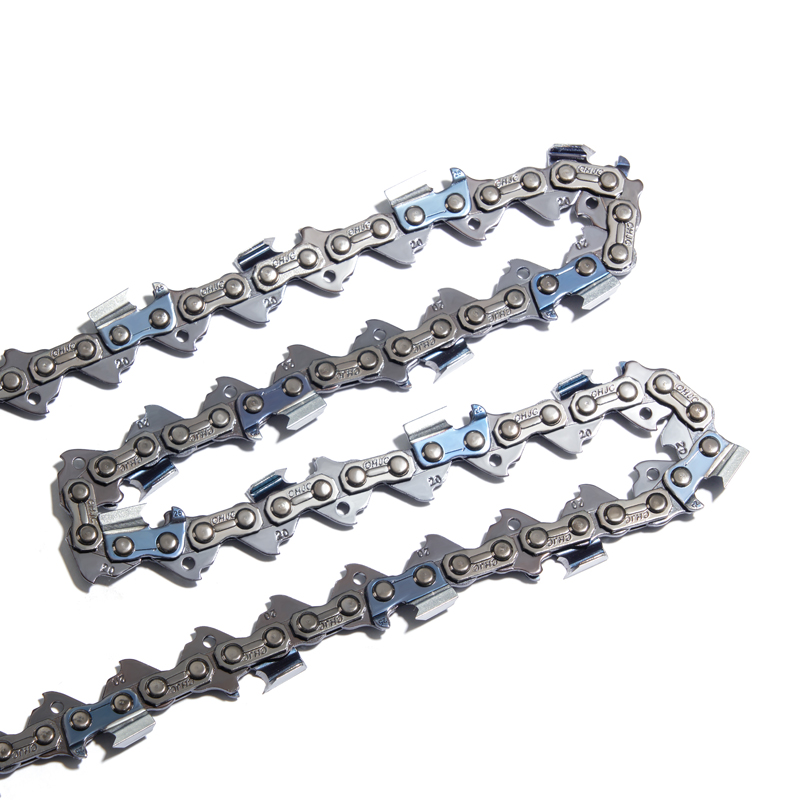
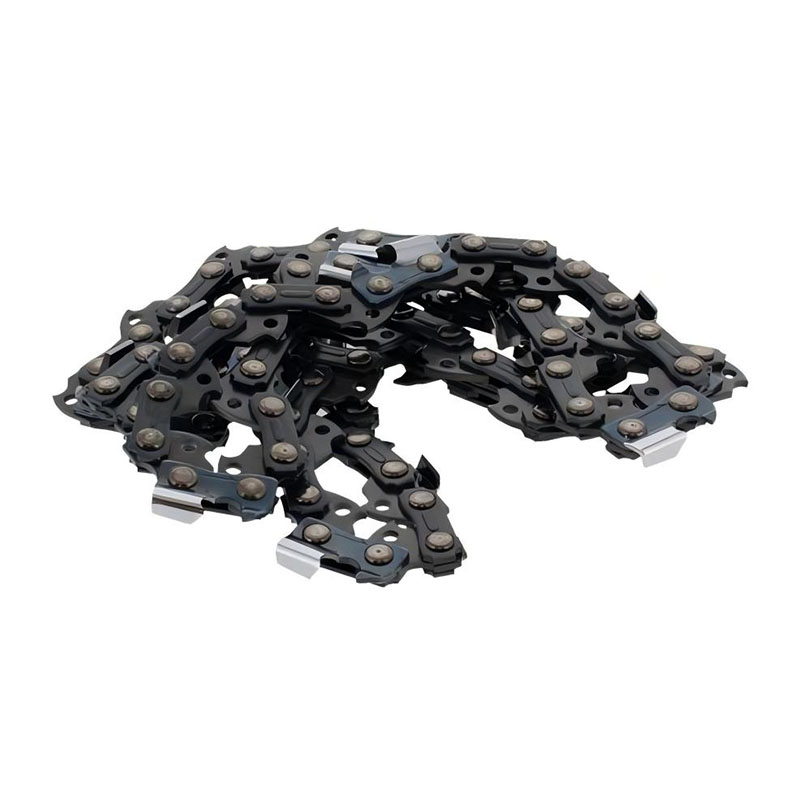
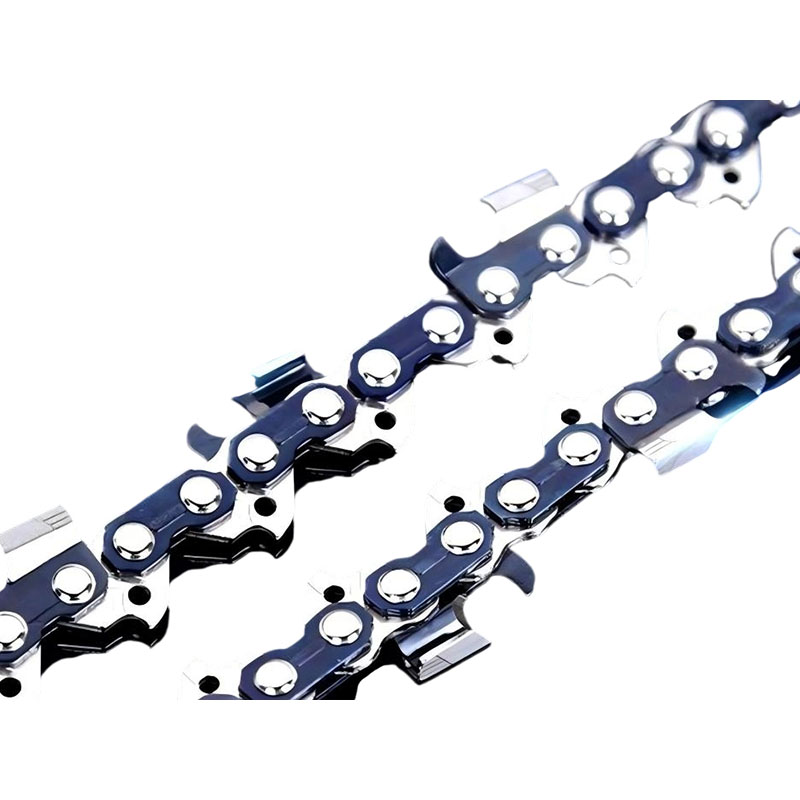
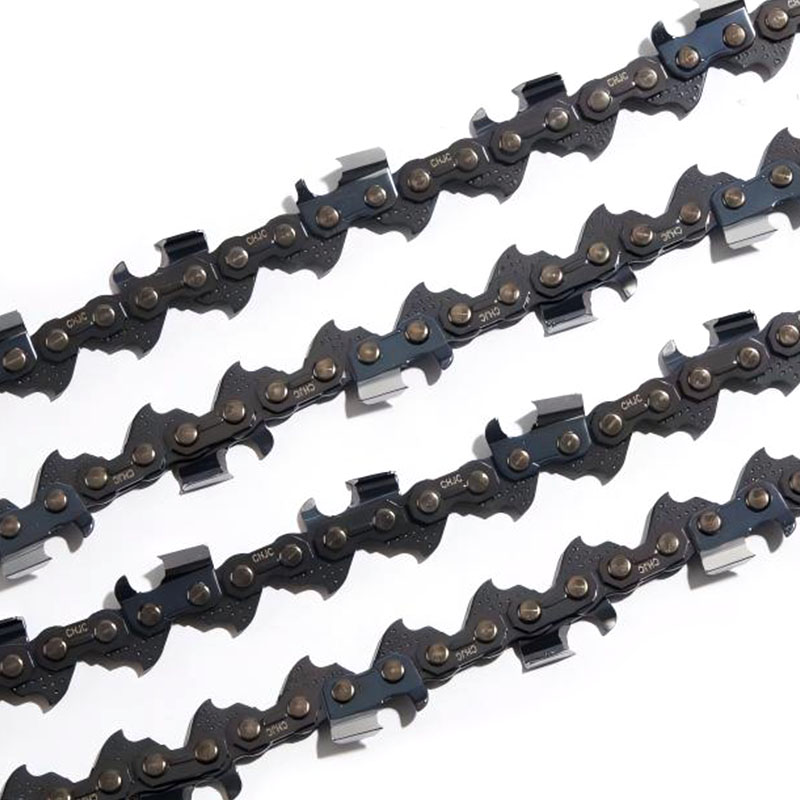
The 3/8'' Saw Chain is the most widely used chainsaw chain pitch for professional and semi-professional firewood and logging work. The "3/8''" refers to the pitch — the distance between any three consecutive rivets divided by two — equaling 0.375 inches (9.52 mm). This pitch provides the right balance of cutting speed, tooth engagement, and chain strength for cutting logs in the 6-inch to 24-inch diameter range that most firewood processors encounter.
3/8'' Saw Chain Specifications
The 3/8'' standard chain (not LP/Low Profile) is designed for medium to large chainsaws and serious cutting work. Key specifications include:
- Pitch: 3/8'' (0.375'' / 9.52 mm)
- Gauge options: .050'' (1.3 mm), .058'' (1.5 mm), .063'' (1.6 mm) — gauge must match the guide bar groove width
- Material: 68CrNiMo3 alloy steel with precision heat treatment for hardness and toughness balance
- Cutter types: Full-chisel (square-cornered, fastest cutting through clean hardwood and frozen wood) or semi-chisel (rounded-corner, more forgiving in dirty or sandy wood)
- Compatible engine size: Typically suits chainsaws of 45cc and above for full-pitch 3/8'' work
Why 3/8'' Is the Right Chain for Log Splitting Work
When running a chainsaw log splitter attachment, the chain faces significant side-loading and pinching forces as the wedge opens the wood behind it. The standard 3/8'' chain's heavier gauge and larger drive links give it the structural rigidity to handle this stress without deflecting or derailing. Its wider kerf compared to low-profile chains also means the wedge has more material removed to enter cleanly.
For firewood processing runs — where the same chain may cut dozens of rounds in a single session — the durability of the 3/8'' full-pitch chain's cutters directly determines how long you can work before stopping to sharpen. Full-chisel 3/8'' chains stay sharper longer in clean, knot-free softwood; semi-chisel variants are the better choice for mixed hardwood lots where hidden dirt, sand, or small stones are common.
3/8'' LP Saw Chain: High-Volume Home Firewood Processing
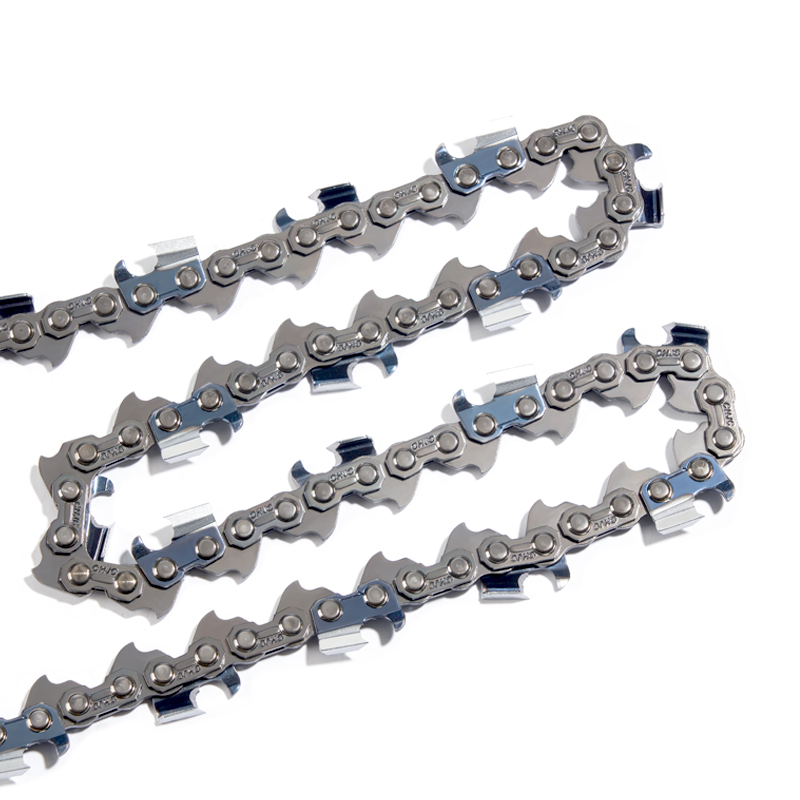
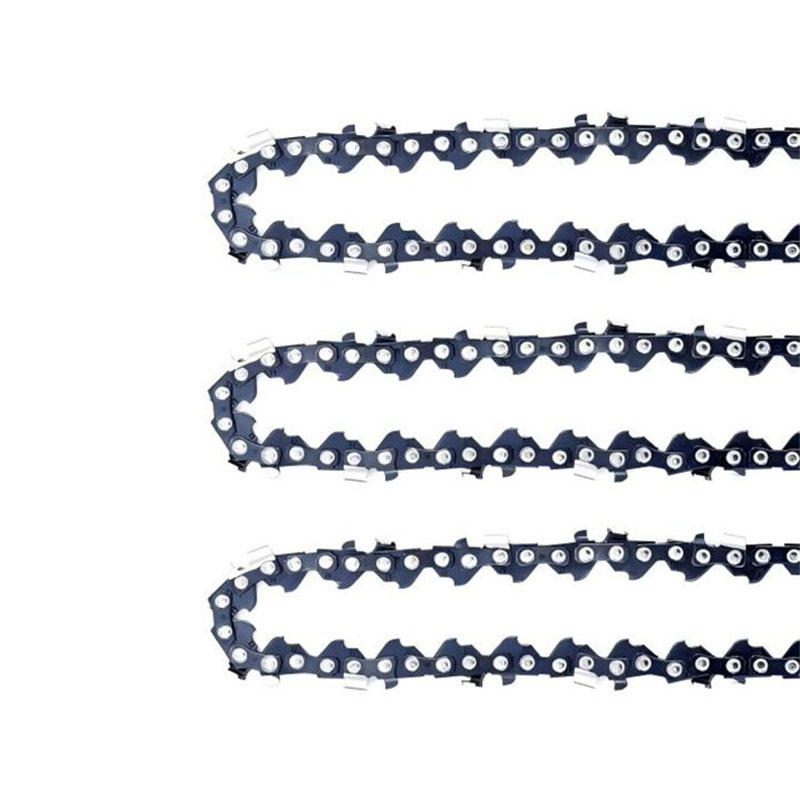
The 3/8'' LP (Low Profile) Saw Chain shares the same 3/8'' pitch as the full-pitch chain but uses a lower depth gauge (raker) and thinner gauge (.043'' or .050''). This makes it lighter, faster-running, and better suited to smaller chainsaws — typically those in the 30cc–45cc range — that are used by homeowners, orchardists, and part-time firewood cutters working with wood up to about 12 inches in diameter.
The low-profile design reduces kickback tendency, making it the safer and more practical choice for occasional users who process firewood seasonally rather than commercially. For a chainsaw log splitter used on a weekend firewood operation — cutting and splitting pine, birch, or poplar rounds in the 6–10 inch range — the 3/8'' LP chain provides more than enough performance with a noticeably smoother, more manageable cutting feel.
Mysawchain.com offers the 3/8'' LP chain in both .043'' and .050'' gauges, manufactured from 68CrNiMo3 alloy steel — the same base material as the professional full-pitch chain — ensuring that the lower-profile design does not compromise the quality of the steel or heat treatment used in the cutters.
1/4'' Saw Chain: Precision Cutting Before Log Splitting
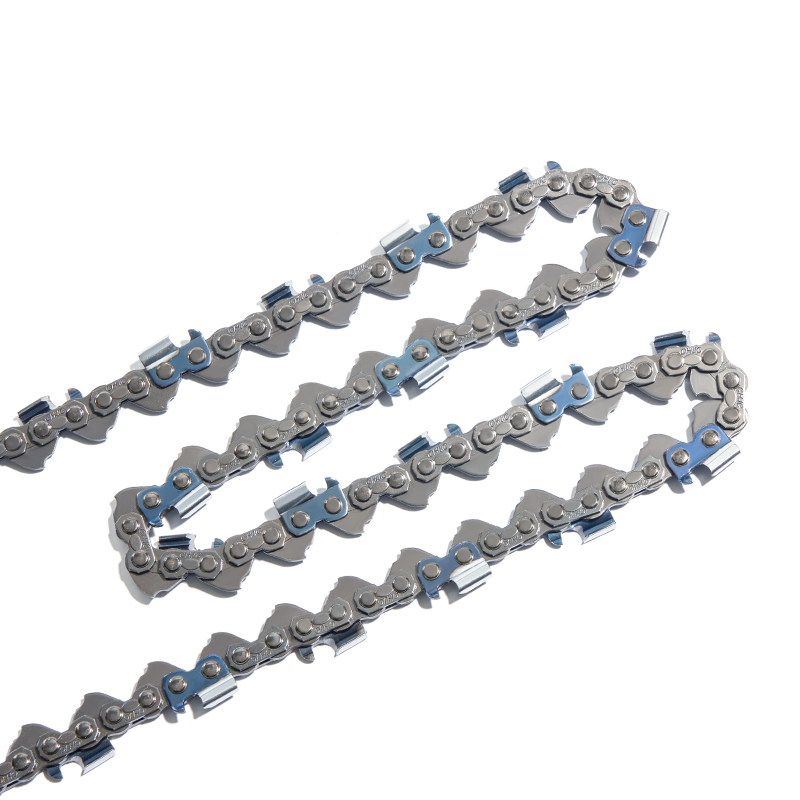
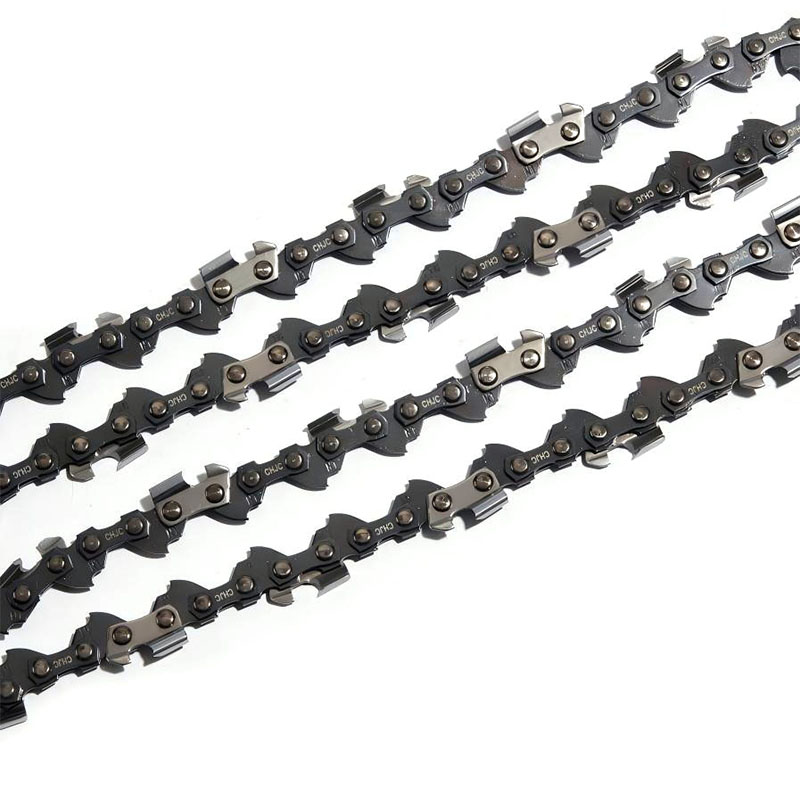
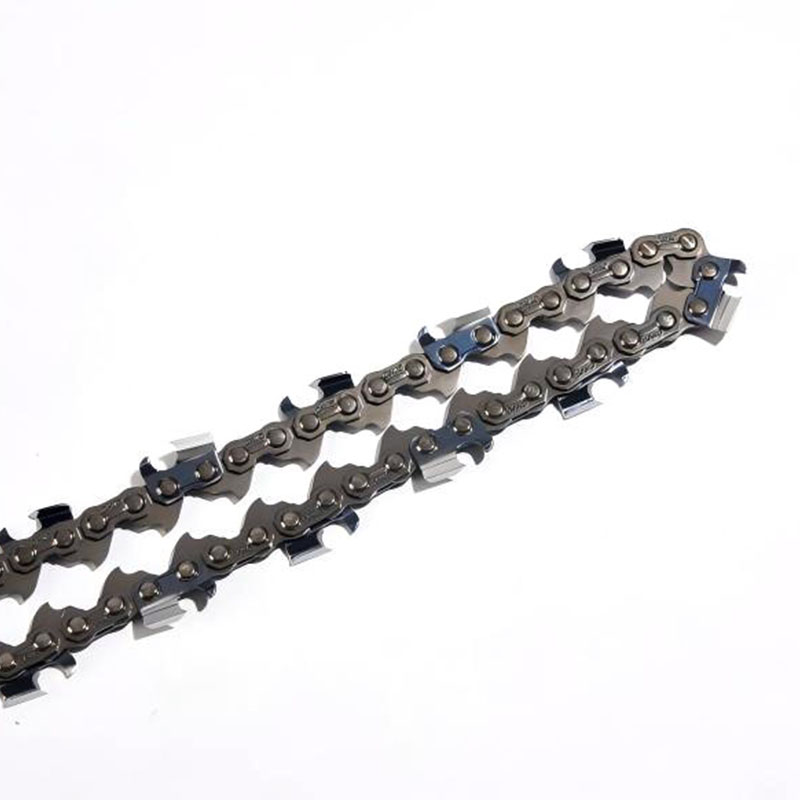
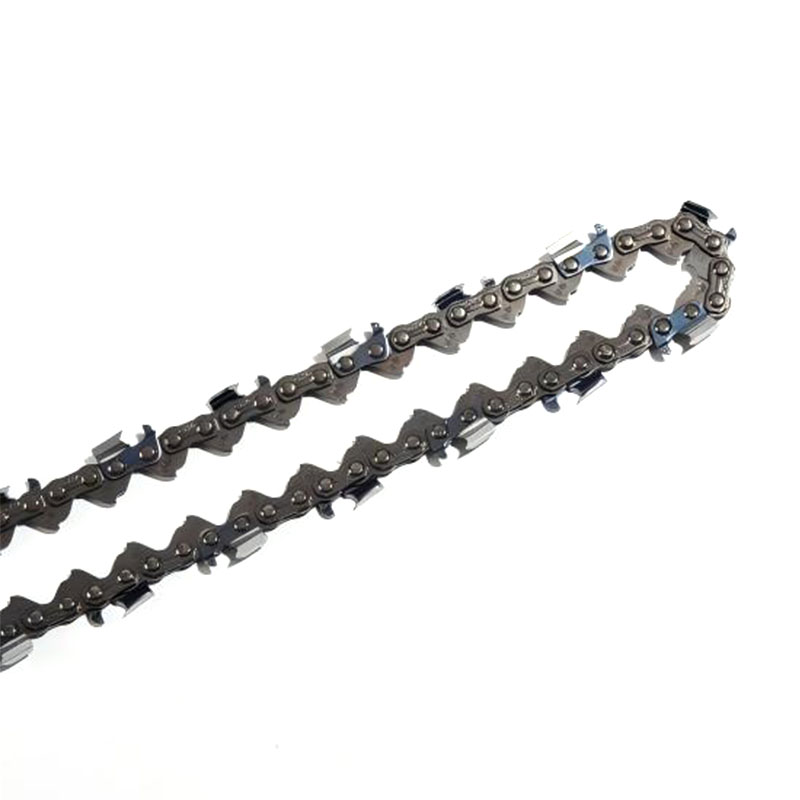
The 1/4'' Saw Chain occupies the opposite end of the pitch spectrum from heavy-duty logging chains. With a pitch of just 0.25 inches (6.35 mm), it is the smallest standard chainsaw chain pitch available — designed specifically for one-handed pruning saws, pole saws, and small battery or petrol-powered chainsaws used for branch work, limbing, and small-diameter timber processing.
In the context of a firewood operation, the 1/4'' saw chain handles the preparatory work that precedes log splitting: limbing felled trees, cutting branches down to manageable lengths, and processing small-diameter material (typically under 4 inches) that does not warrant running a full-size chainsaw. Using a pole saw or small chainsaw fitted with a 1/4'' chain for this work keeps the larger, heavier saw reserved for actual log-length crosscutting and the splitting attachment workflow.
1/4'' Saw Chain Specifications
- Pitch: 1/4'' (0.25'' / 6.35 mm)
- Gauge options: .043'' (1.1 mm) and .050'' (1.27 mm)
- LP variant: 1/4'' LP .043'' — the lowest-profile option, optimized for one-handed pruning tools and the smallest electric chainsaws
- Material: 68CrNiMo3 alloy steel
- Design purpose: Low-vibration, low-profile chain for precision pruning, limbing, and small-diameter wood harvesting
- Best application: Harvesting small-diameter timber, limbing, maintenance and tree service work where cut quality and smoothness matter
Why 1/4'' Chains Produce Exceptionally Clean Cuts
The smaller pitch and finer tooth geometry of the 1/4'' chain produces a narrower kerf and a smoother cut surface than any larger-pitch chain. For log-splitting preparatory work — particularly when processing firewood rounds from ornamental or fruit trees where the cut appearance matters — the 1/4'' chain on a pole saw or compact chainsaw leaves clean, splinter-free cross-sections with minimal bark tearing.
Comparing 3/8'' and 1/4'' Saw Chains for Firewood Work
Choosing between a 3/8'' Saw Chain and a 1/4'' Saw Chain is not a matter of one being better than the other — they serve fundamentally different roles in a firewood processing workflow. The table below clarifies which chain fits which task.
| Feature | 3/8'' Saw Chain | 3/8'' LP Saw Chain | 1/4'' Saw Chain |
|---|---|---|---|
| Pitch | 3/8'' (9.52 mm) | 3/8'' LP (9.52 mm) | 1/4'' (6.35 mm) |
| Gauge Options | .050'', .058'', .063'' | .043'', .050'' | .043'', .050'' |
| Typical Chainsaw Size | 45cc and above | 30cc–45cc | Small electric, pole saw, pruner |
| Log Diameter Range | Up to 24''+ (heavy logs) | Up to 12'' | Up to 4'' (branches, limbs) |
| Log Splitter Use | Primary cutting chain — ideal | Light-duty splitting use | Preparatory limbing only |
| Kickback Risk | Moderate | Low | Very low |
| Material | 68CrNiMo3 | 68CrNiMo3 | 68CrNiMo3 |
| Best User | Professional logger, commercial firewood producer | Homeowner, orchardist, occasional user | Arborist, gardener, tree service |
How to Select the Right Saw Chain for Your Chainsaw Log Splitter Setup
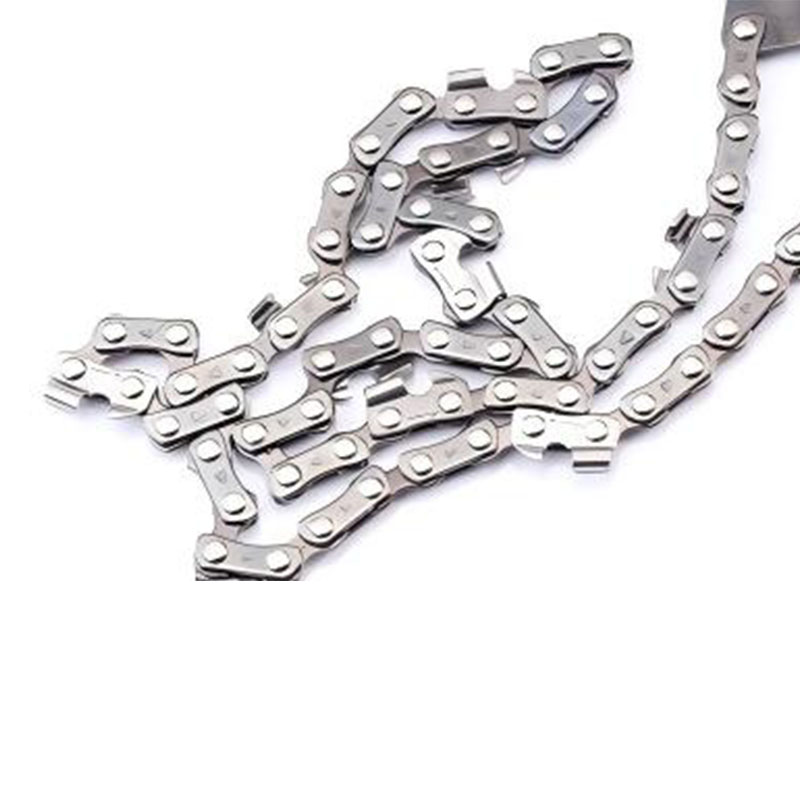
Matching the saw chain to your chainsaw and log splitter attachment involves three measurements that must all align: pitch, gauge, and drive link count. Getting any one of these wrong means the chain will not fit on the bar or will not engage the sprocket correctly.
- Identify your guide bar pitch: The pitch is stamped on the guide bar itself, or listed in the chainsaw's owner manual. For a chainsaw used with a log splitter attachment, you almost always need 3/8'' standard pitch on a mid-to-large saw, or 3/8'' LP on a smaller saw.
- Measure the guide bar groove (gauge): Insert a flat screwdriver blade into the groove. Match the blade width to the gauge specification (.043'', .050'', .058'', or .063''). The drive links must fit snugly in the groove without excessive side play.
- Count the drive links: Drive link count is determined by bar length and pitch. Count the total number of drive links on the existing chain, or find the count in the chainsaw's specifications. This determines the exact chain length needed.
- Choose cutter type for your wood: For clean, dry softwood, a full-chisel 3/8'' chain provides the fastest cutting speed. For mixed hardwood lots or wood with soil contamination, choose a semi-chisel cutter for better durability between sharpenings.
- Verify gauge matches your log splitter attachment requirements: Some log splitter attachments have minimum guide bar width requirements. Confirm the attachment manufacturer's specifications before running a thinner-gauge chain with the splitting wedge.
Saw Chain Maintenance for Log Splitting: Keeping Cutting Performance at Its Peak
Log splitting work is hard on saw chains. The pinching forces from the splitting wedge, the frequency of cuts per session, and the occasional contact with dirty bark or embedded grit all accelerate wear. A proper maintenance routine is the difference between a chain that lasts a full season and one that needs replacing after a few cords of wood.
Tensioning
Chain tension is the most critical daily maintenance task. A correctly tensioned chain should be snug against the guide bar with no sag on the underside, but should still pull freely around the bar by hand when the saw is off. New chains — including new 3/8'' and 1/4'' saw chains — naturally stretch during the first few uses. Check tension every 15 minutes during initial break-in, and re-check at the start of every session thereafter.
Lubrication
The guide bar oil reservoir must remain filled throughout any cutting session. Bar and chain oil lubricates the drive links in the bar groove, the sprocket engagement, and the cutter rivet pivots. Running a saw dry — even briefly — causes rapid heat buildup that glazes the bar groove and blunts cutters faster than any amount of cutting. Use only high-quality bar and chain oil.
Sharpening Schedule
For firewood processing with a 3/8'' chain, sharpen when you notice the saw starting to push sawdust rather than chips, when the saw requires noticeably more downward pressure to cut, or after any contact with soil, rocks, or metal. For the 1/4'' chain used in limbing and branch work, inspect cutters after every use — the smaller cutter size means they lose their edge faster relative to their work volume.
Storage
Store unused chains lightly oiled in a sealed bag or container to prevent corrosion. A properly maintained and stored 3/8'' or 1/4'' saw chain will deliver multiple seasons of reliable service before replacement is needed.
Choosing a Saw Chain Supplier: Quality Materials Make the Difference
Not all saw chains are manufactured to the same material or dimensional standard. For a chainsaw log splitter application — where the chain faces above-average mechanical stress from the splitting wedge — the quality of the steel, heat treatment, and rivet precision directly determines how long the chain holds its edge and its dimensional integrity under load.
Mysawchain.com, operated by Zhejiang Hengjiu Saw Chain Co., Ltd. — a chain transmission specialist founded in 1953 with over 70 years of manufacturing history operating across 8 factories — produces both 3/8'' Saw Chains and 1/4'' Saw Chains from 68CrNiMo3 alloy steel, a chromium-nickel-molybdenum steel grade selected for its combination of hardness after heat treatment and toughness under impact loading. This steel grade gives the cutters their ability to hold a sharp edge through extended cutting sessions while resisting brittle fracture failure when the chain contacts hard inclusions or is caught in a pinching bind.
The full product range — from 1/4'' precision pruning chains through 3/8'' LP, 3/8'' standard, .325'', and up to .404'' harvester chains — covers every step of the firewood and timber processing workflow from initial limbing through final log bucking, with consistent material specifications across the entire chain inventory.