English
 中文简体
中文简体
 русский

Content
Picture a 20-inch Douglas fir log moving through the breakdown saw at your mill. The saw chain driving that cut is a small line item in the budget, but when it is wrong, it stops the entire line. Industrial lumber mill operators see chain as a consumable; whether that means a smart purchase or a costly mistake depends almost entirely on how the chain is specified.
The best saw chain for an industrial lumber mill is not the cheapest one. It is the chain whose pitch, gauge, and cutter geometry match the cuts you run every day. A mismatch shows up as vibration, rough board faces, rapid guide bar wear, and chain breakage. Those problems cost far more than the difference in price per foot.
The Three Variables That Decide Saw Chain Performance
Start with three measurements before you compare brands. If any of them is incorrect, the chain will not seat properly, will not cut efficiently, and will wear out early.
| Variable | What It Controls | Typical Values in Mill Work |
|---|---|---|
| Pitch | Sprocket match and chain strength | 3/8″, .325″, .404″ |
| Gauge | Guide bar groove fit | .043″, .050″, .058″, .063″ |
| Cutter type | Cutting speed, smoothness, and durability | Full chisel, semi-chisel, chipper |
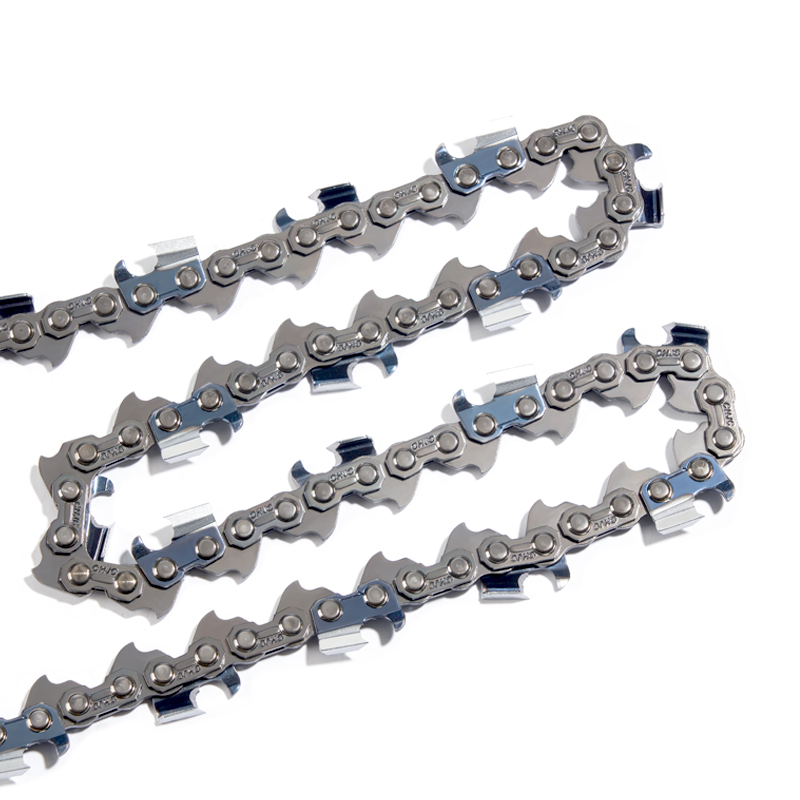
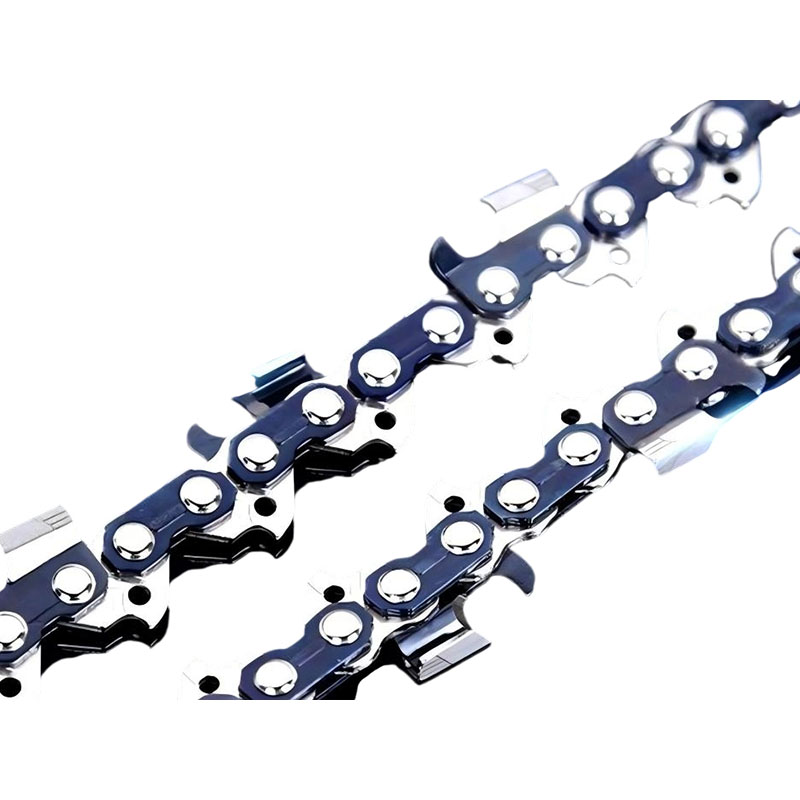
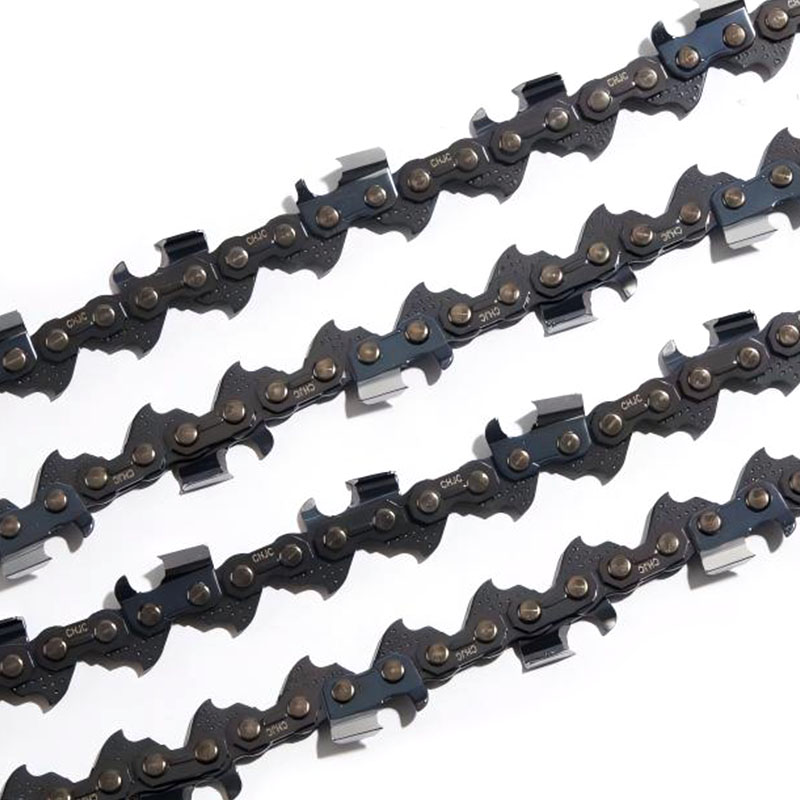
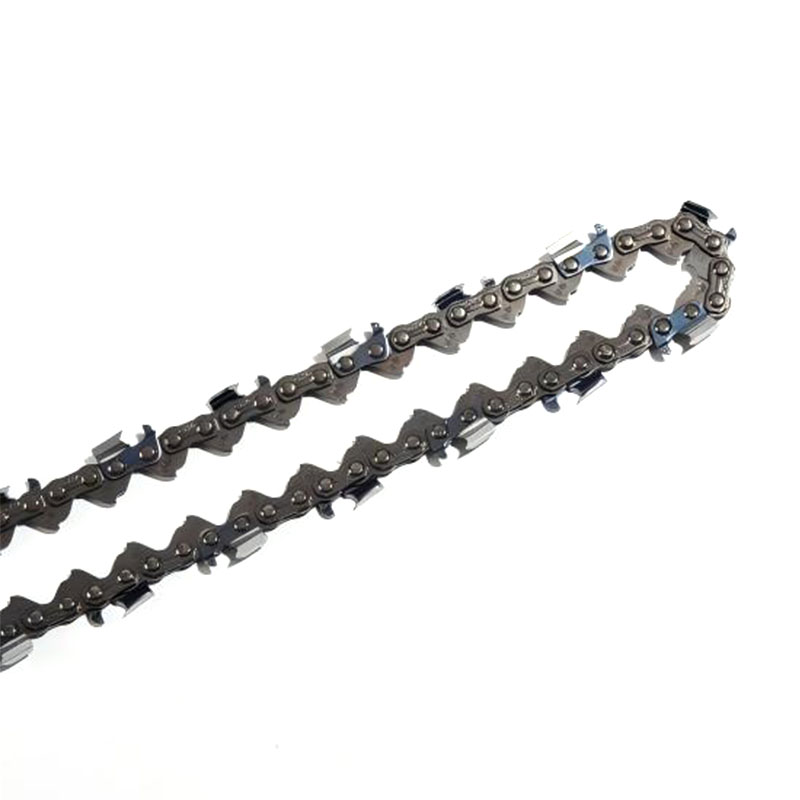
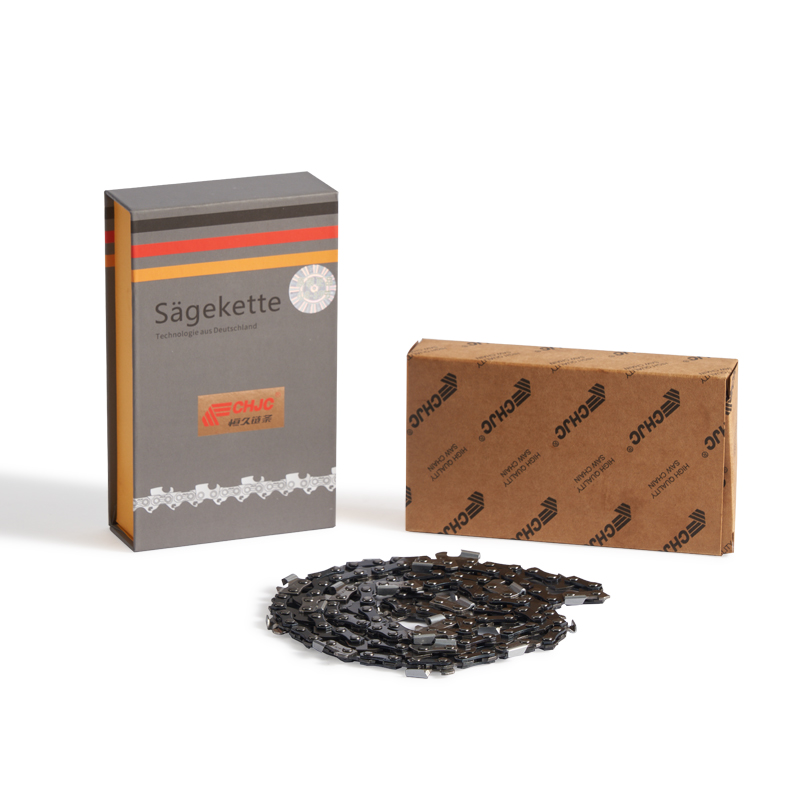
In mill yards and at log landings, high-powered chainsaws handle felling, limbing, and cross-cutting before the log reaches the infeed deck. For this work, a .404″ chipper series chain is common because its full-round cutters are less sensitive to dirt, bark, and dry knots. That makes it one of the most practical choices for outdoor wood processing environments. Learn how to make the right chipper saw chain selection for your mill.
 .404" .063" SAW CHAINSpecification PrecautionsView Product →
If the chain is selected without accounting for these variables, the direct result is downtime. A saw chain with the wrong pitch cannot be tensioned correctly; it jumps sprockets and can break at the worst possible moment. Using the correct gauge is equally critical, because a chain that is too thin for the guide bar will cut a too-narrow kerf and cause the bar to overheat.
Matching Cutter Geometry to the Wood You Process
Cutter geometry has the biggest effect on how the chain feels in use. The three common families used in lumber mill operations are full chisel, semi-chisel, and chipper. There is no perfect cutter for every job; the right one depends on the species you cut and the condition of the bark.
- Full chisel: Square-corner cutters deliver the fastest, most aggressive cut. On clean softwood, this is the preferred choice. On dirty or frozen wood, the sharp corner dulls quickly.
- Semi-chisel: Round-corner cutters are slower on a fresh cut but hold their edge longer in abrasive conditions. Many mills split the difference by using semi-chisel on yard work and full chisel on the saw deck.
- Chipper: Round, raked cutters are the most tolerant of dirt, bark, and frozen wood. They are widely used in high-power applications where cleaning the cut is not practical.
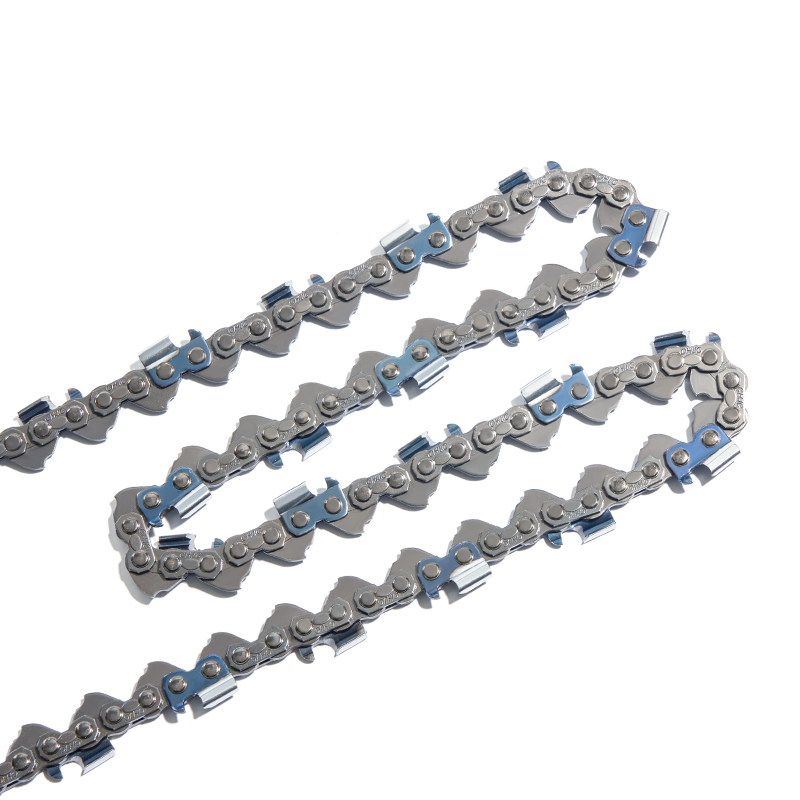
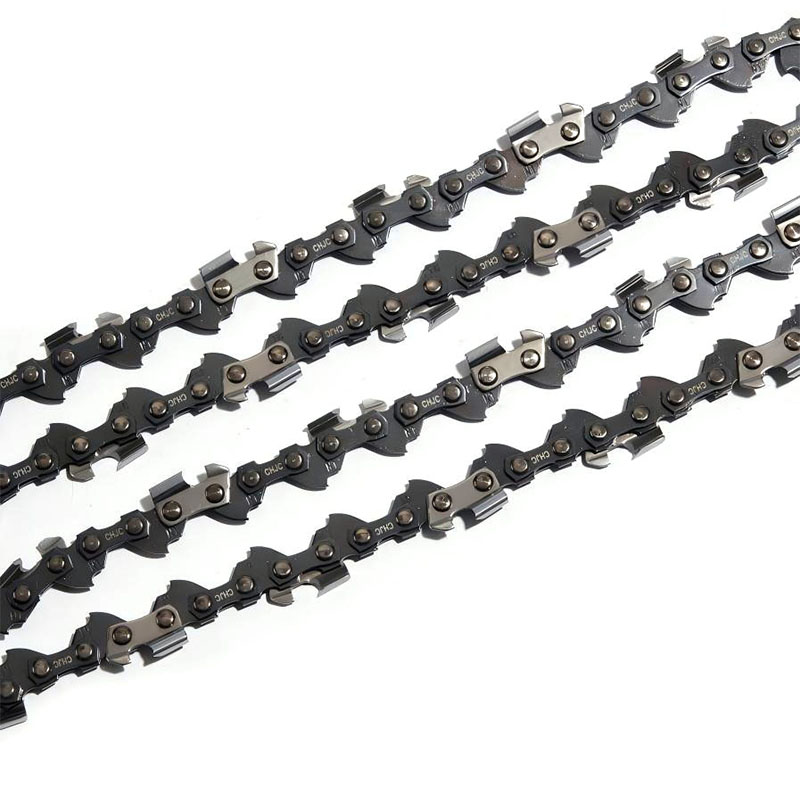
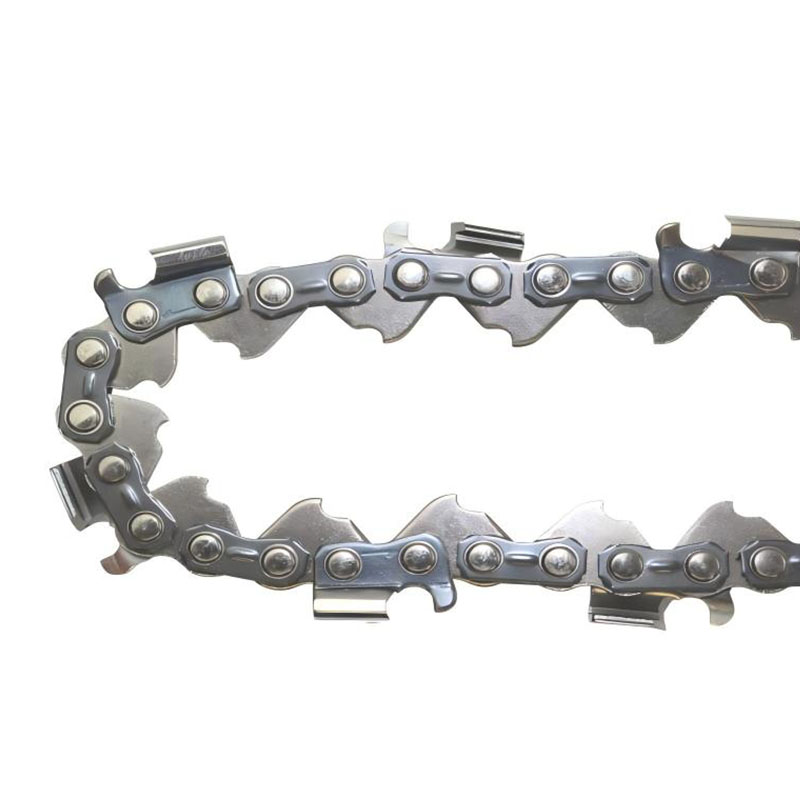
For precision trimming, low-profile chains are a practical complement. A 3/8″ LP low-profile chain produces a lower kickback risk and a finer cut, which makes it useful in trimming and edging stations where the operator is close to the chain.
 3/8" LP .050" SAW CHAINSpecification PrecautionsView Product →
Regular filing and cleaning keep the cutters effective. The sharpening interval on a full chisel chain is shorter than on a chipper chain, and that difference should be scheduled into your maintenance calendar. As a rule of thumb, a poorly maintained chain costs the mill twice as much in labor and downtime as a well-maintained chain of the same price.
What to Verify Before You Place a Bulk Order
When you buy chain by the drum, the difference between a reliable batch and a problematic one is not visible in the labeling. Quality issues appear in guide bar fit, cutting feel, and chain stretch. The most effective way to protect your mill is to check five items on the technical data sheet.
| Inspection Item | Why It Matters | What to Ask the Supplier |
|---|---|---|
| Hardness value | Higher hardness resists cutting edge damage but can make the chain brittle | Ask for the Rockwell hardness range and whether it is through-hardened or surface-hardened |
| Gauge tolerance | A chain that is even 0.003″ off can bind in the guide bar | Request the tolerance on drive link thickness |
| Tensile strength | Heavy logs need a chain that can absorb shocks without stretching | Ask for the pull force required to break or deform the chain |
| Cutter shape consistency | Inconsistent cutters cause vibration and rough boards | Ask how cutter geometry is checked during production |
| Batch traceability | Mills need to know which batch failed so they can stop it at loading | Ask if each batch has a production code |
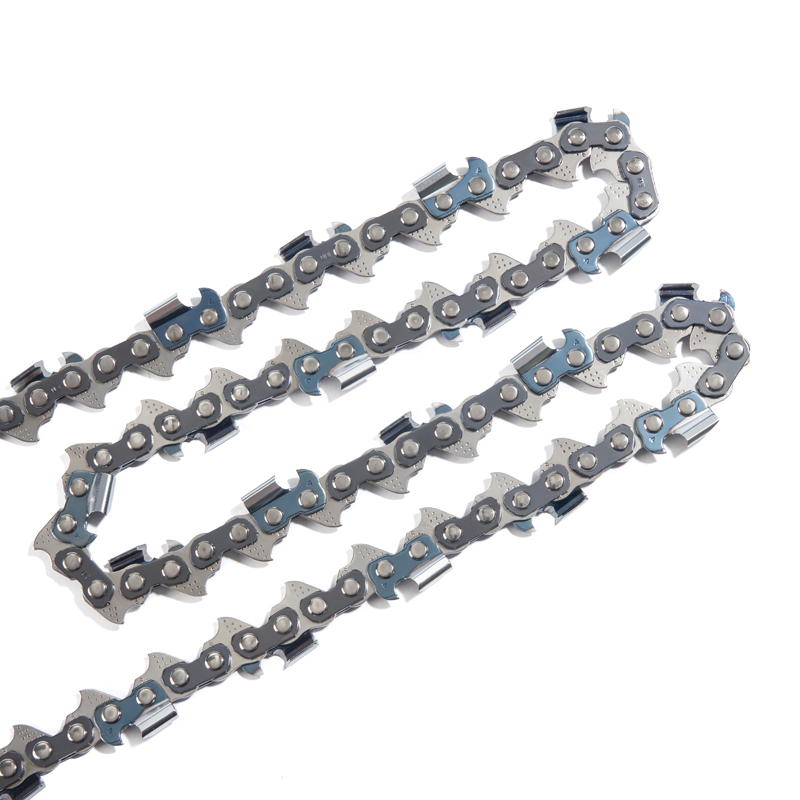
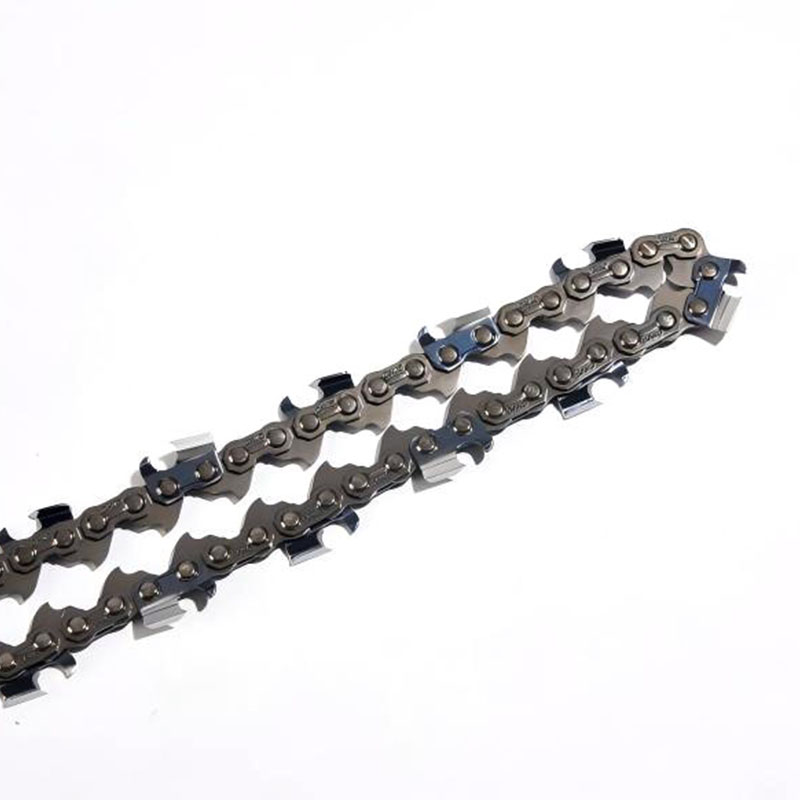
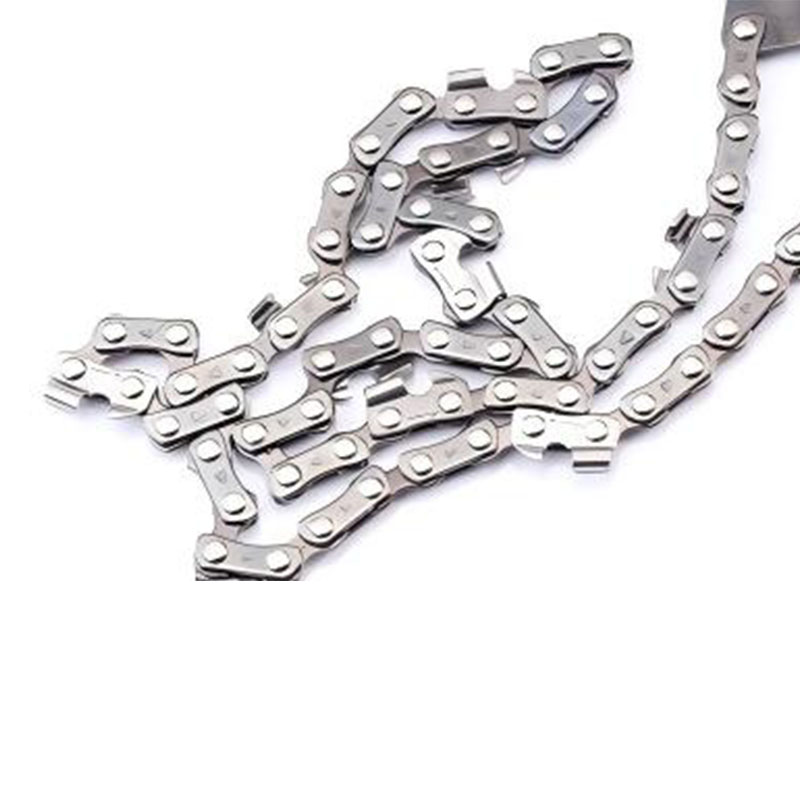
For the biggest logs and the most demanding cuts, a .325″ full chisel chain is often the right balance. It provides strength and speed for medium to large timber without the weight of a full .404″ mechanical system, and it is a solid choice for chainsaws used up and down the mill site.
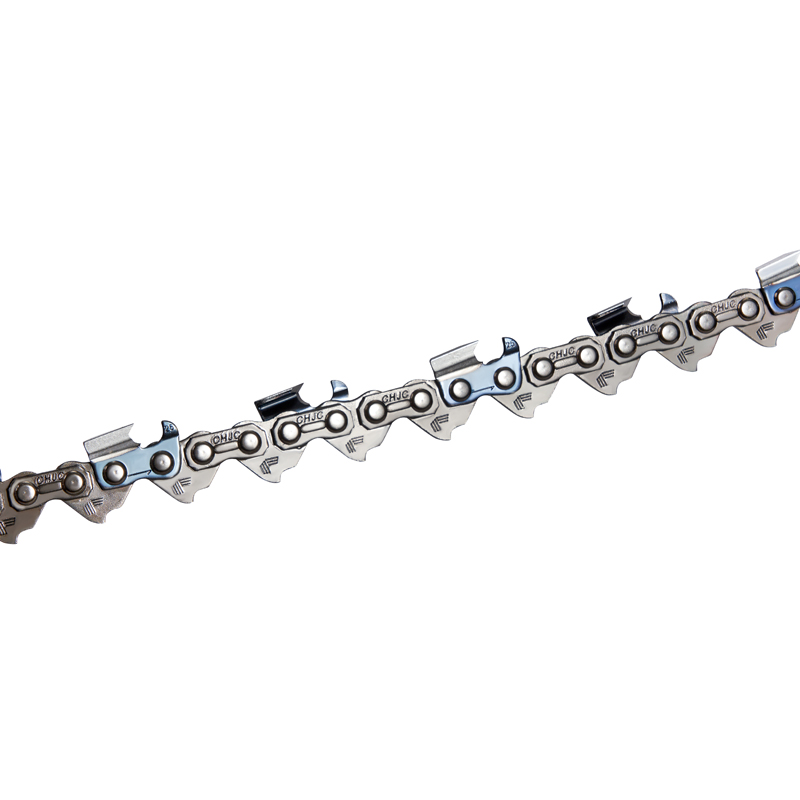 .325" .050" SAW CHAINSpecification PrecautionsView Product →
At Zhejiang Hengjiu, the saw chain production relies on a group network that includes 8 manufacturing factories, 3 testing centers, and 3 tooling centers, so a buyer can ask for verification data instead of relying only on a catalog sheet.
Common Chain Failures in a Lumber Mill and How to Prevent Them
Even a perfectly matched chain can fail if it is used or maintained incorrectly. The signs are usually visible before the chain is lost, and recognizing them saves the saw bar and the operator's time.
- Chain skipping on the sprocket: Usually caused by an incorrect pitch or excessive slack. Check the drive sprocket, not just the chain, before replacing the chain.
- Guide bar rails showing color: A blue or brown tint on the rails indicates overheating. Correct the gauge and check the chain tension before running the saw again.
- Uneven board faces: This is a sign of inconsistent cutters. File or replace the cutters on a regular rotation.
- Chain stretch: Some stretch is normal during the first hours of use, but if the chain stretches too far too soon, the steel quality should be questioned.
- Broken drive links: Usually the result of hitting a hard foreign object, but also a sign of low-quality steel with hidden cracks.
An effective preventive strategy is simple. Train the crew to inspect the chain and guide bar together at every shift change. Mills that run a fixed maintenance interval spend less on chain replacement than mills that wait for a visible failure.
Selecting Saw Chain for an Industrial Lumber Mill
The decision is not about finding the lowest price per foot. It is about matching pitch, gauge, and cutter geometry to the specific work on your mill, and then verifying that the supplier can deliver consistent hardness and gauge tolerance. When those conditions are met, chain becomes a small line item instead of a major cost center.
Hengjiu Group has been manufacturing power transmission products since 1953. Today it operates 8 factories, 2 provincial-level enterprise technology centers, and 3 testing centers, and employs more than 1,660 people including nationally recognized chain transmission experts. For industrial lumber mill operators who need a stable source of saw chain, that engineering depth matters as much as the price.
But the basic rule is timeless: a chain that fits the job and is maintained on schedule will keep the flow of lumber moving through your mill.