English
 中文简体
中文简体
 русский

Content
Picture this: the work is done, the saw is off, and the old chain is lying on the bench with a bent drive link. You need a replacement, but when the dealer asks for the size, you are not sure what to say. Chainsaw chain sizes look like a code of fractions and decimals, yet every chain is defined by only three numbers: pitch, gauge, and drive link count. When those three numbers match your guide bar and sprocket, the chain fits, tensions correctly, and cuts predictably. When they do not, you lose time, money, and sometimes the bar itself.
Getting the size wrong is not a small mistake. A pitch mismatch can damage the sprocket or let the chain jump off under load. A gauge mismatch means the drive links sit too loose or too tight in the bar groove, which ruins oiling and accelerates wear. A wrong link count gives you a loop that will not tension or pinches the bar. Learning these three measurements is the foundation of every saw chain buying decision, from a single replacement loop to a bulk order for a logging crew.
The three numbers that define every chainsaw chain
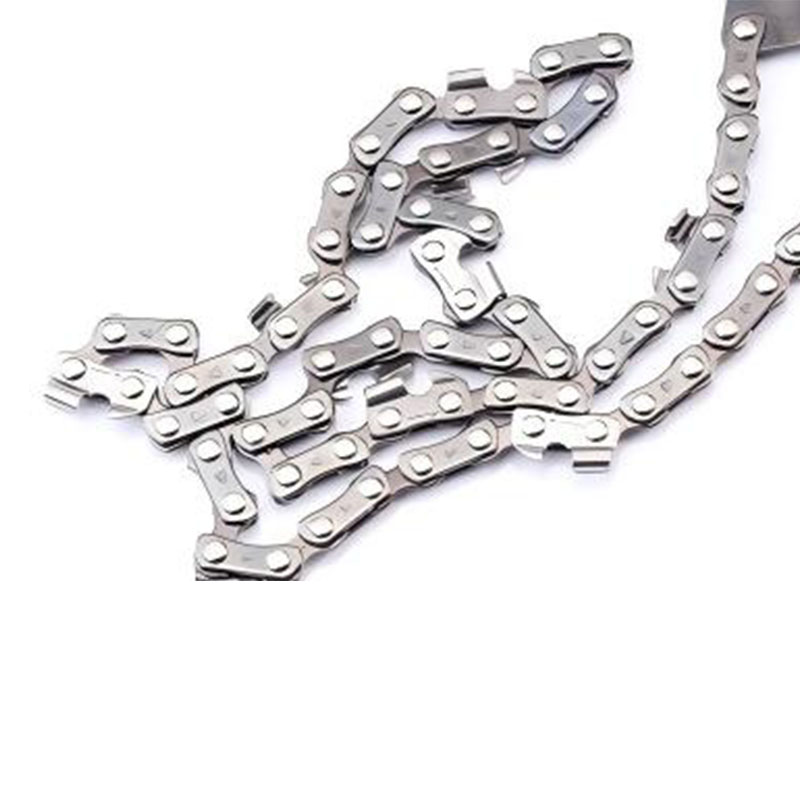
Pitch is the distance between drive links. To measure it, place a ruler across three consecutive rivets and divide the distance by two. The result, in inches, is the pitch. Modern saw chains are built in five standard pitches: 1/4", 3/8" LP, 3/8", .325", and .404". The pitch must match the sprocket on the saw and the sprocket in the nose of the guide bar. Installing the wrong pitch is one of the fastest ways to wreck both components.
Gauge is the thickness of the drive link, the part that slides inside the groove of the guide bar. The most common gauges are .043", .050", .058", .063", and .080". If the gauge is too thick, the chain will not seat in the groove. If it is too thin, the chain wobbles, the cutters lean, and the bar groove wears unevenly. Gauge is the measurement buyers overlook most often, because it cannot be judged by eye.
Drive link count is the number of drive links in a closed loop. It controls the overall length and must match the combination of bar length and nose sprocket. The same 18-inch bar from two different manufacturers can sometimes require a different link count, which is why you should always count before you order.
| Pitch | Common Gauges | Typical Use | Typical Drive Links per Loop |
|---|---|---|---|
| 1/4" | .043", .050" | Compact electric saws, arborist pruning | 40-60 |
| 3/8" LP | .043", .050" | Homeowner saws, light firewood, low-kickback work | 44-66 |
| .325" | .050", .058", .063" | Mid-size professional saws, felling and limbing | 56-84 |
| 3/8" | .050", .058", .063" | Full-size professional saws, bucking and milling | 56-100 |
| .404" | .063", .080" | High-power saws, harvesters, mechanical logging | 84-150 |
Do not let similar names fool you: 3/8" LP and 3/8" are two different chains, and the bar and sprocket must be built for the same family.
Common chainsaw chain sizes and where each one belongs
1/4" and 3/8" LP: the low-profile family
The 1/4" pitch is the smallest standard size. You will find it on compact electric saws and lightweight pruning saws, where smooth, controlled cutting matters more than speed. Because the cutters are small and the chain runs light, kickback energy stays low.
The 3/8" LP chain, also written as 3/8" low profile, is the default choice on countless homeowner saws with 14- to 18-inch bars. Its lower profile and lighter linkage reduce kickback and vibration, which makes the saw easier to control during weekend firewood cutting and overhead limbing. Many arborists also run it for climbing work for the same reason. It is an excellent choice when you prioritize control and safety over raw speed. To compare low-profile behavior with a standard chain on the same type of saw, our article on choosing a low-profile chain explains the trade-offs in practical terms.
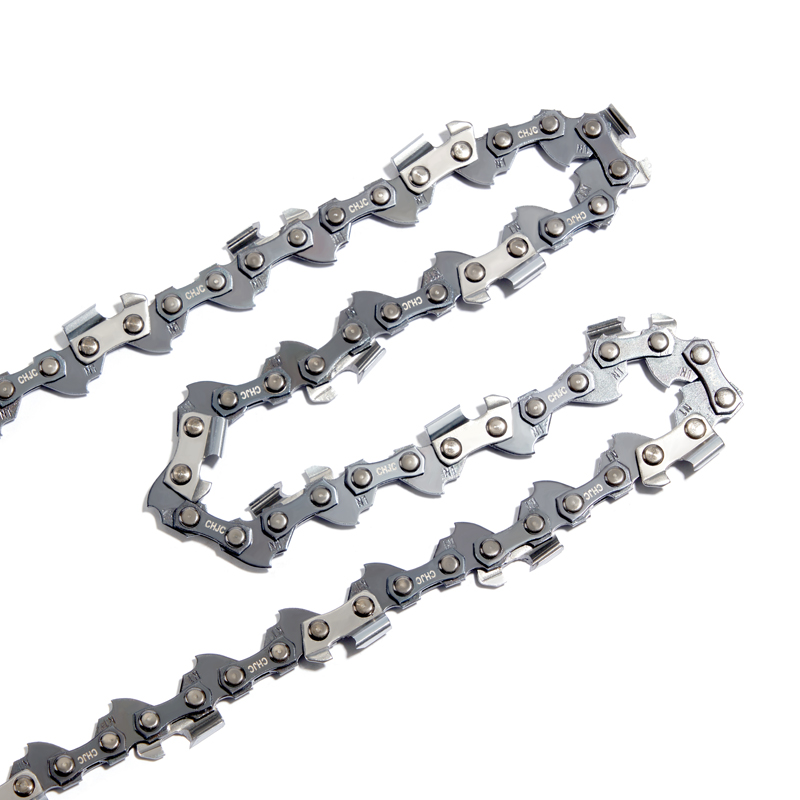
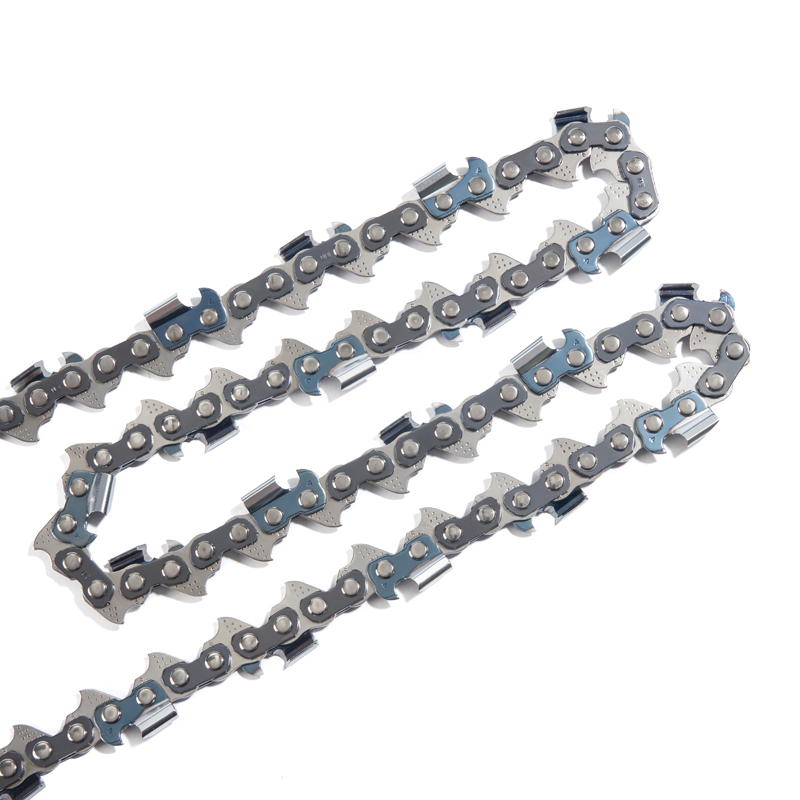
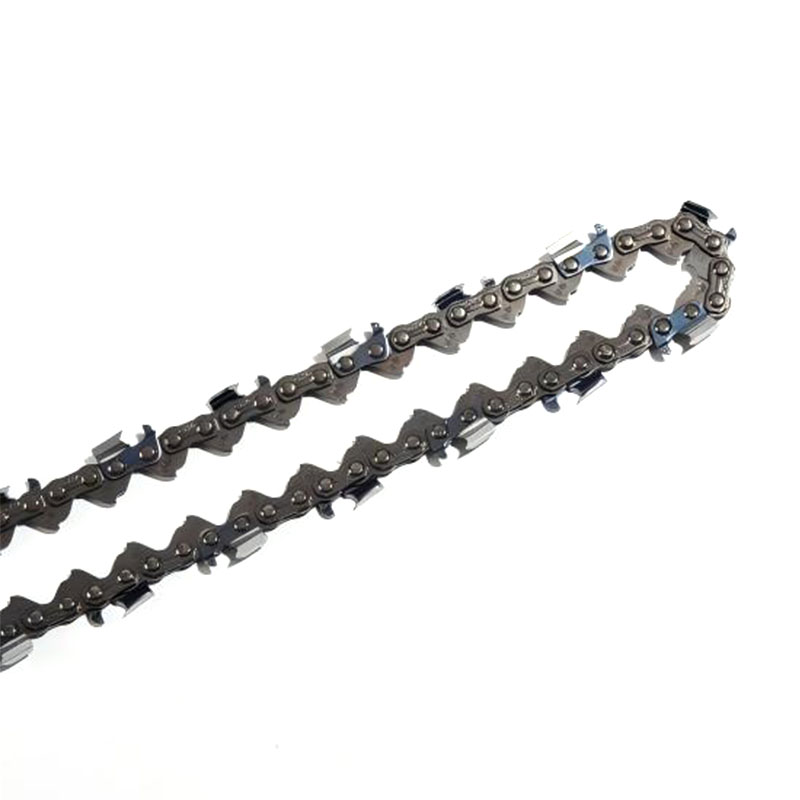
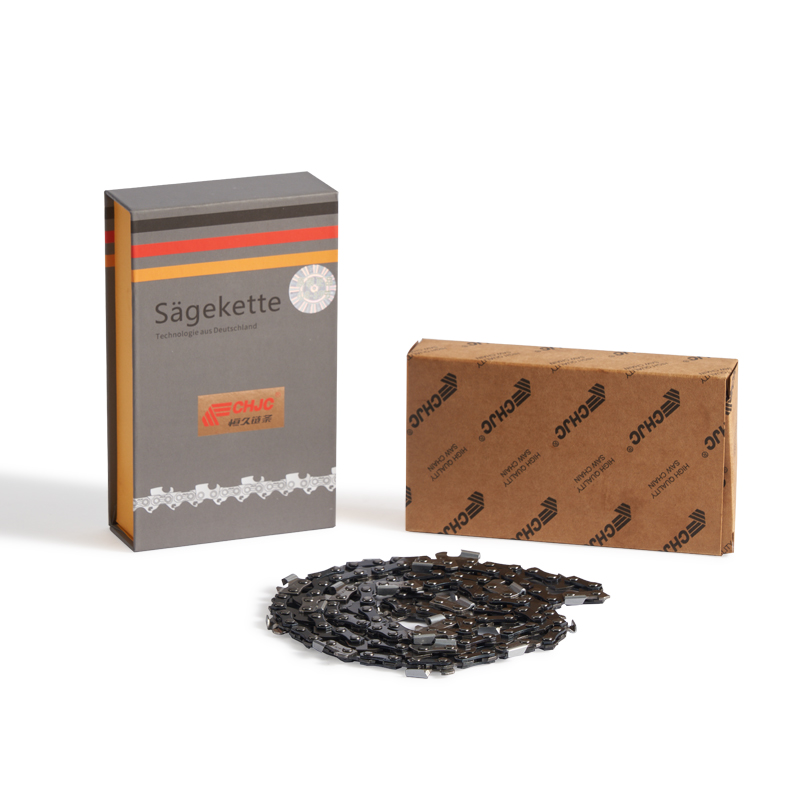 3/8" Low Profile .050" Saw Chain for Homeowner SawsThis low-profile chain reduces kickback and vibration, making it ideal for lightweight saws used in garden trimming and firewood cutting. Available in semi-chisel or full chisel with various drive link counts.View Product →
.325" and 3/8": the professional workhorses
The .325" pitch is the classic professional standard. Saws in the 50 to 70 cc range commonly run .325" with a full chisel cutter, and the combination delivers a stable, aggressive cut for felling, limbing, and firewood production. Full chisel teeth have square corners, which slice through clean wood quickly but lose their edge sooner in abrasive or dirty conditions.
Full-size 3/8" is the other professional standard. It is often paired with longer bars and larger powerheads, and it is a favorite for bucking, milling, and production cutting. The 3/8" full chisel chain is fast in the cut; the trade-off is that square-cornered cutters need more frequent sharpening and more care at the vise. If you need longer edge life in dirty wood, a chipper pattern is a more forgiving alternative.
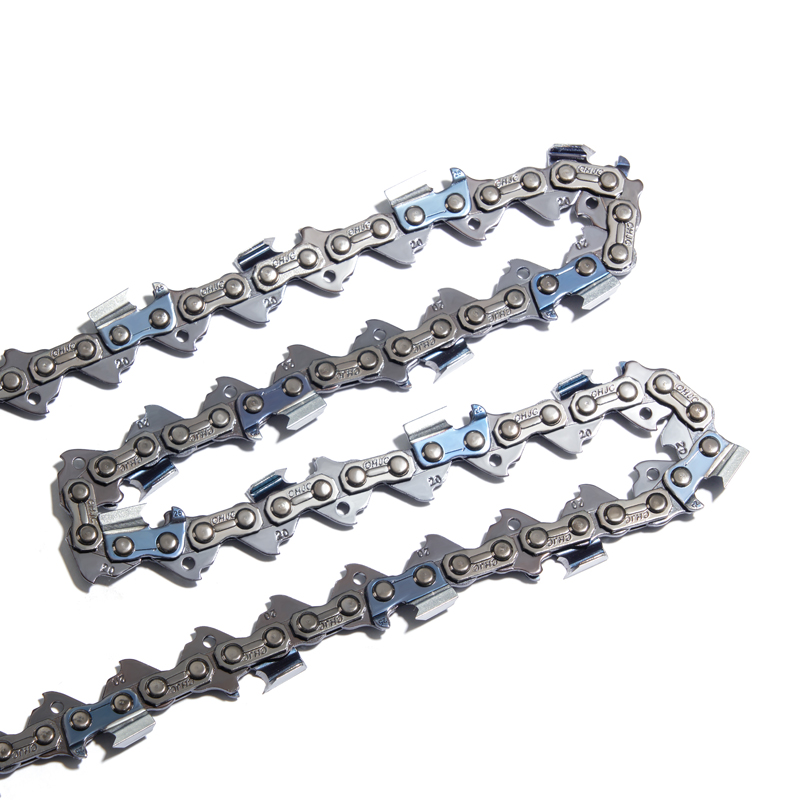
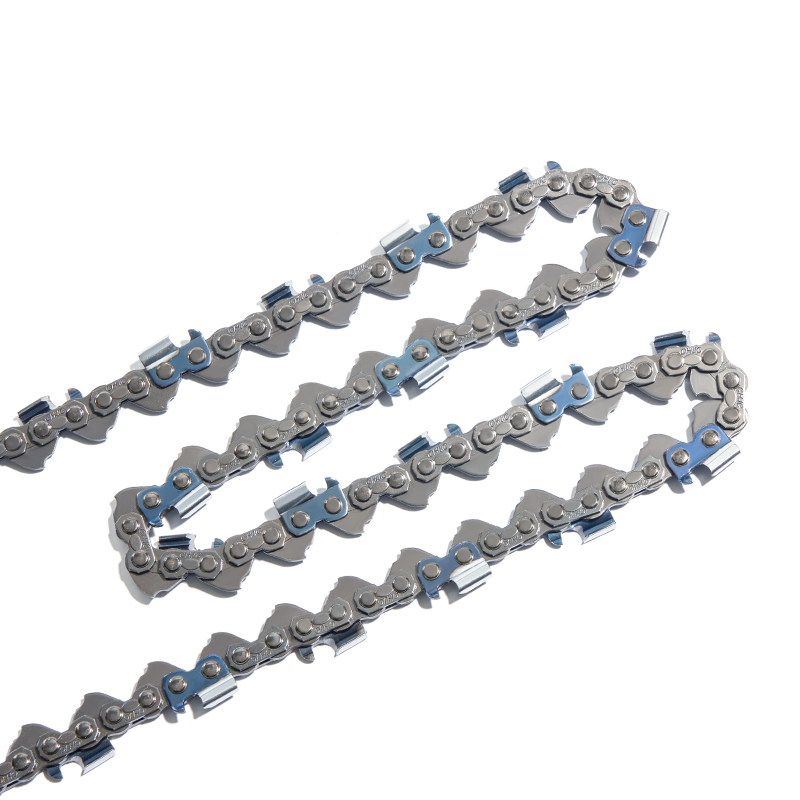
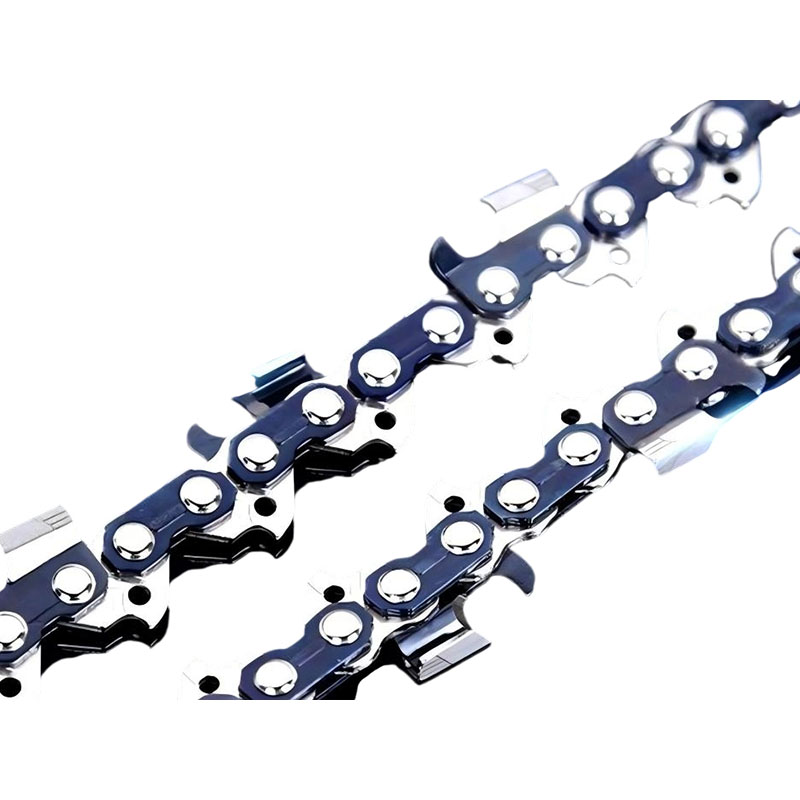
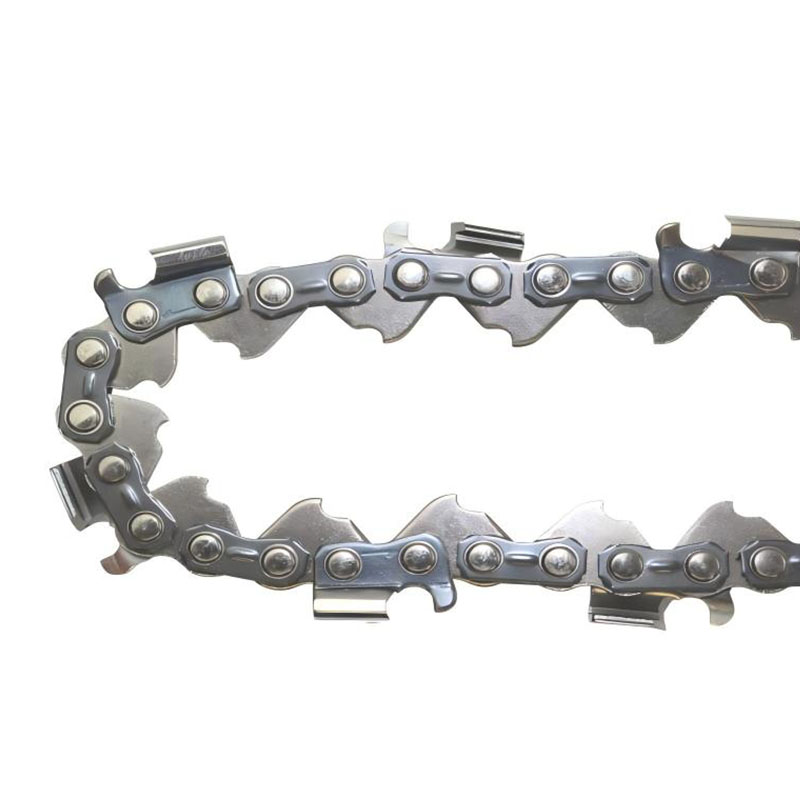
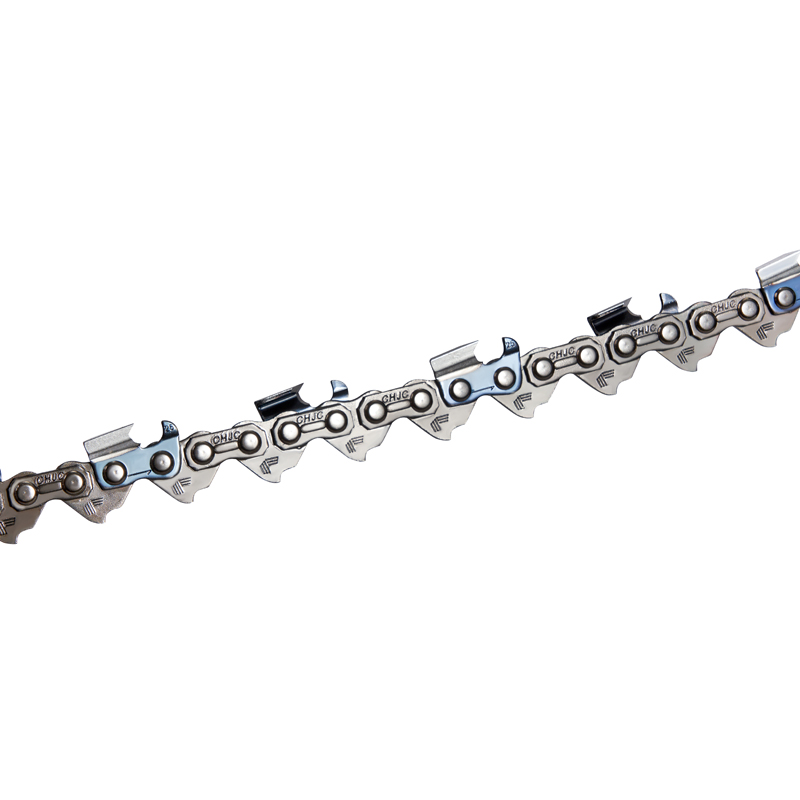 .325" .050" Professional Saw Chain with Blued CuttersDesigned for professional logging tasks like felling and limbing, this chain offers high performance and low vibration. Its blued cutters provide corrosion resistance and long-lasting sharpness for demanding conditions.View Product →
.404": heavy-duty and mechanized logging
The .404" pitch is the largest size you will meet in normal chainsaw work, and it is the dominant pitch in mechanized logging. Harvester heads and high-power felling machines use .404" chains, often with an .080" gauge, because the heavier drive links and larger cutters absorb the shock loads of continuous machine operation. The .404" chipper chain, with its rounded cutters, is especially popular on machines working through tough or dirty timber, because it holds an edge longer and tolerates debris better than a full chisel pattern.
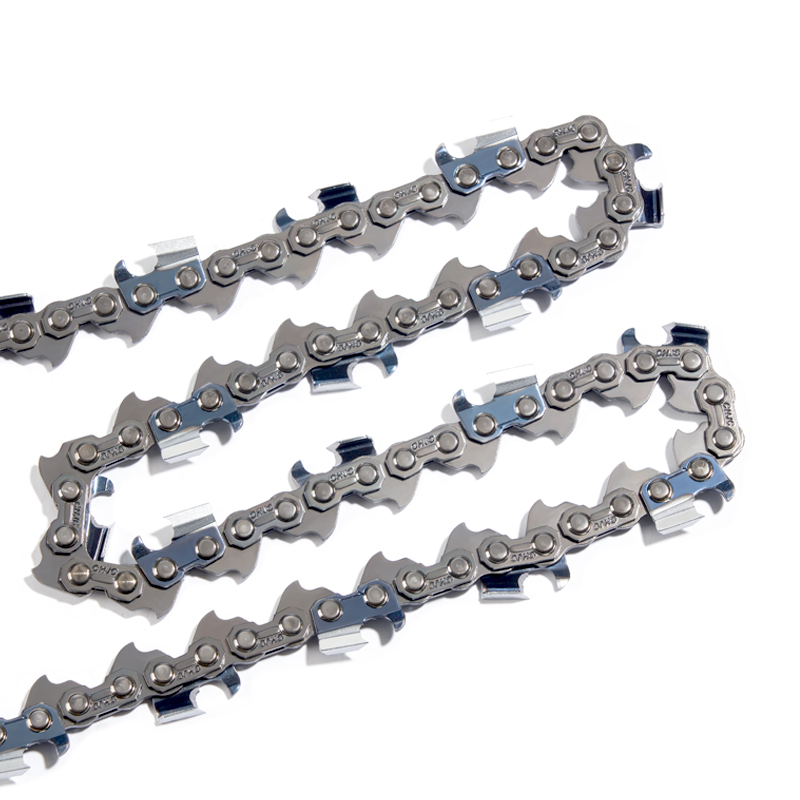
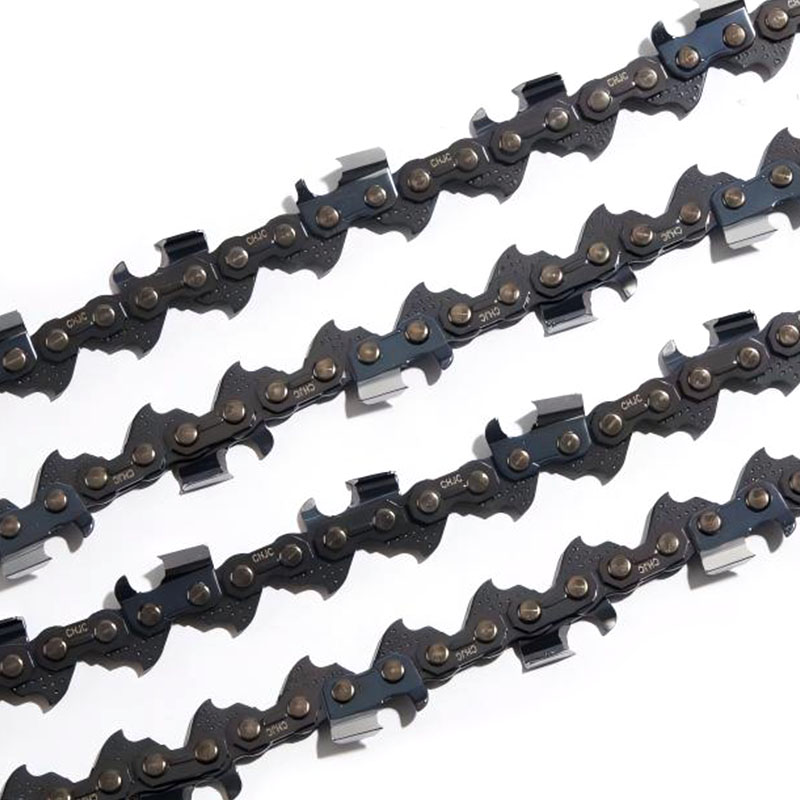
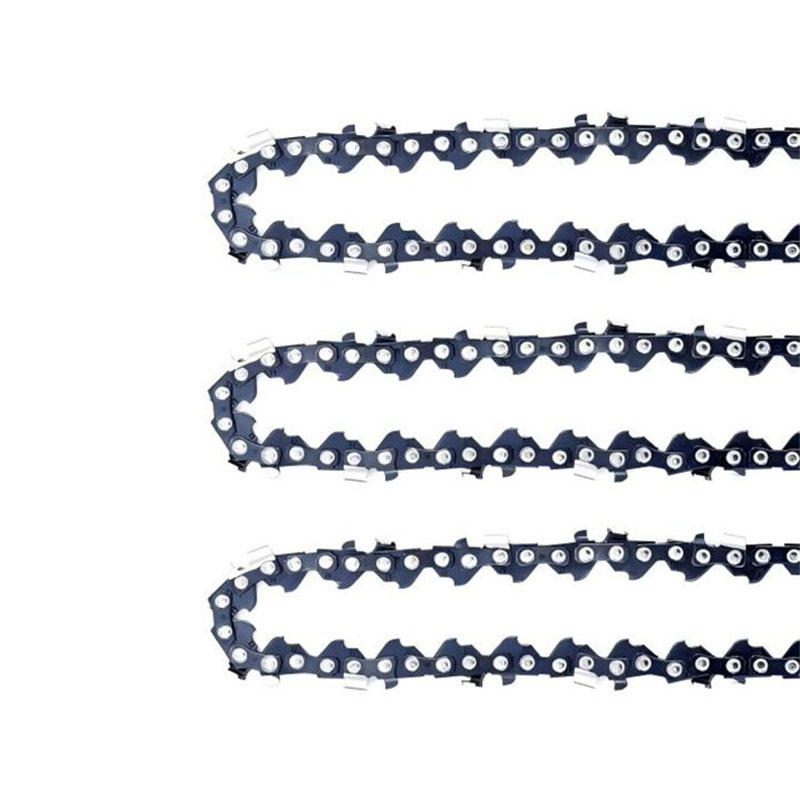
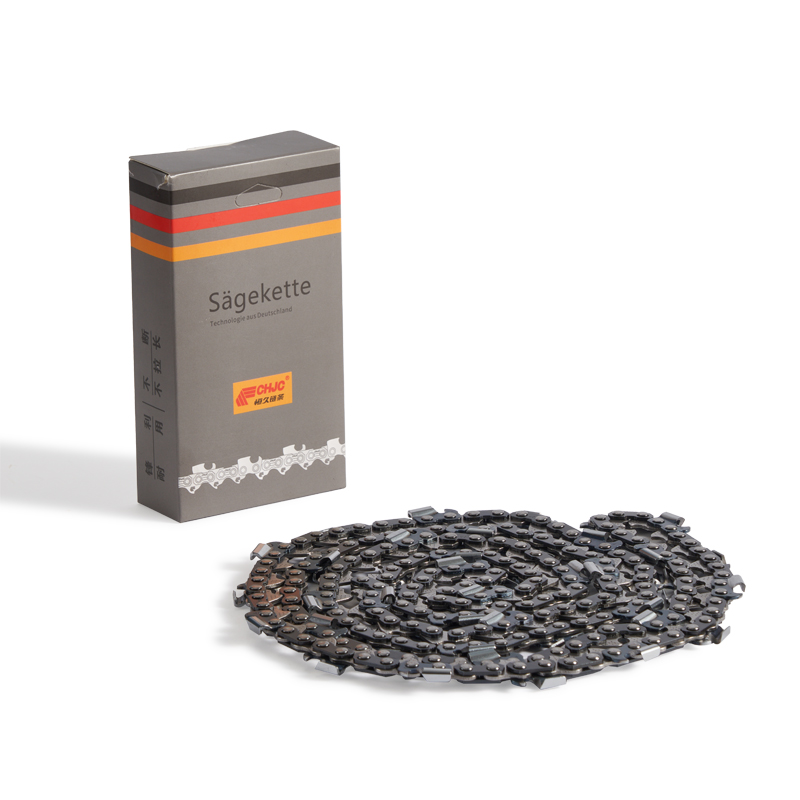 .404" .063" Heavy-Duty Chipper Saw Chain for Large SawsBuilt for high-production cutting of thick wood with mid-to-high-powered machinery. The chipper cutters handle dirty conditions well, while the larger pitch and blued finish ensure durability and stability in heavy use.View Product →
How to confirm the exact size your saw uses
The fastest way to identify your size is to read the guide bar, not the old chain. Most bars carry a stamp near the mounting end that lists the pitch and gauge, for example "3/8 .050" or ".325 058". That single stamp answers half of the question before you touch a caliper.
- Read the stamp on the bar. If it says LP or low profile, treat the chain as part of the 3/8" LP family even if the pitch number looks the same as standard 3/8".
- Count the drive links on the old loop. Lay it flat on the bench and count the tangs that engage the sprocket. A wrong loop is not a cheap mistake.
- Check the sprocket pitch. The sprocket is marked with its pitch, and it must match the chain exactly. A worn sprocket explains many fit problems in the field.
- Measure when the stamp is worn off. Use a caliper on a drive link for the gauge, and measure across three rivets and divide by two for the pitch.
Two mistakes cause most returns: confusing 3/8" LP with 3/8", and choosing a chain by bar length alone. Bar length is only a starting point; the nose sprocket and bar model decide the final link count. When the numbers disagree, count the drive links again before ordering.
Why the right size is only half the buying decision
A chain that fits perfectly can still perform badly if the steel, heat treatment, or riveting is weak. The chain is the only part of a saw that touches the wood at high speed, and its quality determines both cutting speed and how long the bar and sprocket survive.
For a single homeowner loop, the difference between a good and a mediocre chain may mean one extra sharpening. For a crew that burns through dozens of loops per month, the difference shows up in downtime and per-hour cost. That is why professional buyers check more than the three numbers on the box.
- Consistent cutter hardness across the loop, so every tooth wears at the same rate.
- Drive link gauge held to a tight tolerance, so the chain tracks straight and oils evenly.
- Rivets that are peened correctly, so the chain flexes freely without stretching.
This is also where a factory relationship pays off. A custom saw chain factory can supply standard sizes in volume, but it can also produce custom drive link counts, special gauges, branded packaging, and cutter patterns tuned to local wood conditions. When the same production line makes your .325" workhorse loops and your .404" harvester chains, consistency is easier to maintain and sourcing becomes simpler.
Chainsaw chain sizes are not a mystery. Read the bar stamp, count the drive links, and confirm the gauge and pitch before you order. Then choose a cutter profile that suits the wood you cut, and buy from a manufacturer whose quality you can verify. The chain that fits and holds an edge is the one you will reach for at the end of a long day - and the one that actually gets the job done.