English
 中文简体
中文简体
 русский

Content
- 1 Best Chainsaw Brand: Why the Chain Is the Real Decision
- 2 What Is a Ported Chainsaw? A Clear, Technical Explanation
- 3 Top-Rated Professional Chainsaws: What Actually Makes a Saw Pro Grade
- 4 How to Use a Chainsaw Safely and Effectively
- 5 What Weight Is Bar Chain Oil? The Definitive Answer
- 6 Best 2-Stroke Oil for Chainsaw: Protect Your Engine from the Inside
- 7 Chainsaw Tach: Why You Need One and Exactly How to Use It
- 8 Hengjiu Chainsaw Chain Products: The Full Range Explained
- 9 FAQ About Chain Saw: Your Most Important Questions Answered
- 9.1 How do I know when my chainsaw chain is dull?
- 9.2 How often should I sharpen my chainsaw chain?
- 9.3 What is the correct chain tension?
- 9.4 Can I use any chain on my chainsaw?
- 9.5 How long does a chainsaw chain last?
- 9.6 What happens if I run my chainsaw without bar oil?
- 9.7 Is it safe to cut with a chainsaw in wet or rainy conditions?
- 9.8 How do I store my chainsaw for the off-season?
- 10 Chainsaw Maintenance Quick Reference
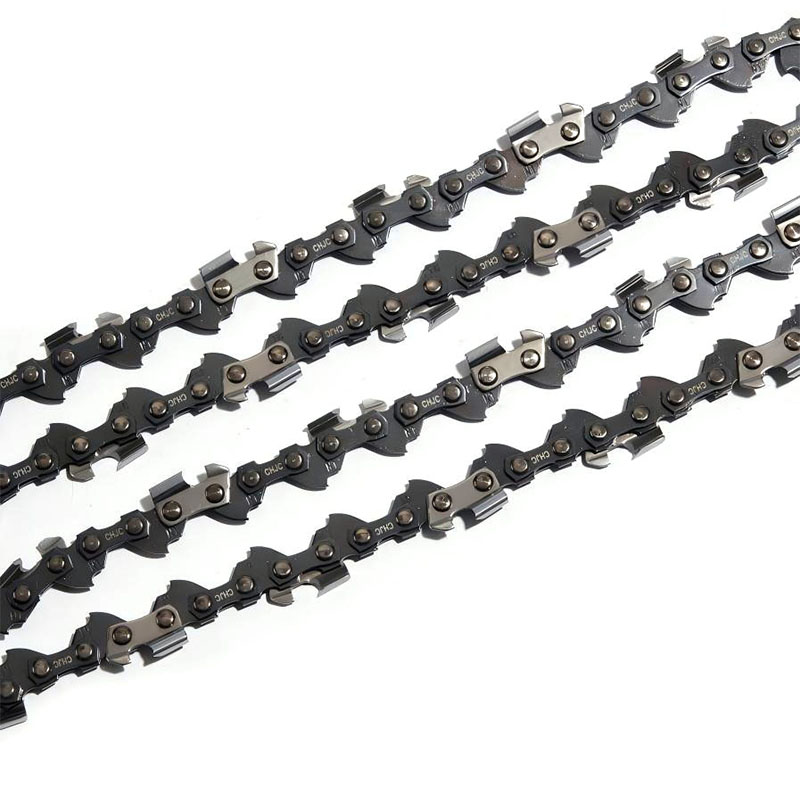
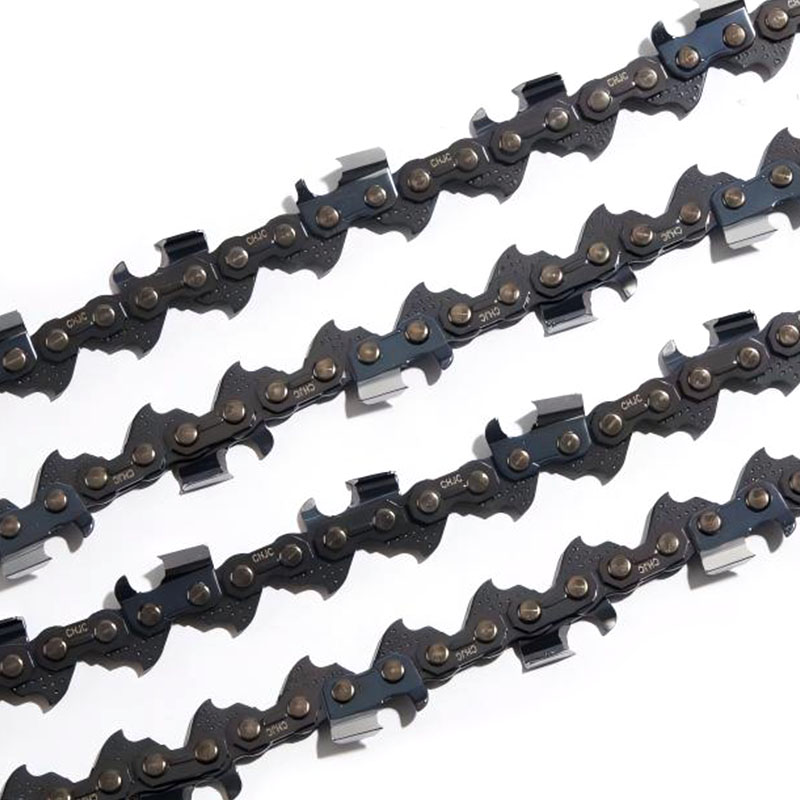
If you're searching for the best chainsaw brand, the answer comes down to one core truth: the powerhead gets you started, but the chain and bar determine everything — cutting speed, safety, and longevity. Whether you are a homeowner tackling weekend firewood or a professional logger running a saw all day, understanding chainsaw chain types, oil specifications, tuning tools like a chainsaw tach, and correct operating technique will dramatically improve your results. Hengjiu, a manufacturer with over 70 years of chain production experience and 8 manufacturing facilities worldwide, delivers precision-engineered saw chains trusted by professionals across the globe.
Best Chainsaw Brand: Why the Chain Is the Real Decision
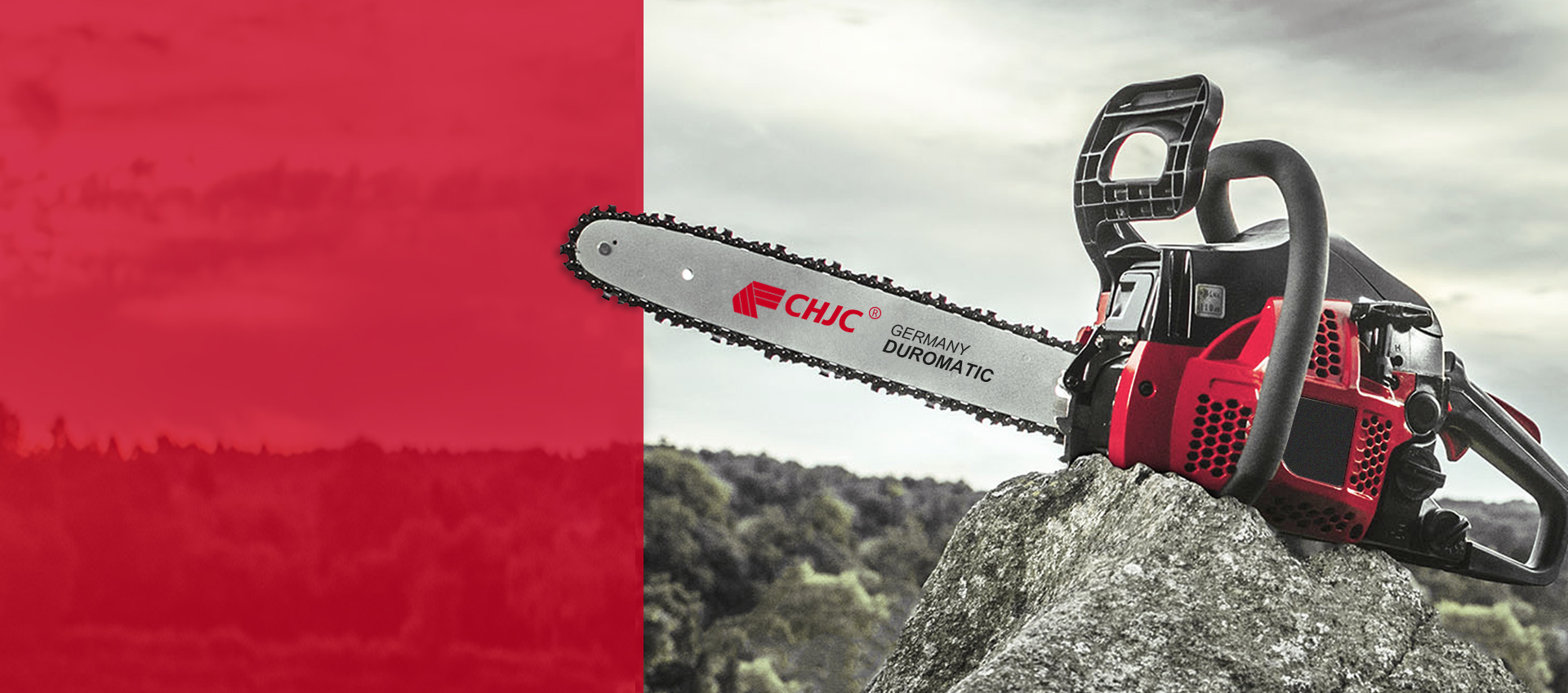
Most buyers focus entirely on the powerhead when choosing the best chainsaw: engine displacement, brand recognition, and weight. But professionals know that two identical saws fitted with different chains produce dramatically different results. The chain is the cutting tool. The saw is simply the driver.
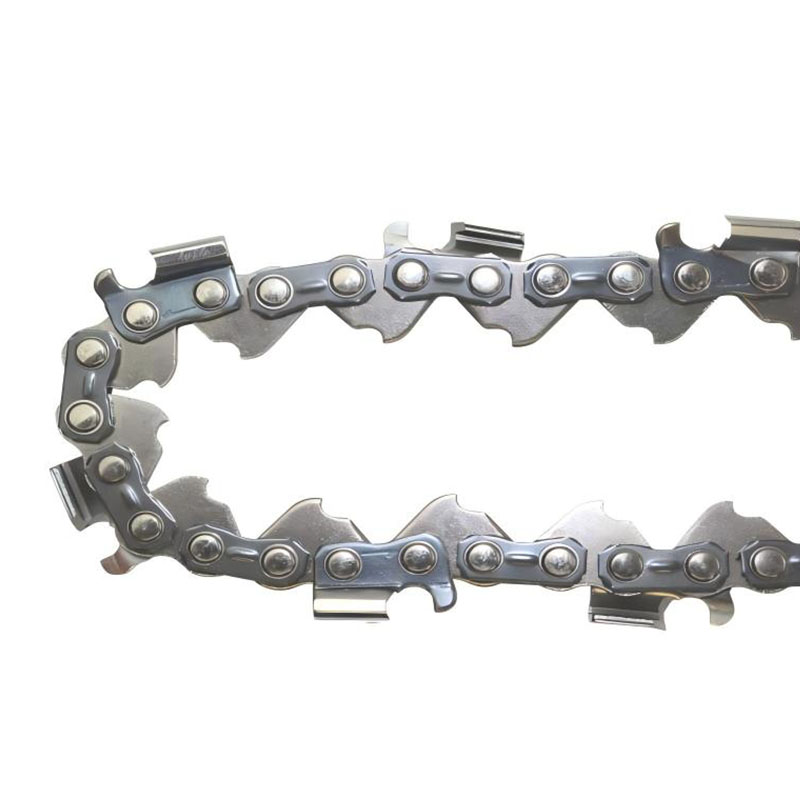
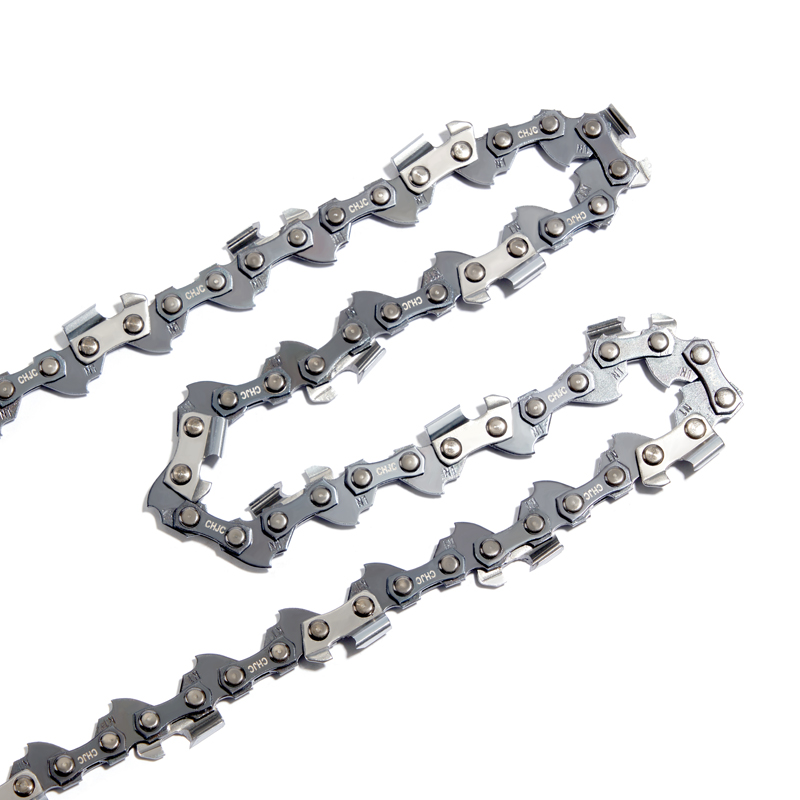
When evaluating which chain is right for your saw, three specifications must match exactly:
- Pitch — the distance between any three consecutive rivets divided by two. Common values: 1/4", 3/8" LP, .325", 3/8", and .404"
- Gauge — the thickness of the drive links that ride in the bar groove: .043", .050", .058", .063", or .080"
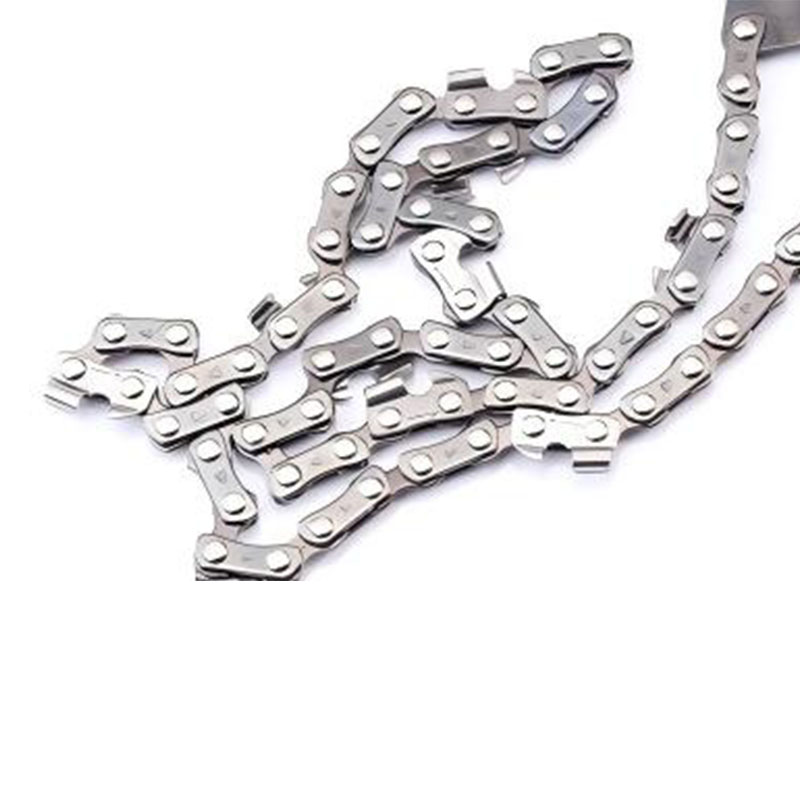
- Drive link count — the total number of drive links in the loop; must match your bar's specification exactly
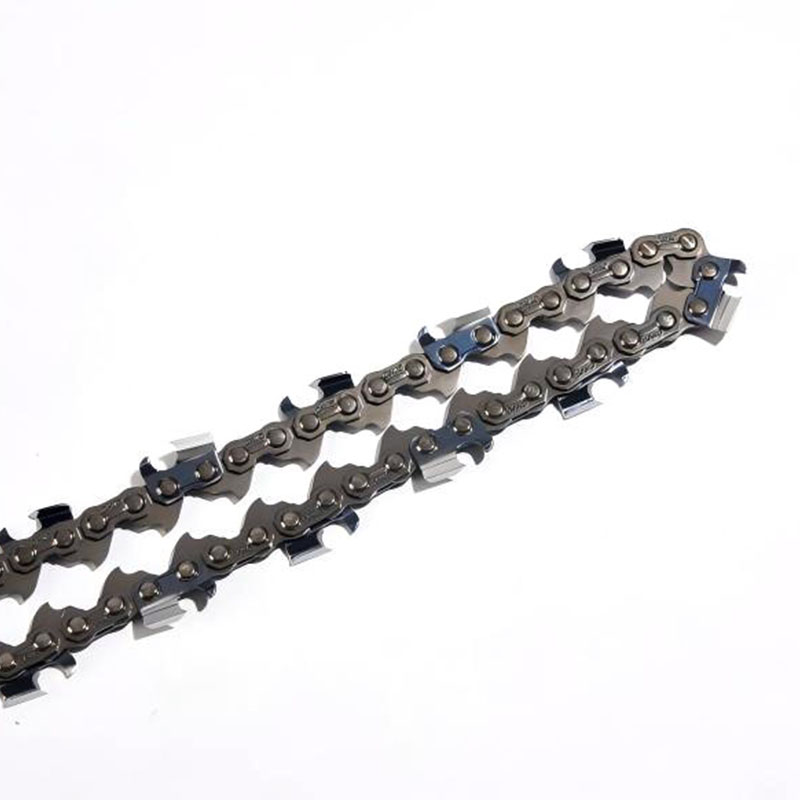
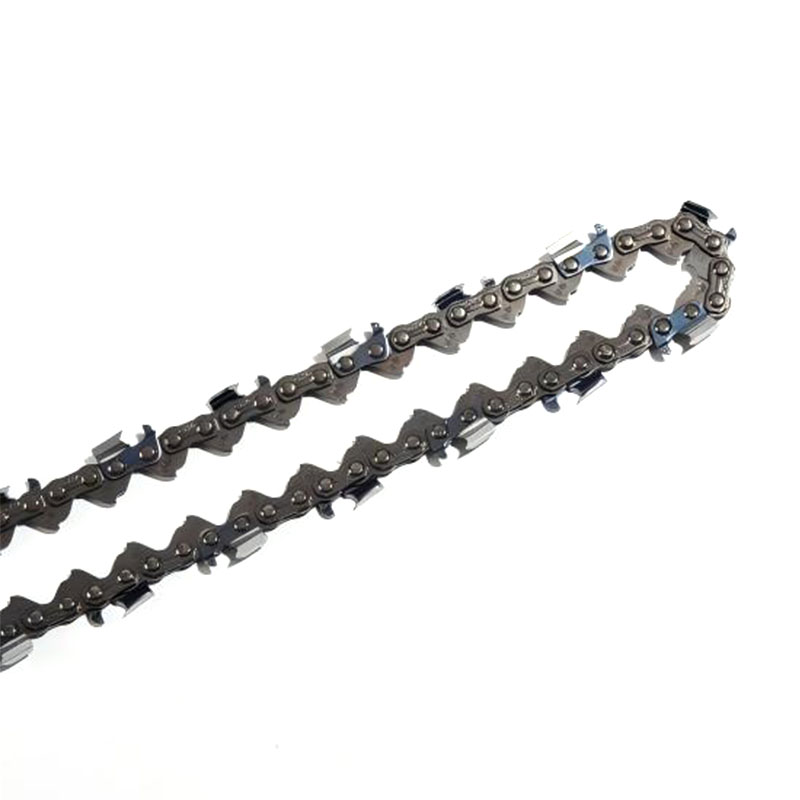
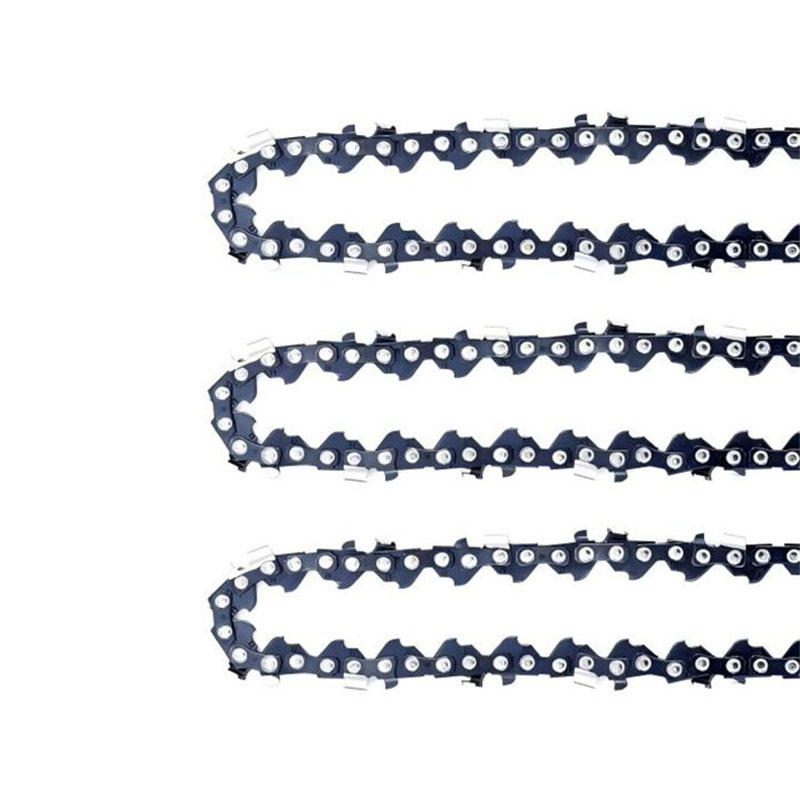
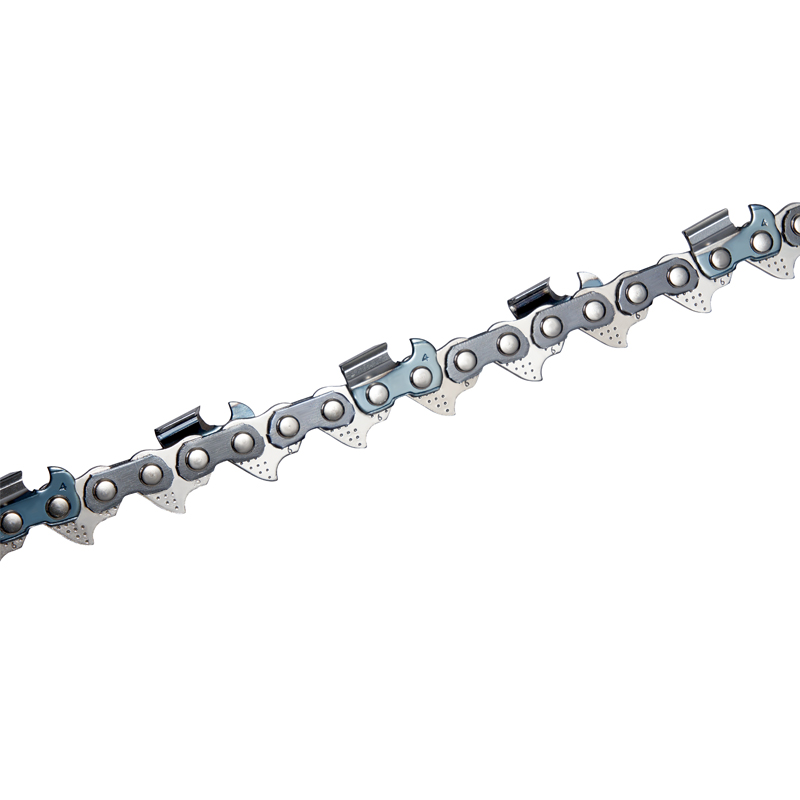
Hengjiu manufactures chains in every standard configuration — from lightweight 1/4" pruning chains to heavy-duty .404" .080" harvester chains for industrial timber operations — all produced using high-chromium tool steel with precision heat treatment for maximum edge retention.
| Chain Series | Pitch | Gauge Options | Best Application | User Level |
|---|---|---|---|---|
| 1/4" Saw Chain | 1/4" | .043", .050" | Pruning, precision cuts, small saws | Homeowner / Arborist |
| 3/8" LP Saw Chain | 3/8" LP | .043", .050" | Yard work, light firewood, garden trees | Homeowner |
| .325" Saw Chain | .325" | .043", .050", .058", .063" | General purpose, firewood, light logging | Homeowner / Semi-Pro |
| 3/8" Saw Chain | 3/8" | .050", .058", .063" | Professional logging, felling, bucking | Professional |
| .404" Saw Chain | .404" | .063", .080" | Large timber, harvester machines, milling | Industrial / Professional |
What Is a Ported Chainsaw? A Clear, Technical Explanation
A ported chainsaw is a saw whose engine cylinder has been mechanically modified — the intake, exhaust, and transfer ports are enlarged, reshaped, or repositioned to increase airflow through the engine and raise the RPM ceiling. This process, known as "porting," is most common in competition chainsaw events and high-production commercial timber work.
How Porting Affects Engine Performance
A two-stroke chainsaw engine uses precisely timed port openings in the cylinder wall to induct the air-fuel charge and expel exhaust gases. Enlarging these ports produces measurable changes:
- Peak RPM increases by 500–2,000 RPM above factory settings, directly raising chain speed
- The power band shifts toward the top end — ported saws sacrifice low-end torque for high-RPM horsepower
- Fuel consumption and heat load on the piston increase significantly
- The carburetor's high-speed needle must be recalibrated to maintain the correct air-fuel ratio at the new RPM range
Chain Requirements on a Ported Saw
Because a ported saw drives the chain at a significantly higher speed, chain quality becomes even more critical. A chain that stretches prematurely under elevated load — or loses its edge rapidly due to heat — will negate the benefits of porting entirely. Hengjiu's high-chromium steel chains, with precision heat-treated cutters and reinforced riveting, are engineered to handle the stress of elevated RPM without premature failure or chain stretch.
For most homeowners and the majority of professional operators, a stock saw running a premium Hengjiu chain delivers the best balance of performance, reliability, and longevity. Porting is a specialist modification best reserved for experienced engine builders and competition applications.
Top-Rated Professional Chainsaws: What Actually Makes a Saw Pro Grade
The top-rated professional chainsaws share a consistent set of traits: high-displacement engines (50cc–120cc), full-wrap front handles, hardened sprocket-nose bars, and — critically — professional-grade chains in larger pitch and heavier gauge that sustain high-production cutting without failure. Here is exactly what separates a professional-grade chainsaw setup from a consumer unit:
- Engine displacement: Professional saws start at 50cc; heavy-duty models used in felling and milling reach 88cc–120cc
- Duty cycle: Consumer saws are rated for up to 2 hours of daily use; professional units run 8–10+ continuous hours per day
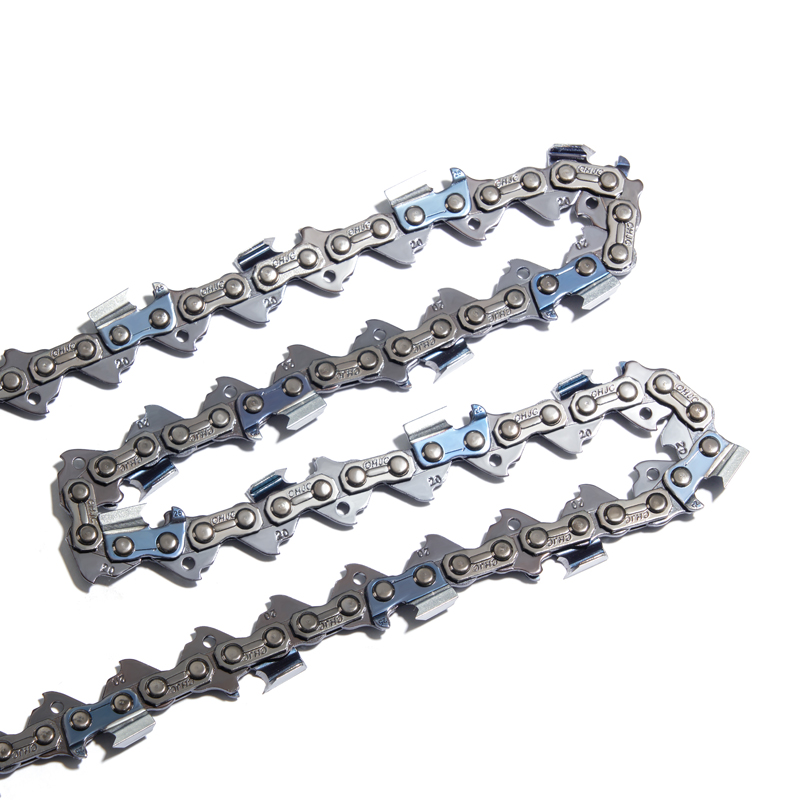
- Chain pitch: Professional applications demand .325", full 3/8", or .404" chains — the 3/8" LP pitch is designed for lighter consumer saws only
- Advanced anti-vibration: Multi-point isolation systems that reduce hand-arm vibration syndrome (HAVS) risk during full-day operation
- Adjustable automatic oiler: Variable flow rate to match lubrication needs across different workloads and wood types
- Tool-free chain tensioning: On-the-fly adjustments during production cutting without interrupting workflow
| Feature | Homeowner Grade | Professional Grade |
|---|---|---|
| Engine Displacement | 30–40cc | 50–120cc |
| Daily Duty Cycle | Up to 2 hrs | 8–10+ hrs |
| Recommended Chain Pitch | 3/8" LP or .325" | .325", 3/8", or .404" |
| Anti-Vibration System | Basic single-point | Advanced multi-point isolation |
| Bar Oiler Type | Fixed-rate automatic | Adjustable automatic |
| Ideal Hengjiu Chain | 3/8" LP .050" or .325" .050" | 3/8" .050"/.058" or .404" .063" |
How to Use a Chainsaw Safely and Effectively
Knowing how to use a chainsaw correctly is as important as choosing the right equipment. Chainsaw injuries account for approximately 36,000 emergency room visits annually in the United States alone — the vast majority of which are preventable with proper technique and personal protective equipment (PPE).
Essential Safety Gear Before Starting
- Chainsaw chaps or cut-resistant pants (Class A or Class C rated for your chain's speed class)
- Hard hat with integrated face shield and hearing protection rated to at least 25 dB NRR
- Cut-resistant gloves with grip surface on the palm
- Steel-toe chainsaw boots with cut protection in the upper
- High-visibility vest when working near roads or other operators
Step-by-Step Chainsaw Operation
- Pre-start inspection: Check chain tension, sharpness, bar oil level, fuel mix level, and chain brake function before every use.
- Safe starting: Use the ground-start method — saw on firm ground, foot through the rear handle, left hand on the front handle. Never drop-start unless specifically trained.
- Engine warm-up: Allow 30–60 seconds at idle before applying load, especially in temperatures below 40°F (4°C).
- Plan the cut: Identify the fall direction, establish an escape route 45° to the rear, and clear the work zone — minimum distance is two full tree-lengths from any bystanders.
- Grip and stance: Left hand on the front handle with thumb wrapped underneath; right hand on the rear handle. Always stand to the side of the cutting plane, not directly behind the bar.
- Cut with the lower bar: The upper quadrant of the bar nose is the kickback zone — avoid contact in that area during all normal cutting operations.
- Use the chain brake: Engage whenever moving between cuts, tripping, or not actively cutting. The brake must stop chain movement in under 0.1 seconds.
- Maintain chain sharpness: A dull chain requires far more force, causes fatigue, and dramatically increases kickback risk — sharpen Hengjiu chains regularly and replace when cutters are worn short.
What Weight Is Bar Chain Oil? The Definitive Answer
Bar and chain oil is typically equivalent to SAE 30-weight oil at warm temperatures, though it is specifically formulated with a tackiness additive that standard motor oil completely lacks. This tackiness causes the oil to cling to the bar and chain at high rotational speed — without it, oil slings off the chain before reaching the cutting zone, starving the system of lubrication and causing accelerated wear.
Seasonal Bar Oil Selection Guide
- Summer / Warm weather (above 40°F / 4°C): Standard-weight bar oil (SAE 30 equivalent). Most widely available and suitable for the majority of use cases.
- Winter / Cold weather (below 40°F / 4°C): Lightweight bar oil (SAE 10 equivalent) or winter-formulated bar oil. Thick oil in cold conditions flows sluggishly and fails to lubricate the chain adequately.
- Emergency substitute: Fresh SAE 30 motor oil can be used temporarily, but it lacks tackiness and slings off faster — replace with proper bar oil as soon as possible.
How to Verify Your Oil Is Working Correctly
Hold the running saw at full throttle over a light-colored surface — cardboard works well — for 2–3 seconds. A fine mist of oil should appear within that time. If no pattern appears, check the reservoir level, clear any blockage in the bar's oil port, and verify the oiler adjustment screw is set appropriately for your workload. Proper lubrication is the single most impactful factor in bar and chain service life: a well-oiled Hengjiu chain on a clean bar can last 3–5 times longer than the same chain run on an under-lubricated setup.
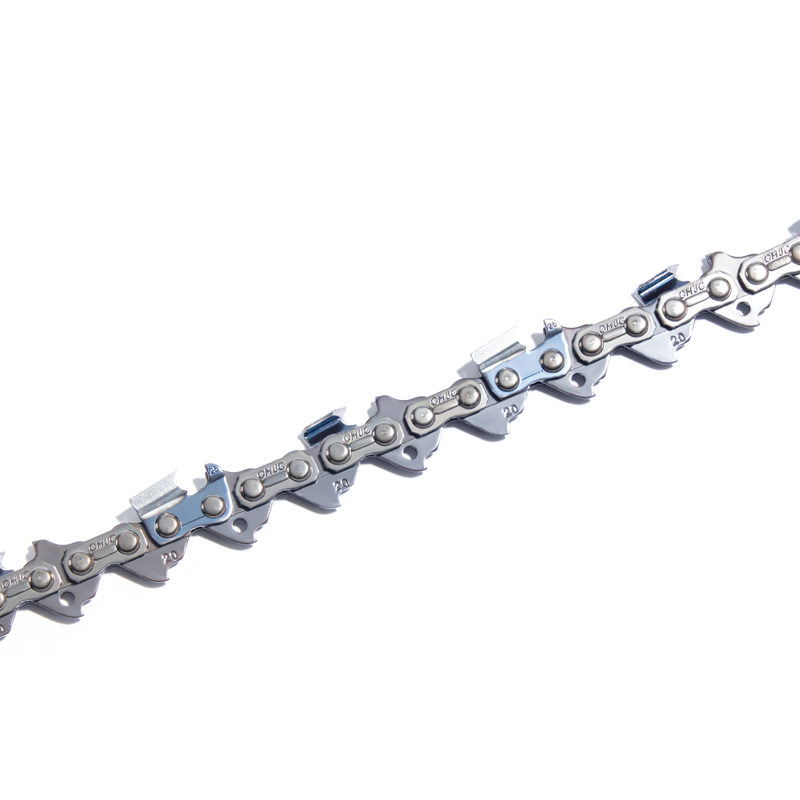
Best 2-Stroke Oil for Chainsaw: Protect Your Engine from the Inside
Most gas-powered chainsaws use a two-stroke engine with no separate oil reservoir — the lubricant is premixed directly into the fuel. Using the wrong oil type, wrong rating, or incorrect mix ratio is the most common cause of preventable chainsaw engine failure. The best 2-stroke oil for a chainsaw is a purpose-formulated full-synthetic or semi-synthetic oil rated for air-cooled engines, ideally carrying a JASO FD or ISO-L-EGD certification.
What the Oil Ratings Mean
- JASO FD: The highest Japanese Automotive Standards Organization classification for 2-stroke oils — minimum smoke, maximum lubrication, minimal carbon deposit formation
- ISO-L-EGD: European equivalent of JASO FD, commonly specified in professional-grade chainsaw oils sold across European markets
- Full synthetic formulation: Superior thermal stability at the extreme RPM and temperature range of chainsaw engines — often exceeding 12,000 RPM continuously
- Low-ash or ash-free formula: Reduces carbon buildup on the piston crown, exhaust port, and spark arrestor screen — directly extending time between cleanings
| Mix Ratio | Oil per 1 US Gallon of Fuel | Typical Application |
|---|---|---|
| 50:1 | 2.6 fl oz (77 ml) | Most modern chainsaws — the standard recommendation |
| 40:1 | 3.2 fl oz (95 ml) | Older engines or when using non-synthetic oil |
| 25:1 | 5.1 fl oz (151 ml) | Very old two-stroke engines (pre-1990) |
Always use fresh fuel. Gasoline stored for more than 30 days begins degrading, forming varnish deposits in carburetors and fuel lines. Use ethanol-free gasoline (E0) whenever possible — ethanol absorbs moisture and accelerates corrosion in aluminum carburetors. If E0 is unavailable, a quality fuel stabilizer added at mixing time extends shelf life to approximately 90 days.
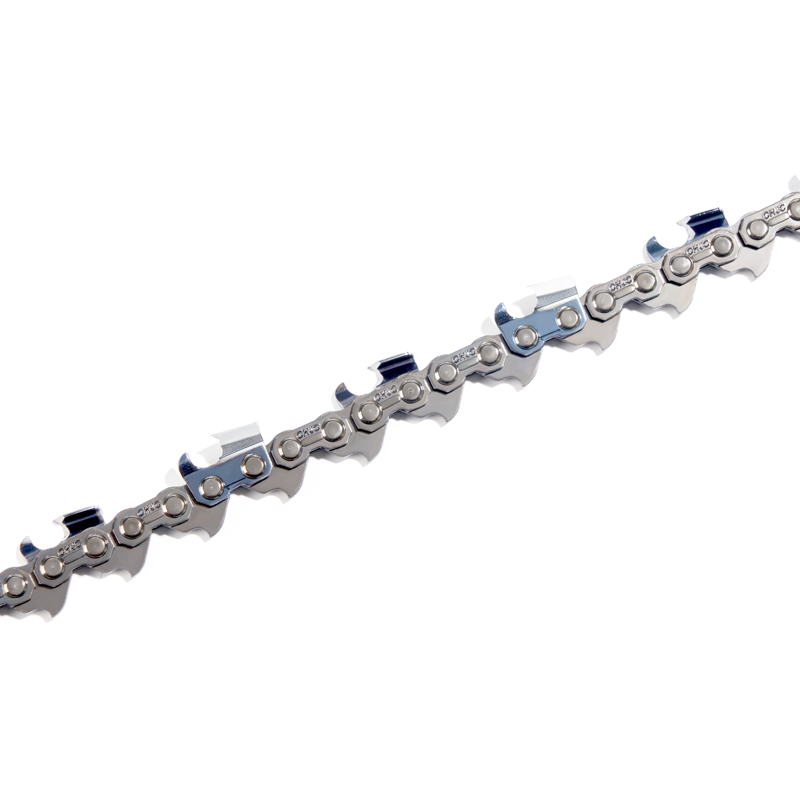
Chainsaw Tach: Why You Need One and Exactly How to Use It
A chainsaw tach (tachometer) is a non-contact diagnostic instrument that measures your saw's engine RPM in real time, typically using an optical sensor aimed at the flywheel or an inductive clamp positioned around the ignition wire. It is the only accurate method for tuning a chainsaw carburetor to factory or competition specifications — sound-based tuning consistently produces results that deviate 500–1,500 RPM from the target.
Why RPM Precision Matters
Most homeowner chainsaws have a recommended idle speed of 2,500–3,000 RPM and a wide-open-throttle (WOT) RPM of 10,500–14,000 RPM. Professional and competition saws can reach 15,000+ RPM. Deviating from these ranges causes measurable problems:
- Idle too low: Engine stalls under load, poor chain brake response, carbon fouling on the spark plug
- Idle too high: Chain engages at rest — a serious safety hazard; excessive clutch drum and sprocket wear
- WOT too low: Chain bogs down in dense wood, overheating from lean mixture, poor productivity
- WOT too high: Risk of piston seizure, accelerated bearing wear, potential connecting rod failure
Step-by-Step Tachometer Tuning Procedure
- Warm the engine for at least 2 minutes at normal operating temperature before taking any readings
- Position the tach sensor near the ignition wire (inductive type) or at the flywheel cooling fins (optical type)
- With the chain brake engaged, read idle RPM — adjust the idle screw (marked "T" or "LA") until reaching the manufacturer's specified range
- With a log clamped for safe loading, apply full throttle and read WOT RPM — adjust the high-speed needle (H screw) in 1/8-turn increments: clockwise leans the mixture and raises RPM; counter-clockwise richens it
- Never exceed the manufacturer's maximum RPM specification. A properly tuned saw running a sharp Hengjiu chain will always outperform an over-revved saw on a dull chain
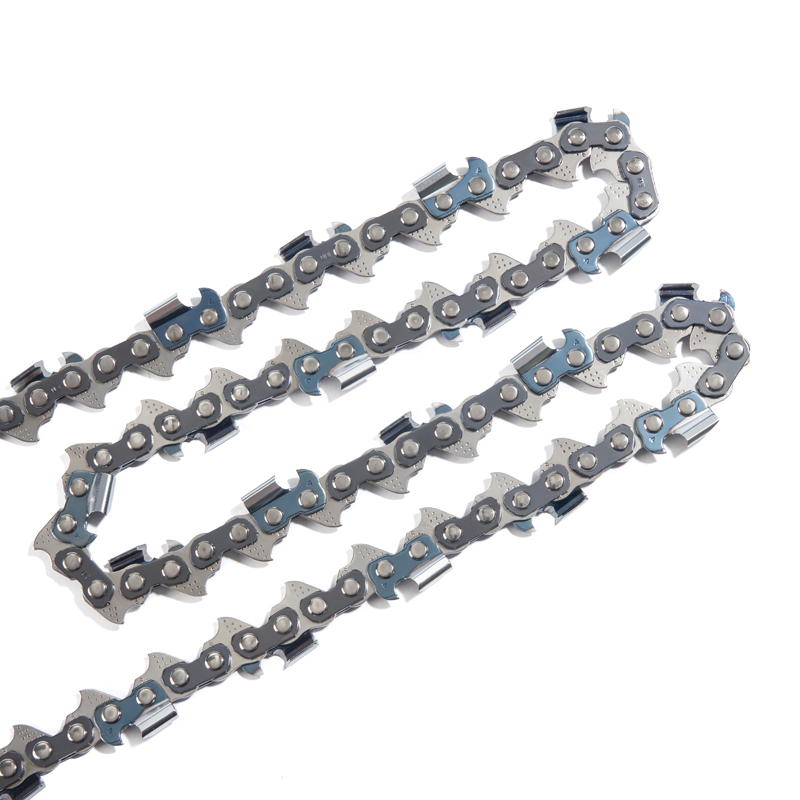
Hengjiu Chainsaw Chain Products: The Full Range Explained
Founded in 1953 and operating 8 manufacturing facilities and R&D centers, Hengjiu produces a complete range of saw chains covering every application from delicate pruning work to industrial harvester operations. Raw materials — including high-chromium tool steel for cutters — are imported from Germany, ensuring consistent metallurgical quality across the entire lineup.
1/4" Saw Chain — Precision Pruning and Small Saws
Available in 1/4" .043" and 1/4" .050" configurations, the Hengjiu 1/4" chain is designed for small handheld chainsaws, electric pruning saws, and arborist tools where precision cuts in confined spaces are required. The narrow profile reduces vibration and allows controlled cutting in orchards, vineyards, and residential tree care.
3/8" LP Saw Chain — Ideal for Homeowners
The 3/8" LP .050" is Hengjiu's most popular homeowner chain. Its low-profile cutter design reduces vibration, minimizes kickback risk, and pairs perfectly with lightweight consumer saws under 40cc. Compatible with Stihl, Husqvarna, Echo, Craftsman, Poulan, Makita, and many other brands.
.325" Saw Chain — Versatile All-Around Performance
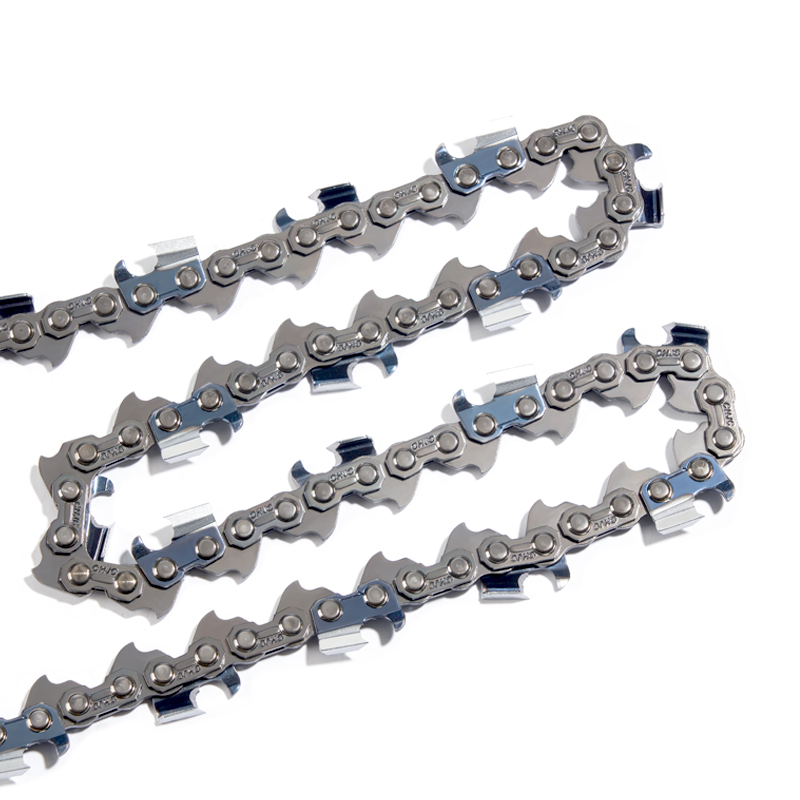
Available in .050", .058", and .063" gauge, the Hengjiu .325" chain covers the widest application range — from homeowner firewood cutting to semi-professional land clearing. The unique cutter head geometry maximizes all aspects of saw chain function: fast entry, clean exit, and efficient chip ejection.
3/8" Saw Chain — The Professional Standard
Hengjiu's 3/8" chain in .050", .058", and .063" gauge is the choice of professional logging operators worldwide. Full-chisel and semi-chisel cutter options, blued cutters for corrosion resistance, and a low-kickback design allow this chain to handle any wood type efficiently through long cutting sessions.
.404" Saw Chain — Heavy-Duty and Harvester Applications
The .404" .063" chain is engineered for professionals running high-powered saws on large timber. The .404" .080" harvester chain takes it further: with a thickened and burnished chassis, reinforced tie straps, and heavy-duty rivets, it is purpose-built for the extreme continuous stress of mechanical harvesting operations where unplanned downtime is economically unacceptable.
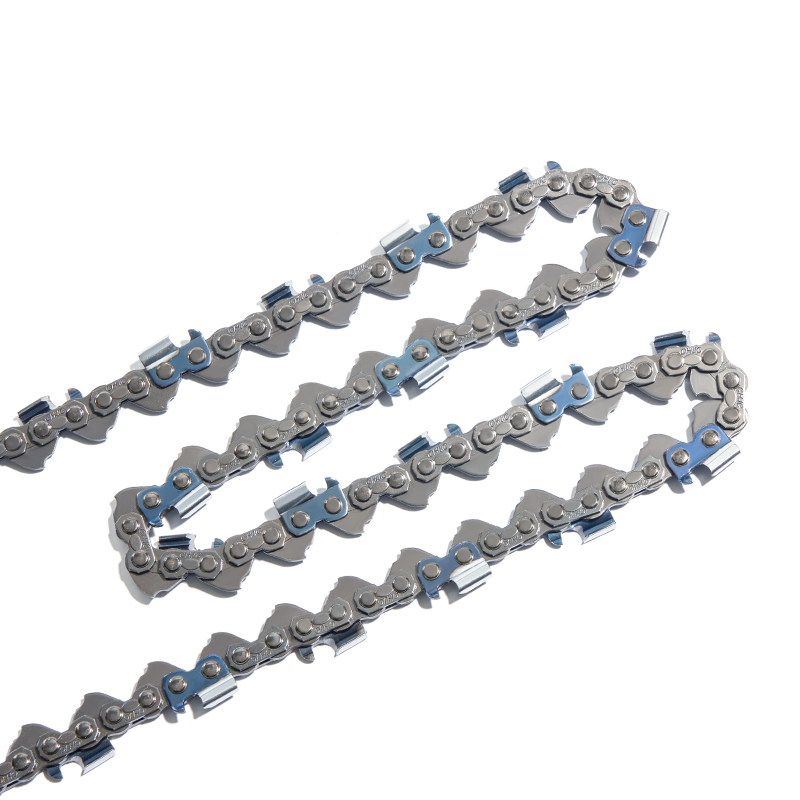
| Cutter Style | Cut Speed | Edge Retention in Dirty Wood | Kickback Risk | Best For |
|---|---|---|---|---|
| Full Chisel | Fastest | Moderate | Higher | Clean hardwood, professional logging |
| Semi-Chisel | Fast | High | Moderate | Dirty, abrasive, or frozen wood |
| Low-Profile (LP) | Moderate | High | Lowest | Homeowners, light-duty yard work |
| Harvester (Heavy) | Very Fast | Very High | N/A (machine-mounted) | Mechanical harvesting, high production |
FAQ About Chain Saw: Your Most Important Questions Answered
How do I know when my chainsaw chain is dull?
A sharp chain produces coarse wood chips. A dull chain produces fine sawdust, requires excessive downward force to feed through the cut, causes the saw to pull to one side, and often creates smoke even with adequate bar oil. Any one of these signs means immediate sharpening is needed. If more than 8–10 file strokes per cutter are required, replacement is more economical than continued sharpening.
How often should I sharpen my chainsaw chain?
Sharpen every 2–3 tanks of fuel under normal clean-wood conditions. Sharpen immediately after any contact with soil, rocks, wire, or concrete — even brief contact dulls the chain significantly. A correctly sharpened Hengjiu chain requires only 2–4 file strokes per cutter during routine touch-up maintenance.
What is the correct chain tension?
With the saw cold, the chain should sit snug against the bar rail but remain pullable by hand with light effort. The drive links should stay seated in the bar groove when pulled downward from the underside. A correctly tensioned chain snaps back smartly when released. Never run a loose chain — it can derail violently at speed. Avoid over-tightening equally: excessive tension causes accelerated bar rail wear and can snap the chain during operation.
Can I use any chain on my chainsaw?
No. Three specifications must match exactly: pitch, gauge, and drive link count. A mismatched pitch prevents the chain from seating on the drive sprocket. A mismatched gauge is either too loose (unsafe) or too tight (will not fit in the bar groove). Hengjiu chains are clearly labeled with all three specifications and include cross-reference compatibility with major brands, including Stihl, Husqvarna, Echo, Oregon, Craftsman, McCulloch, Poulan, Makita, Dolmar, and Milwaukee.
How long does a chainsaw chain last?
A quality chain can typically be sharpened 8–12 times before cutters become too short for efficient use. With proper maintenance — regular sharpening, correct tensioning, adequate lubrication, and avoiding soil contact — a single Hengjiu chain can last an entire season of moderate residential use, approximately 50–100 hours of cutting. The drive sprocket should be replaced every 2–3 chains to prevent accelerated chain stretch from a worn sprocket profile.
What happens if I run my chainsaw without bar oil?
Running without bar oil destroys both the chain and bar within minutes. Friction between drive links and bar rails generates extreme heat — sufficient to anneal the chain's heat-treated cutters, permanently reducing their hardness. Continued dry running will weld the chain to the bar groove and seize the sprocket nose bearing on sprocket-nose bars. Always confirm oil flow before each cutting session using the cardboard test described above.
Is it safe to cut with a chainsaw in wet or rainy conditions?
Gas-powered chainsaws can operate in wet weather without mechanical issues — the primary risks in rain are operator footing and reduced visibility. Never operate an electric chainsaw in rain or near standing water. Green or wet wood is marginally easier to cut than seasoned dry wood. Frozen wood is significantly harder, dulls chains faster, and increases chain wear — a semi-chisel Hengjiu chain is the better choice for frozen-wood conditions.
How do I store my chainsaw for the off-season?
For storage exceeding 30 days: drain the fuel tank, then run the engine to stall to remove residual fuel from the carburetor. Drain the bar oil reservoir. Remove the bar and chain, clean them thoroughly, apply a thin protective coat of oil to the chain, and store in a dry location away from direct sunlight. This prevents carburetor varnishing, rust on bar rails and chain rivets, and degradation of rubber fuel system components — ensuring reliable starting when the next cutting season begins.
Chainsaw Maintenance Quick Reference
Follow this interval-based maintenance schedule to maximize the service life of your Hengjiu chain, guide bar, and saw engine across every season of use.
| Interval | Task | Why It Matters |
|---|---|---|
| Before every use | Check chain tension, oil level, sharpness, and chain brake function | Safety and cutting performance baseline |
| Every 2–3 fuel tanks | Sharpen chain cutters and file depth gauges | Maintains efficiency; reduces kickback risk |
| Every 5 fuel tanks | Clean bar groove, clear oiler port, flip bar end-for-end | Prevents uneven bar rail wear; maintains oil flow |
| Every 10 fuel tanks | Check bar rail squareness, clean air filter, and inspect sprocket wear | Prevents chain derailment and engine performance loss |
| Every 2–3 chains | Replace the drive sprocket | Worn sprocket accelerates chain stretch by up to 30% |
| Annually / Seasonal | Carburetor service, throttle/safety linkage inspection, spark plug replacement | Ensures reliable starting and safe operation for the season |
A well-maintained chainsaw running a sharp, correctly tensioned, and properly lubricated Hengjiu chain is safer, more productive, and more economical than any other configuration. The chain is a consumable — but with disciplined maintenance, its service life can be extended dramatically. Invest in the right chain for your application, maintain it on schedule, and it will return that investment many times over in cutting efficiency and reduced downtime.