English
 中文简体
中文简体
 русский

Content
- 1 Pitch, Gauge, and Drive Link Count: The Three Numbers That Define a Chain
- 2 Dimensional and Performance Comparison at a Glance
- 3 Cutter Geometry: Why a Smaller Pitch Cuts Differently
- 4 Matching Pitch to Saw Power: The Rule That Prevents Returns
- 5 Cutting Speed, Vibration, and User Fatigue: Real-World Behavior
- 6 Application Scenarios: Which Pitch Belongs Where
- 7 Sharpening, Maintenance, and Service Life
- 8 Sourcing Considerations for Distributors and OEM Buyers
- 9 Summary: How to Decide Between 3/8" and .325"
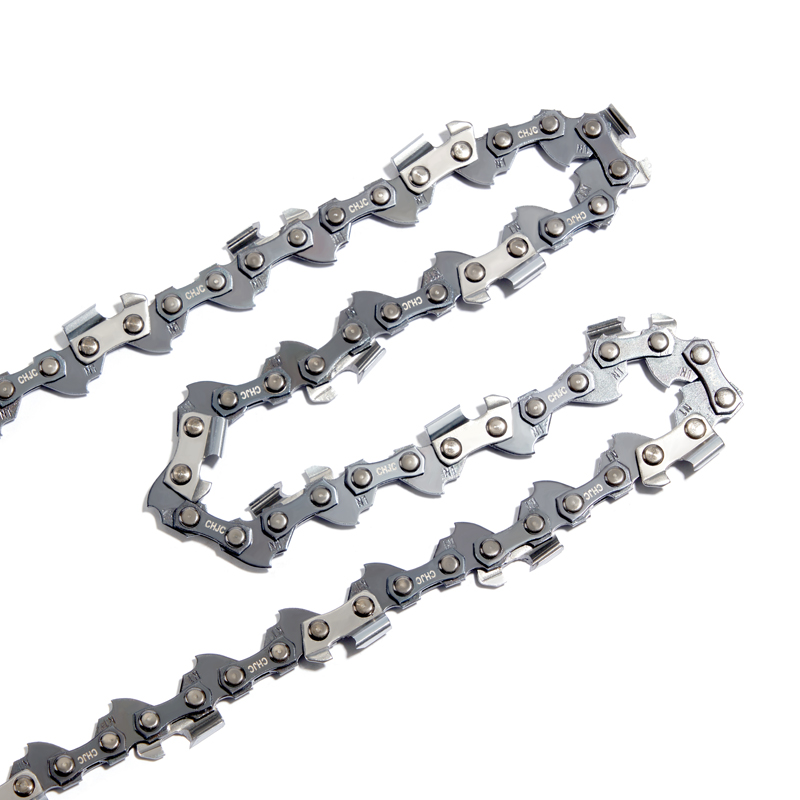
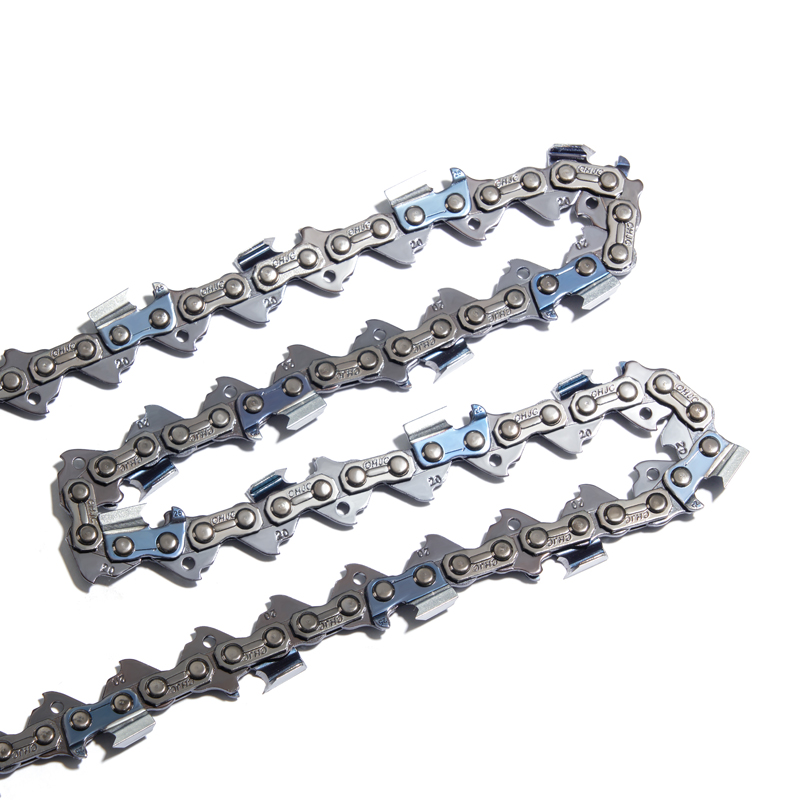
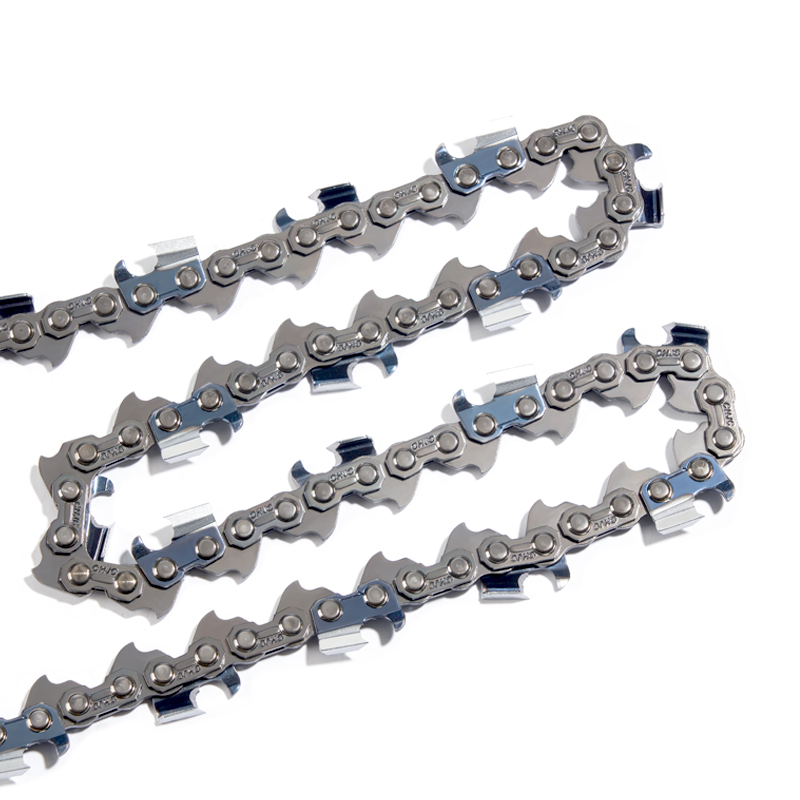
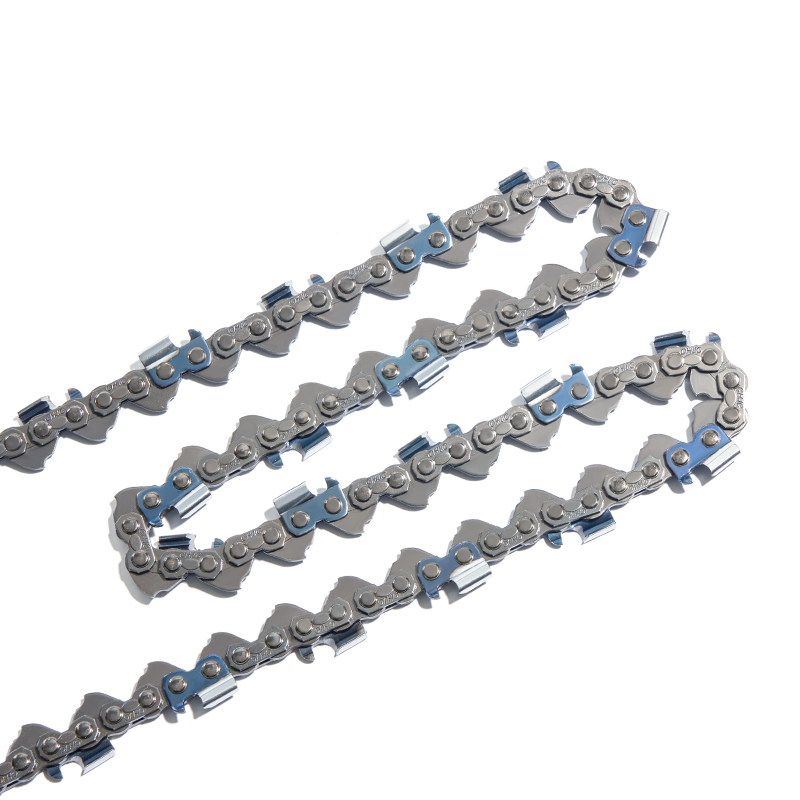
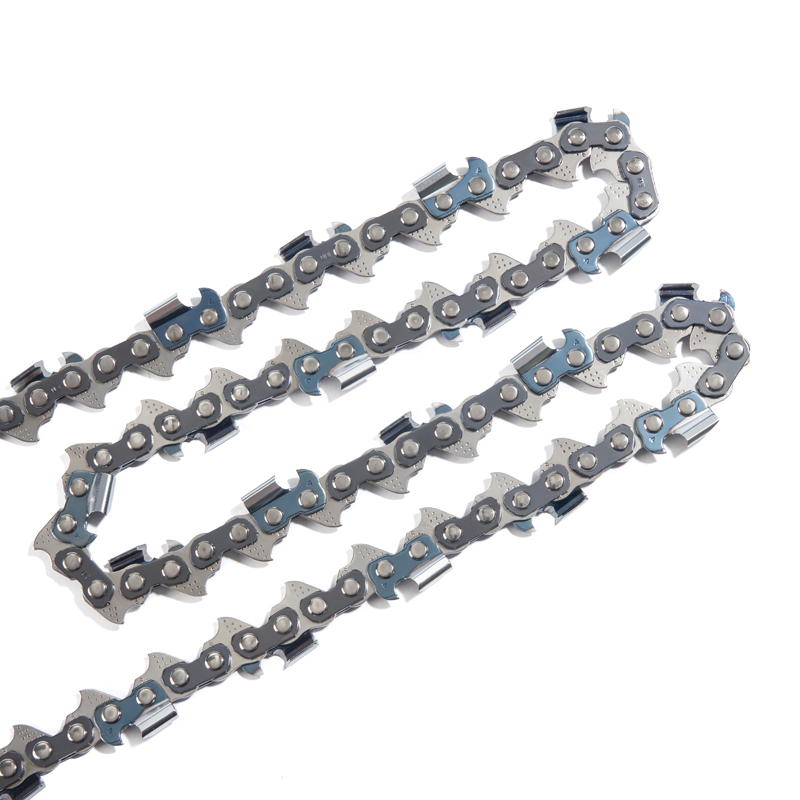
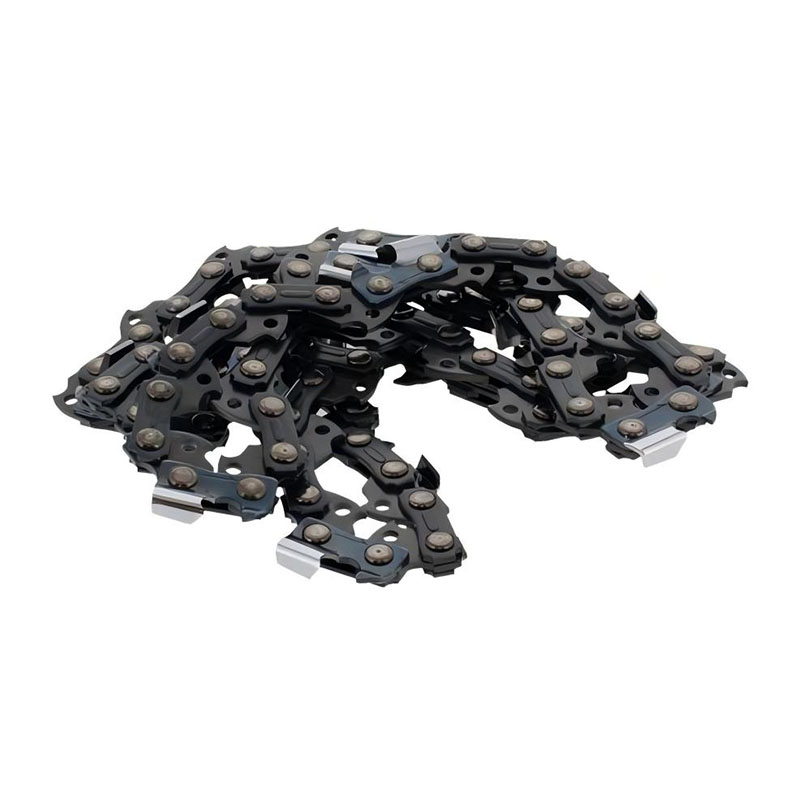
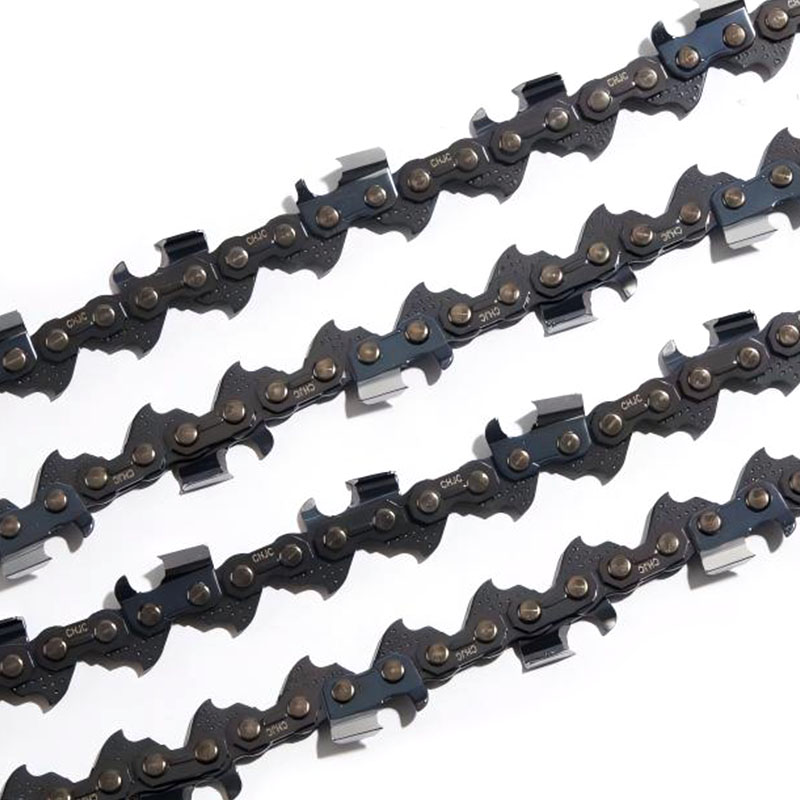
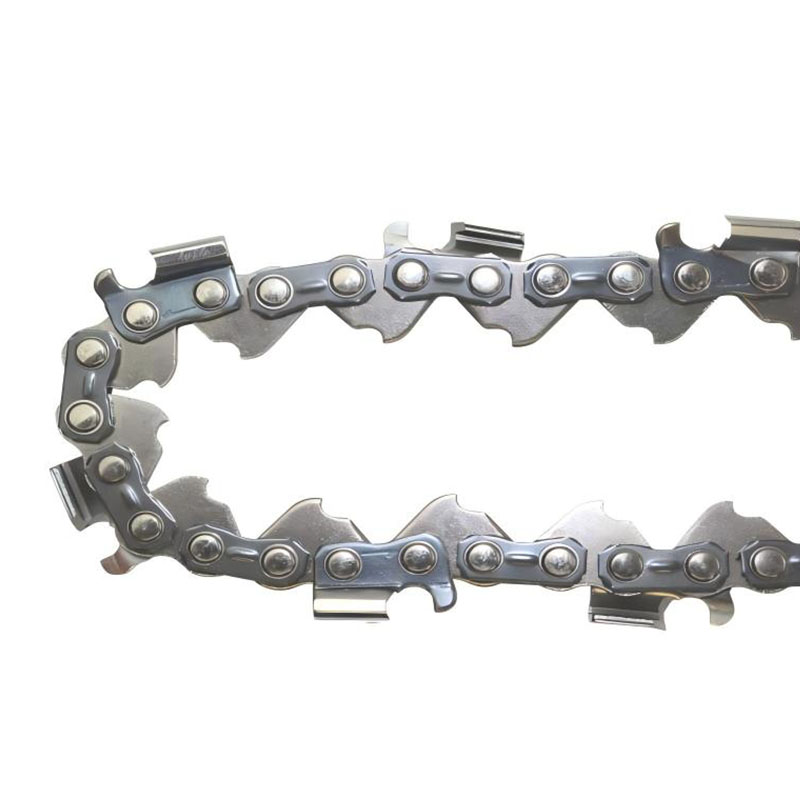
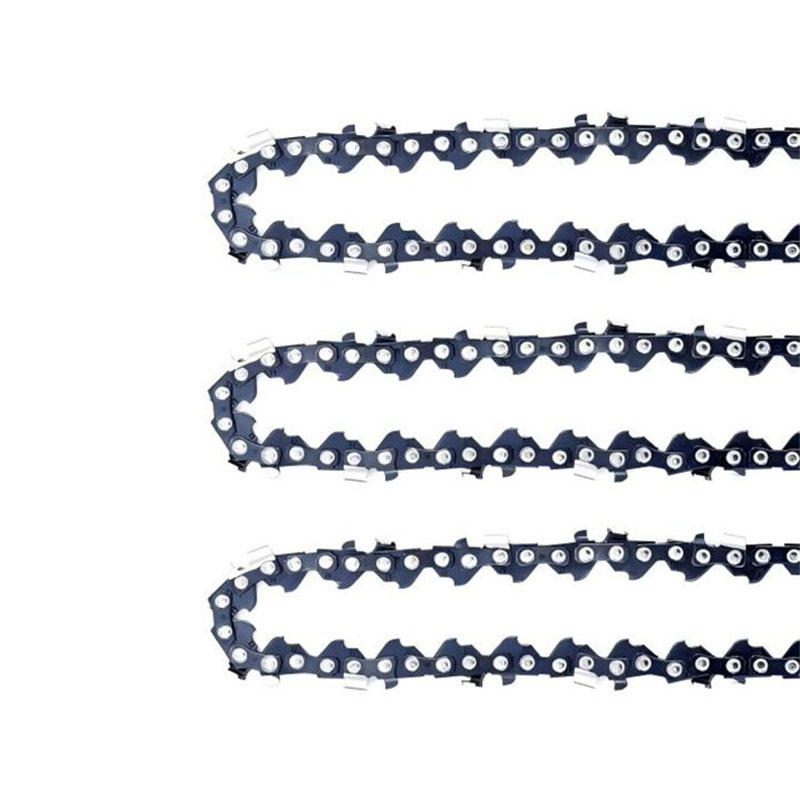
The difference between 3/8" and .325" pitch chainsaw chains comes down to one measurement and a chain of consequences that flow from it. Pitch is the distance between any three consecutive rivets divided by two—so a 3/8" chain has rivets spaced farther apart (0.375 inch) than a .325" chain (0.325 inch). That seemingly small 0.050-inch gap changes cutter size, kerf width, power demand, vibration, sprocket compatibility, and which saw the chain belongs on. In short: .325" pitch chains are optimized for mid-sized saws between 38cc and 62cc with a focus on cutting speed and balance, while 3/8" pitch chains (including the popular 3/8" LP variant) split into two roles—standard 3/8" for heavy-duty saws above 50cc, and 3/8" LP for lightweight saws under 40cc where low vibration and low kickback matter most. If you're sourcing chains for a fleet of saws or building a private-label product line, knowing exactly where each pitch belongs is the first step toward fewer warranty returns and happier end users.
This guide walks through the dimensional contrasts, the engineering reasoning behind each pitch, the saw-power matching rules, real-world cutting behavior, and the buying logic distributors and OEM purchasers use when choosing between these two families—including where the 3/8" LP Saw Chain fits in a typical product catalog.
Pitch, Gauge, and Drive Link Count: The Three Numbers That Define a Chain
Before separating 3/8" from .325", three terms have to be locked down because they are routinely confused even by experienced buyers. Pitch is the longitudinal spacing of the rivets and dictates which sprocket and bar nose the chain will run on. Gauge is the thickness of the drive link tang—the part that rides inside the guide bar groove—and is expressed in inches such as .043", .050", .058", or .063". Drive link count is simply how many drive links sit in the loop; it is determined by the bar length and the pitch together.
A 3/8" chain and a .325" chain are never cross-compatible without changing both the sprocket and the guide bar. The pitch of the chain must equal the pitch of the bar nose sprocket and the drive sprocket. Mismatching pitch causes the drive links to ride high or low in the sprocket pockets, leading to chain skipping, premature wear, broken tie straps, and in some cases catastrophic chain throw. Anyone selling replacement chains to the aftermarket needs to communicate this clearly to avoid returns.
Dimensional and Performance Comparison at a Glance
The fastest way to see the gap between these two families is a side-by-side breakdown of their dimensional parameters and intended applications. The table below summarizes the practical differences a procurement engineer needs before placing a wholesale order.
|
Core specification and application comparison between 3/8" pitch and .325" pitch saw chains |
|||
|
Parameter |
3/8" Standard Pitch |
3/8" LP (Low Profile) |
.325" Pitch |
|
Rivet spacing |
0.375 inch |
0.375 inch (lower cutter profile) |
0.325 inch |
|
Typical gauge options |
.050", .058", .063" |
.043", .050" |
.050", .058", .063" (plus .043" LP) |
|
Recommended saw size |
50–100 cc |
Under 40 cc (incl. battery saws) |
38–62 cc |
|
Cutter size |
Large, aggressive |
Small, low-profile |
Medium |
|
Kerf width |
Wider |
Narrowest |
Narrow |
|
Vibration level |
Higher |
Lowest |
Low to moderate |
|
Kickback tendency |
Higher |
Reduced (ANSI low-kickback common) |
Moderate |
|
Primary use case |
Felling, milling, hardwood |
Pruning, trimming, firewood |
Limbing, mid-size felling, farm |
|
End-user profile |
Professional logger |
Homeowner, arborist, orchardist |
Farmer, semi-professional |
Cutter Geometry: Why a Smaller Pitch Cuts Differently
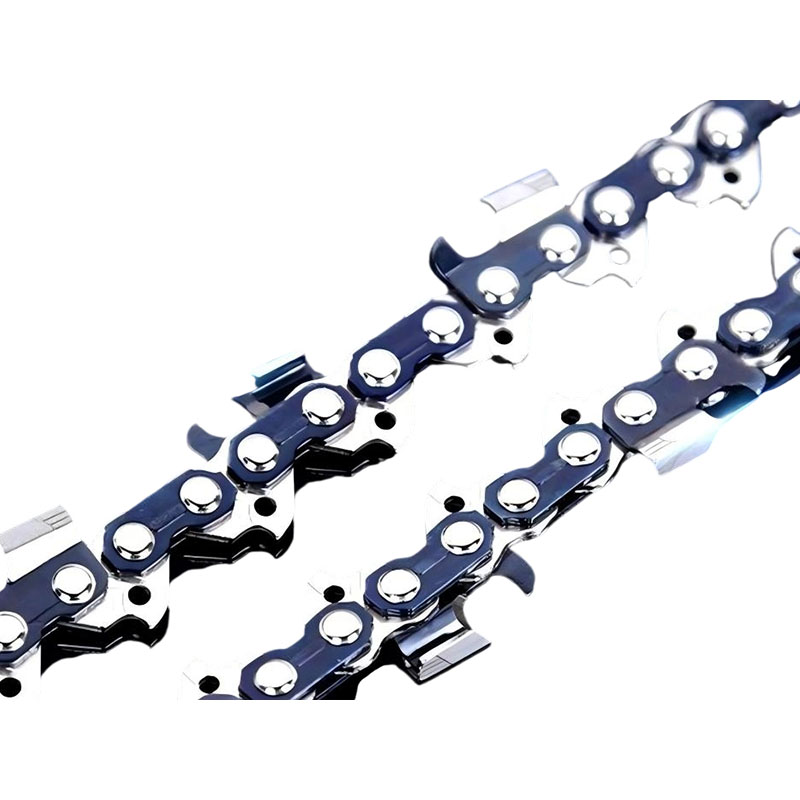
Pitch directly controls how much cutter tooth fits between two rivets. A 3/8" chain has more linear space for each cutter, so manufacturers can build a taller cutter with a longer top plate, allowing it to remove a larger chip per pass. That translates to faster cuts—but only when the powerhead has the horsepower to keep the cutter moving at its designed chip-load. Under-powered saws bog the chain, the chip thins out, and the user ends up working harder for slower results.
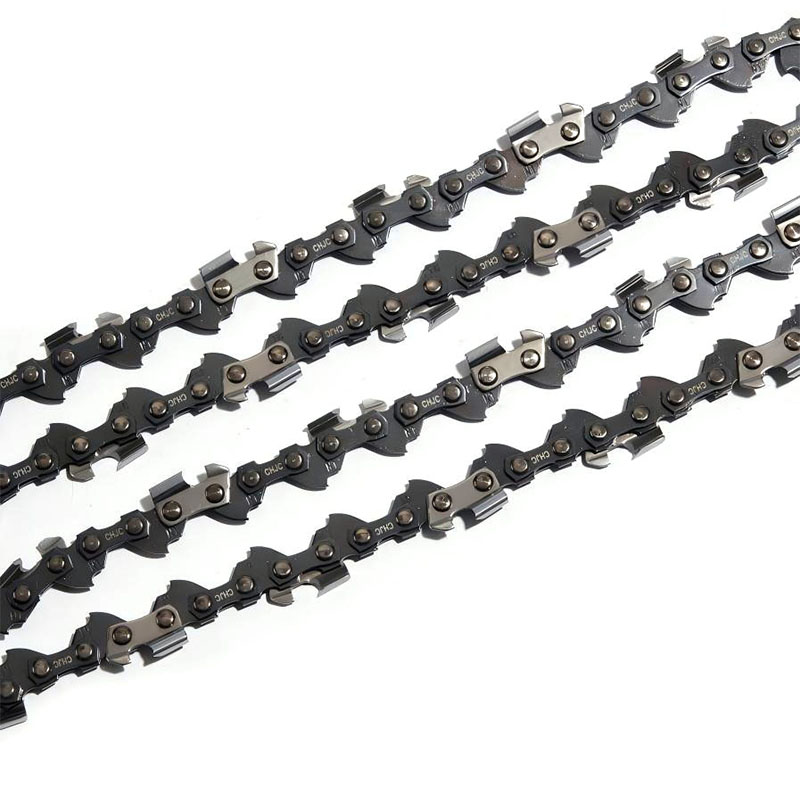
A .325" chain compresses cutter geometry into a tighter space. The cutter is smaller, takes a smaller bite, and produces a narrower kerf. Because the kerf is narrower, less wood has to be removed per inch of cut, and a 50cc saw can keep the chain in its sweet spot more easily than it could with a 3/8" of the same gauge. The .325" pitch is the reason many 50cc-class saws can deliver near-professional cutting speed without the bulk and fuel burn of a 60cc-plus saw.
3/8" LP: The Specialist Inside the 3/8" Family
3/8" LP shares the same rivet spacing as standard 3/8" but uses a deliberately lower cutter profile and a shallower depth gauge. The lower profile reduces vibration during operation, smooths cut quality on small-diameter wood, and significantly reduces kickback risk. This is why almost every battery-powered chainsaw and most homeowner-grade gas saws under 40cc ship with a 3/8" LP loop from the factory. The reduced chip load matches the lower torque output of small engines and battery motors, while the low-profile cutter geometry keeps the user safer during overhead pruning and limb work.
Matching Pitch to Saw Power: The Rule That Prevents Returns
The single most common mistake in chainsaw chain selection is pairing the wrong pitch with the wrong powerhead. Buyers who source replacement chains for resale see this constantly: an end user installs a standard 3/8" chain on a 40cc homeowner saw, the saw cannot drive the chain at its designed chip load, the chain pulls heat and dulls fast, and the chain is returned as "defective." It is not defective—it is mismatched. The general matching rule is straightforward:
- Under 40cc or battery-powered saws:3/8" LP with .043" or .050" gauge, or .325" LP with .043" gauge for the smallest gas saws.
- 38–50cc saws (mid-range farm and homeowner):.325" pitch with .050" gauge offers the best balance of cutting speed and durability.
- 50–62cc saws (semi-professional):Either .325" with .058" or .063" gauge for narrower kerf and lower fuel use, or standard 3/8" with .050" for higher cutting speed.
- Above 62cc (professional logging, milling):Standard 3/8" with .058" or .063" gauge delivers the chip load and durability required for sustained heavy cutting.
A practical illustration: a 50cc saw fitted with a 16-inch bar will run a .325" loop at peak efficiency, with the engine sitting comfortably in its rated RPM range. Swap that loop to a standard 3/8" chain, and the same saw will cut—but slower, hotter, and with more user fatigue, because the engine is being asked to push a larger chip with the same horsepower.
Cutting Speed, Vibration, and User Fatigue: Real-World Behavior
Cutting speed is the metric most end users obsess over, but it is only part of the picture. In identical wood with identical sharpening and adequate saw power, standard 3/8" chains generally finish a cut faster than .325" chains because the larger cutter removes more material per stroke. However, "adequate power" is the load-bearing phrase. On a 50cc-class saw, the .325" chain often matches or beats 3/8" on cut time because the smaller chain stays in its torque sweet spot while the 3/8" lugs the engine.
Vibration behavior also differs noticeably. .325" pitch chains produce smoother operation thanks to closer-spaced cutters engaging the wood more frequently and more uniformly. 3/8" LP chains, with their shorter cutters, take this even further and are typically the lowest-vibration option in any catalog. For arborists doing two- or three-hour pruning shifts in trees, that vibration difference is the difference between a productive workday and a hand-arm vibration injury risk.
Kickback Risk and Safety Compliance
Kickback—the sudden upward jerk of the bar when the upper quadrant of the nose contacts wood—is influenced strongly by cutter geometry. 3/8" LP chains are the most kickback-resistant of the three families, and most are certified to ANSI B175.1 low-kickback standards for use by untrained operators. Standard 3/8" chains, especially full-chisel variants, sit at the opposite end of the spectrum and are intended for trained professionals. .325" sits in the middle, with both low-kickback and aggressive cutter options available depending on cutter shape (semi-chisel vs full-chisel).
Application Scenarios: Which Pitch Belongs Where
A clean way for distributors and product managers to think about pitch selection is by end-use scenario rather than by technical specification:
- Backyard pruning and limb work:3/8" LP is the default. Light, smooth, safe, and matched to the small-displacement saws and battery units this segment runs.
- Orchard and vineyard maintenance:3/8" LP again, often with .050" gauge for slightly more durability in repeated trimming work.
- Farm firewood cutting on a 50cc saw:.325" pitch is the most efficient choice for mixed log diameters up to roughly 14 inches.
- Landscaping and tree service:A two-saw kit with 3/8" LP for the climbing saw and .325" for the ground saw covers most daily tasks.
- Professional felling and bucking:Standard 3/8" pitch with full-chisel cutters and a thicker gauge handles large hardwood and softwood without fatigue on the chain side.
- Chainsaw milling:Standard 3/8" pitch is the standard choice, often in a ripping configuration with modified cutter angles.
For wholesale buyers serving the rental, dealer, and aftermarket channels, this scenario-based view drives SKU planning. A balanced inventory typically holds 3/8" LP for the homeowner segment, .325" for the farm and semi-pro segment, and standard 3/8" for the professional segment—each available in two or three gauge options.
Sharpening, Maintenance, and Service Life
Pitch also influences how the chain is maintained. Larger cutters on a 3/8" chain hold more steel and tolerate more resharpening cycles before reaching the wear indicator line. A well-maintained standard 3/8" chain in clean wood can be filed 10 to 15 times before retirement; .325" chains generally yield slightly fewer cycles because the cutter mass is smaller. 3/8" LP cutters are the smallest of the three and reach wear indicators soonest, but their lower cost per loop balances the equation for homeowner buyers.
File size also differs: 3/8" standard chain typically uses a 7/32" round file, .325" uses a 3/16" file, and 3/8" LP uses a 5/32" file. Catalog teams should make sure replacement files are cross-referenced clearly on packaging—getting the file size wrong is one of the most common end-user complaints and one of the easiest to prevent through clean labeling.
Sourcing Considerations for Distributors and OEM Buyers
When sourcing 3/8" and .325" chains for resale or private-label programs, three quality variables matter more than pitch itself. Steel chemistry—high-strength alloy steels such as 68CrNiMo3 are standard for hardwood-grade chains and deliver superior tooth retention. Heat treatment consistency—chrome plating thickness on the cutter and induction hardening of the rivets must be tightly controlled to prevent premature wear or rivet looseness. Tie-strap geometry—a well-designed tie strap reduces chain stretch during break-in, a major complaint metric in distributor reviews.
Hengjiu Group, founded in 1953 and focused on chain transmission products for more than seven decades, manufactures the full spread of pitch families—1/4", 3/8" LP, 3/8", .325", and .404"—across eight factories and R&D centers. That production scale lets buyers consolidate orders across pitch lines, gauge variants, and drive link counts under a single supplier relationship, with in-house testing covering material composition, dimensional accuracy, and tensile strength from raw stock through finished loops.
Summary: How to Decide Between 3/8" and .325"
The choice between 3/8" and .325" pitch is ultimately a choice about saw size, end user, and work scenario—not about which pitch is "better." Standard 3/8" wins on cutting speed when there is enough horsepower behind it; .325" wins on balance and efficiency on mid-size saws; 3/8" LP wins on safety and smoothness for light-duty and battery applications. The pitches are not rivals—they are complementary tools that cover different segments of the market.
For procurement teams stocking aftermarket inventory, the practical action items are: confirm the dominant saw cc-class your customers run, match pitch and gauge to that class, hold at least two gauge variants per pitch family, and choose a manufacturing partner with verified material standards and in-house testing infrastructure. With those decisions made, the 3/8" versus .325" question stops being a debate and becomes a clean SKU map that serves every end user from the weekend gardener to the professional logger.