English
 中文简体
中文简体
 русский

Content
- 1 What Does 3/8" Pitch Mean and Why It Matters for Industrial Log Work
- 2 Pitch Comparison: How 3/8" Stands Against .325" and 3/4" Options
- 3 Gauge Options for 3/8" Pitch Saw Chains: Selecting the Right Drive Link Width
- 4 Cutter Types Available in 3/8" Pitch Saw Chains
- 5 Drive Link Count: How to Select the Correct Chain Length
- 6 Key Performance Factors: What Separates a Good 3/8" Saw Chain from a Poor One
- 7 How to Sharpen and Maintain 3/8" Pitch Saw Chains for Maximum Service Life
- 8 Applications of 3/8" Pitch Saw Chains in Industrial Log Operations
- 9 Safety Considerations When Operating 3/8" Pitch Saw Chains on Industrial Logs
- 10 Buying Guide: What to Look for When Sourcing 3/8" Pitch Saw Chains in Bulk
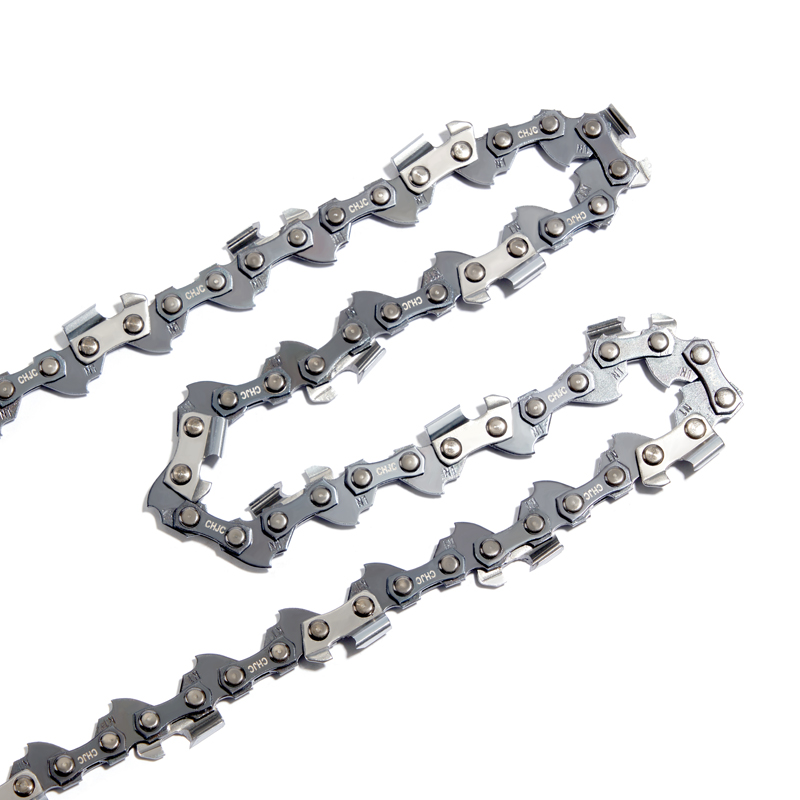
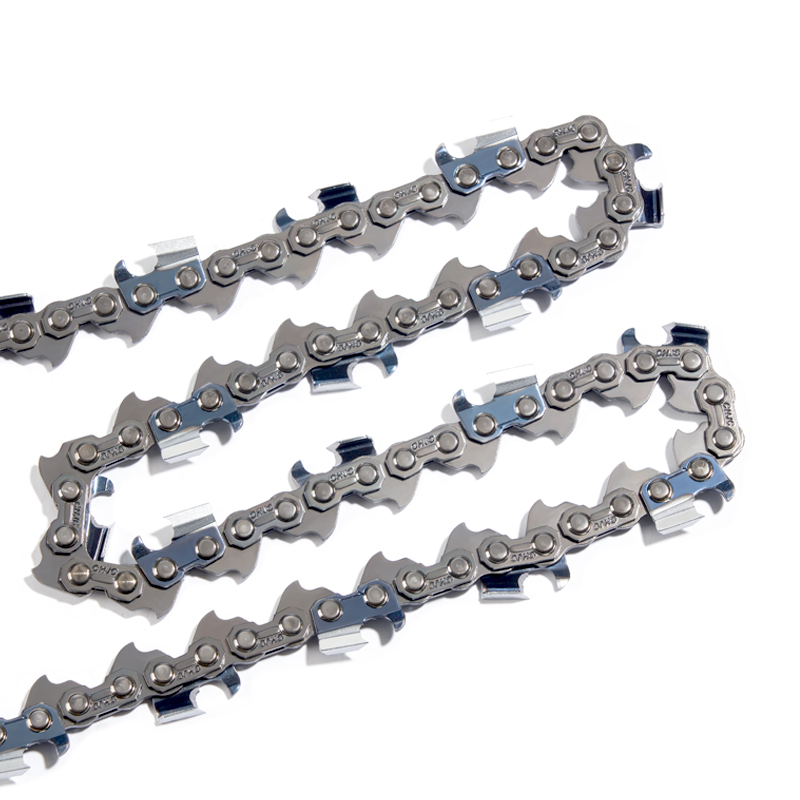
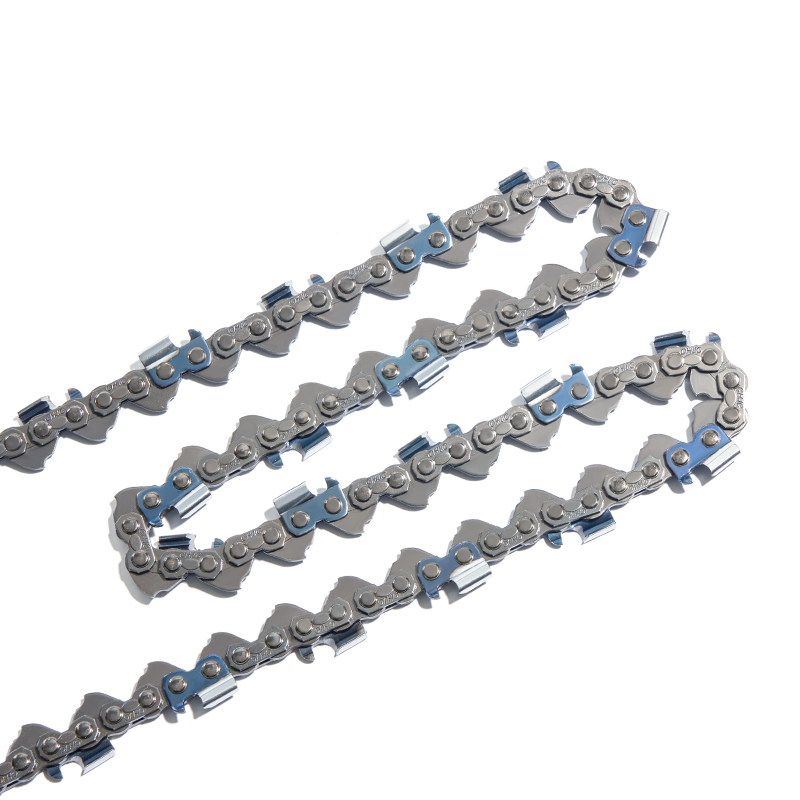
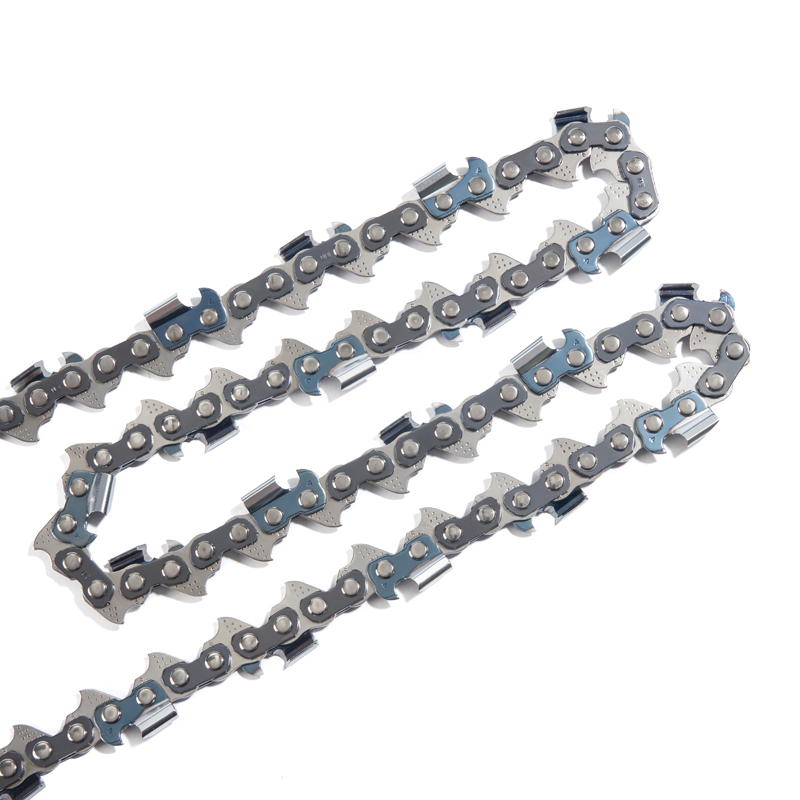
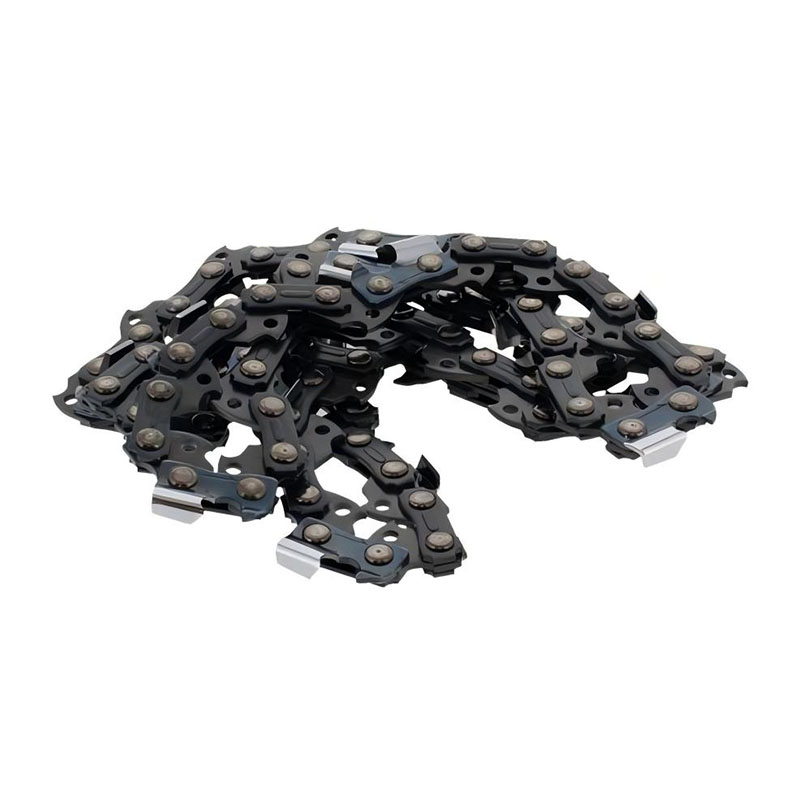
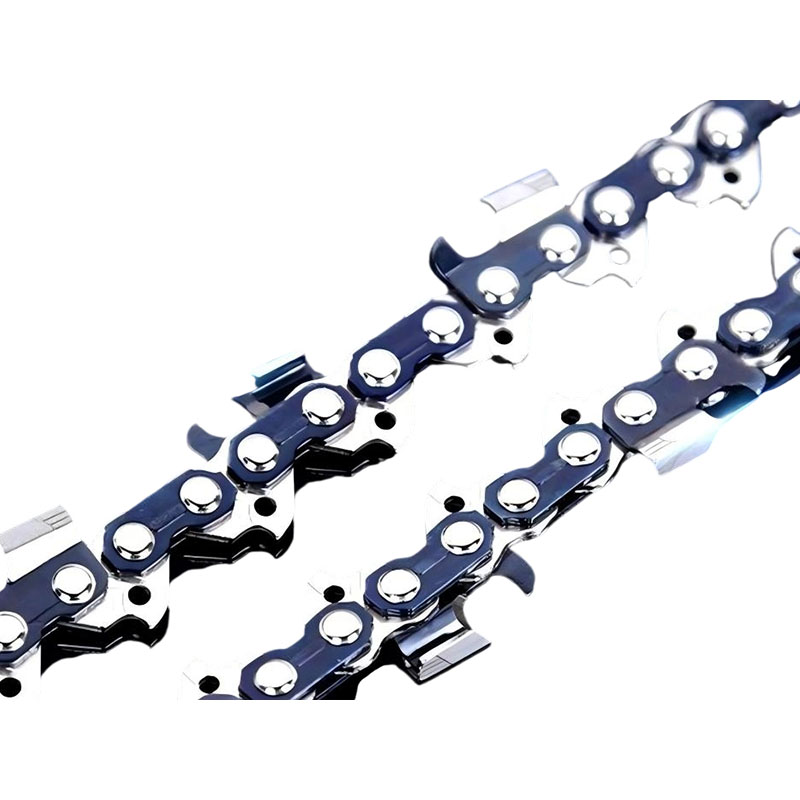
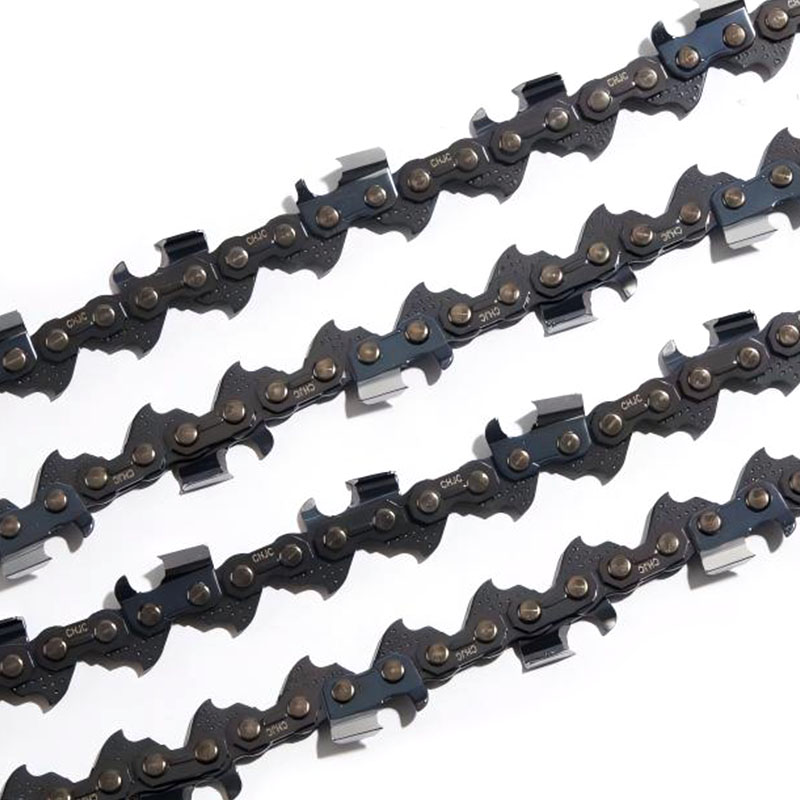
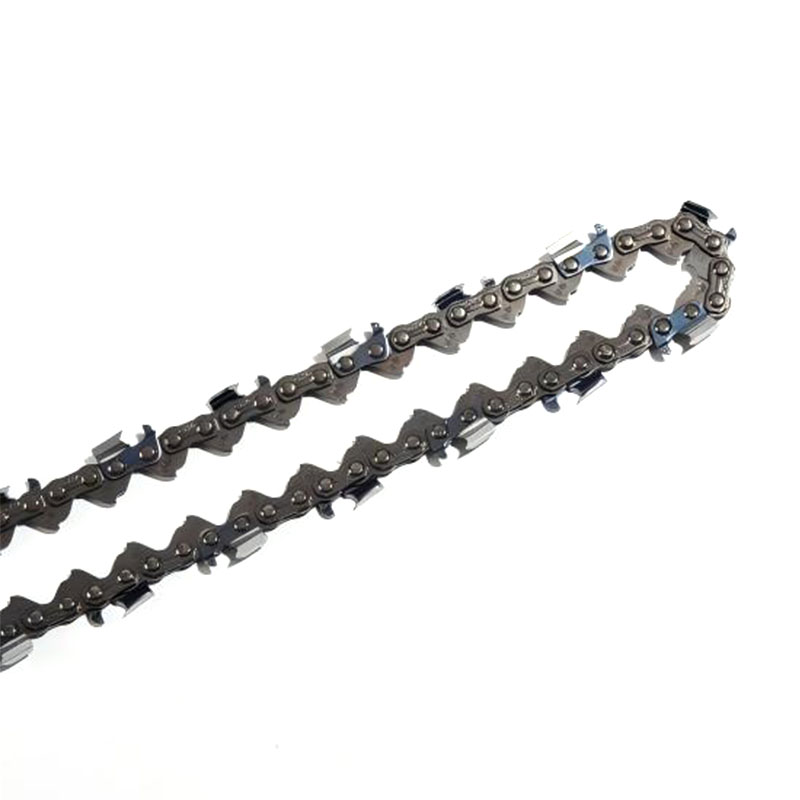
When it comes to cutting through large-diameter hardwood logs and demanding industrial timber work, 3/8" pitch saw chains are the gold standard for professional loggers and arborists worldwide. The 3/8-inch pitch — defined as the distance between any three consecutive rivets divided by two — delivers the ideal balance between aggressive cutting performance and chain durability. Whether you are processing pine, oak, or dense hardwoods on a full-day logging operation, choosing the right 3/8" pitch saw chain directly determines your productivity per hour, fuel consumption, and equipment lifespan.
This guide covers everything you need to know: how 3/8" pitch chains compare to other pitch sizes, which gauge and cutter types suit different industrial log applications, how to maintain and sharpen them correctly, and what specifications matter most when placing a bulk order for professional or OEM use.
What Does 3/8" Pitch Mean and Why It Matters for Industrial Log Work
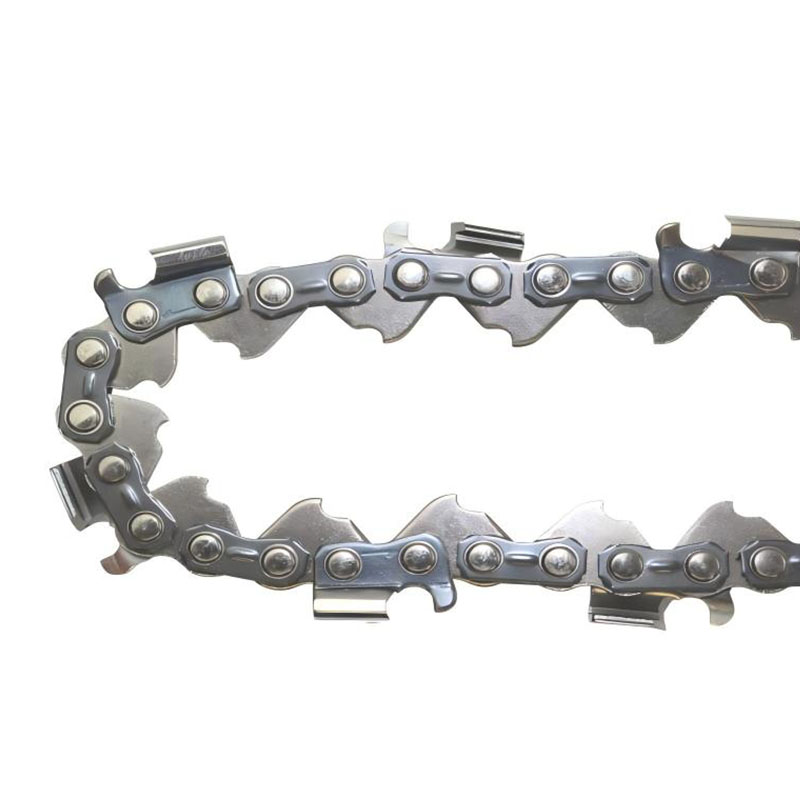
Pitch is the single most important specification when selecting a saw chain for industrial log cutting. It refers to half the distance between three consecutive rivet centers. A 3/8-inch (9.3 mm) pitch is the most widely used size in professional chainsaw applications globally, found on saws ranging from 50cc to over 120cc displacement.
There are two distinct variants under the 3/8" umbrella that are frequently confused:
- 3/8" Full Pitch (Standard 3/8"): Used on professional-grade saws with 50cc and above. This is the dominant chain for heavy-duty industrial log processing, milling, and felling operations. Drive links are larger and carry more oil, reducing friction on long cuts.
- 3/8" Low-Profile (LP): Smaller overall dimensions, designed for lightweight saws typically under 45cc. Not suitable for large-diameter industrial log applications where sustained cutting power is required.
For industrial log operations — particularly processing logs exceeding 30 cm (12 inches) in diameter — the full 3/8" standard pitch is the correct specification. Its larger cutter geometry removes more material per pass, reducing the number of strokes needed and lowering thermal stress on the bar and engine.
Pitch Comparison: How 3/8" Stands Against .325" and 3/4" Options
| Pitch Size | Typical Saw Size | Best Application | Cut Speed | Chain Durability |
|---|---|---|---|---|
| .325" | 35cc – 55cc | Limbing, pruning, medium logs | Fast | Moderate |
| 3/8" Full | 50cc – 120cc+ | Industrial log, felling, milling | High | High |
| 3/4" | Large milling saws, harvest machines | Lumber mills, giant timber | Very High | Very High |
The data clearly shows that the 3/8" full pitch occupies the professional sweet spot. It handles the vast majority of industrial log work without the excessive weight, specialized equipment needs, or cost premium associated with 3/4" systems.
Gauge Options for 3/8" Pitch Saw Chains: Selecting the Right Drive Link Width
Gauge refers to the thickness of the drive links — the part that fits into the guide bar groove. Getting this wrong means the chain either falls off the bar or jams. For 3/8" full pitch chains used in industrial log applications, the two primary gauges are:
- .058" (1.5 mm): The most common gauge for professional saws. Offers excellent strength and durability for heavy felling and bucking of large logs. Compatible with a wide range of guide bars from 16" to 36".
- .063" (1.6 mm): A heavier gauge suited to the most demanding industrial applications — continuous milling, processing very dense hardwoods, and extended use on large-displacement saws above 80cc. This gauge resists lateral flex better, reducing kerf wandering on long cuts.
Always verify gauge against your guide bar specification before ordering. A mismatch of even 0.05 mm can cause premature bar groove wear, dangerous chain derailment, or binding that stalls the saw mid-cut.
Cutter Types Available in 3/8" Pitch Saw Chains
The cutter geometry determines how aggressively the chain attacks wood, how smoothly it cuts, and how quickly it dulls. For industrial log work, three main cutter styles are commonly available in 3/8" pitch configurations.
Full Chisel Cutters
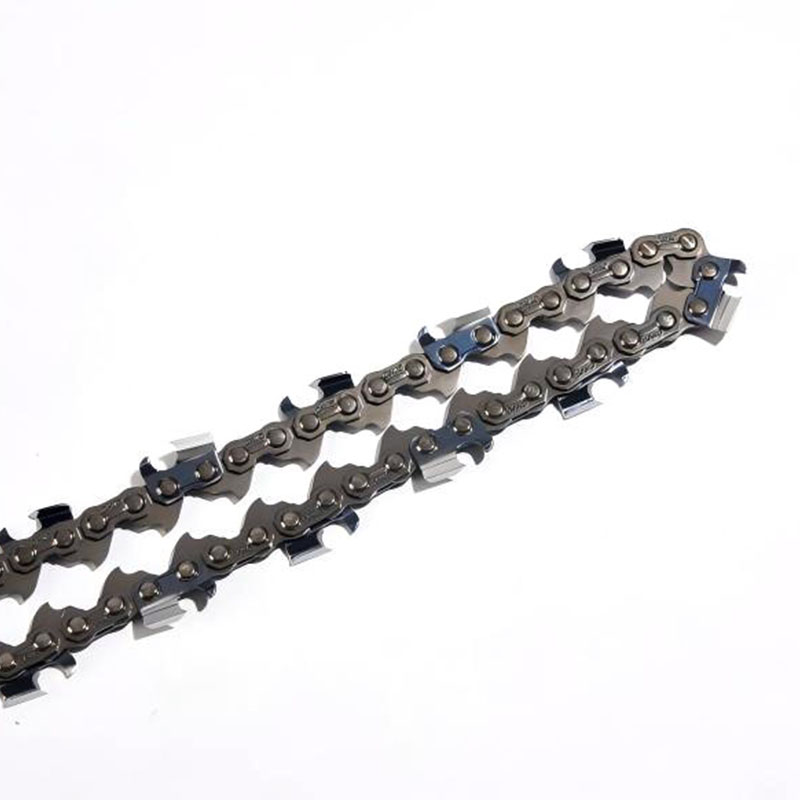
Full chisel cutters have a square-cornered cutting tooth that delivers the fastest, most aggressive cutting performance in clean softwood and dry hardwood. In controlled tests on pine logs of 40 cm diameter, full chisel chains cut approximately 15–20% faster than semi-chisel alternatives. However, they dull quickly when encountering dirty wood, soil, embedded sand, or small stones — conditions common in field logging operations.
Semi-Chisel Cutters
Semi-chisel cutters feature a rounded cutting corner, sacrificing a small amount of raw cut speed in exchange for significantly better edge retention. For industrial log operations where wood surfaces are dirty, frozen, or contain debris, semi-chisel chains maintain a workable cutting edge much longer between sharpenings. Many professional logging crews running full-day operations in forest environments prefer semi-chisel to reduce downtime from frequent sharpening stops.
Specialty: Carbide-Tipped 3/8" Pitch Chains
For industrial applications involving extremely abrasive materials — reclaimed lumber with embedded fasteners, palm wood, or frozen timber — carbide-tipped 3/8" pitch saw chains are available. Carbide tips last up to 10 times longer than standard steel in highly abrasive conditions. The trade-off is higher upfront cost and the requirement for diamond-wheel sharpening equipment rather than standard files.
Drive Link Count: How to Select the Correct Chain Length
Beyond pitch and gauge, the third critical specification is the number of drive links — which determines whether the chain fits your guide bar. A 3/8" pitch chain that is one drive link too short or long simply will not install correctly.
| Bar Length (inches) | Typical Drive Links (.058" gauge) | Common Application |
|---|---|---|
| 16" | 60 DL | Bucking medium logs, arborist work |
| 18" | 68 DL | General industrial log processing |
| 20" | 72 DL | Felling and bucking large logs |
| 24" | 84 DL | Heavy felling, milling large hardwood logs |
| 28" | 100 DL | Industrial milling, very large diameter timber |
| 36" | 120 DL | Giant timber operations, professional milling only |
Note that drive link counts can vary slightly between manufacturers for the same nominal bar length. Always cross-check with your specific guide bar manufacturer's chain compatibility chart before bulk purchasing.
Key Performance Factors: What Separates a Good 3/8" Saw Chain from a Poor One
Not all 3/8" pitch saw chains are manufactured to the same standard. In industrial log applications where a chain may be in continuous use for 6–10 hours per day, material quality and heat treatment make a significant difference in service life and safety.
Steel Grade and Heat Treatment
Professional-grade 3/8" saw chains are manufactured from chromium-plated, hardened tool steel with Rockwell hardness values typically in the range of 60–65 HRC on the cutter faces. Lower-grade chains use mild steel that dulls much faster — field data from logging contractors indicates that budget chains may require resharpening after as little as 1–2 tanks of fuel, while quality chains can run 4–6 tanks between sharpenings under comparable conditions.
Rivet and Link Geometry Consistency
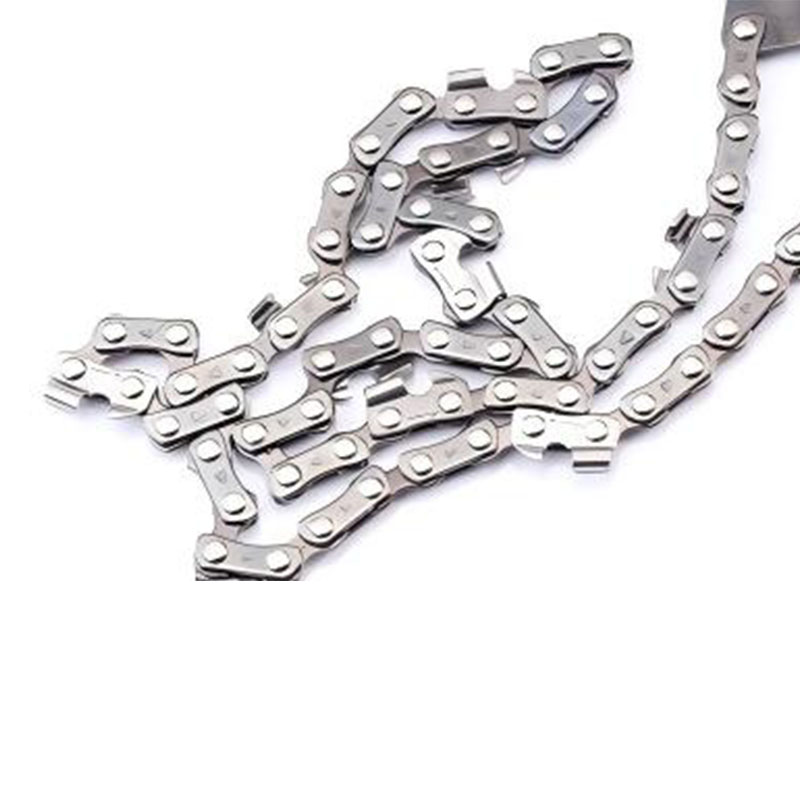
In mass production, rivet hole tolerances of ±0.01 mm or better are the standard for quality chains. Loose tolerances cause uneven chain stretch, vibration, and uneven wear on the guide bar nose. When evaluating suppliers for industrial log saw chains, requesting material certifications and dimensional inspection reports for drive link and tie strap thickness is standard practice for procurement professionals.
Cutter Depth Gauge Settings
The depth gauge (raker) height controls how deeply each cutter bites into wood per pass. Standard settings for 3/8" pitch chains in industrial log cutting are 0.025" to 0.030" (0.64–0.76 mm) below the cutter top plate. A depth gauge set too high reduces cut efficiency; too low creates excessive kickback risk and rapid chain wear. OEM-supplied chains are typically factory-set to these parameters, but they must be checked and maintained during regular sharpening intervals.
How to Sharpen and Maintain 3/8" Pitch Saw Chains for Maximum Service Life
Proper maintenance is the single biggest factor under an operator's control when it comes to chain longevity and cutting safety. A well-maintained 3/8" chain can be resharpened 8 to 12 times before replacement, representing a significant reduction in total chain cost per cubic meter of wood processed.
File Size for 3/8" Full Pitch Chains
The correct round file diameter for sharpening full-pitch 3/8" saw chains is 7/32" (5.5 mm). Using an incorrect file size changes the cutter geometry, reducing cutting efficiency and increasing the risk of kickback. File guides calibrated for 3/8" pitch ensure consistent filing angle at 25–35 degrees depending on cutter type and wood species.
Sharpening Frequency Guidelines
Professional loggers typically sharpen after every tank of fuel or approximately every 45–60 minutes of cutting. Indicators that a 3/8" chain needs immediate sharpening include:
- Chain produces fine dust instead of wood chips during cutting
- Saw requires heavy downward pressure to advance through the log
- Visible rounding or reflective glare on cutter tips under light inspection
- Chain pulls consistently to one side, indicating uneven cutter height
Chain Tension and Bar Lubrication
Correct chain tension should allow the chain to be pulled away from the bar by approximately 3–4 mm at the center of the bar, snapping back when released. Overly tight chains accelerate bar nose wear and reduce cutting speed. Overly loose chains risk derailment and create a severe injury hazard.
Chain oiling is equally critical. Saw chain oil consumption rates for professional saws running 3/8" pitch chains range from 150 to 300 ml per hour depending on saw displacement and bar length. Insufficient lubrication causes the chain to heat above 200°C within minutes, leading to rapid hardness loss in the steel and premature chain failure.
Applications of 3/8" Pitch Saw Chains in Industrial Log Operations
Timber Felling
Large-scale felling operations typically use 3/8" full chisel or semi-chisel chains on bars from 20" to 36". For softwood forests (pine, spruce, fir), full chisel configurations dominate due to clean wood conditions. Semi-chisel is preferred in mixed or hardwood felling environments where soil contact is unavoidable. Production rates in professional softwood felling can exceed 100 trees per day per operator with properly maintained 3/8" chains.
Log Bucking and Processing
Bucking — cross-cutting felled logs into workable lengths — is where 3/8" chains see the highest daily usage in industrial settings. Processor heads on harvester machines often use specialized 3/8" pitch chains engineered for continuous automated operation, with hardened side plates to resist the repeated lateral contact of processor rollers.
Portable Sawmill and Milling Applications
Chainsaw mills used for ripping logs into lumber slabs place extreme demands on 3/8" pitch chains. Ripping cuts require a specially angled cutter with a top plate filing angle of 5–10° rather than the standard 25–35° used for cross-cutting. Standard cross-cut 3/8" chains can be used for milling but will overheat and dull 3–4 times faster than purpose-configured ripping chains.
Arborist and Urban Tree Work
Those working on large urban trees (diameters of 60 cm and above) frequently turn to 3/8" pitch chains on medium-to-large saws. Semi-chisel is strongly preferred in this setting because urban trees contain significantly more embedded debris — wire, nails, concrete dust — that would rapidly destroy full chisel cutters.
Safety Considerations When Operating 3/8" Pitch Saw Chains on Industrial Logs
The large cutter geometry of 3/8" full pitch chains makes kickback more energetic than with smaller pitch configurations. Proper safety practices are non-negotiable.
- Low-kickback chain options: Some 3/8" pitch chains are designed with modified depth gauges and guard links that reduce kickback energy by up to 40% compared to standard configurations. These are required in many jurisdictions for non-certified operators.
- Chain brake function: Always verify the chain brake activates correctly before beginning industrial log work. A functional brake stops a 3/8" chain within 0.1 seconds upon kickback detection.
- PPE requirements: Cut-resistant leg protection (chainsaw chaps rated for chain speeds of at least 28 m/s), Class E helmet with face shield, and chainsaw-specific gloves are the minimum standard for industrial log operations.
- Chain inspection before each shift: Check for cracked or bent cutter links, loose rivets, and uneven stretch. A damaged 3/8" chain running at full speed carries enough kinetic energy to cause fatal injuries if it derails or breaks.
Buying Guide: What to Look for When Sourcing 3/8" Pitch Saw Chains in Bulk
For procurement managers, equipment distributors, and logging contractors purchasing 3/8" pitch saw chains in volume, several quality indicators separate reliable suppliers from unreliable ones.
- Material certification: Require SGS or equivalent third-party test reports confirming steel grade, Rockwell hardness, and chromium plating thickness on cutters.
- Dimensional tolerances: Request drawing specifications and inspection reports for drive link thickness, tie strap thickness, and rivet hole diameter. Top-tier manufacturers hold ±0.01 mm tolerances; budget producers often drift to ±0.05 mm or worse.
- Cross-brand compatibility: Confirm that the 3/8" pitch chains are dimensionally compatible with the major saw brands your customers run — correct compatibility ensures no returns or warranty disputes.
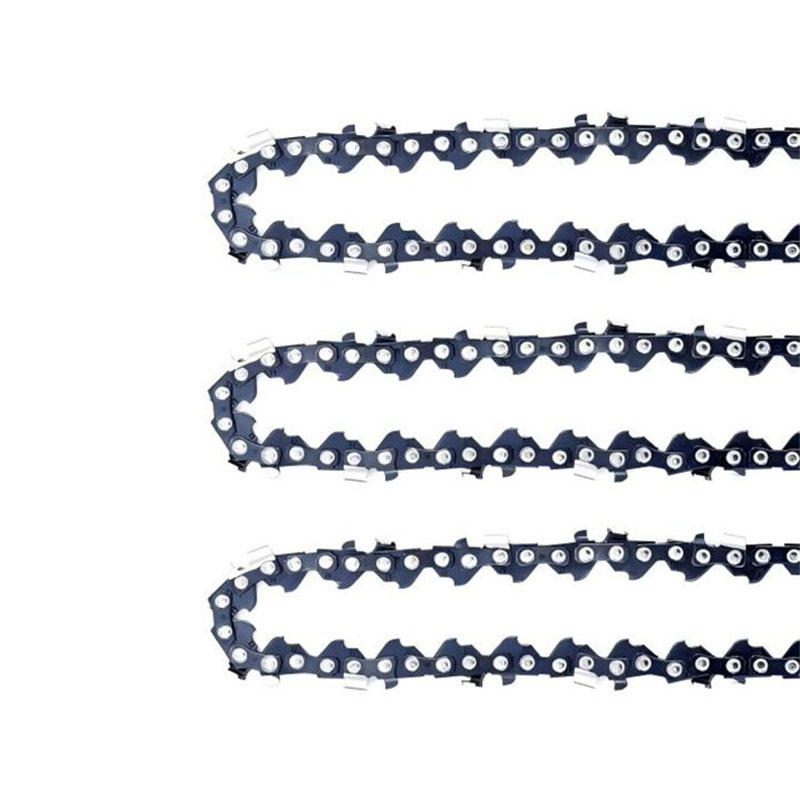
- MOQ and lead time: Industrial log customers typically require chains in full-reel quantities (25 chains per reel is a common standard). Confirm your supplier can deliver consistent batch quality across multi-reel orders.
- Packaging for field use: Chains destined for harsh logging environments benefit from individual oiled poly bags with clearly printed specifications (pitch, gauge, drive link count) to prevent mix-ups on site.
When comparing total cost of ownership rather than unit price, a higher-quality 3/8" pitch chain that lasts 3× longer and requires fewer sharpening stops delivers better value per cubic meter of wood processed than a budget chain, even if the purchase price is 30–50% higher.