English
 中文简体
中文简体
 русский

Content
- 1 What a Chainsaw Chain Size Chart Really Tells You
- 2 Pitch, Gauge and Drive Link Counts at a Glance
- 3 Pitch: Where Most Ordering Errors Start
- 4 Gauge: A Tolerance Measured in Thousandths
- 5 Drive Link Count: The Number No Chart Can Guess for You
- 6 How to Confirm the Size Before You Order
- 7 Cutter Type and Sequence: Choices That Follow the Fit
- 8 Purchasing Notes for Distributors and OEM Buyers
Buying the wrong saw chain is rarely a dramatic mistake. It is a quiet one. The box arrives, the pitch printed on the label looks correct, the loop drops onto the bar, and then it will not turn, or it turns, cuts crooked and chews the bar rails within a day. A purchasing manager we worked with ordered a batch of 3/8-inch low-profile chain for a fleet of 20-inch bars and learned on the shop floor that every loop was three drive links short. His size chart listed pitch and gauge. It never mentioned drive links.
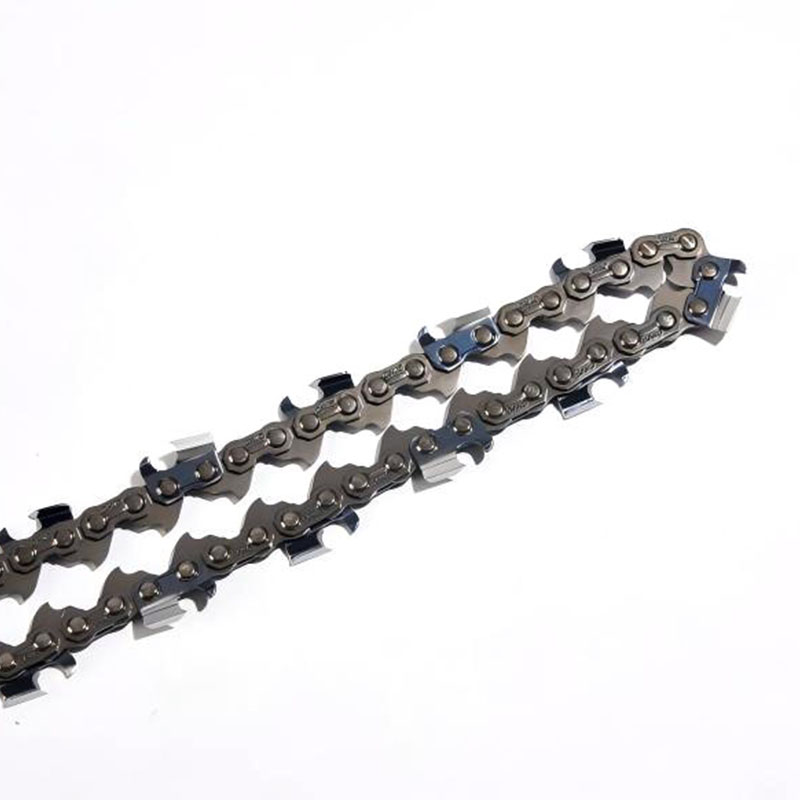
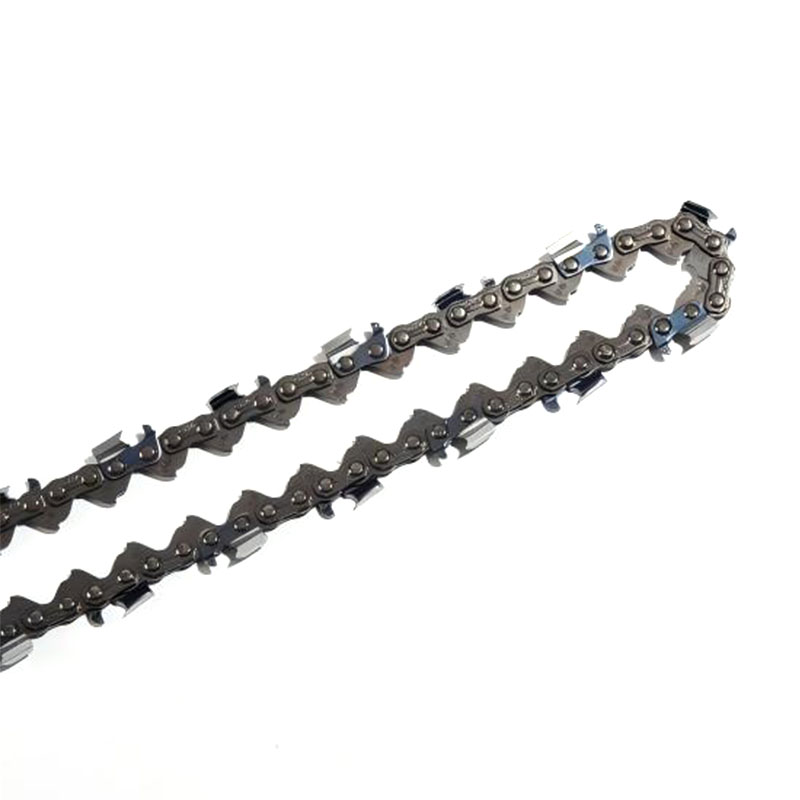
That missing column is the real problem with most chainsaw chain size charts. The short version first: a chain is defined by three numbers, pitch, gauge and drive link count, and a chart only earns its place on the workshop wall when it shows all three for the exact bar length in use. Cutter type and sequence matter, but they change how a chain cuts, not whether it fits.
What a Chainsaw Chain Size Chart Really Tells You
Read a size chart as three separate answers rather than one.
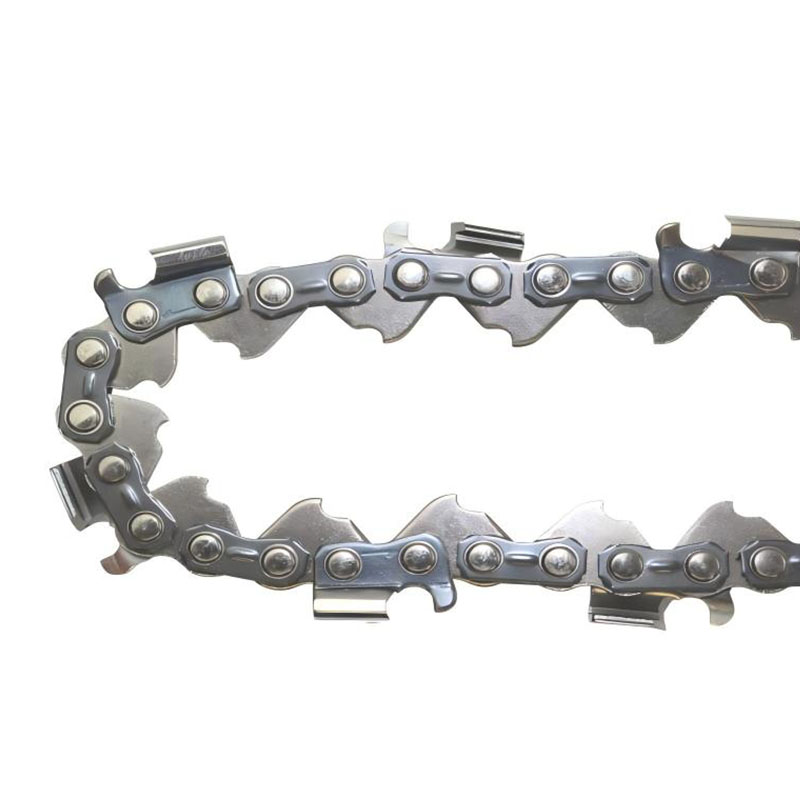
- Pitch is the spacing between drive links, taken as half the distance across three consecutive rivets. It has to match the sprocket.
- Gauge is the thickness of the drive link where it rides in the bar groove. It has to match the bar.
- Drive link count is the total number of drive links in the loop. It has to match the bar length and the pitch together.
The three values are independent. A .325-inch chain with a .063-inch gauge and 74 drive links, and a .325-inch chain with a .050-inch gauge and 74 drive links, share two numbers and fit two different saws. That is why a usable chart is organized in columns instead of being written as a list of bar lengths.
Pitch, Gauge and Drive Link Counts at a Glance
The table below groups the pitch values that appear most often on chainsaw chain size charts with the gauge options and the class of saw each combination normally serves. Use it to narrow the field, then confirm the drive link count against your own bar.
| Pitch | Common gauges | Pitch in millimetres | Typical saw class |
|---|---|---|---|
| 1/4 inch | .043, .050 | 6.35 mm | Top-handle and pole saws |
| 3/8 inch low profile | .043, .050 | 9.32 mm | Farm, ranch and homeowner saws |
| .325 inch | .050, .058, .063 | 8.25 mm | Mid-range saws, roughly 45 to 60 cc |
| 3/8 inch | .050, .058, .063 | 9.52 mm | Professional felling saws, roughly 55 to 90 cc |
| .404 inch | .063, .080 | 10.26 mm | Harvesters, mills and heavy powerheads |
Pitch narrows the field first because it decides sprocket compatibility. Gauge eliminates whatever is left by looking at the bar groove. Drive link count finishes the job. Work through the columns in that order and a size chart stops being a reference document and starts being a purchasing tool.
Pitch: Where Most Ordering Errors Start
Pitch is measured by taking the distance across any three consecutive rivets and dividing it by two. That single figure controls how the chain sits on the drive sprocket, so an error here is not a fitting nuisance, it is a mechanical fault waiting to happen. The values that cover almost every saw in service are:
- 1/4 inch, 6.35 mm, for small top-handle and pole saws.
- .325 inch, 8.25 mm, the workhorse pitch for mid-sized saws.
- 3/8 inch low profile, 9.32 mm, for lighter saws and narrow kerf bars.
- 3/8 inch, 9.52 mm, for professional felling saws.
- .404 inch, 10.26 mm, for harvesters, chainsaw mills and heavy equipment.
Look closely at the two 3/8-inch entries. The difference is 0.2 mm, invisible to the eye and decisive at the sprocket. A low-profile loop on a standard 3/8-inch rim, or the reverse, will wear the drive links, jump the rim and shorten the life of both parts. Pitch must match the sprocket exactly, with no interpretation allowed. For buyers comparing the two families in detail, the practical differences between low-profile saw chains and standard profile chains are worth reviewing before a specification is locked in.
Sourcing both gauges of the same low-profile family on one purchase order is common practice for distributors, because the same saw model can ship with either bar groove depending on the market.
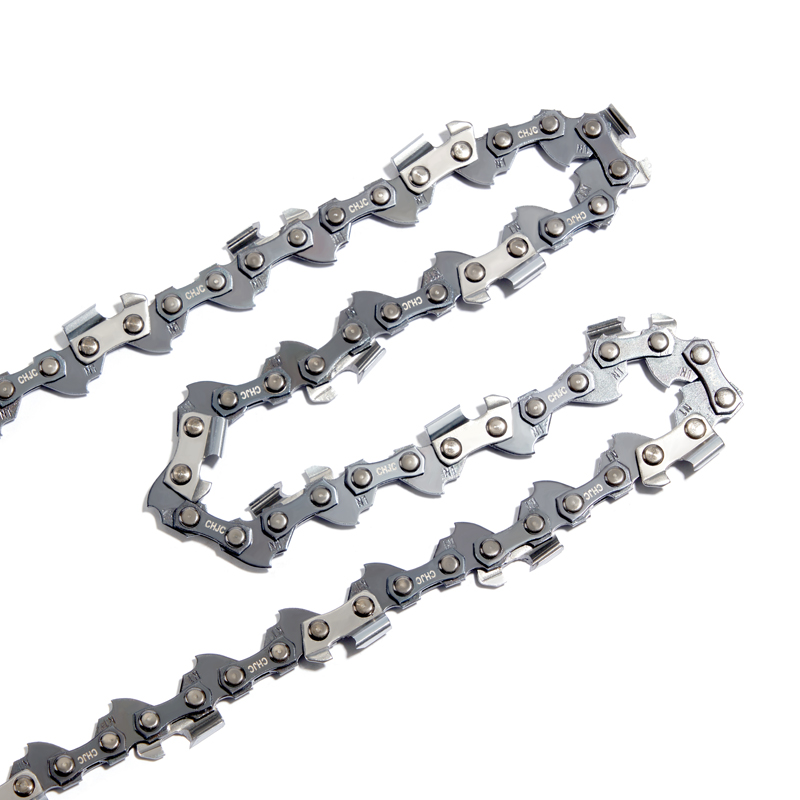
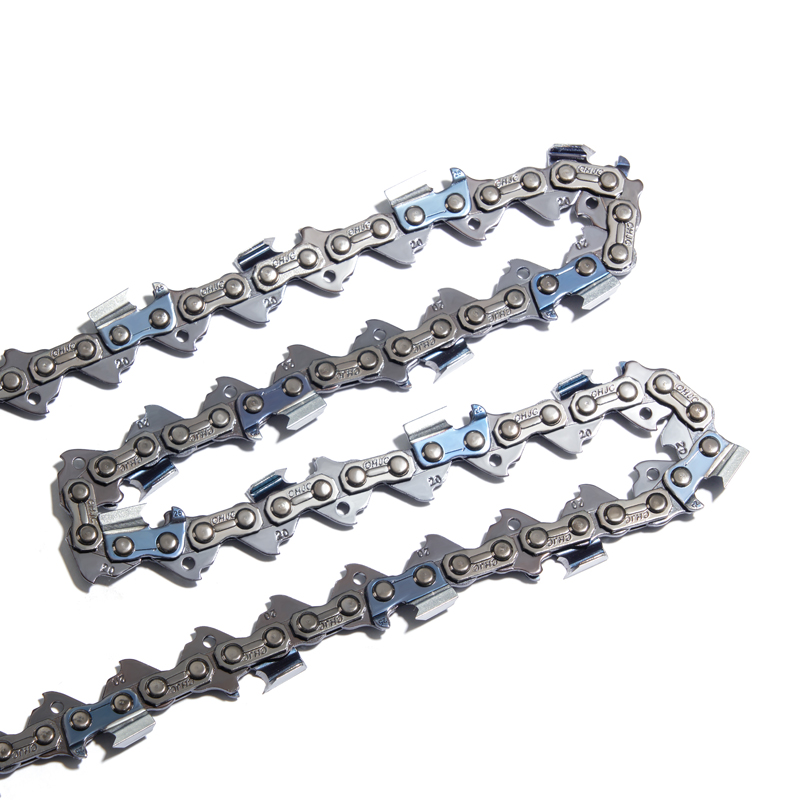
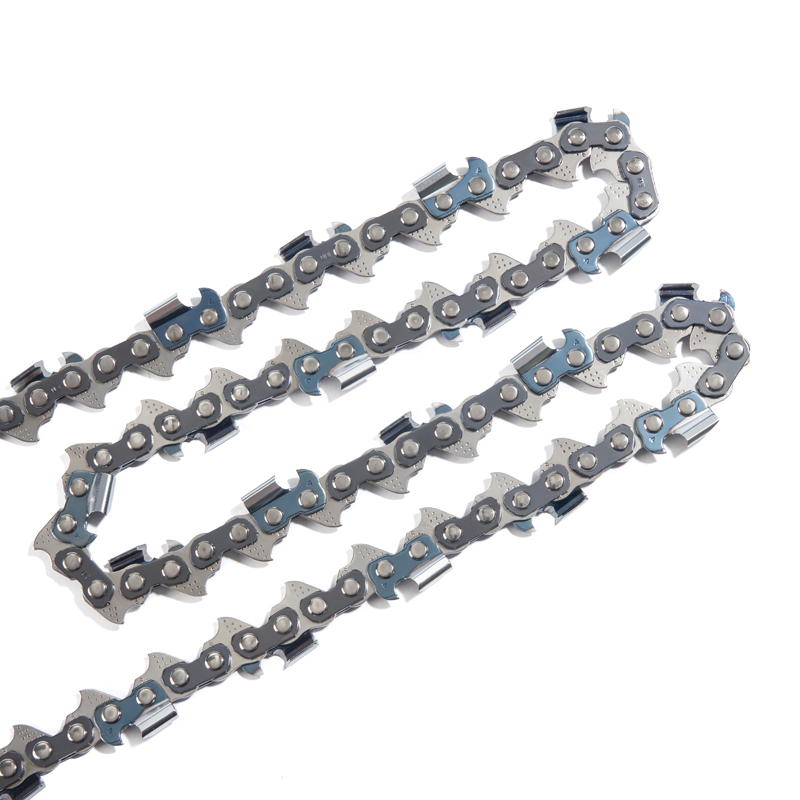
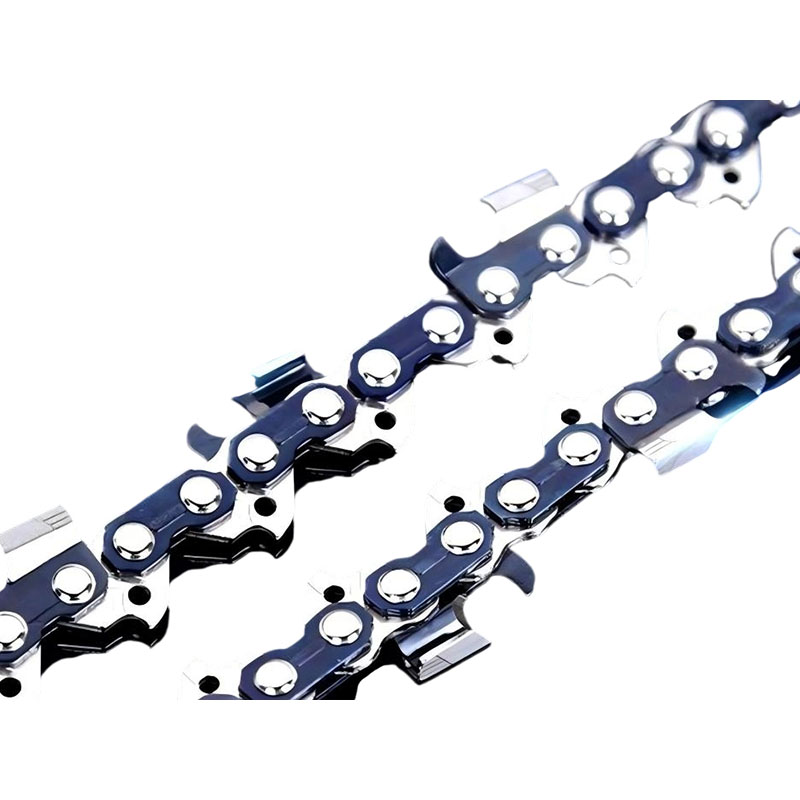
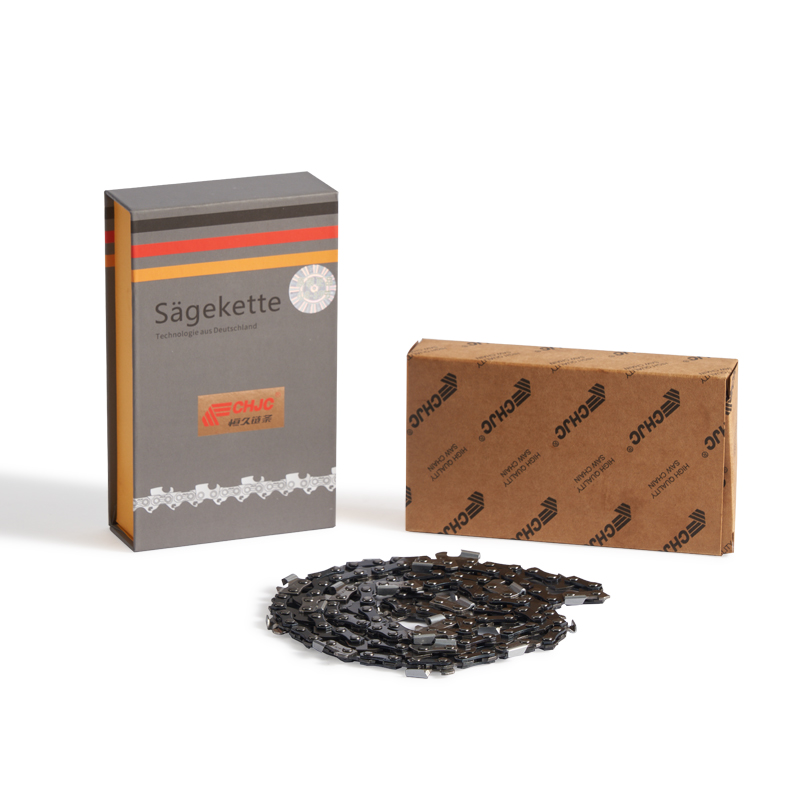 3/8" LP .050" SAW CHAINSpecification PrecautionsView Product →
Gauge: A Tolerance Measured in Thousandths
Gauge is a small number doing a large job. It describes the thickness of the drive link where it enters the bar groove, and it is written in thousandths of an inch: .043, .050, .058 and .063, which correspond to roughly 1.1 mm, 1.3 mm, 1.5 mm and 1.6 mm. On the shelf, .050 and .058 look nearly identical. In the groove, they are not interchangeable.
There is no useful tolerance on gauge. A chain one step too thick will not seat at all. A chain one step too thin will rock sideways, cut a curved kerf, throw under load and wear the bar rails unevenly, and the damage usually appears long before the operator connects the problem to the chain. The field test takes seconds: a correctly sized loop sits in the groove with no side-to-side play while still sliding freely by hand. If the chain clicks into the groove but can be rocked left and right, the gauge is wrong.
Bar groove width also changes with wear. A bar that has run thousands of hours with a loose chain may hold a .058 chain snugly where a .050 chain once belonged, which is one reason replacement chains should be checked against the bar rather than ordered from a machine model alone.
Drive Link Count: The Number No Chart Can Guess for You
Drive link count is the only one of the three numbers that depends on the bar itself. Two bars of the same advertised length do not always need the same loop, because the tail sprocket, the nose radius and the bar profile all change the total length of chain needed. Typical values give a sense of the range, but they are a starting point, not an answer:
- 16-inch bar, 3/8-inch low profile, .050 gauge: typically 55 or 56 drive links.
- 18-inch bar, .325 pitch, .063 gauge: typically 74 drive links.
- 20-inch bar, 3/8-inch pitch, .050 gauge: typically 72 drive links.
- 24-inch bar, 3/8-inch pitch, .050 gauge: typically 84 drive links.
- 36-inch bar, .404 pitch, .063 gauge: typically 104 drive links.
Note how little the bar length alone tells you. A 20-inch bar in 3/8-inch pitch and the same 20-inch bar in .325-inch pitch do not take the same loop, because the pitch changes the number of links needed to span the same distance. Count the old chain before it is discarded, or read the number stamped on the bar. Both take less than a minute and eliminate the most expensive mistake in this category, which is a full batch of loops that cannot be fitted.
How to Confirm the Size Before You Order
Four checks cover almost every saw, in order of speed.
- Read the guide bar. Most bars are stamped with three figures in sequence, for example 20 .050 72, meaning bar length, gauge and drive link count. This is the fastest and most reliable source.
- Count the old chain. Lay it flat, straighten it and count every drive link. A loop that has stretched slightly still has the correct count.
- Check the manual or the housing label. This works well for stock saws that have never been modified, but it fails the moment a bar has been swapped.
- Measure when markings are gone. Measure across three rivets and divide by two for pitch, then use a caliper on a drive link for gauge.
One habit separates experienced buyers from everyone else: they record all three numbers in the purchase specification, not just the bar length. A chain ordered as "20-inch chain" is a guess. A chain ordered as 3/8-inch pitch, .050 gauge, 72 drive links is a component.
Cutter Type and Sequence: Choices That Follow the Fit
Once pitch, gauge and drive link count are settled, the remaining decisions affect cutting behavior rather than fit. Cutter geometry decides how aggressive and how durable the chain is in real wood.
Common cutter types
- Full chisel: fast, sharp corners, best in clean softwood and hardwood where speed matters most.
- Semi-chisel: rounder profile, more forgiving in dirty or frozen timber, and the usual choice for mixed work.
- Chipper: durable and easy to file, common on utility and low-speed applications.
- Low-profile cutter: reduced kickback geometry, standard on lighter saws and safety-focused builds.
Sequence and safety features
Standard sequence has one cutter for every two drive links and suits bars up to roughly 20 inches. Skip tooth and full skip reduce the number of cutters so chips clear more easily on long bars, at the cost of a rougher cut. Anti-kickback features, whether a guard link or a bumper drive link, are part of the specification for consumer saws and should never be described as an optional extra. For professional felling saws, full chisel loops in 3/8-inch pitch represent the largest single share of demand, and they are usually ordered alongside matched rim sprockets.
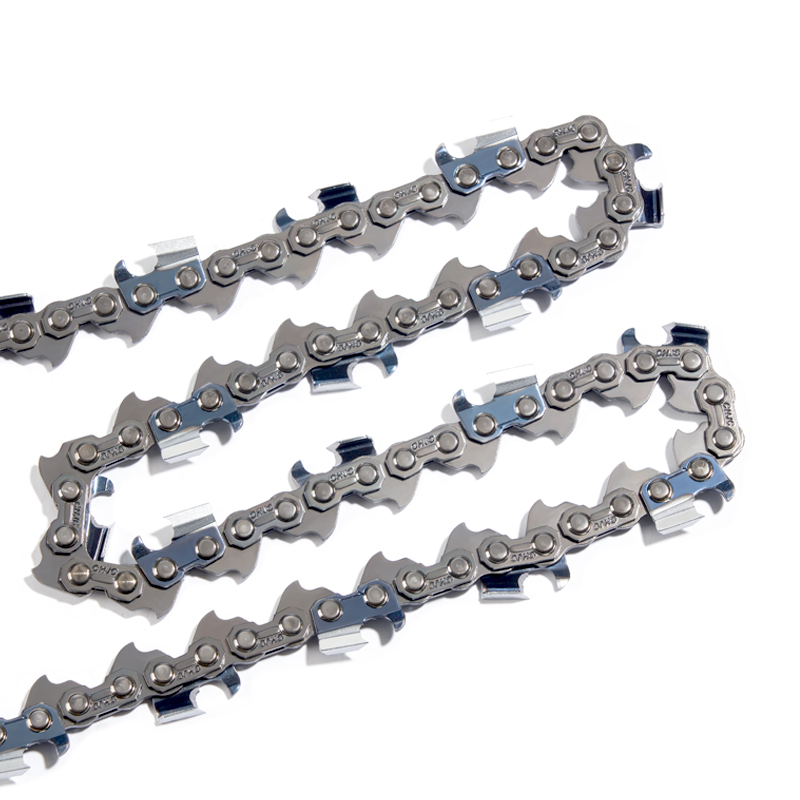
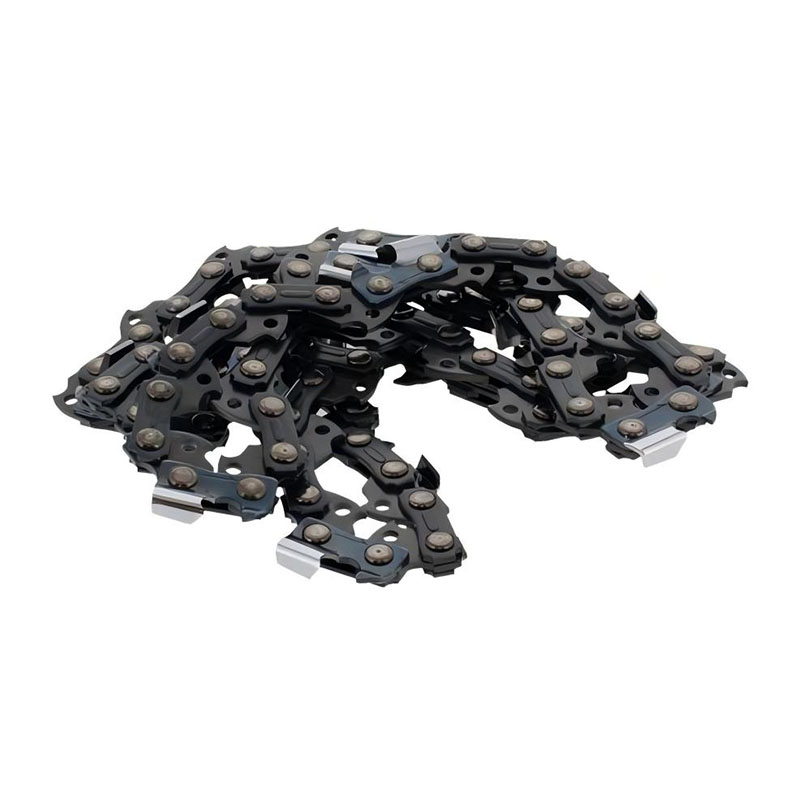
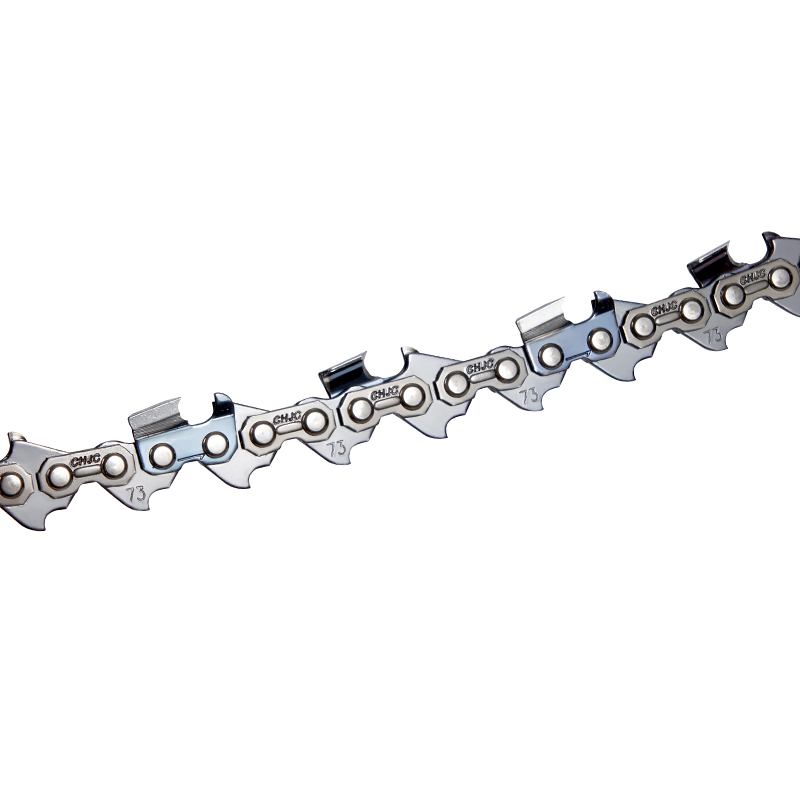 3/8" .050" SAW CHAINSpecification PrecautionsView Product →
Purchasing Notes for Distributors and OEM Buyers
For a single replacement loop, a size chart is enough. For anyone buying in volume, correct dimensions are only the entry ticket. What determines whether a container of chain performs is consistency between batches, and that depends on three things: drive link hardness, rivet quality and tooling accuracy.
A chain that stretches unevenly after a few tanks of fuel is almost always a heat treatment or rivet issue, not a pitch issue. Variation between production runs shows up as loops that fit one week and feel tight the next, even though every measurement on the label is identical. Buyers who audit suppliers usually ask for two things before placing a repeat order: a sample from at least two separate production batches, and confirmation that the same dies are used across the run. A manufacturer working from its own in-house mold centers can hold that consistency far more easily than one outsourcing cutters and tie straps separately.
Heavy harvesting equipment running .404-inch pitch in .080-inch gauge is a separate supply line from handheld saw chain, with different tolerances and different wear expectations, and it is normally specified by machine rather than by bar length.
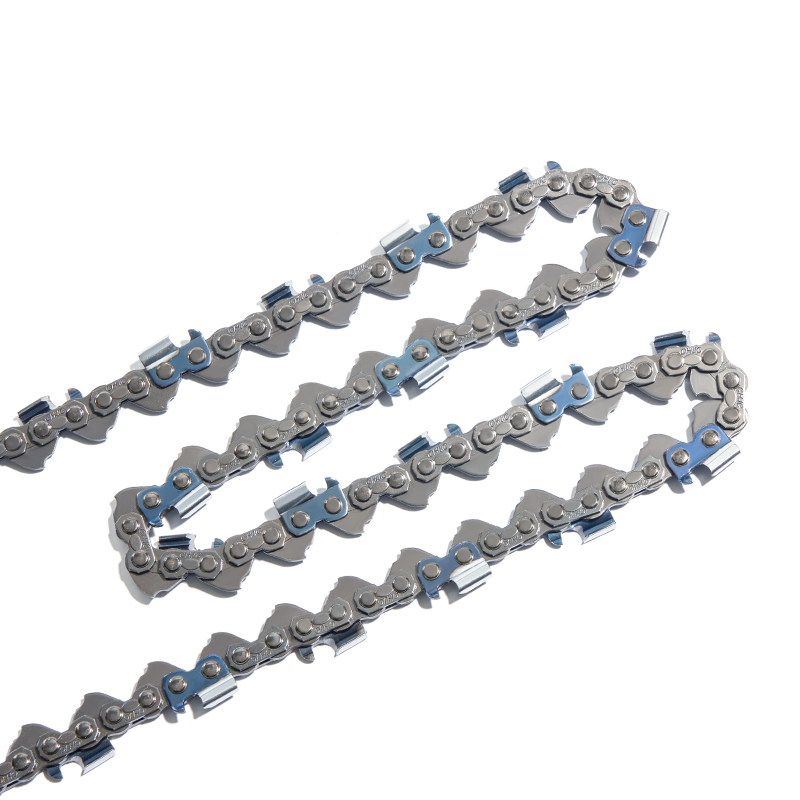
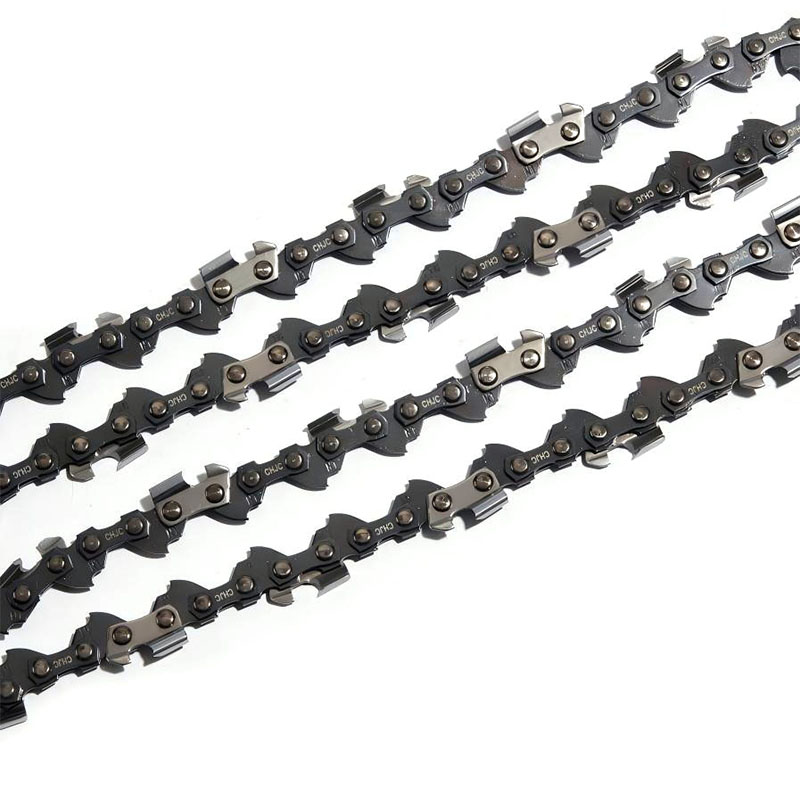
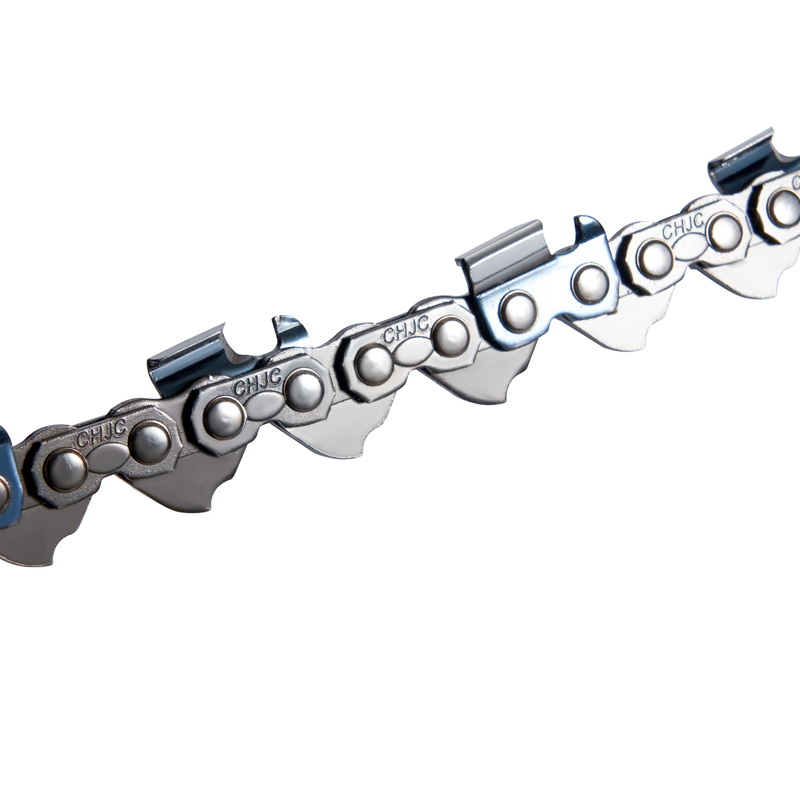 .404" .080" HARVESTER CHAINSpecification PrecautionsView Product →
For buyers who need non-standard loops, custom link counts or private-label packaging, working directly with a custom saw chain factory shortens the loop between specification and shipment considerably compared with sourcing through distribution layers.
A chainsaw chain size chart earns its keep when it answers three questions for every bar length on it: what pitch, what gauge, how many drive links. Everything else, cutter type, sequence, safety features, is a performance decision made after the chain fits.
The 30 seconds it takes to read the stamp on a bar or count a worn loop is the cheapest insurance in this category. Get the three numbers right, write them into the specification, and the quiet mistakes stop arriving in boxes.