English
 中文简体
中文简体
 русский

Content
- 1 The Four Columns Every Chain Chart Organises
- 2 Pitch: The Column Buyers Read First
- 3 Gauge and Drive Link Count: Where Returns Come From
- 4 Cutter Style: Full Chisel, Semi-Chisel, Chipper and Low-Profile
- 5 Sequence: Full House, Semi-Skip and Full Skip
- 6 Heavy-Duty Rows: Harvester and Chipper Chains
- 7 Five Checks Before the Order Leaves Your Desk
A distributor once returned forty loops of 3/8 inch chain in a single shipment. The pitch was right, the cutter style was right, the labels were printed correctly, and the cartons were sealed properly. The chains were .050 inch gauge; the bars on those saws had .058 inch grooves. One misread column produced a full pallet of returns, two weeks of freight, and a customer who now measures every loop twice.
That is why a chainsaw chain types chart should be read column by column, not row by row.
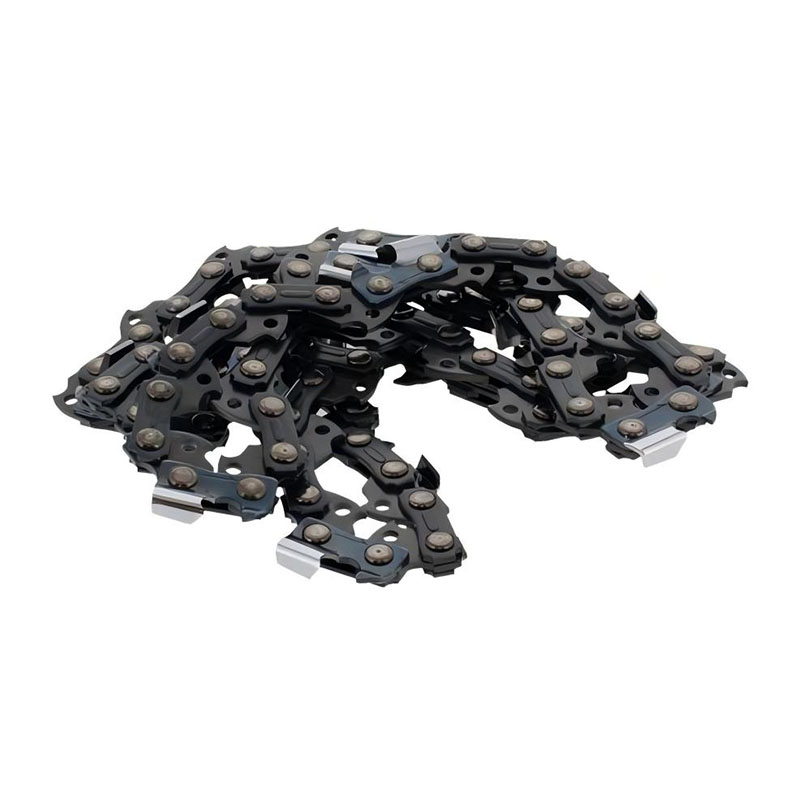
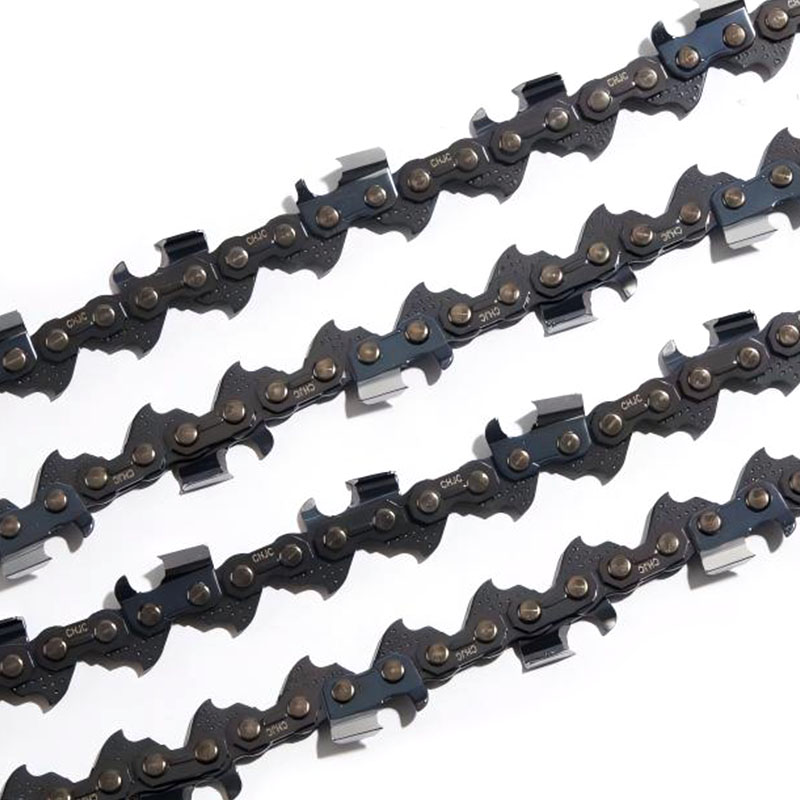
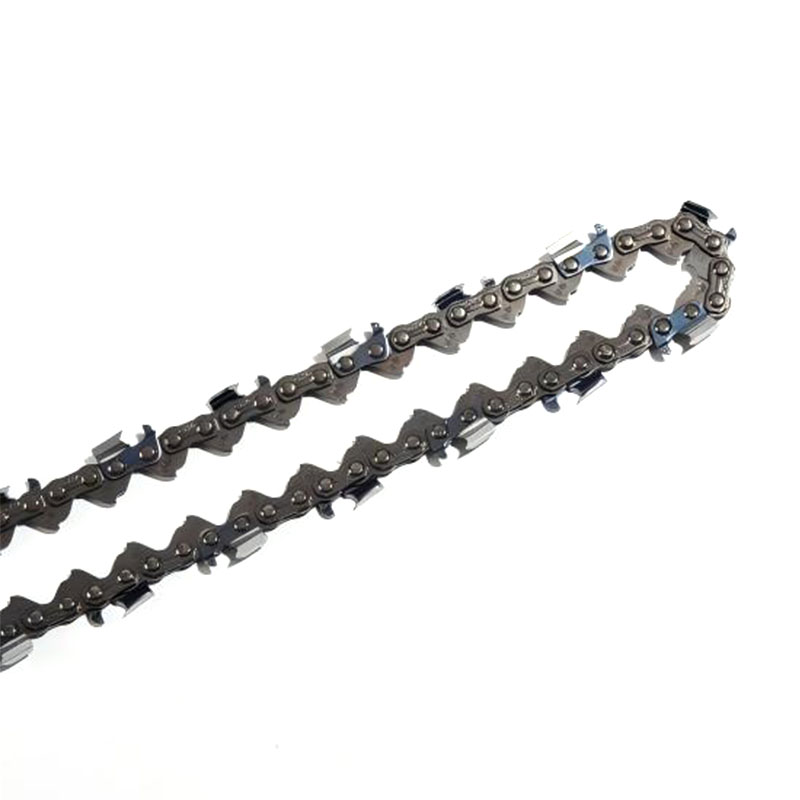
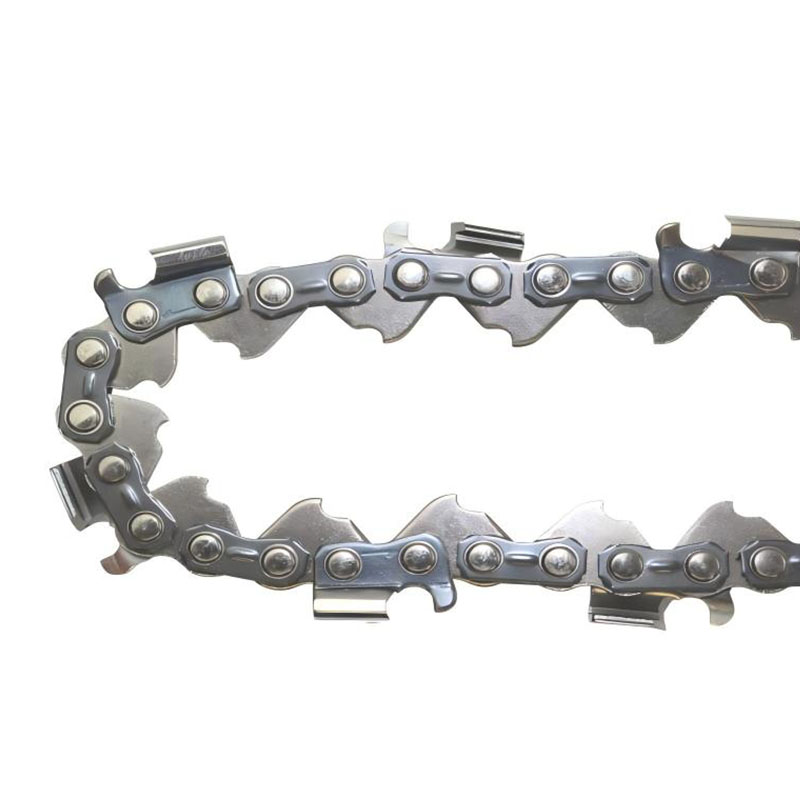
Four values define a saw chain: pitch, gauge, drive link count and cutter style. The first three decide whether the loop fits the bar and sprocket. The fourth, together with chain sequence, decides how the chain behaves in the cut. A chart that tells you only "3/8 inch" has told you almost nothing.
The Four Columns Every Chain Chart Organises
Charts from different manufacturers look different on the page, but they all sort the same variables into two groups: dimensional and behavioural.
- Pitch — the spacing of the drive links, written as a fraction of an inch. It must match the drive sprocket and the bar nose sprocket.
- Gauge — drive link thickness in thousandths of an inch. It must match the bar groove width.
- Drive link count — the number of links in the loop, tied to bar length and sprocket size.
- Cutter style and sequence — tooth geometry, plus how many cutters are fitted around the loop.
The first three are a fit question with no room for guessing. Pitch, gauge and link count either match the saw or the chain will not run. The fourth is a performance question, where judgement and experience are allowed.
Pitch: The Column Buyers Read First
Pitch is half the distance between three consecutive rivets, which is why it is written as a fraction. A quick workshop check is to measure across three rivets and divide by two: on a 3/8 inch chain the span is roughly 3/4 inch.
The common trap is that two genuinely different chains can share the same pitch. A 3/8 inch low-profile chain and a 3/8 inch standard chain both read "3/8", but they do not interchange. Cutter profile, drive link height and sprocket engagement all differ, and a low-profile chain on a standard sprocket will run rough or fail early.
| Pitch | Common gauges | Typical saw class | Typical work |
|---|---|---|---|
| 1/4 inch | .043, .050 | Top-handle, pole and carving saws | Limbing, pruning, detail work |
| 1/4 inch LP | .043 | Micro and battery saws | Fine pruning, light clean-up |
| 3/8 inch LP | .043, .050 | 30 to 50 cc homeowner and farm saws | Firewood, limbing, small felling |
| .325 inch | .043, .050, .058, .063 | 45 to 60 cc farm and ranch saws | Felling, bucking, firewood |
| 3/8 inch | .050, .058, .063 | 55 to 90 cc professional saws | Felling, bucking, hardwoods |
| .404 inch | .063, .080 | 90 cc and above, harvester heads | Heavy felling, mechanical harvesting |
Where a chart lists only one gauge against a pitch, treat it as a default rather than a rule. The same .325 inch pitch is sold in four different gauges because it is fitted to four different families of bar.
Gauge and Drive Link Count: Where Returns Come From
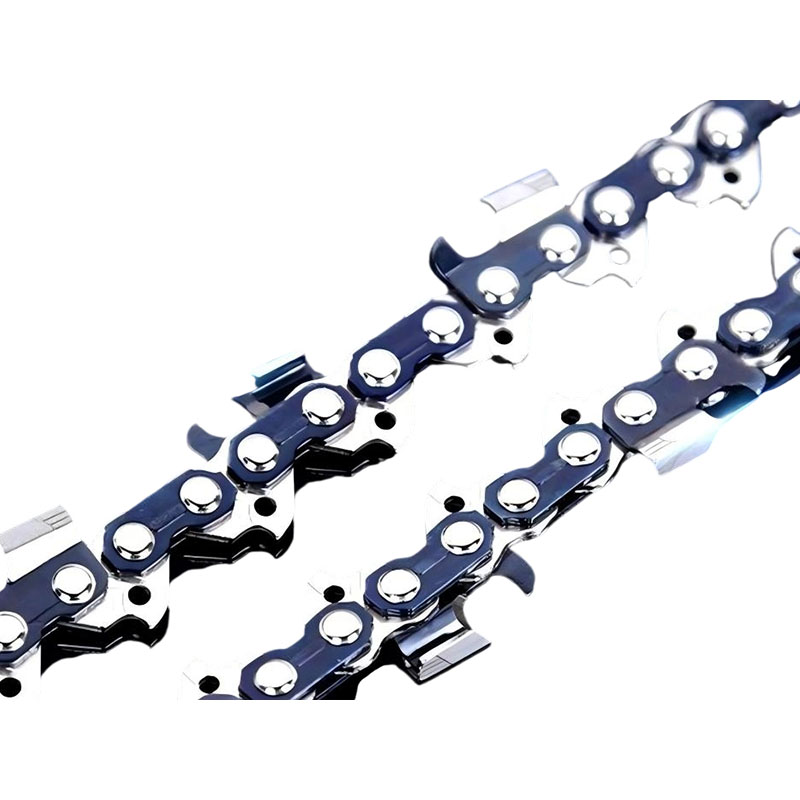
Gauge is measured in thousandths of an inch — .043, .050, .058, .063 and, on heavy felling equipment, .080. It describes how thick the drive link is where it travels inside the bar groove. A .050 inch chain in a .058 inch groove sits loose and rocks sideways, which wears the bar rails, rounds the rim sprocket and produces cuts that wander to one side.
Drive link count has to be exact as well. There is no adjusting a loop that is two links too long. If the loop will not tension within the bar's adjustment range, the count is wrong, not the chain.
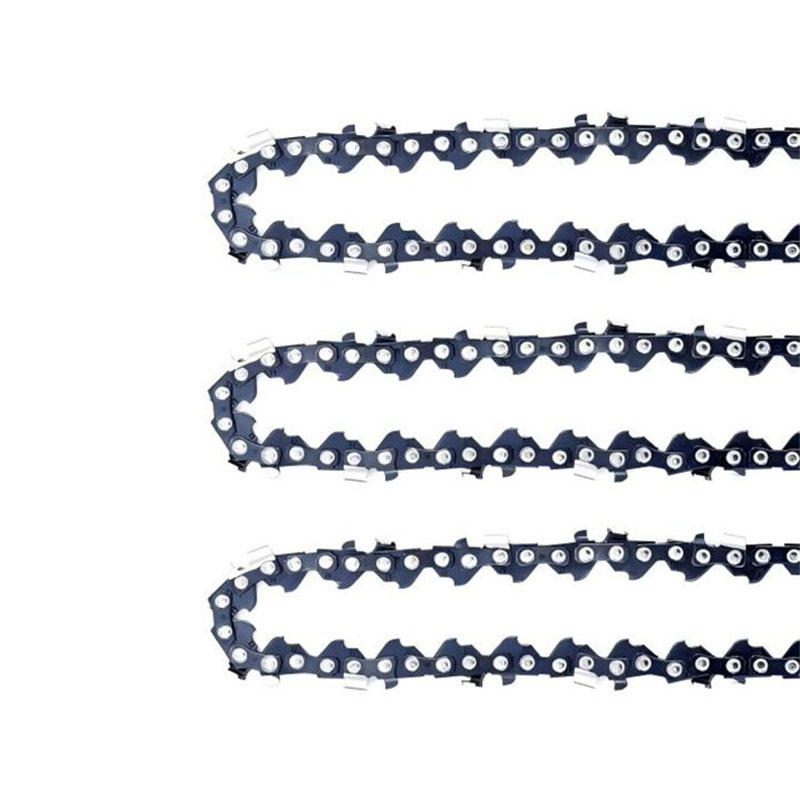
Most of the small-saw end of the table is covered by low-profile loops, which are lighter, need less engine torque and generate lower kickback energy.
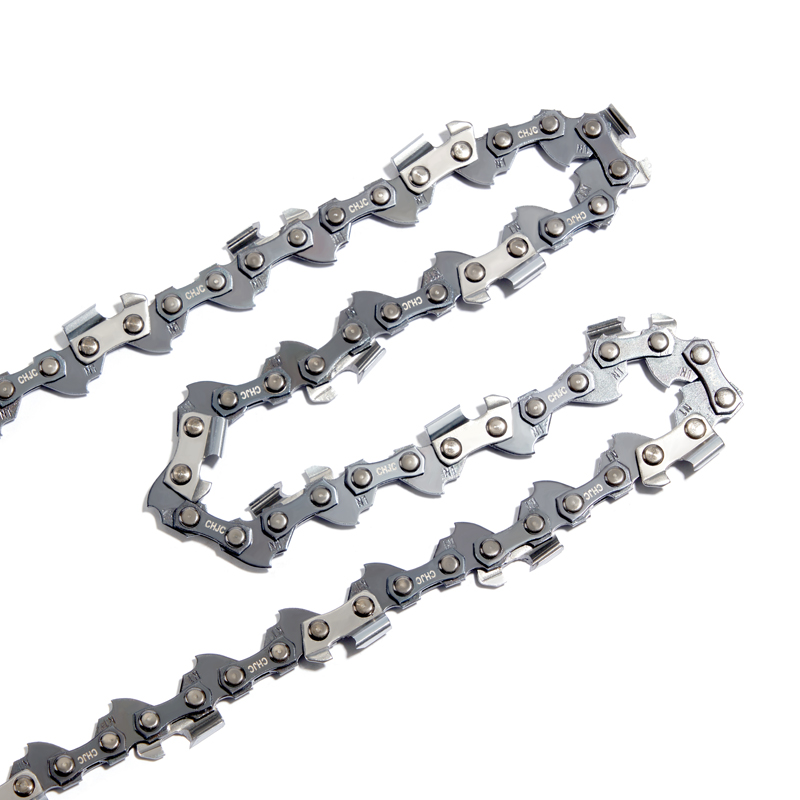
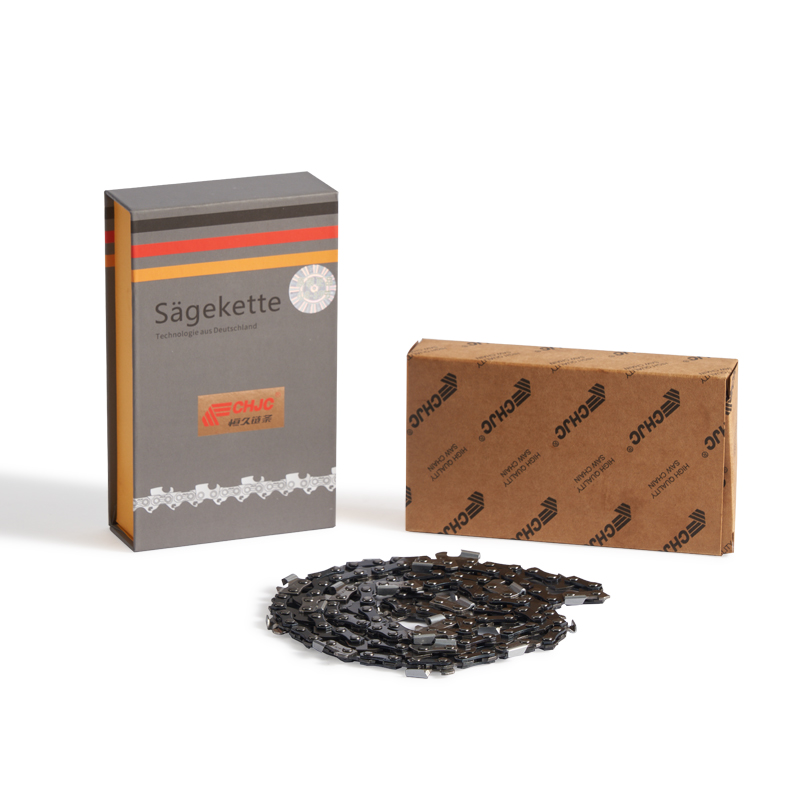 3/8" LP .050" SAW CHAINSpecification PrecautionsView Product →
Sizing a loop from the bar alone is risky, because bars with the same length can be cut for different drive link counts. The count stamped on the old chain, or printed on a dealer selector, is the safer starting point.
Cutter Style: Full Chisel, Semi-Chisel, Chipper and Low-Profile
Once the fit columns are settled, the cutter column decides cost per cord rather than cost per loop. Tooth geometry controls cutting speed, the shape of the chip, the load on the engine and how the chain survives grit and bark.
| Cutter style | Edge geometry | Speed in clean wood | Dirty timber | Sharpening |
|---|---|---|---|---|
| Low-profile | Small radius corner | Moderate | Tolerant | Forgiving angles |
| Full chisel | Sharp square corner | Fastest | Dulls quickly | Needs accurate filing |
| Semi-chisel | Rounded corner | Fast | Good balance | Easy |
| Chipper | Round, no sharp corner | Slowest | Most tolerant | Very forgiving |
| Square chisel | Square-ground corner | Fastest in softwood | Fragile in grit | Specialist equipment |
Low-profile and the kickback question
Low-profile chains carry a smaller cutter with a lower profile above the bar, which reduces the mass that can be thrown back during a kickback event. That is why they dominate the homeowner and farm segment, and why a full-size 3/8 inch chain should not be fitted to a small saw simply because the pitch label matches. The trade-off between these geometries is covered in more detail in this comparison of low-profile versus standard chain profiles.
When full chisel pays off
Full chisel holds the edge that cuts fastest in clean, frozen-free timber, which suits production felling and clean softwood. In firewood that has been skidded through mud, the sharp corner dulls within a tank of fuel and the operator loses more time filing than was gained in cutting. A .325 inch full chisel loop is the usual compromise for farm and ranch saws in the 45 to 60 cc class.
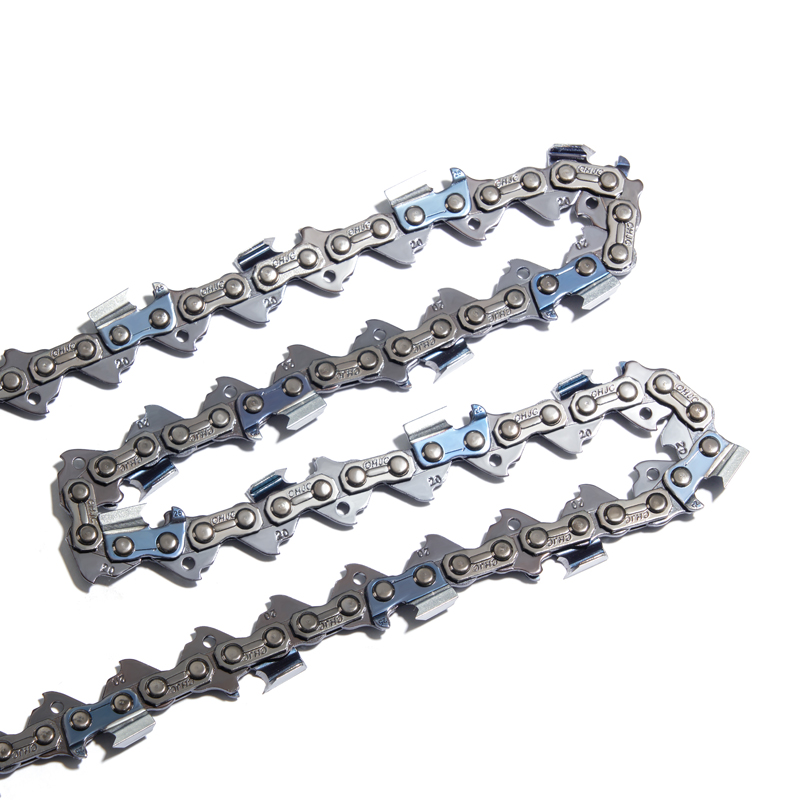
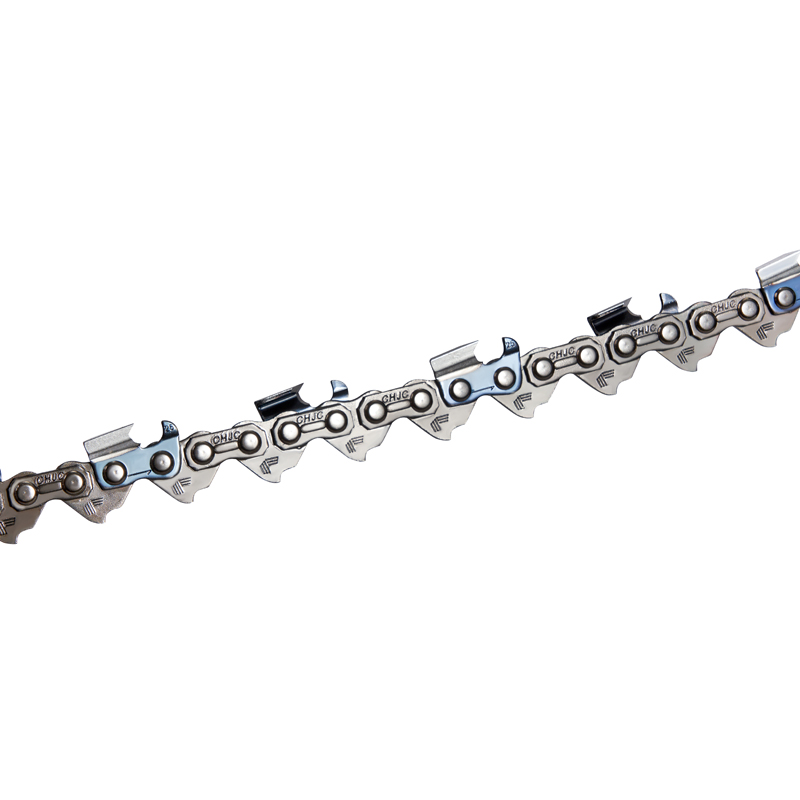 .325" .050" SAW CHAINSpecification PrecautionsView Product →
Sequence: Full House, Semi-Skip and Full Skip
Sequence is the column most often ignored, and it changes how a chain handles the engine's torque.
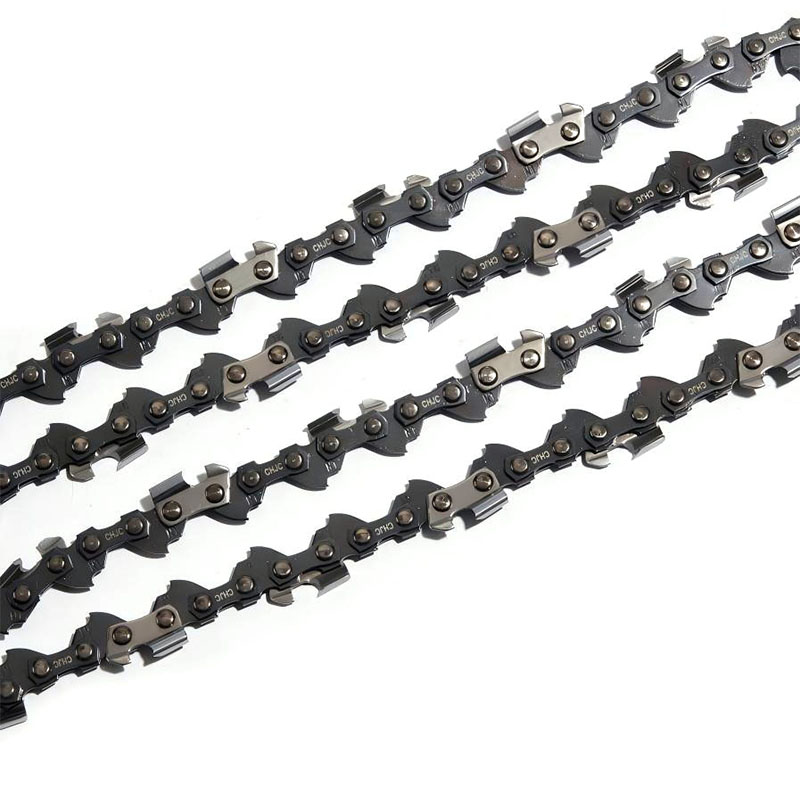
- Full house, or standard: a cutter in every position. Smooth cutting and the best finish, suited to bars up to roughly 20 inches on engines under 60 cc.
- Semi-skip: one cutter removed from every second pair. A middle option for mid-size powerheads running longer bars.
- Full skip: every third position left empty. More room for chip clearance and less load on the engine, which is why long bars and large timber favour it.
The trade-off is straightforward. Fewer cutters mean faster chip clearance, lower engine strain and a higher chain speed, but a rougher finish and more vibration when working in small-diameter wood.
Heavy-Duty Rows: Harvester and Chipper Chains
At the bottom of most charts sit the .404 inch pitch lines. The .404 pitch family covers the largest saws and machine-mounted cutting heads, where .063 inch gauge loops are used on big felling saws and .080 inch gauge chains are reserved for harvester heads that run through eight-hour shifts.
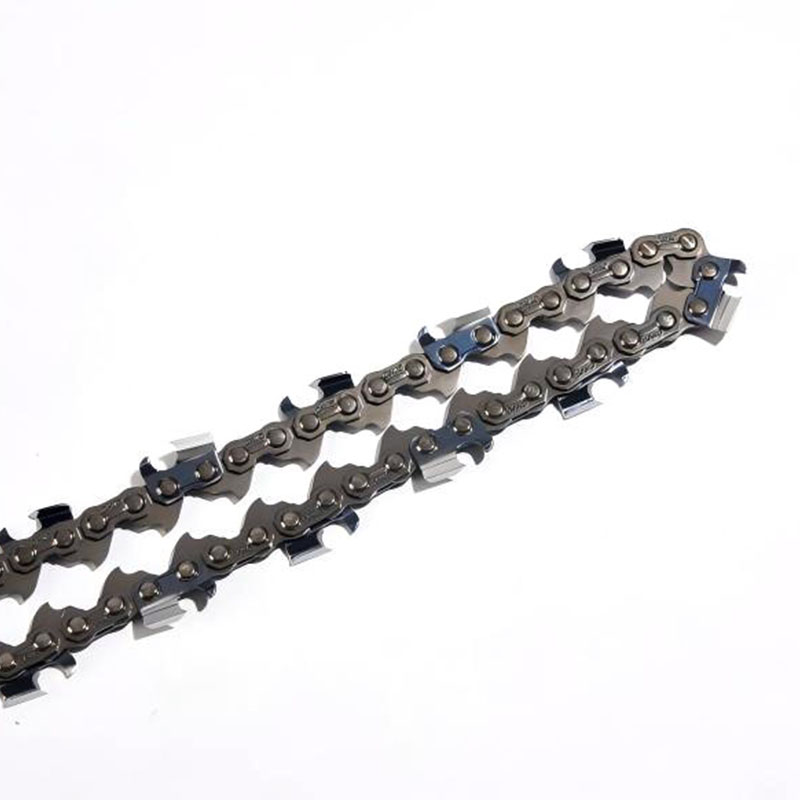
Chipper chains use a round-edged tooth with no sharp corner to chip away. They cut more slowly than chisel in clean timber, but they survive bark, grit and dirty logs that would destroy a full chisel corner in minutes. That makes them the practical choice for land clearing, roadside work and pulpwood where the wood never arrives clean.
A mechanical lumbering chain for harvester heads is built around a different set of priorities again: high tensile strength, precise cutter spacing for smooth delimbing, and a body that resists stretch when the head is reversing under load.
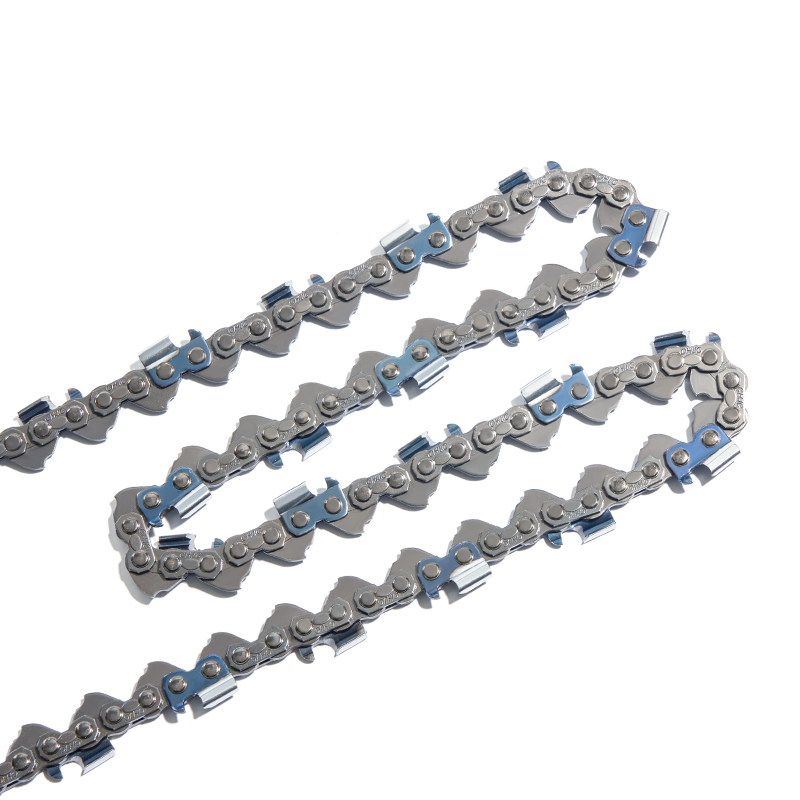
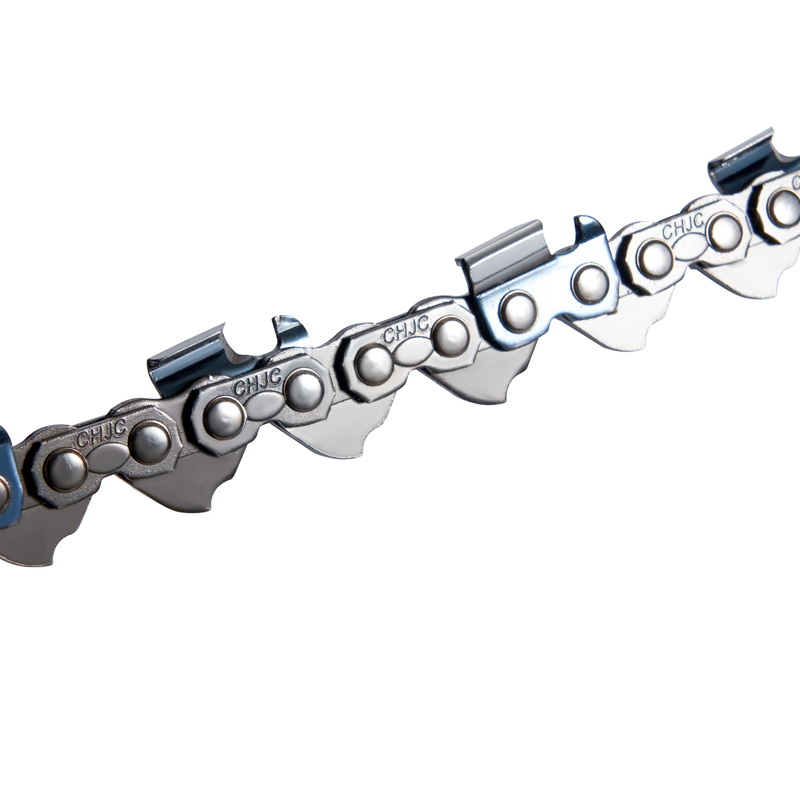 .404" .080" HARVESTER CHAINSpecification PrecautionsView Product →
Custom work starts at this end of the chart. When a machine builder specifies an unusual combination of pitch, gauge and drive link count, the loop has to be assembled to that specification rather than picked from a shelf.
Five Checks Before the Order Leaves Your Desk
- Measure pitch across three rivets and divide by two. Confirm the result against the drive sprocket, not just the bar.
- Measure gauge with a caliper on the drive link, and compare it with the bar groove width rather than the bar's printed label.
- Count drive links on the used chain. A worn chain still has the correct count when it is stretched.
- Check the sprocket for pitch and tooth count, since a worn rim sprocket will quickly damage a new chain.
- Record all four values on the SKU, including cutter style and sequence, so the next order cannot drift.
The cost of these checks is a few minutes. The cost of skipping them is a returned shipment, and the customer relationship that goes with it.
A chain types chart is only as useful as the numbers fed into it. Read the fit columns first, because pitch, gauge and drive link count have no tolerance for interpretation, then choose cutter style and sequence around the wood you actually cut rather than the wood in the catalogue photograph. A loop that fits correctly and suits the timber will outlast two cheap loops that do not.