English
 中文简体
中文简体
 русский

Content
Complete Technical Reference · mysawchain.com
The Three Critical
Chainsaw Chain
Specifications
Pitch, gauge, and drive link count — master all three before you order, sharpen, or replace any saw chain.
Guide
2025
1Saw Chain Pitch
Pitch is the most important dimension when selecting a chainsaw chain. It is defined as the distance between any three consecutive rivets divided by two. This measurement must exactly match the drive sprocket and guide bar nose sprocket on your saw — a mismatch will prevent proper engagement and can damage the saw.
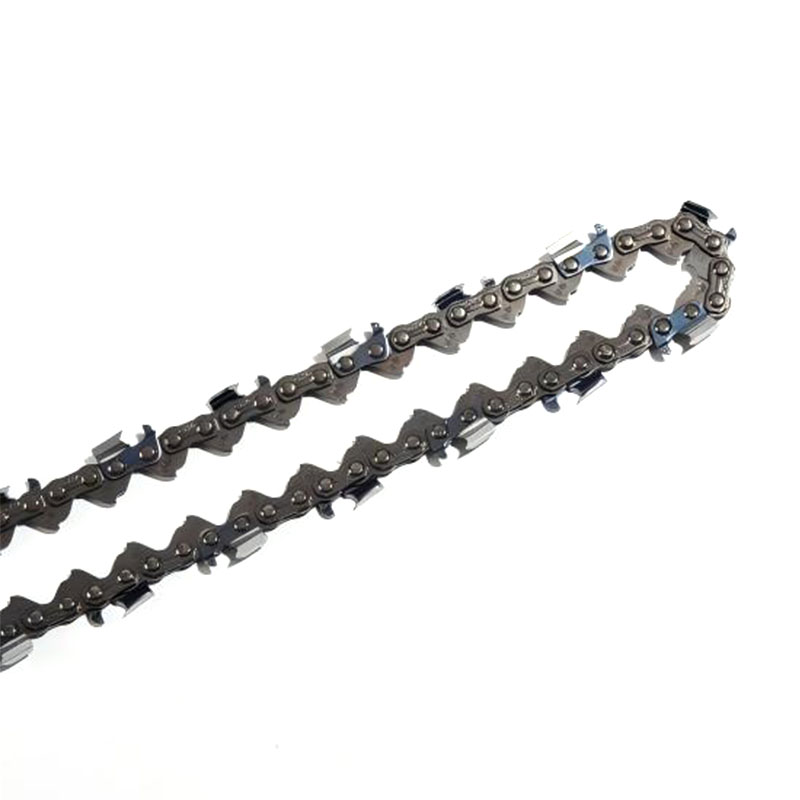
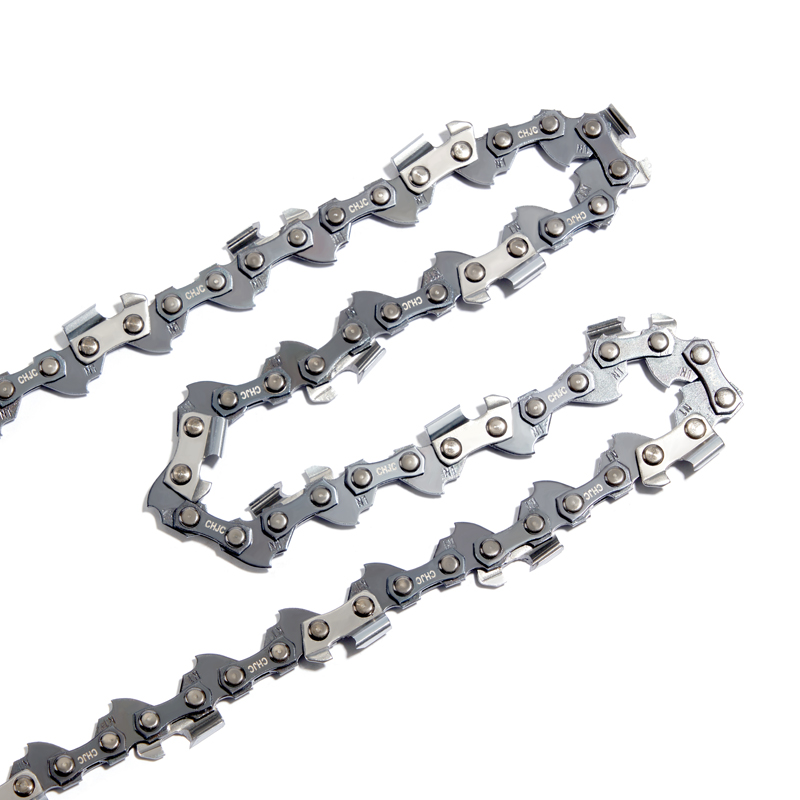
mysawchain.com · .325″ .058″ Saw Chain
Common pitch sizes and their typical applications:
- 1/4″ pitch — ultra-fine, used on small pruning saws and pole saws
- 1/4″ LP (Low Profile) — lightweight homeowner and pruning use
- .325″ — the most popular mid-range pitch; used on many consumer and semi-professional saws
- 3/8″ Low Profile — common on entry-level homeowner saws; lower kickback
- 3/8″ — the standard for professional logging and felling work
- .404″ — heavy-duty professional and harvester applications
To measure pitch manually, place the chain on a flat surface, measure the distance between the centres of any three consecutive rivets, and divide by two. Always verify pitch before purchasing a replacement chain.
2Drive Link Gauge
Gauge refers to the thickness of the drive link that fits into the guide bar groove. Just as pitch must match the sprocket, gauge must match the bar groove exactly — too loose and the chain may derail; too tight and it binds, causing overheating and accelerated wear.
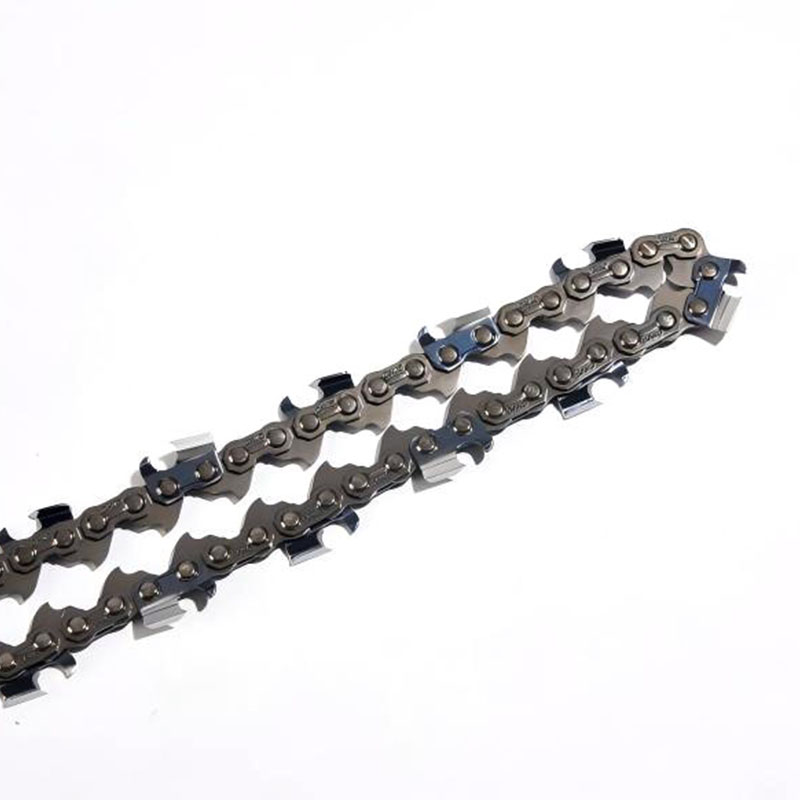
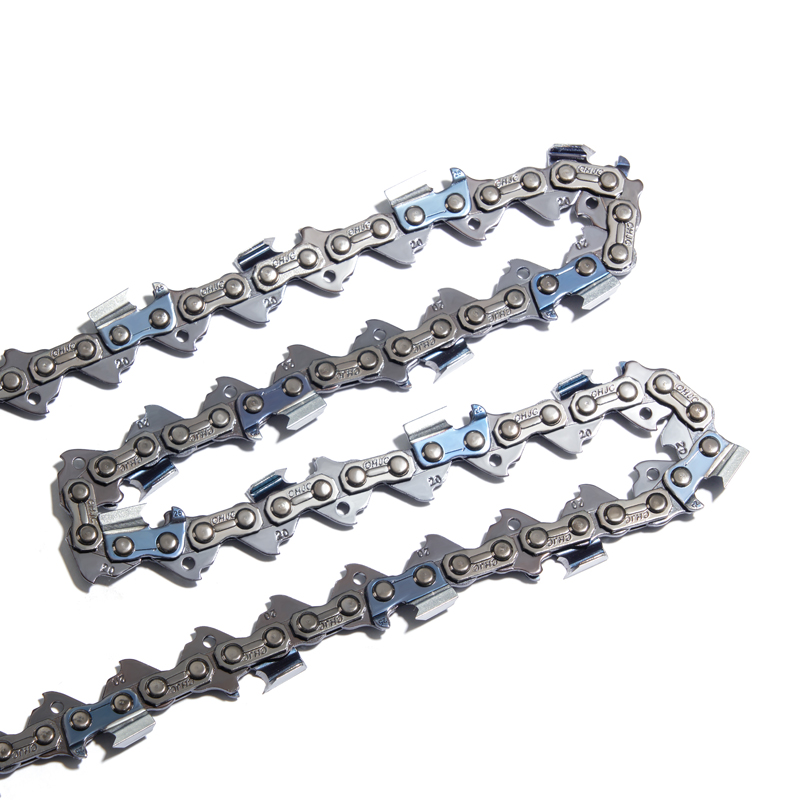
mysawchain.com · 3/8″ .058″ Saw Chain
Standard gauge sizes available from mysawchain.com products:
| Gauge (inches) | Gauge (mm) | Typical Use |
|---|---|---|
| .043″ | 1.1 mm | Light-duty / LP chains |
| .050″ | 1.3 mm | Consumer / homeowner saws |
| .058″ | 1.5 mm | Semi-professional saws |
| .063″ | 1.6 mm | Professional / logging saws |
| .080″ | 2.0 mm | Heavy-duty harvester chains |
A simple way to measure gauge is to use a feeler gauge or a set of coins: a standard US dime fits a .050″ groove while a US penny approximates .058″. For accuracy, however, always use calipers or consult your bar specification label.
3Drive Link Count
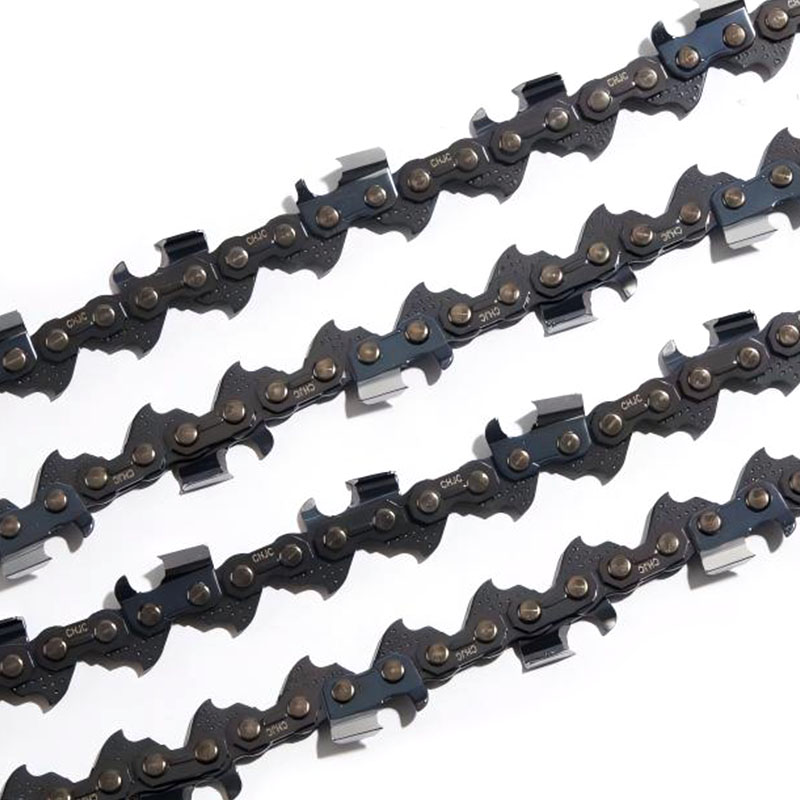
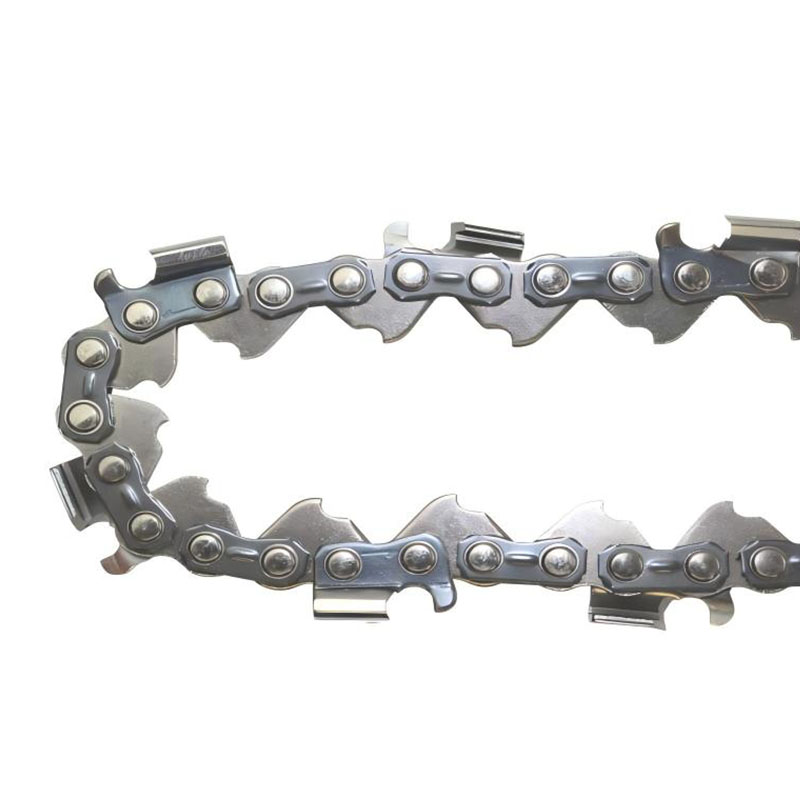
The drive link count is the total number of drive links in the chain loop. This determines the chain's overall length and ensures it fits a specific bar length and sprocket combination. Even if pitch and gauge are correct, a chain with the wrong drive link count will be too short to close the loop or too long to tension properly.
Drive link count varies by bar length and pitch combination. For example, a 16-inch bar with .325″ pitch typically requires around 66 drive links, while a 20-inch bar with 3/8″ pitch may need 72. Always check your original chain's drive link count before ordering a replacement.
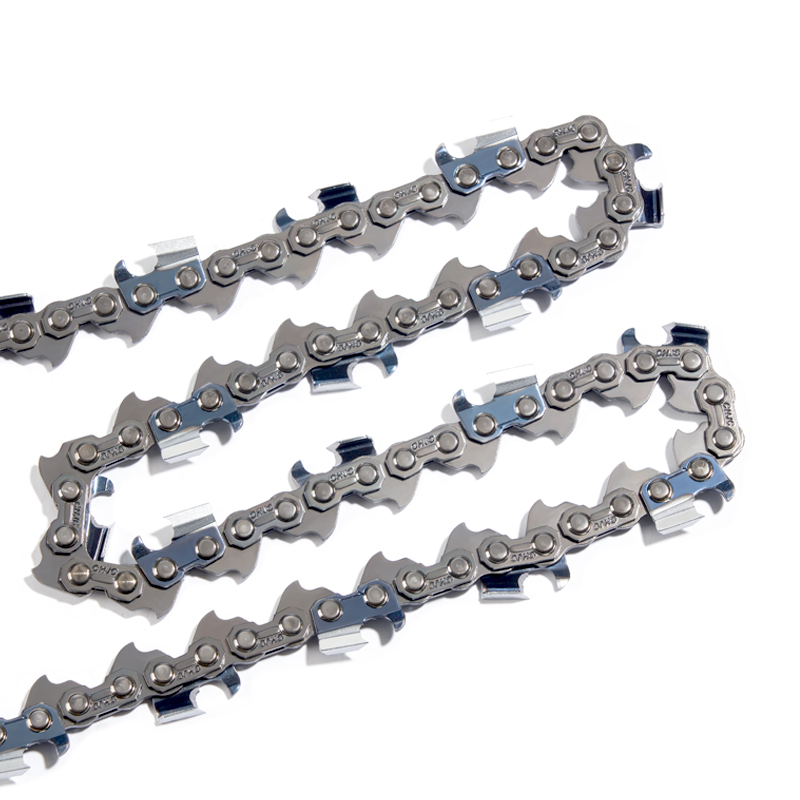
mysawchain.com · 3/8″ .063″ & .325″ .063″ Saw Chains
To count drive links: lay the chain flat on a table, identify one drive link as your starting point, and count each tooth-free link around the full loop. Alternatively, the drive link count is often printed on the original chain packaging or stamped on the bar.
Chainsaw Chain Pitch vs. Gauge
Although both are dimensions of the chain, pitch and gauge control entirely different fit points. Pitch controls how the chain engages the sprocket; gauge controls how the chain sits in the bar groove. Think of them as the height and width of a key — both must be correct for the lock to work.
| Parameter | What It Measures | What It Must Match |
|---|---|---|
| Pitch | Link spacing (rivet-to-rivet ÷ 2) | Drive sprocket & bar nose sprocket |
| Gauge | Drive link thickness | Guide bar groove width |
Types of Chainsaw Chain Blade Profiles
The cutter profile — the shape of the individual cutting tooth — has a major impact on cutting speed, smoothness, and safety. Three main profiles are used across modern chainsaw chains:
Full Chisel Chain
A full chisel chain features a square-cornered cutter that slices through clean softwood and hardwood with maximum efficiency. It produces the fastest cutting speeds of any profile and generates a clean, smooth cut surface. The tradeoff is that square corners dull quickly when they contact sand, dirt, or bark, and the profile carries a higher kickback risk. Full chisel chains are the choice of professional fallers and buckers working with clean timber.
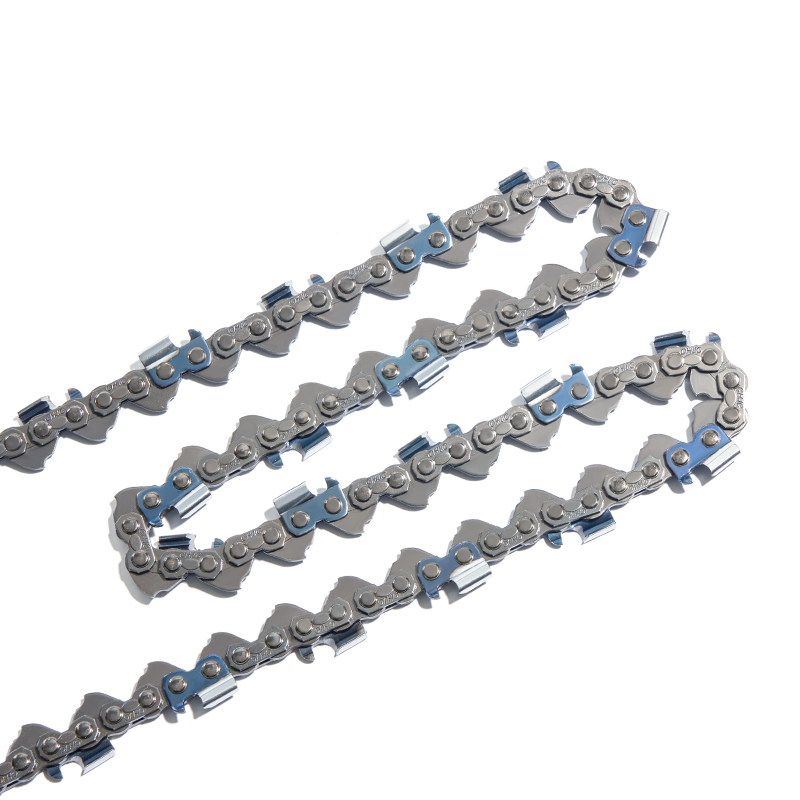
mysawchain.com · .325″ Full Chisel Saw Chain
Semi-Chisel Chain
Semi-chisel cutters have a rounded corner between the top plate and the side plate. This geometry makes the tooth more resistant to dulling from dirt, debris, and abrasive bark. While slightly slower than full chisel in ideal conditions, semi-chisel chains maintain their edge far longer in realistic field conditions. They are the preferred choice for firewood cutters, land clearing, and any work where the wood may contain embedded grit or dirt.
Low-Kickback Chain
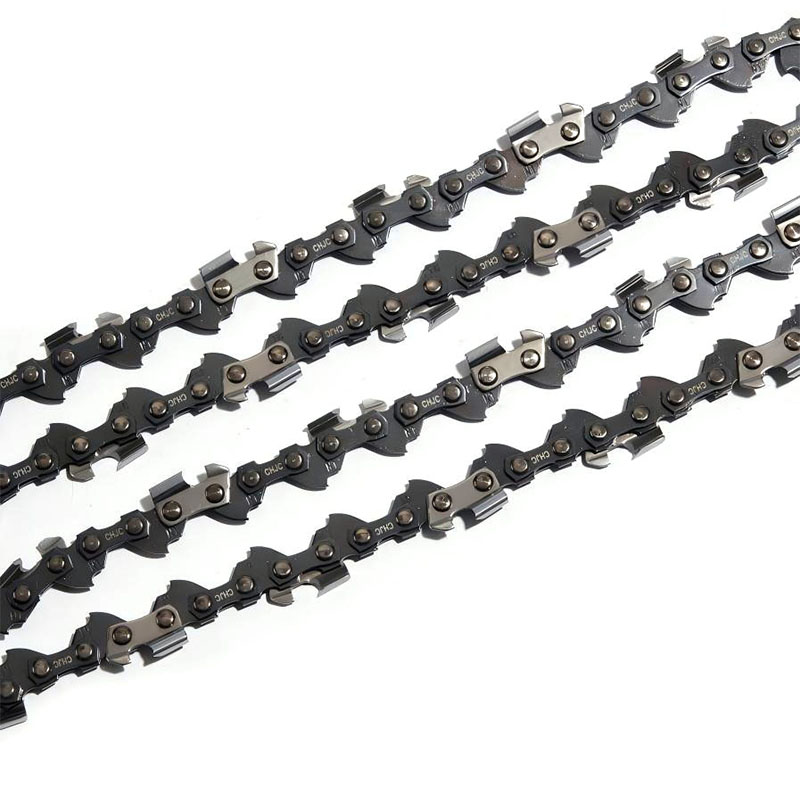
Low-kickback (Low Profile or LP) chains incorporate safety-oriented geometry into the cutter and depth gauge design, limiting the depth of cut and reducing the chance of kickback. These chains are standard on homeowner-grade saws and required by ANSI safety standards for consumer chainsaws.
mysawchain.com · 3/8″ LP Low-Kickback Saw Chain
Skip Tooth and Semi-Skip Tooth Chain
Skip tooth chains have every other cutter position left empty, which reduces the number of teeth in contact with the wood at any moment. This design clears chips more aggressively from the cut, making it ideal for ripping green or wet softwood with long bars. Semi-skip alternates between standard and skip sequences, balancing chip clearance with cutting control. Both profiles are used in milling and bucking large-diameter logs.
How to Read Chainsaw Chain Specifications
Chain specifications are typically printed on the original packaging or stamped on a label on the guide bar. A typical specification reads something like: 3/8″ – .050″ – 66, where the three numbers represent pitch, gauge, and drive link count in that order.
- Locate the label on the side of your guide bar — it is usually near the mounting heel.
- Note all three values: pitch, gauge, and drive link count.
- Cross-reference these values against the chain model listings at mysawchain.com to find the correct replacement.
- If the bar label is worn or missing, count the drive links manually and use a caliper to measure gauge directly.
Using any incorrect value — even one — will result in a chain that cannot be installed, or one that fails prematurely. All three numbers must match your bar and sprocket exactly.
Chain Saw Blade Maintenance
A sharp, correctly tensioned chain is the foundation of both productive and safe chainsaw operation. Maintenance falls into three areas: sharpening, depth gauge setting, and knowing when to replace the chain entirely.
Signs It's Time to Replace the Chain
Even a well-maintained chain eventually reaches the end of its service life. Replace the chain when any of the following conditions are present:
- The chain is producing fine dust rather than chips, indicating the cutters are no longer shearing wood effectively
- The saw requires heavy downward force to maintain a cut — a sharp chain feeds itself through wood under its own weight
- The cut wanders or curves rather than following a straight line, often caused by uneven cutter lengths from asymmetric sharpening
- Cutter height drops below the depth gauge (raker) — at this point the chain cannot cut efficiently
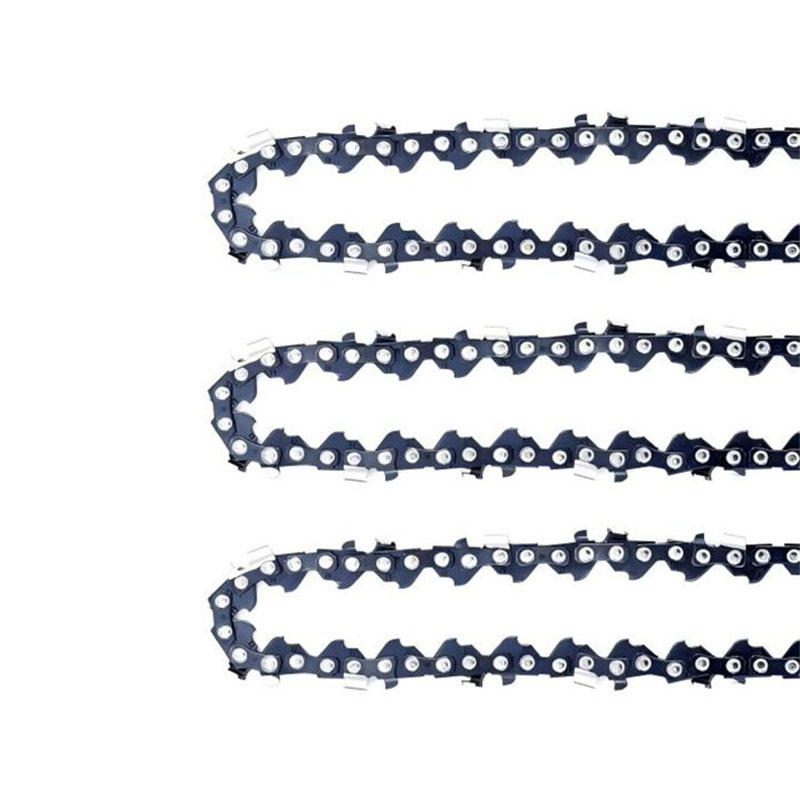
- The chain has been sharpened so many times the cutter is visibly shorter than when new (typically after 5–10 sharpenings for a full chisel chain)
mysawchain.com · 1/4″ LP .043″ Saw Chain
File Size for Each Pitch
Using the correct round file diameter keeps the cutter geometry correct during sharpening. Filing with an oversized file rounds the tooth's top plate; an undersized file leaves a hook. Match the file diameter to the chain pitch every time.
| Chain Pitch | Round File Diameter | Typical Application |
|---|---|---|
| 1/4″ pitch | 4.0 mm (5/32″) | Pruning / pole saws |
| .325″ pitch | 4.8 mm (3/16″) | Consumer / semi-pro saws |
| 3/8″ Low Profile | 4.0 mm (5/32″) | Homeowner / LP saws |
| 3/8″ full pitch | 5.5 mm (7/32″) | Professional logging |
| 0.404″ pitch | 5.5 mm (7/32″) | Heavy-duty / harvester |
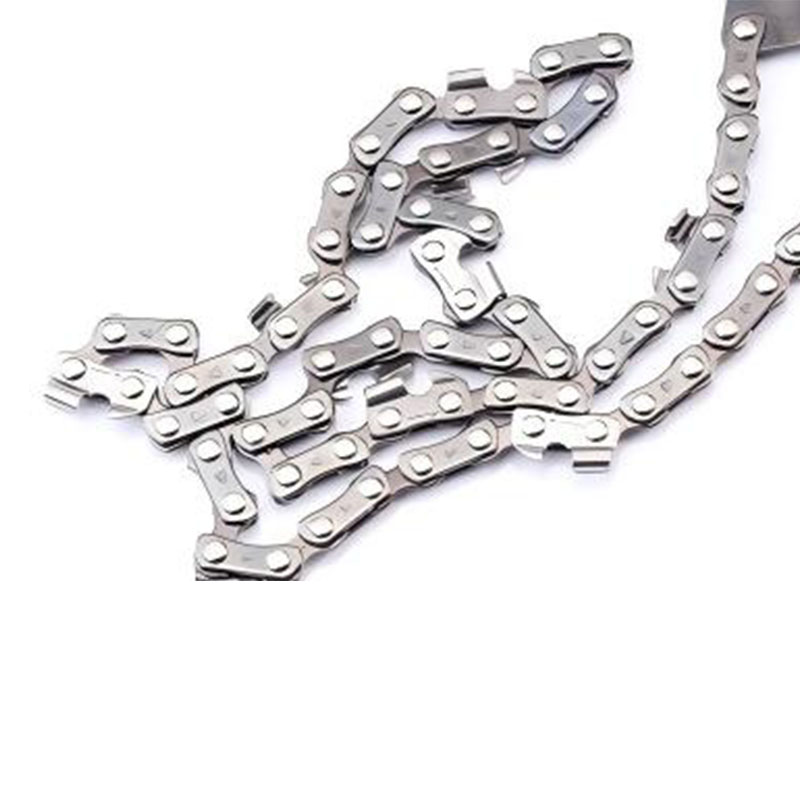
mysawchain.com · .325″ LP .043″ Saw Chain
After filing, always re-check the depth gauge (raker) height with a flat depth gauge tool and file it down if it protrudes above the recommended setting for your chain type. Neglecting the depth gauge after sharpening is one of the most common causes of poor cutting performance and increased kickback risk.