English
 中文简体
 русский

Content
- 1 The Short Answer: Fit First, Brand Second
- 2 Pitch, Gauge and Drive Links: What Actually Has to Match
- 3 Hardness, Edge Retention and Filing Effort
- 4 Price, Availability and Cost per Cut
- 5 Three Field Scenarios and What They Imply
- 6 Where a Spec-Matched Factory Loop Fits
- 7 A Buying Checklist Before You Pay
Two 20-inch loops sit on the workbench beside the same worn bar. One is a dealer-supplied Stihl loop at full list price; the other is an Oregon replacement selling for roughly half. The saw is a 50cc firewood saw, the bar is straight but tired, and the owner wants a decision before Saturday. The short version: the loop that fits the bar and matches the wood will outcut a more expensive loop that does not, and most of the Oregon chain vs Stihl argument disappears once pitch, gauge and drive-link count are confirmed.
What remains after that is real, but narrower. Stihl chain is generally harder, so it keeps a working edge longer in abrasive, dirty timber. Oregon chain tends to sharpen more easily, cuts smoothly and is stocked in more places at lower prices. The sections below cover how to verify fit, what the hardness gap costs you in filing time, how price-per-cut works out, and where a spec-matched factory loop fits for buyers ordering by the hundred.
The Short Answer: Fit First, Brand Second
A mismatched chain damages the bar, the drive sprocket and the chain itself far faster than any difference between two well-made brands. A .325 pitch loop on a 3/8 sprocket will not seat, and forcing it ruins both parts within minutes. Check three numbers before you compare prices:
- Pitch: 1/4", 3/8" low profile, .325", 3/8" or .404". It must match the sprocket and the bar nose.
- Gauge: the thickness of the drive link where it rides in the bar groove, usually .043", .050", .058" or .063". It must match the groove.
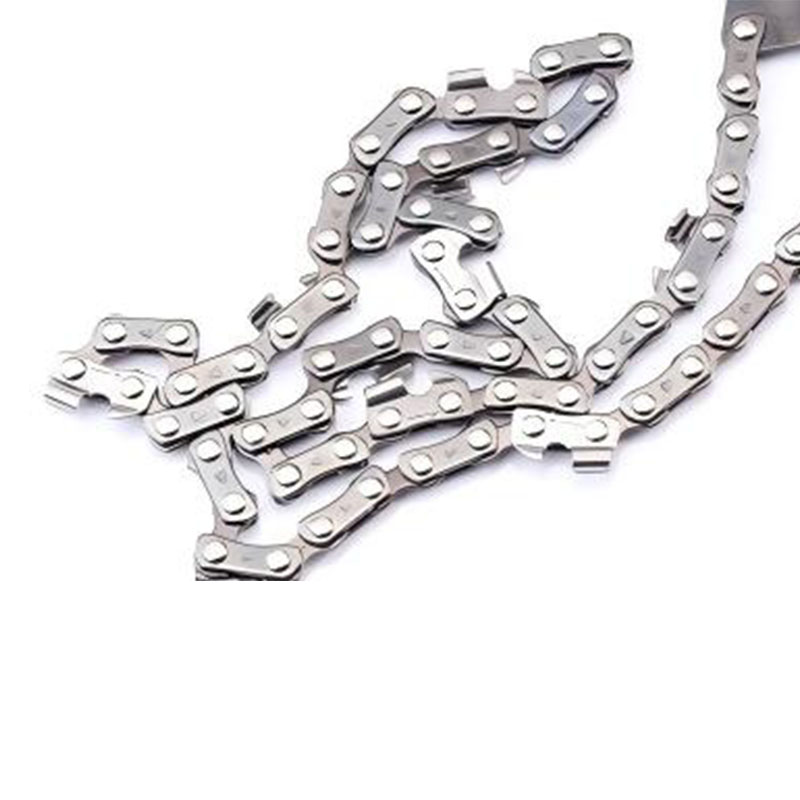
- Drive link count: the same pitch and gauge can come in different link counts for different bar lengths. Count the old chain twice.
When those three match, Oregon loops run on Stihl bars and Stihl loops run on Oregon bars in normal field use. The practical limits are the bar nose sprocket tooth count and, on low-profile setups, small differences in cutter profiling.
Pitch, Gauge and Drive Links: What Actually Has to Match
The table below is the one worth keeping on the counter. Every mismatch has a specific failure mode, and most of them are expensive.
| Dimension | What it controls | How to check it | Result of a mismatch |
|---|---|---|---|
| Pitch | Rivet spacing and how the chain seats on the sprocket | Stamped on the bar; measure across three rivets if worn | Chain jumps, sprocket and drive links wear fast |
| Gauge | Drive link thickness against bar groove width | Bar stamp, or caliper across the drive link tang | Loose chain wanders and throws; tight chain binds and burns the bar |
| Drive links | Total loop length for a given bar | Count the old loop; do not trust the bar length alone | Loop will not tension or runs out of adjustment |
| Cutter type | Chip clearance, cut speed, kickback behaviour | Compare profile and depth gauges with the old chain | Slow cutting in hard wood, or an aggressive chain on a small saw |
Low profile is where buyers get caught most often. A 3/8" low-profile loop is not the same as a standard 3/8" loop even though both say 3/8", and mixing them up on a small saw changes both the cut and the safety margin. If you are unsure which family your saw belongs to, this comparison of low-profile versus standard saw chains explains the cutter geometry and where each belongs.
Hardness, Edge Retention and Filing Effort
The most consistent difference in the field is metallurgy rather than geometry. Stihl cutters are hardened to hold an edge longer, which shows up in bark-covered storm damage, sandy windfall and dirty stump wood. Oregon cutters are generally a little softer at the working corner: they file faster, throw a smooth chip in clean softwood, and tolerate a slightly sloppy hand stroke.
When the harder edge pays off
In abrasive wood, edge retention is worth more than filing comfort. An extra tank of fuel per sharpening means fewer stops, fewer files worn out, and less time with the saw switched off. Storm crews and contract fallers working gritty urban trees usually notice it by the second or third touch-up of the day.
When easier filing wins
Firewood cutters working clean softwood rarely push a chain hard enough to need maximum wear resistance. Here the smoother-cutting loop is quicker to freshen with a round file every other tank, and the edge stays consistent. Match the file to the pitch: 5/32 inch for 1/4" and 3/8" low profile, 3/16 inch for .325", 7/32 inch for standard 3/8" and .404". Too small and the corner rounds over; too large and the file never reaches the gullet.
One point gets lost in brand arguments: a sharp loop filed at the correct angle will outcut a dull premium loop every time. Hardened cutters do not make grinding safer either. A dull wheel that overheats the tooth draws temper from any chain, and a burnt cutter will not hold an edge no matter whose name is stamped on the tie strap.
Price, Availability and Cost per Cut
Chain is a consumable, so the number that matters is cost per cord, not sticker price. Four items decide it:
- Purchase price: dealer OEM loops against Oregon loops, with the gap varying widely by region and bar length.
- Sharpening cycles: eight to twelve filings before the cutters reach the wear mark, depending on wood and operator.
- Bar and sprocket life: correct gauge protects the bar; a worn sprocket ruins a new loop within hours.
- Downtime: a spare loop in the truck is worth more than a discount on twenty.
Rough math: a loop costing about $25 that survives ten sharpenings across eight to ten cords lands near $2.50 to $3.00 per cord before labour. A $10 price gap per loop matters far less than a bar ruined by the wrong gauge, or a sprocket worn into a hook. Inspect the drive sprocket every third sharpening and replace it once the teeth show a visible hook.
Three Field Scenarios and What They Imply
Firewood and storm cleanup
50–60cc saw, 18–20 inch bar, mixed softwood, a few cords a year. Buy two matched loops, keep one sharp, and do not pay a premium for wear resistance you will never use. A correctly matched Oregon-pattern loop at a lower price is the rational pick.
Production felling and mechanical harvesting
Long shifts in dirty bark, hardwoods, or harvester heads running .404 pitch. Edge retention starts paying for itself, and cutter geometry matters more than brand: full chisel for clean, fast cutting, chipper or semi-chisel for frozen or gritty timber. In harvester work the chain is the cheapest part of an hour of downtime.
Fleet and private-label buying
Buying by the reel or the hundred turns a brand question into a specification question: pitch, gauge, drive-link count, cutter profile, hardness and packaging. A factory running its own heat treatment and test benches can hold those numbers lot to lot, which is what a distributor needs to keep a private label credible.
Where a Spec-Matched Factory Loop Fits
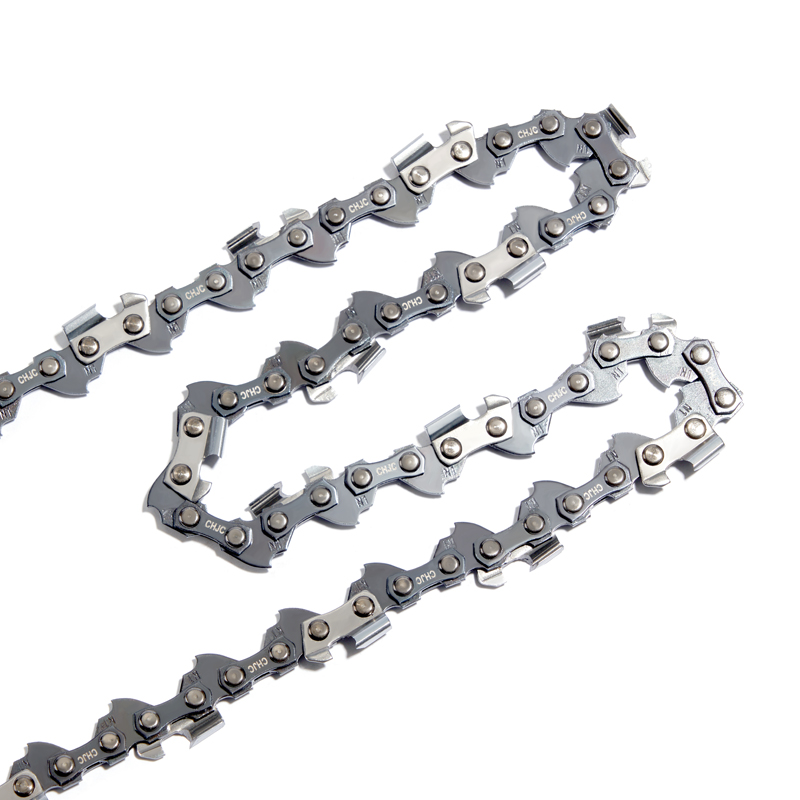
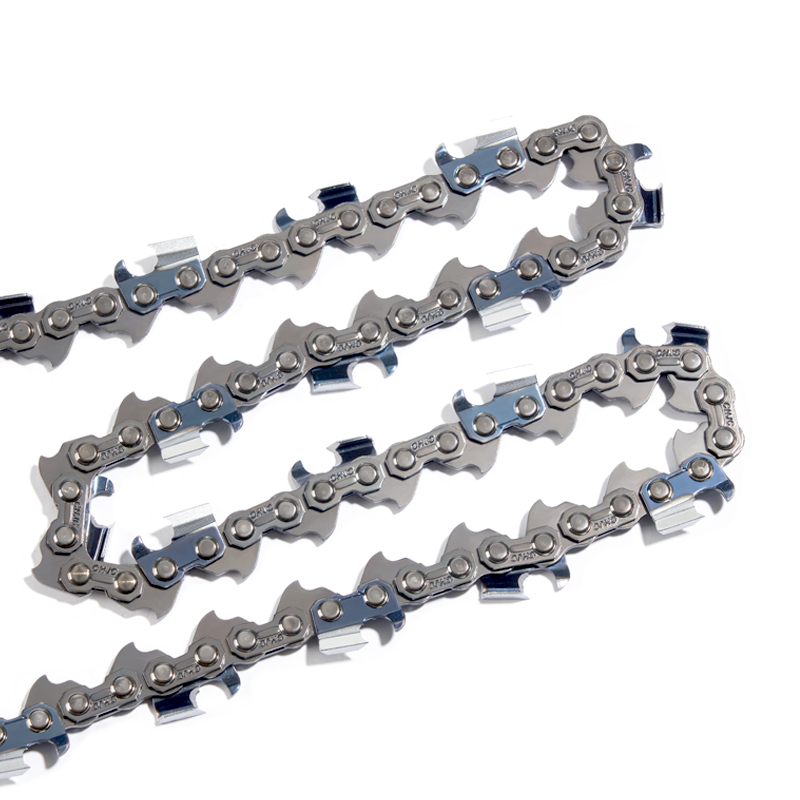
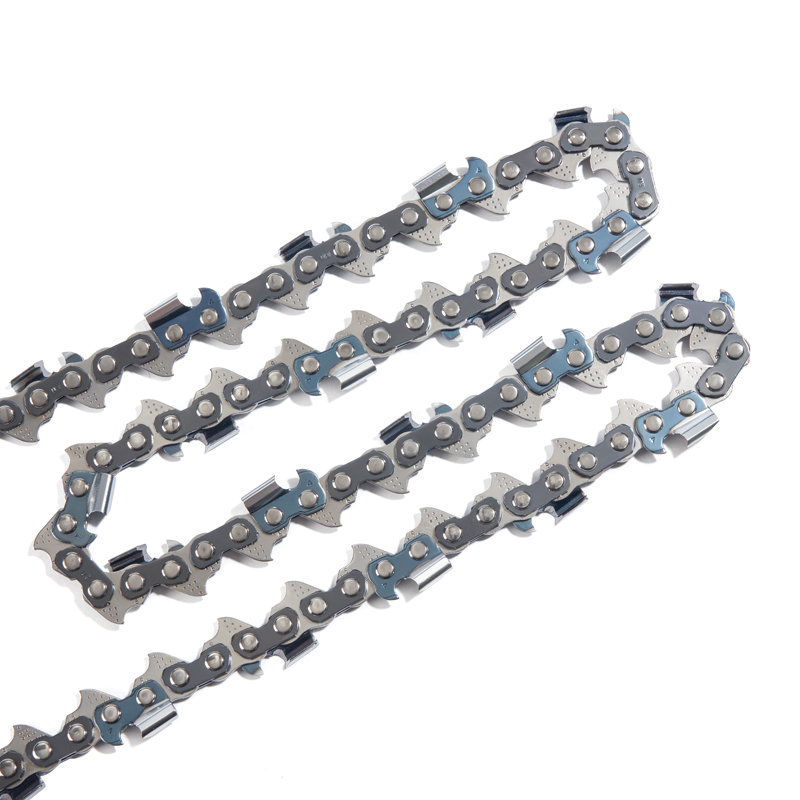
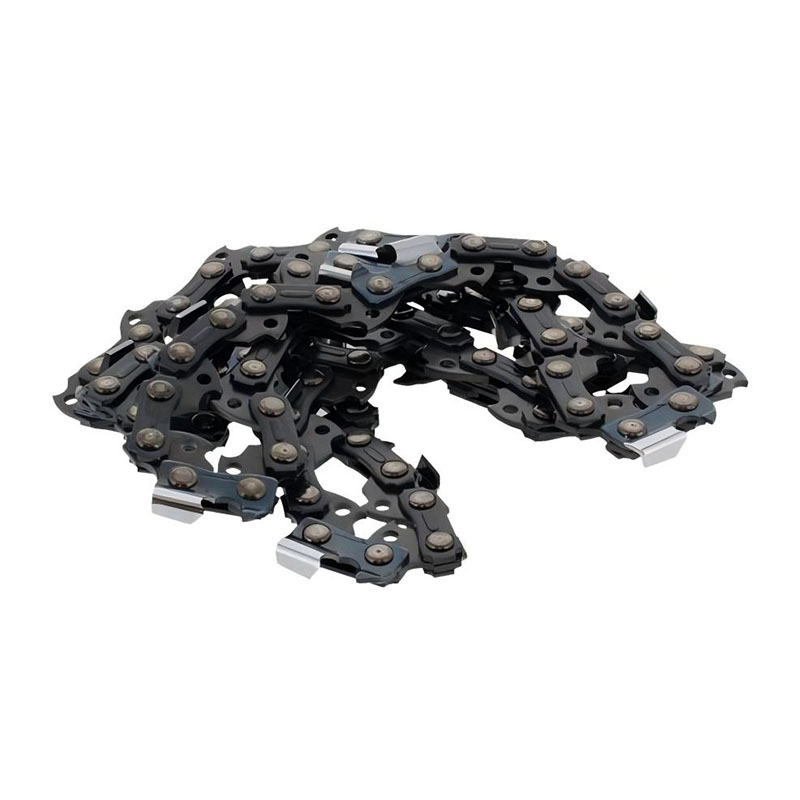
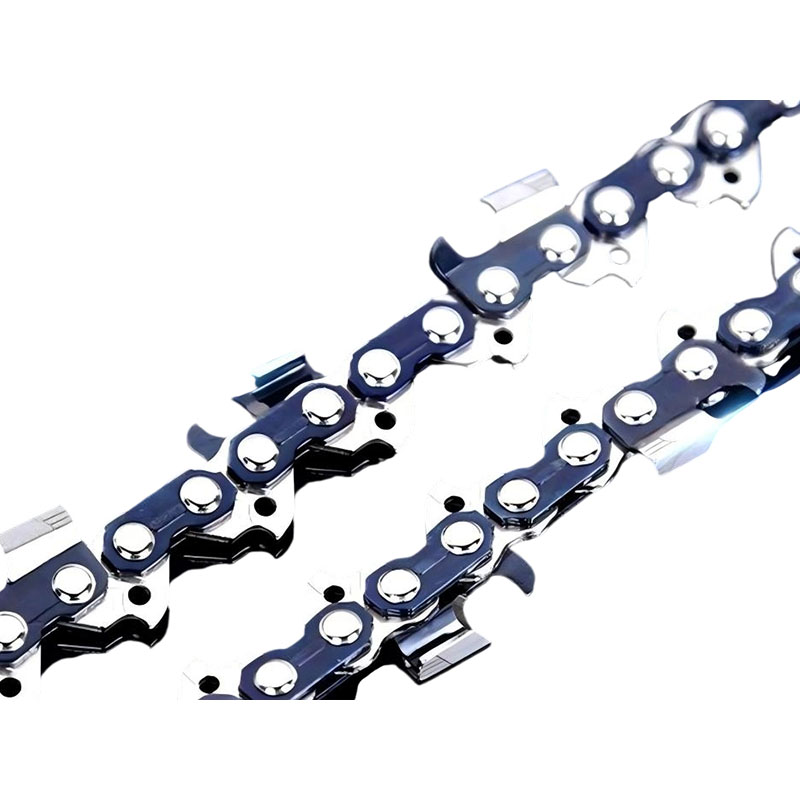
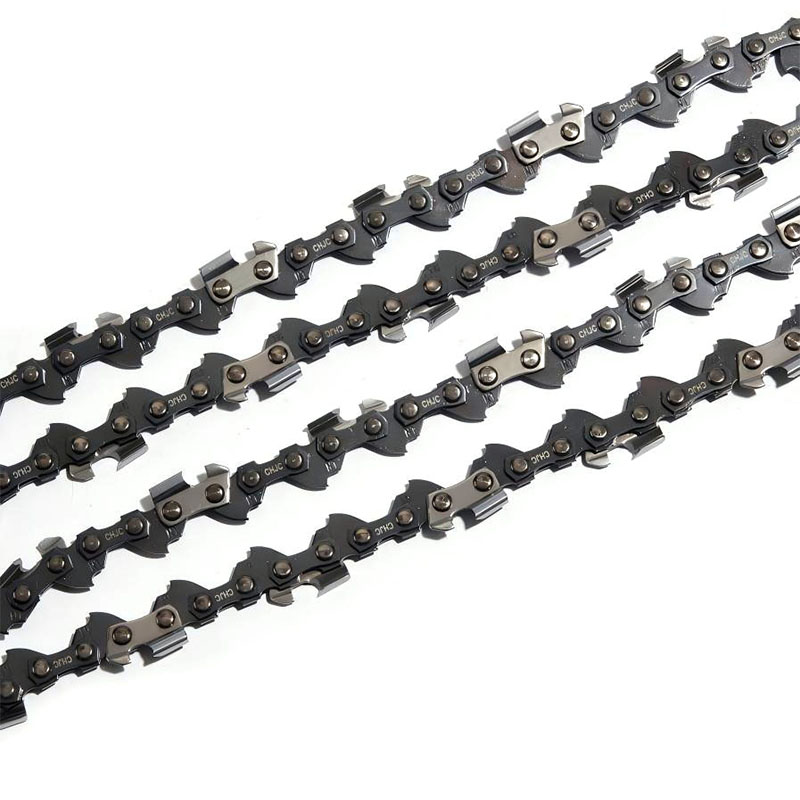
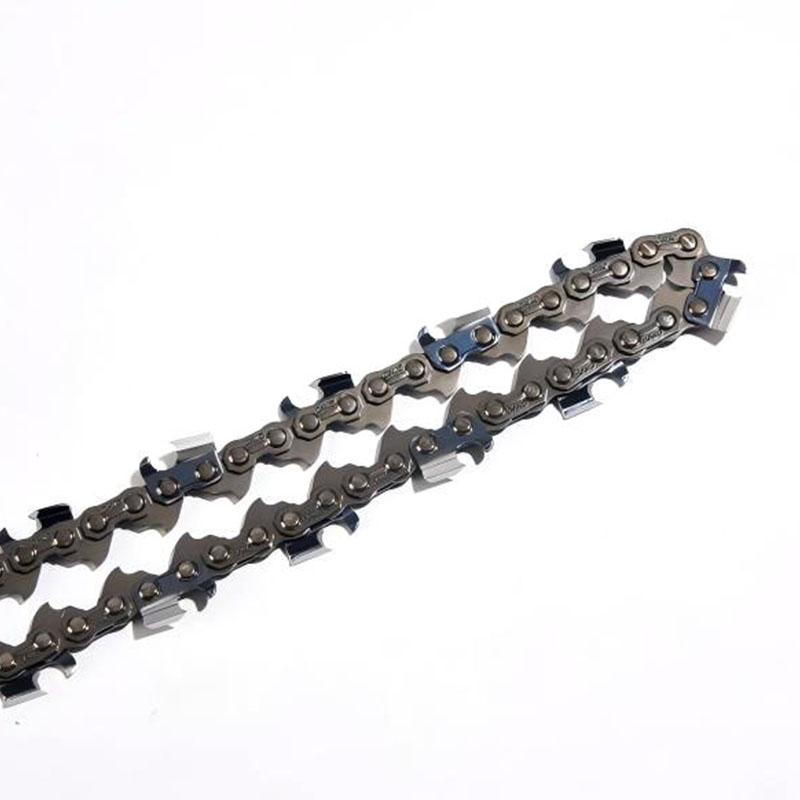
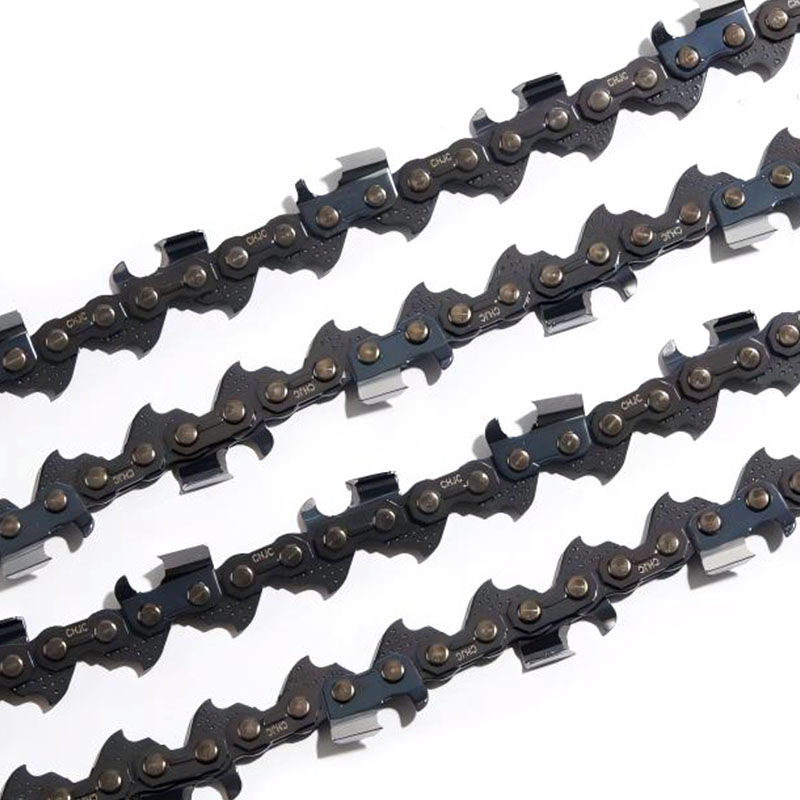
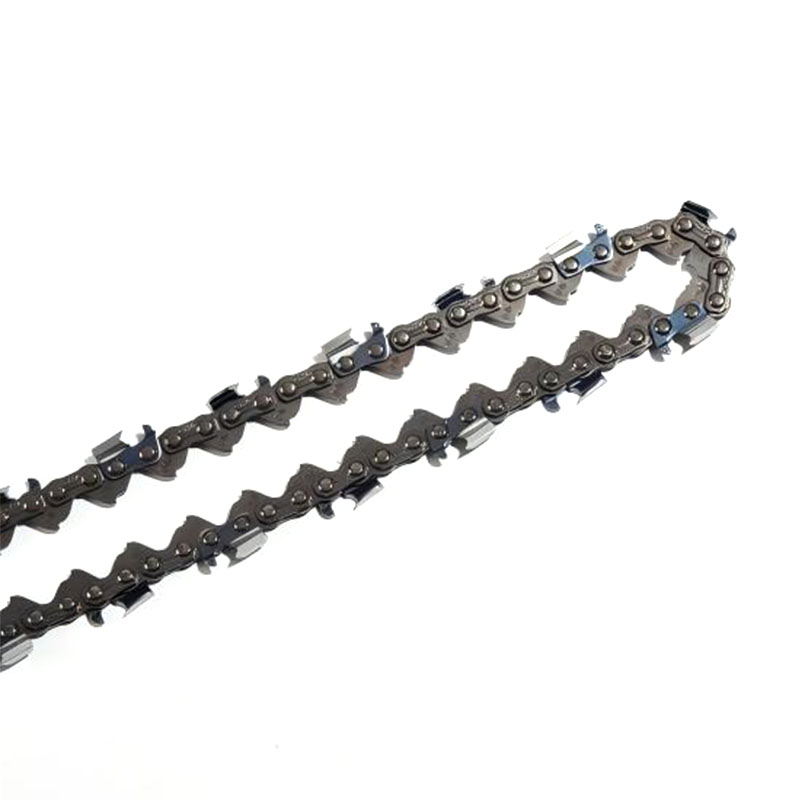
For volume buyers, a third option sits outside the retail brand comparison. Hengjiu has manufactured chain products since 1953 and now runs eight plants and R&D centres, three test centres and three mould-making centres, producing low-profile, full chisel, chipper and mechanical lumbering chain across 1/4", 3/8" LP, .325", 3/8" and .404" pitches.
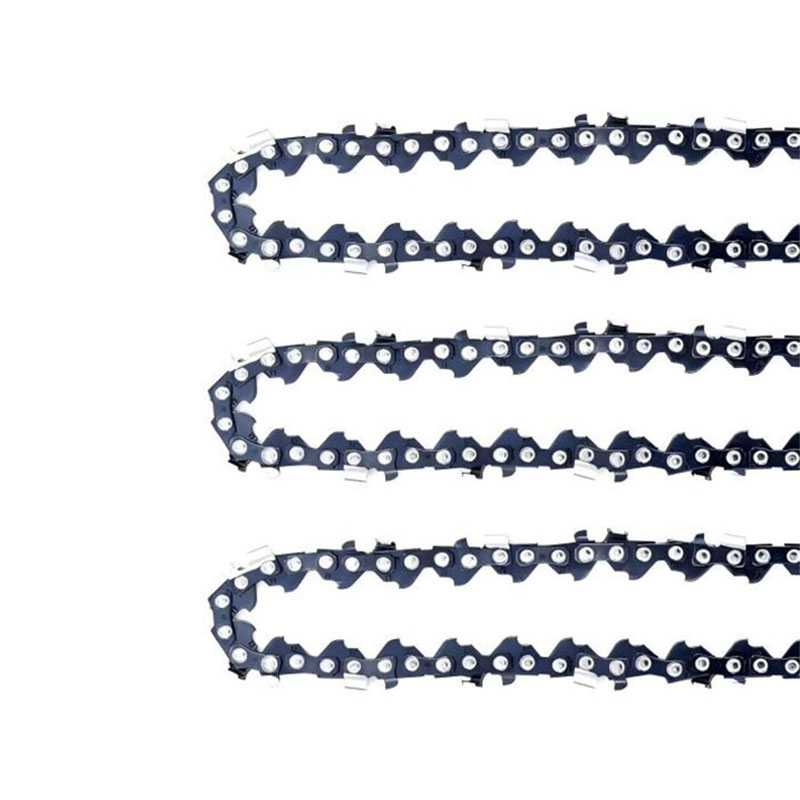
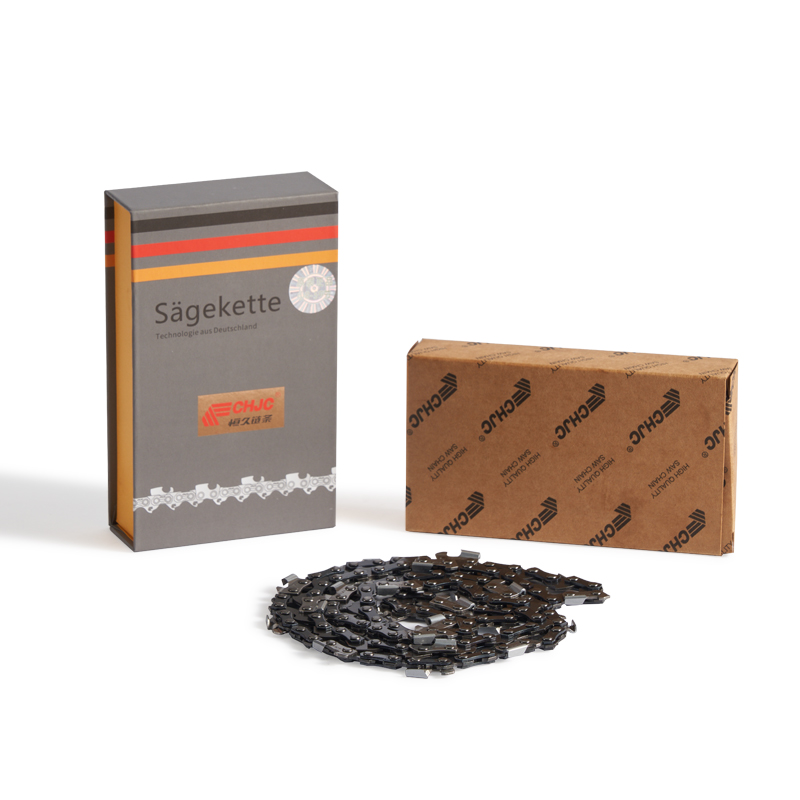 3/8" LP .050" Low-Profile Saw ChainA low-vibration 3/8-inch low-profile chain for lightweight and electric saws, with semi- or full-chisel cutters and multiple drive-link counts.View Product →
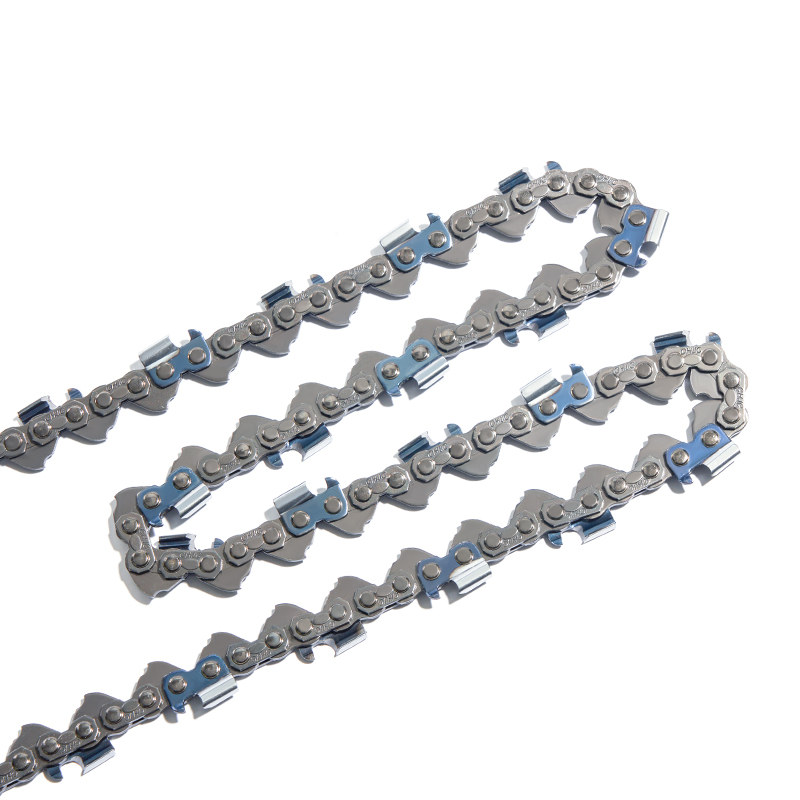
Small-saw users get the most from a low-profile loop that is consistent in gauge and drive-link count, because those are the two numbers that quietly ruin bars when they drift between lots. The .325-inch pitch series covers the middle ground where most farm and firewood saws live, in .050", .058" and .063" gauges.
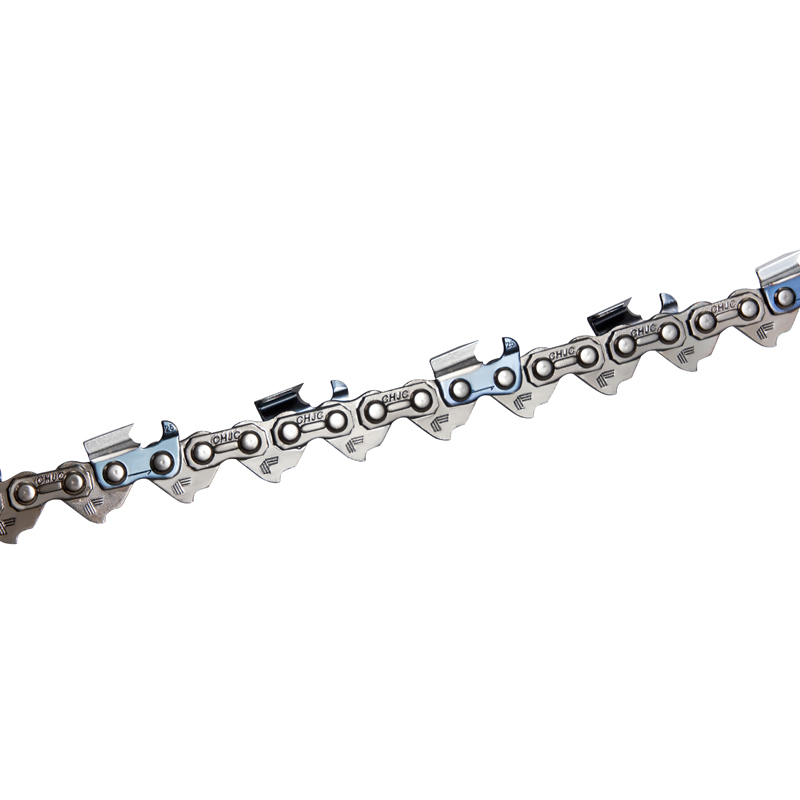 .325" .050" High-Performance Low-Vibration Saw ChainA durable .325-inch, .050-gauge chain for professional logging and firewood work, with blued cutters and semi- or full-chisel options.View Product →
For dirty, high-volume work, cutter hardness and heat treatment matter more than the label on the box. Ask any supplier for the hardness range and the test method behind it, then compare that answer with the price per loop.
Matching a chipper profile to a harvester head or a heavy bar is a specification exercise, not a brand loyalty test, and it is the part of the Oregon chain vs Stihl conversation that professional buyers actually control.
A Buying Checklist Before You Pay
- Read the bar stamp, then confirm with calipers if the bar is worn or repainted.
- Count drive links on the old chain, twice, and write the number down.
- Match cutter type to the wood: full chisel for clean timber, chipper or semi-chisel for gritty or frozen logs.
- Inspect the bar groove for slop and the sprocket for hooking before fitting anything new.
- Buy the correct file diameter at the same time as the chain, not a week later.
- For volume orders, request the heat-treatment and hardness specification in writing, not just the pitch.
Oregon versus Stihl is a real choice, but a smaller one than the marketing suggests. Match pitch, gauge and link count, choose a cutter profile that suits the wood, and file the loop before it goes blunt. Do that and either brand cuts well; skip it and neither will. For one or two loops a year, buy on price and local availability. For dirty, abrasive timber, pay for edge retention. For volume purchasing, put the specification in writing and let the factory build to it.